
The Transpennine Real Ale Trail

Huddersfield Station

On Saturday myself and a group of friends went to do the Transpennine Real Ale Trail. Many of the stations on the railway line between Leeds and Manchester via Huddersfield have pubs serving real ale either on the station or nearby, and eight of these form part of an official trail.

Though it’s been done for years, the trail grew in popularity following the broadcast of Oz and James Drink to Britain, a BBC TV show with Oz Clarke and Top Gear’s James May which was broadcast in 2009. The number of people attempting the real ale trail increased significantly, although sadly many weren’t in it for the real ale. Go back a to any Saturday afternoon earlier this year and you would expect to see large groups of people – mostly men – frequently in fancy dress, drinking lager and engaging in anti-social behaviour.

A particular problem point was the small and usually quiet village of Marsden. Though Marsden has a pub right by the railway station, conveniently called The Railway, many prefer to go into the village to the Riverhead Brewery Tap and others. This BBC News video gives you an idea of how bad it was last year.

Since then, many of the pubs on the route have stopped serving lager and spirits on Saturdays, and will refuse service to those in fancy dress. In other words, patrons have to drink real ale or soft drinks. And, based on our experiences, it seems to be working – whilst a Saturday in late October is bound to be less busy than in mid-summer, the route was much quieter and the people there were better behaved. At Slaithwaite (pronounced ‘slowwwit’) station, Northern Rail had provided a couple of marshals to manage the numbers of people on the small platforms. And at Huddersfield there were a number of British Transport Police officers around, but that may be more to do with the local football team playing local rivals Leeds United at home that day.

On our visit, we went to six of the eight ‘main’ pubs on the trail. Starting at Stalybridge, we then called at Greenfield, Marsden and Slaithwaite, before then skipping straight to Dewsbury and then back to Mirfield. By this point it was getting late, so we didn’t go to Huddersfield or Batley this time around.

I’ve done Huddersfield many times before though, and the station actually plays host to two pubs. They’re both on platform 1 – The Kings Head and The Head of Steam – although the introduction of ticket barriers means that you need to exist the station to access them now. The Head of Steam is my favourite and has the largest overall drinks selection (including a good cider menu) but real ale drinkers tend to prefer The Kings Head as its ale selection is stronger.

It’s a good way to spend an afternoon with friends and I’m pleased that the solution to the problems with rowdy drinkers seems to have worked. Other ale trails are available around the country and this month’s CAMRA magazine has a special feature on pubs at stations, which seem to be enjoying something of a renaissance of late. CAMRA also published a book last year; it’s out of stock on Amazon unfortunately but is available in CAMRA’s own shop, and members get £2 off.

Mavericks – my review

A screenshot of Finder on Mac OS X Mavericks

Following Apple’s keynote presentation on Tuesday, OS X 10.9, aka ‘Mavericks’ was released. Apple broke its long-standing tradition of charging for OS X updates by offering Mavericks for free, and on any machine capable of running Lion. Furthermore, it looks like a direct upgrade from Snow Leopard to Mavericks is possible on those machines not yet updated, which may go some way in explaining why Mavericks is over five gigabytes in size.

By making Mavericks free, Apple can now dodge questions about whether the update is value for money. I know some felt that Mountain Lion wasn’t really worth the cost, even though it was only $20 and was already the cheapest OS X update to date (barring the ancient 10.1 ‘Cheetah’ update from 10.0). That being said, my early plays with it suggest that its value is at least that of Mountain Lion, and therefore a worthwhile update.

Installing Mavericks

Having been up at 5:45am on Tuesday (for work) I decided not to attempt to install Mavericks as soon as it came out, although I did watch most of Apple’s keynote live. Instead I waited until yesterday, and gave myself things to do whilst it installed, which, from beginning the download to completing installation, took around two hours on my early 2010-vintage Mac Mini. Then there were a raft of software updates to install afterwards – iPhoto, iTunes, XCode, a Digital Camera RAW update and improvements to some of the voices for the text-to-speech feature, plus various third-party apps. This took another hour or so but was technically optional.

Up and running

Once I had Mavericks up and running, it seemed to work fine. Well, no different to Mountain Lion, anyway. My Mac still takes quite a while to boot up but that’s probably to do with various apps and utilities that I have running. I did have to fiddle with the screen settings, as for some reason Mavericks decided to set my two screens to be an extended desktop and not mirrored like I prefer – my second screen is actually the living room television. Mavericks also changed some of my Magic Mouse’s settings so that left and right swiped no longer did anything. Frustrating, but easily changed back.

Scrolling seems smoother, which is nice, and Launchpad is now quite a bit faster – especially when opening stacks. This is a relief as it’s the main way I access apps that aren’t in the Dock.

Activity Monitor

The Activity Monitor saw major changes in Mavericks, with a new tabbed interface. I like it, and it feels simpler now, even though it shows more information. A new ‘Energy’ tab shows which apps are putting the most strain on your battery, if your Mac is a laptop – mine isn’t, but it’s still interesting to see which apps are power-hungry. Predictably Firefox was using the most energy whilst I was writing this but some background processes were also quite hungry too, so I may have to re-evaluate which apps run on startup.

It also tells you whether OS X is making use of one of its new features, Compressed Memory. When you start to run out of available RAM, OS X will now compress some of the data in RAM to make more available. This does add a bit of processing overhead, but it’s still faster than using a swap file (virtual memory) on a hard disk or even a solid state drive (SSD). I noticed that since installing Mavericks, OS X attempts to use as much RAM as possible to minimise swap file usage.

Maps

I had a brief play with the new Maps app. It’s basically the same as the iOS app, which sadly means it’s full of the same crappy data. A year on and there are still big problems with missing places (such as Bradford’s Alhambra Theatre), or places that have long-since closed.

I did note that my search history from my iPhone carried over to my Mac, which is interesting. However, I’ll be sticking to Google Maps for now.

Finder

Finder now has tabs in Mavericks; I’m sure some people will be overjoyed at this but I’m not too bothered. You can at least drag documents between tabs so I suppose I may use it from time to time. I don’t think I’ll use tags though, as I never used the labels that came before.

Miscellaneous points

  • The CPU coalescing feature is quite clever, but of limited use to a desktop user like me. I’ve heard that it is effective at extending battery life, which is good – it’s always nice to have a battery that lasts longer after an update than the more usual opposite.
  • The colours seem brighter on my screen, but that may be co-incidental with me changing the screen settings.
  • I like how newly-installed or updated apps sparkle in Launchpad.
  • I’m aware that there are major problems between Mail and Gmail accounts, however, I’ve recently stopped using Mail so thankfully I haven’t experienced this first hand.
  • LinkedIn is now supported alongside Twitter and Facebook. You can post status updates from the Notification Centre, and your connections will appear in Contacts. I wonder if iOS will follow suit in a forthcoming update.
  • I’ve turned on the iCloud Keychain. To enable it you have to also tell OS X to require a password to unlock your Mac if left idle, which isn’t done in a very intuitive way.
  • Users of older versions of Parallels desktop have found out that it doesn’t work on Mavericks. The latest version does but it’s a paid-for update. Consequentially my article about converting Parallels VMs to VirtualBox has been well-visited over the past few hours.

Elsewhere

As usual, John Siracusa has written a very extensive review of Mavericks at Ars Technica, which is well worth reading as it explains how some of the new performance features work. Dave2 is mostly positive about it too, although Lifehacker’s initial review is less so.

For me personally, it seems fine. Those wanting to err on the side of caution may want to wait for the inevitable 10.9.1 update which will follow in a few weeks (especially if you use Gmail in Mail), but I feel it’s good enough to take the plunge now. And you can’t argue with the price.

Armley Mills Industrial Museum

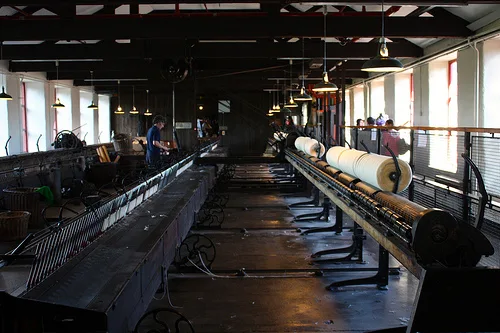
Photo of the inside of Armley Mills Industrial Museum

Yesterday Christine and I, along with a few friends, went to the Leeds Industrial Museum at Armley Mills.

Regular readers will note that this is the third industrial museum in the area that I’ve visited recently. Last year we went to the Bradford Industrial Museum, which is open regularly. And in August this year we went to the Calderdale Industrial Museum, which is only open select weekends throughout the year. The Leeds Industrial Museum is housed at Armley Mills, towards Kirkstall, and straddling a patch of land between the River Aire and Leeds Liverpool Canal.

Our reason for visiting was for the twice-annual Leeds Steampunk Market. It had moved to Armley Mills from its usual venue of Left Bank near Burley Park. Rather than being arranged in one place in a main hall, this time the market was spread out across the museum and over the four floors, including outside. This made it seem less busy, but well over 600 people had come through the door on Saturday, and the numbers were looking similarly healthy on Sunday when we visited. A 50% discount for those who came dressed in costume may well have helped, and indeed Christine and I took advantage of this.

#steampunk

This was our third visit to the Steampunk market and we have now both amassed the basic Steampunk outfit. Sadly we didn’t take any photos this time (bar the Instagram image above) but my spray-painted gold goggles attached to a top hat made an outing. I suppose over time we’ll be able to come closer to some of the outfits that the more committed followers of the Steampunk subculture have. As usual there were some excellent costumes on show by other attendees.

As for the actual museum at Armley Mills, I managed to take a few photos (uploaded to Flickr of course) but to be honest we will need to go back and actually look at the exhibits properly next time. Especially as in some cases it was difficult to tell if something was a museum artefact or a piece of Steampunk art.

The next Steampunk market in Leeds will be at the White Cloth Gallery on November 30th and December 1st. I may be there.

Assorted notes on London

The Thames, from Blackfriars
  • Normally we take a rolling case with us to London. This time we packed lightly and ensured that all of our clothes fitted into a rucksack (for me) and a shoulder bag (for Christine). This meant that we could use lockers and cloakrooms in the various museums that we visited, which were free or cost considerably less than the Left Luggage facilities at stations.
  • For a nice view of the River Thames, go to Blackfriars station. It has recently been rebuilt, and now spans the Thames with entrances on both the north and south banks, however more importantly big glass windows have been provided. The photo taken above was taken from Platform 1, looking east, and frames Tower Bridge really well.
  • We saw a pair of urban foxes. They didn’t make any of these noises. It’s not the first time I’ve seen an urban fox but I hadn’t been so close to one before.
  • On our second night in London we stayed at the Pullman Hotel on Euston Road – roughly halfway between St Pancras and Euston stations. It’s not a hotel we’d normally be able to afford but it was definitely worth staying at (certainly better than our Friday night hotel). You also get brilliant views of London from the upper floors, and you don’t need to have a room there to use the lifts.
  • We had a mosey out to the Thames Barrier, which as of 2005 is much easier to get to thanks to the Docklands Light Railway. Alight at Pontoon Dock, and then have a nice stroll through Thames Barrier Park which is in itself quite a nice place.
  • The Museum of London is well worth visiting. It’s free and offers an interesting history of the city, from early settlers to the present day. There’s even a small collection of items from last year’s Olympic Games. We didn’t have chance to visit the Museum of London Docklands this time though.
  • The Wellcome Collection looked interesting but most of it is closed until the spring, so we didn’t spend much time there. The bookshop is excellent though.
  • The British Library also has an exhibition of interesting texts in its archives, including two of the four surviving copies of Magna Carta, which will be 800 years old in a couple of years’ time. There’s enough there to kill time for an hour or so.