Marriage

Penguin wedding cake toppers

On Saturday, Christine and I went to the wedding of a couple of friends we’ve known for a few years. Co-incidentally, Saturday was the first day that same-sex couples could legally marry in England and Wales.

A bill to change the law was passed last year, and on the 13th of this month, same-sex couples who had married overseas had their marriages automatically recognised as such here. At the same time unmarried couples were able to give notice and the first same-sex marriages happened just after midnight on the 29th March.

The wedding we went to was a mixed-sex marriage, but a marriage all the same. The only thing that was slightly different was that the registrar stated that a marriage was between ‘two people’ and not ‘a man and a woman’, as it was before and when Christine and I got married last year.

I’m really pleased that any two people who love each other and want to spend the rest of their lives with each other can now marry, regardless of their sexual orientation or genitalia. Though Britain has had a compromise of ‘civil partnerships’ since 2005 – offering the same legal status as marriage – it’s good to see that every couple can now be treated equally.

Well, mostly. Whilst same-sex couples should have no problems obtaining a civil marriage, religious marriages are only offered to same-sex couples by a small handful of religious groups – namely the Quakers and the Unitarians. Same-sex marriages are not yet available in Scotland, although the relevant legislation has been passed so it is only a matter of time before this changes. Northern Ireland, however, refuses to allow or recognise same-sex marriages. There are some other issues too.

And there are still changes to happen in wider society. Though a majority of people in the UK support same-sex marriages, around 20% of people would turn down an invitation to a same-sex wedding. But the tide of opinion is going in the right direction and, on the whole, I feel that British society is more accepting of LGBT people now than it has been for any time in history.
Dave Jennings – 1960-2014

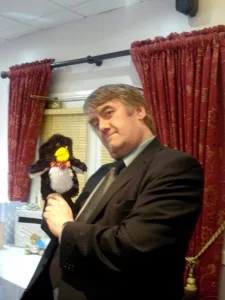
A photo of Dave Jennings at our wedding, holding a Mr Flibble penguin puppet

Last week I heard the very sad news that Dave Jennings, a very good friend of mine, had passed away from a heart attack outside his flat in Bradford.

I’ve known Dave for several years, initially through friends who were in the musicals society but since 2009 we have been on a regular pub quiz team together at the university.

Though originally from the Bradford area, Dave’s early career was in London, working as a music journalist for Melody Maker magazine. It was there that he reviewed a song by the band ‘Darlin’, which he described as a ‘daft, punky thrash’. Two of the former members of Darlin’, Guy-Manuel de Homem-Christo and Thomas Bangalter, went on to form Daft Punk, and the rest is history.

Melody Maker closed in 2000 and Dave returned north, eventually enrolling as a mature student on a course at the University of Bradford where I work. He graduated with a first class honours degree in 2006.

During his time at the university he was involved in both the theatre group and later the musicals society. Indeed, he was due to play the role of Orin Scrivello, the dentist in Little Shop of Horrors, but sadly he passed away before the last dress rehearsal. Thankfully, another member of the society stepped up and the show was performed as planned.

Outside of the university he has been a regular extra in the ITV soap opera Emmerdale, often in the background of the Woolpack having a drink. His acting showreel from 2009 is here to watch. And recently he had made a return to music journalism, doing some freelance articles for The Girls Are, and has learnt to play the banjolele, as evidenced in this video.

Dave was also a big geek, like me, particularly when it came to Doctor Who. In fact he shared a birthday with John Barrowman (Captain Jack) and Alex Kingston (River Song). For our wedding, where the photo was taken, he had a Mr Flibble hand puppet commissioned for us, which I’ve been using as my Twitter avatar for some time.

There have been few times over the past six days when I have not been reminded of Dave and the things that he did. Whether it was constantly beating me on Words with Friends with his superior vocabulary, talking about music or the latest Doctor Who episode, or our mutual enjoyment of the Steampunk subculture. Dave will be very much missed by both myself and his large group of friends. He was such a lovely and friendly person and a real shame that his passing has come so soon.

His funeral will take place this Friday, at Nab Wood Cemetery near Bingley, at 3:20pm.

Five years on

It’s been five years to the day since Hari and I ended our relationship. Though mostly a mutual agreement that things weren’t working, it was still a very difficult time for me, exacerbated by being unemployed and having recently lost my grandmother. It was pretty much the lowest point of my life so far.

The end of any relationship is hard, but particularly so when the relationship was with someone that you had been with for several years and were living with. The following few weeks were a struggle, not at least because I had to organise moving back home with my parents, cancelling utilities and so on.

Thankfully, things started to turn around soon afterwards, and around 6 weeks later I was back in a job. My friends were brilliantly supportive during that time and helped me greatly. And, later on, I met Christine, to whom I’ve now been married for almost a year now.

Hari has also moved on, and started a relationship with someone around the same time as I met Christine. We’re still in contact over Facebook but have only met in person once since the split, mainly because she now lives in Scotland. I’m sure we’re both happier now, and though it hurt at the time, breaking up was the right thing to do. And, with hindsight, I’m glad we called it quits when we did, rather than trying in vain to revive our relationship.

The re-launched Microsoft OneNote

A screenshot of OneNote on Mac OS X

Yesterday Microsoft unwrapped the latest changes to its OneNote software. Originally introduced with Office 2003, OneNote is now a separate product, albeit one integrated with Microsoft’s OneDrive (previously SkyDrive) service.

The main changes are that the basic OneNote system is free and available without having to buy Microsoft Office, and that there’s now an API for third-party services to connect to. Existing Office 2013 and Office 365 customers get some premium features, but the basic note-keeping and synchronisation tools are available for all at no cost now. There is also a Mac OS X app for the first time, as previously Office:mac 2011 didn’t include OneNote.

The new API access means that there’s already an IFTTT channel for OneNote, and the folks at Feedly have included support in their feed reader (free for now but paid customers only from next month). A few other apps are also available in OneNote’s app directory.

I imagine most people will be interested in a comparison with Evernote, which is the main leader in cloud-based note-taking. Though I’m not able to do a full comparison, personally I’ll be sticking with Evernote. The OS X app for OneNote is big (over 400 megabytes when installed) and slow to start up. I’ve found Evernote a bit easier to manage plain text notes, although OneNote offers more flexibility with arranging items within notes. Evernote also lets you export and print notes, unlike OneNote’s free offering.

Other competitors include Google Keep and Apple’s iCloud Notes. Google Keep is Android and web-only (an unofficial iOS app exists), but supports voice memos. iCloud Notes is available on iOS, OS X and the web, but there’s no Windows app and only simple text notes are supported. Whilst I think that the new OneNote is definitely better than Google or Apple’s offerings, Evernote is still the service to beat.

Little Shop of Horrors

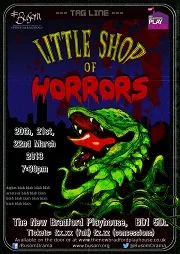
This coming Thursday, my wife Christine will be featuring in an amateur production of Little Shop of Horrors, along with other students from the University of Bradford where I work. It’s on at The New Bradford Playhouse and runs until Saturday.

As well as playing a character in the show, Christine has been helping out for a number of weeks now, and I also spent much of the weekend helping and/or hindering the technical team as they set up in the theatre. It promises to be a good show, and the puppets they’re using look really good.

So, if you’re available on Thursday, Friday or Saturday nights this week, we’d both very much appreciate it if you were able to come along. Tickets can be purchased online here.

Preventing Tetanus

Screenshot of the NHS information page about tetanus

When was the last time you had a tetanus vaccine? If the answer is ‘I don’t know’ or ‘more than ten years ago’, then you may wish to contact your GP to make an appointment to get vaccinated.

After a recent incident involving a colleague’s hand, a door, and their subsequent trip to the local accident and emergency department, I realised that the answer to that question was the latter in my case. I’m pretty sure that I’d not had a booster vaccination for tetanus since before leaving York to go to university in 2002, so I was overdue.

Thankfully, the vaccine is free to everyone in the UK (thank you, NHS). As I already had an appointment with the practice nurse for an asthma checkup yesterday, I just asked in advance if I could be given the vaccination at the same time. It’s mostly like any other vaccine but can make your arm hurt for up to 48 hours afterwards apparently.

Tetanus is actually pretty rare in the UK, with only three people contracting the disease in England and Wales in the whole of 2011. But that doesn’t mean that you shouldn’t have the vaccine, as though it is rare, it can be fatal. The symptoms can include lockjaw, followed by muscle spasms and stiffness, a fever, high blood pressure and an increased heartbeat. If left untreated, it can result in heart failure, and indeed 11% of those who contract the disease die. The disease is usually contracted through wounds on the skin, which is why you may be asked if you have had the vaccine recently if you present at casualty with an injury.

Some younger people may have lifelong immunity to tetanus, thanks to changes in the vaccination programme, but if you’re approaching middle age like me then you will probably need a booster vaccine every ten years. Either way, speak to your GP or practice nurse, as he/she will be able to advise you whether you need the vaccine.

Museum of Transport, Greater Manchester

Museum of Transport, Greater Manchester

On Saturday, whilst Christine was working, I took myself off to the Museum of Transport, Greater Manchester. I’ve been meaning to go for a while, but the recent opening of Queens Road Metrolink station nearby has made it somewhat easier to get to. Although railway engineering works, and the temporary closure of the Metrolink platforms at Victoria station, meant that it was still something of a trek taking a couple of hours each way from Sowerby Bridge. Normally, it’d take around an hour.

Anyway, the museum. It’s in the Cheetham Hill area of Manchester, to the north of the city centre, and is housed in the back of what was the Queens Road tramshed for Manchester Corportation Tramways – now used by First buses as a bus depot. It’s home to a wide variety of buses that operated in or are linked with Greater Manchester, plus a few other bits and bobs. But mostly buses – other forms of transport were not very well represented.

There are three trams, only one of which is complete (a horse tram). Of the others, one is Metrolink 1000, a half-tram mock-up of what would become the production T68 tram series. The T68s have only recently been retired from revenue service in Manchester and I imagine that a production model may enter the collection when one is preserved. The other bit of tram is the lower passenger compartment of what was originally a double decker tram, in the process of being restored.

There are also re-created transport offices, as well as an extensive collection of bus tickets, roller blinds and old signs. But, buses form the main attraction here.

On the whole I found it interesting but it’s not as good as other transport museums – particularly the excellent London Transport Museum. You definitely need to be more of a transport geek to enjoy it, and I’m sure Christine would have been bored stiff by it had I dragged her along. (I very nearly did last summer, but we ended up going bra shopping instead.)

The museum is open three days a week – Wednesdays, Saturdays and Sundays, or all week in August. Entry is only £4 for adults, and free for accompanied under-16s, which is good value for a museum that can keep your average transport geek occupied for a couple of hours.

Photos from my visit are available on Flickr.

Hearthstone: Heroes of Warcraft

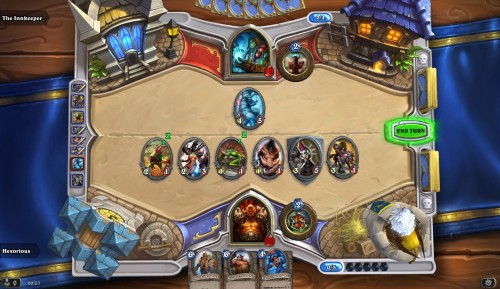
Screenshot of the game Hearthstone: Heroes of Warcraft

Some months ago, I was given access to the then-closed beta of Blizzard Entertainment’s new game Hearthstone: Heroes of Warcraft. If I’m honest, I didn’t really bother to play it until a few weeks ago.

The open beta cycle is now coming to an end, so presumably the final release of the game is imminent. Unlike other Blizzard games it’s expected to be free to play, but with in-app payments to be extras. It integrates with Blizzard’s Battle.net service so you can chat to friends playing other Blizzard games like World of Warcraft, Diablo III and Starcraft II whilst playing.

Hearthstone is, essentially, a turn-based card game. It can be played either against the computer, in practice mode, or against other players – either friends or random matches. So far, I haven’t ventured outside practice mode so I haven’t played against any other real people as yet.

The basic premise of the game is that you have a deck of cards, which belong to a class from one of the original nine World of Warcraft classes (i.e. no death knights or monks), and you play a hero of that class. As I started with the Mage deck, I played Jaina Proudmore. You then play against another hero of a different class – so choosing a Warrior opponent will give you Garrosh Hellscream. As you defeat other classes, you get access to those decks, until you can choose any of the nine class decks to play.

In the games, you start off with several cards, and receive at least one more card with each turn. Some cards produce minions, which can attack or defend you; others enable spells and abilities. You also gain a mana crystal with each turn – the number of crystals you have for each turn budgets the number of abilities you can use. If you defeat the opposing hero, you win.

It’s very similar to real world table top games, but with the bonus of having the computer enforce the rules. I occasionally play table top games but sometimes the rules can be bewildering, and some games have a steep learning curve that puts off more casual gamers like me. So I appreciate having my hand held by the game in this way. It’s also nice that it uses a familiar universe of characters, as all of them have appeared in the Warcraft game series at some point.

Hearthstone itself is relatively easy to play, and is controlled entirely with the mouse. I’m pretty sure it’s been designed so that it can be easily ported to tablets, although as yet it’s only playable on Windows and Mac OS X. Hopefully Android and iOS versions will be forthcoming when it’s finally released, as I think it would lend itself well to casual play on a tablet.

If you want to try Hearthstone before it exits beta, you’ll need to download it now. A Battle.net account is required, but it’s free to play.

A letter from me to myself in 1999 about the internet

This month marks 15 years since I first used the internet at home. I thought I’d write a letter to myself, aged 14, about how things have changed since then.

Dear Neil,

Hello. This is a letter from 2014, 15 years into the future. Around about now, you will be using the internet at home for the first time, and it will be awesome. What’s more, is that as time goes on, it will get even more awesome, and the ways that you use the internet will change.

Firstly, it’ll get faster. Right now you’re using a 56k modem, and downloading a 10 MB file can take the best part of an hour. But in a couple of years time, you’ll get ‘broadband’, and that’ll increase your download speeds tenfold, to around 512 Kbps. Better yet, it’s ‘always on’, so there’s no need to dial a number and hear the modem make all of those screechy noises, and you’re not charged by the minute, so no more £40 per month phone bills for your parents to pay.

Although you will still hear the screechy modem noises in the future, I’m afraid. You’ll spend a couple of years in university halls of residence with them, and then share an office with a fax machine.

Eventually your internet connection will hit the lofty highs of 20 Mbps – yes, megabits, not kilobits. You’ll be able to use the internet to watch full TV programmes, and you won’t even need to use that ghastly RealPlayer software anymore. Oh yeah, and if you think RealPlayer is bad now then I have bad news for you, but hey, it gets worse before it gets better (i.e. you can get rid of it completely!)

The music industry eventually figures out how to sell music legally online so you won’t be using Napster for much longer. Hurrah! In fact, you don’t really buy CDs anymore. Next year, your parents will buy you a portable MP3 player – a bit like a MiniDisc player – because you’ll do well in your GCSEs. Just not necessarily in the subjects that you expect.

And soon you won’t even need a computer to use the internet. One day, you’ll buy a mobile phone, but with a big touchscreen that also has the internet – and, it works anywhere! In fact in some places it’s faster than the internet on your computer and you’ll be able to sit in a bus station and use the internet at 38 Mbps! Because you’ll still be using buses when you’re almost 30 as you still haven’t passed your driving test yet. Sorry to be the bringer of bad news.

In better news, you will eventually find someone to love, and who loves you back in equal measures. It’ll take a while, but you will get there and you will be happy.

Also, and you may find this utterly bizarre now, but you are writing this letter on Firefox, a descendent of Netscape, running on an Apple Mac. You will, in time, give up your reliance on Windows and Internet Explorer. Oh, and Apple makes your phone too. And a ‘tablet’ – a flat touchscreen device that doesn’t have a keyboard but let you use the internet and programs, and watch videos, which is pretty cool.

I’m sorry to say that all of the time you spent learning to code in BASIC turns out to be for little value. You’ll end up knowing the very basics of several languages, but nothing substantial, sadly.

So anyway, on the whole the future is pretty awesome. See you in 15 years!

Yours,

Neil

The Two Together Railcard

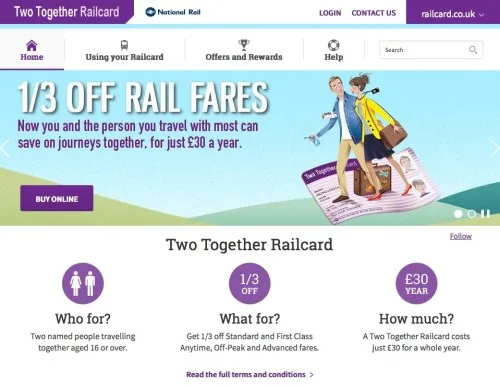
A screenshot of the Two Together Railcard web site

There’s a new addition to the railcard family – the Two Together Railcard. Launched some time ago as a pilot in the West Midlands, it’s now available nationally, as of yesterday.

Unlike most railcards, issued to a single person, this is issued to two named people who must travel together for it to be valid. You needn’t be related, so if you regularly travel with a particular friend or housemate then they can be on the card. Like most railcards, it costs £30 and is valid for one year, and gives you a third off almost all rail tickets. You can also get 10% from this link, so it costs £27 for the year. The card can be bought at staffed ticket offices at stations, or online.

As Christine and I do a lot of travel together, this card has the potential to save us a lot of money, so we’ve ordered one. The £30 cost will easily be recuperated as we regularly spend more than £90 per year on tickets where both of us travel. In fact, it may pay for itself after just one long return journey. Until now we’ve been making use of Northern Rail’s Duo tickets, which allow a second adult to go half price with a full-fare paying adult. But this is limited to only some of Northern’s trains and isn’t a national scheme.

Right now we don’t qualify for any of the four other existing national railcards. The 16-25 railcard is for those aged 16-25 (we’re too old) or older people in full-time education (we’re not). The Friends & Family railcard is for those with children aged 5-15, which won’t apply to us for some time – you need to be travelling with at least one child in that age range for it to be valid. We’re both thirty years too young for the Senior railcard, and neither of us are disabled, so the Disabled railcard is out.

So, if you’re like Christine and I – adults who work full time, are approaching middle age and are childless or don’t have any children over five years old – then the Two Together railcard is a welcome introduction.