
Listening to books, part V (Fiction edition)

It’s time for another update on the audiobooks that I’ve been listening to. As mentioned last time, I’ve been listening to a few fiction books lately, rather than just yet more celebrity memoirs. As someone who hasn’t read (or indeed listened to) fiction in many years, this was a bit of a departure for me. Indeed, Mitch Benn’s book Terra was the first in a long time.

Here’s what I’ve listened to:

Battlemage by Stephen Aryan

The cover of Battlemage by Stephen Aryan

I’ll disclose a minor conflict of interest here: I used to work with Stephen’s partner. At the time, I remember hearing about how he was struggling to get a publisher. This was when self-publishing on Kindle and the like was becoming more popular. I’m pleased to see that Stephen’s persistence paid off, with this book being published by Orbit in September 2015. It’s available as an actual paperbook in real shops (or Amazon – sponsored link), and an audiobook on Audible.

Battlemage is among the longer books that I’ve listened to – roughly on a par with a typical Game of Thrones book. It tells the story of several battlemages, powerful and feared wizards, who are recruited to fight in a war against the ‘warlock’. It’s firmly in the ‘sword and sorcery’ subgenre of fantasy.

I really enjoyed this book; whilst I chose it principally to support someone I know, the story was good and the characters had depth. The narration by Mark Addis on the audiobook is good as well. It’s the first in a trilogy, and I’m looking forward to listening to Bloodmage, the next book in the series.

Dietland by Sarai Walker

I listened to this book on a recommendation from Sofie Hagen, formerly one half of The Guilty Feminist podcast. I didn’t really know what to expect, other than that it would likely criticise the diet industry.

Dietland (Amazon link – sponsored) tells the story of Plum, a fat girl who doesn’t want to be fat. She signs up for a weight loss scheme called ‘The Baptist Plan’, but is left looking for other options when the company is closed by its founder’s daughter. Considering bariatric surgery, she’s recruited into a secretive collective and finds out the truth about dieting.

The reviews of this book are mixed, perhaps due to its controversial second half where the story takes an interesting twist. For me, I found the second half much stronger than the first. Initially I almost wrote this book off as being typical cheap ‘chick lit’, but I stuck with it and was rewarded. Drawing parallels with real-life events, it’s hilarious and empowering.

Lauren Henderson narrates the book, and whilst she does so well, she wouldn’t be my favourite voice actor.

The Alchemist by Paulo Coelho

I listened to The Alchemist (Amazon link – sponsored) because it was available as a freebie on Audible back in November. I had run out of credits, didn’t fancy paying full price for another audiobook and saw that it was a relatively short 4 hour listen, which I completed in a week thanks to a few long car journeys.

It’s certainly not the sort of book that I would normally listen to, and it was okay, I guess. The story follows a young Spanish shepherd, as he travels to Africa to find treasure. The revelations he has on his journey end up changing the course of his life.

There’s a lot of religious imagery in the book, even if it isn’t overtly Christian. The narration was good, but you can tell that it has been translated into English. There’s not the level of nuance that I expect it would have if read in its original Portuguese.

Good Omens by Terry Pratchett and Neil Gaiman

The cover of Good Omens by Terry Pratchett and Neil Gaiman

As a child, I read a few Terry Pratchett books – namely the Johnny Maxwell trilogy, but as yet I haven’t dabbled my toe into any of Pratchett’s books for adults. Similarly, I’ve not really read any Neil Gaiman books apart from a couple of short stories. So I thought that Good Omens (Amazon link – sponsored), a collaboration between the two of them, would be a good introduction to both authors. It’s a standalone book that is not part of any wider series.

Good Omens follows Crowley and Aziraphale, a demon and an angel who live on Earth, and who aren’t very happy about its imminent destruction. As the four horsemen of the apocalypse gather, and the anti-christ goes missing, it’s up to them to save the world, with the help of a surprisingly accurate book of prophecies written by one Agnes Nutter.

There are some laugh-out-loud moments in Good Omens, especially in its comments about the M25, and how every cassette that spends more than a couple of weeks in a car becomes songs by Queen. Some of the pop culture references are a little dated – this book was first published in 1990 – but on the whole, it holds up well. Stephen Briggs offers an excellent narration in the audiobook.

Update (May 2025): This was written before the allegations about Neil Gaiman’s sexual abuse were made public. Also, the original Stephen Briggs audiobook has been replaced with a newer recording narrated by Martin Jarvis.

Up next

At present I’m back to celebrity memoirs, but will be listening to more fiction books in future. I’m considering making a start on Game of Thrones, and perhaps making inroads into Terry Pratchett’s Discworld universe.
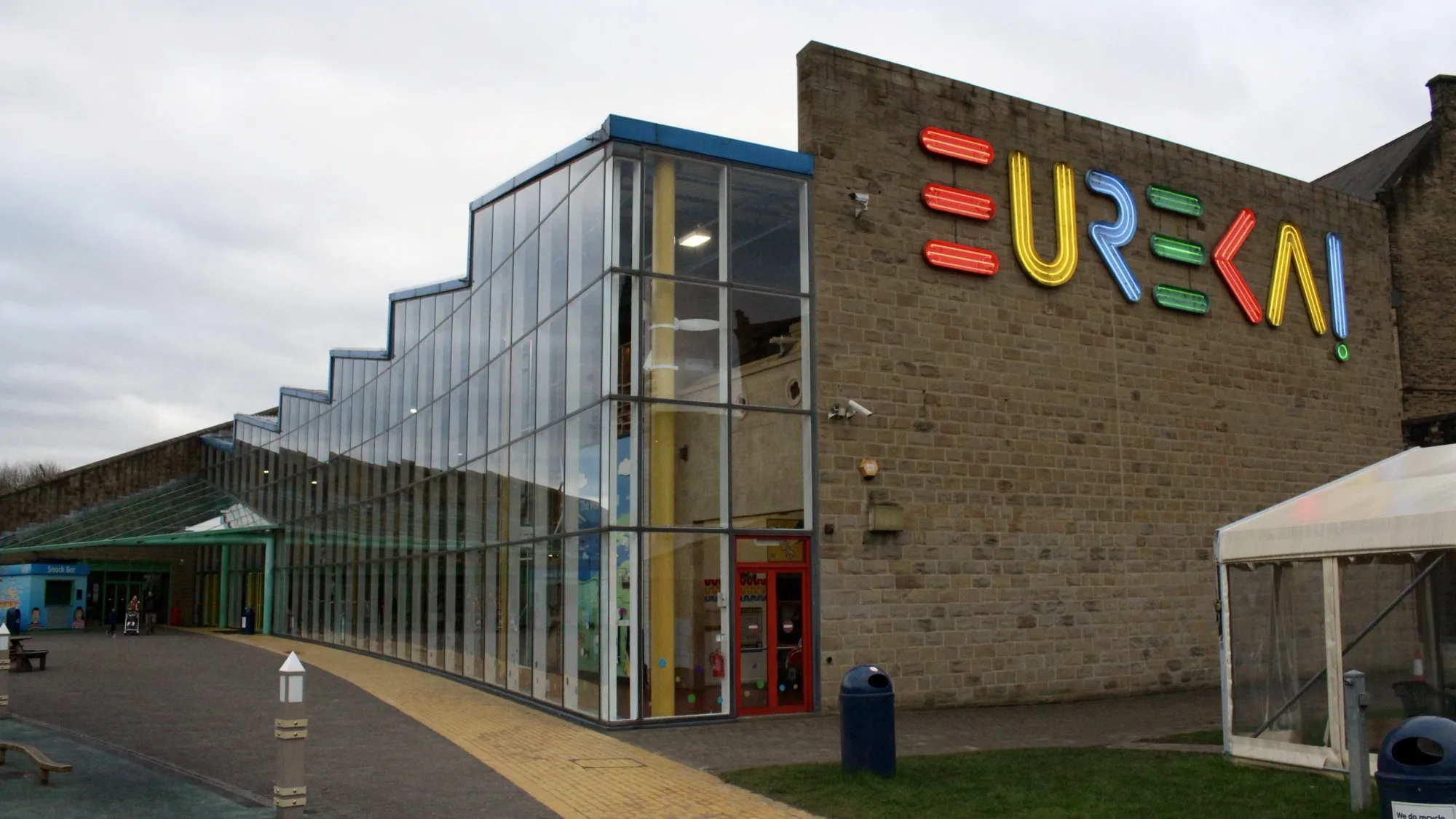
Going back to Eureka as an adult

A photo of the Eureka National Childrens Museum in Halifax

When I was a kid, I used to love going to Eureka, the national children’s museum in Halifax. I was eight years old when it opened in 1992, and so I was in the right age group to visit. I remember going with primary school at least once, and with my parents on other occasions.

Eureka turns 25 this year, and I took Lizzie along a few weeks ago. She’s been three times now – once with me, and twice with her mum. I took her because Christine was working that weekend, and we had a Tesco Clubcard Days Out voucher that was about to expire.

There are still quite a few bits of the museum there that I remember. I remember pedalling on a fixed bike, and seeing a skeleton appear doing the same motions. That’s still there, although the rest of the gallery around it is new. The SoundSpace gallery is new; Lizzie found this really stimulating with lots of sound and light. We also spent a little bit of time in Living and Working Together, and All About Me, but having arrived there after lunch on a Saturday there was only limited time.

When Eureka opened, it was almost unique in the level of interactivity offered. So many museums at the time locked their exhibits behind glass cases, and there would only be the occasional button to press. Eureka was different – you could play with just about everything. It was all about learning through play – a concept that it now applies to its nursery, which is consistently rated ‘Outstanding’ by Ofsted. Nowadays, many more museums have exhibits which are accessible to kids, but Eureka was pioneering in this respect.

Eureka entry prices

Although it’s a national museum, Eureka doesn’t receive any central government funding, hence the need to charge an entrance fee. Our local MP, Holly Lynch, has been campaigning to change this. Making it free would be fantastic for Halifax, as it could bring in many more visitors to the town. Work is already ongoing to better link the town centre and the Piece Hall with Eureka and the railway station.

As it stands, for a family of two adults and two children aged 3 or over, a day out at Eureka is almost £52. Whilst the tickets are then valid for unlimited repeat visits within the subsequent 12 months, it’s still a big initial outlay. And that doesn’t include food at the café, parking or travel. It would be great if the museum could become more accessible to those on lower incomes.

Eureka is still a fantastic museum for kids. Quite a lot has changed in 25 years and I’m pleased to see how it’s developed. But it was also nice to go back and see things that I remembered when I was younger. And now that we live nearby, we’ll be getting the most out of our annual passes.

Beningbrough Hall

Beningbrough Hall

Easter Monday, despite being a bank holiday, was quite a nice day. So, we went to Beningbrough Hall, near York, with my parents in tow.

I’ve been before, as it’s not far from my parents’ house, and it’s a National Trust property. My parents have been National Trust members for years, and I also joined some time ago. Unfortunately, there aren’t many properties near us in West Yorkshire. East Riddlesden Hall is the nearest to where we live, and so I don’t get many chances to use my membership. So it was nice to be able to get some return on my membership fees. Plus, Christine has never been.

We didn’t go inside the hall itself, although I later found out that there’s a children’s playroom inside – dammit! Beningbrough Hall is a northern outpost of the National Portrait Gallery, and so there are many paintings inside.

Instead, we strolled around the gardens. They’re not the biggest, but they’re pretty and well-kept. Being Easter, there was the usual Cadbury’s Egg Hunt taking place. Our one-year-old was a bit young for this, but I think they’ll enjoy it next year.

There’s also a good outdoor playground. Again, it’s better for bigger kids, but our one-year-old enjoyed the swings. During school holidays, there are opportunities to build dens in the wood, and various other activities to keep children entertained.

As usual, there are photos on Flickr.

The National Coal Mining Museum for England

National Coal Mining Museum for England

Yesterday I took our one-year-old to the National Coal Mining Museum for England, which is near Wakefield. Christine was working again and I’d heard that it was a good place to take kids of all ages. Plus, it had the advantage of it being free to enter.

The mining museum opened in the late 1980s, and became a national museum in 1995. You can read more about the history of the site on Wikipedia. However, this was my first ever visit. My parents never took me as a child, and I hadn’t been as an adult because we’ve not had a car until recently. It’s not very well-served by public transport – typically three buses an hour from Wakefield, 2 from Huddersfield and 1 from Dewsbury. But there is ample car parking, and it’s on the main A642 road.

The main attraction is the opportunity to go down the old Caphouse Colliery coal mine. Alas, you need to be at least five years old to do so. So, we’ll have to come back to do that sometime after 2020 when our one-year-old is old enough. Fortunately, there’s a playroom for the under-5s with a ball pit and soft play area. Collectively, this kept our one-year-old entertained for the best part of an hour.

National Coal Mining Museum for England

Two coal mines

The mining museum actually spans two pits – Caphouse, and Hope Pit, which is at the other end of the site. A narrow-gauge railway runs between the two, and on weekends you can get on board a small battery-powered train. Alternatively, it’s a quarter of a mile walk.

You can’t go down Hope Pit, but most of the surface buildings are open to have a look inside, and there are some information panels and interactive exhibits. However, there were no staff on hand to talk about the exhibits – and this is something I noticed generally across the day. It’s a big museum, but I feel it could be brought more to life with more staff.

National Coal Mining Museum for England

Living and working

The entrance to the mining museum includes a visitor centre, and galleries focussing on the human side of the mining industry. How people lived, and the impact of industrial action, with a particular focus on the Miners Strike of the 1980s. I was born during the strike, so was too young to remember it. The museum tries to take quite a neutral line on the dispute; though it covers the hardship that mining families faced, it explains the other side as well. As a national museum, I expect that it receives central government funding, so this perhaps isn’t so surprising. But it’s a different attitude to, say, the People’s History Museum in Manchester.

One thing I noticed about the other visitors was that I was one of the youngest adults there, despite being in my thirties. There were lots of kids there (including a birthday party group) but many were with their grandparents, whom I’m guessing may have worked down the mines in their heyday, or lived in mining communities. Coincidentally, Friday marked the first time that Britain’s energy needs were met without coal for 24 hours.

Stables

Outside, you can visit the stables where two pit ponies and a horse now live. Although horses were used in commercial mining right into the 1990s (something I learned on my visit), none of these three horses has ever worked down a mine. At one time, these would have pulled a Paddy Train up the side of the mining museum site. But said paddy train was lying rusting in a far corner of the site, along with its plaque commemorating its opening in 1990. Indeed, several parts of the site are part-derelict. Unfortunately, being a free museum means that it’s reliant on donations and public funding.

This aside, I think we both had a good day out. Discounting lunch in the café, which serves reasonable but expensive food, we spent about 3 hours there. Had we been able to go underground, I expect this would have been longer. I’m sure we’ll be back when Lizzie is older.

Low Moor railway station

Low Moor Station

Last summer, Kirkstall Forge became Yorkshire’s newest railway station, and I went to have a look on a free afternoon. But it’s now lost the crown to another new Yorkshire station: Low Moor. And today I popped over to have a look.

Re-opening

Low Moor is technically a re-opening of a station that was closed in the 1960s, following the Beeching report. It used to be a junction station, with a branch line heading down the Spen Valley through Cleckheaton and Heckmondwyke. That branch line was closed, and is now the Spen Valley Greenway, a segregated footpath that I’ve walked a few times (but curiously never blogged about). Low Moor station has an exit onto the Greenway, improving access to it.

For a couple of years in the 1990s, the land once occupied by the old Low Moor station was used for Transperience, a public transport museum. I wrote about it a few years ago despite having never been; it closed due to a lack of visitors, and therefore money.

The new Low Moor station has been quite a long time coming; plans have existed for some time. Its construction has also taken far longer than planned. The local area was a major coalfield, and, during work to build a lift shaft, an uncapped mining shaft was found that didn’t exist on any plans. The station should have therefore opened in 2016, but, hey, better late than never.

The start of construction was also held up due to the need to get a standards derogation for the curved platforms. Modern stations have dead straight platforms, to minimise the gap between trains and the platform edge. Low Moor station is on a curve, and so there are a number of ‘Mind the Gap’ warnings around.

Low Moor Station

The new Low Moor station

So what did I find when I visited? Well, it’s very similar to most new stations that have opened of late. As you’d expect, it is (almost) fully wheelchair accessible; the only exception being the steps down to the Greenway. A ramp for cycles has been provided (but was fenced off) – this seems like a curious omission. Lifts provide access to the two platforms, which surprised me slightly. The station is unstaffed, so if the lifts break down, there’s no assistance for wheelchair users. I’m guessing large ramps would have added to the cost; the station already cost over £10million to build.

As mentioned, Low Moor station is unstaffed, so there’s no ticket office. There is a machine by the car park, however, which has around 100 spaces. When I visited today, there were around 20 cars parked up. Which isn’t a lot, but the station has been open less than a fortnight, and there are almost no road signs to it. I expect that, in time, it’ll be signposted from the nearby M62 as a park-and-ride facility for those travelling into Leeds and Bradford.

Low Moor Station

Services

Which brings me to the train services. There aren’t many of them.

After spending a lot of money on a new station, you might expect there to be a regular train service. But the majority of train services on the Calder Valley line whizz through Low Moor station without stopping. There’s a basic hourly service in each direction: one northbound to Bradford and thence onto Leeds, and one southbound to Halifax and Huddersfield. There’s no direct service to Manchester Victoria.

Grand Central, the open access operator which runs trains between Bradford and London King’s Cross, stop most of their trains at Low Moor, so there is a link to the capital. But these trains only run four times a day in each direction.

It’s a shame that Low Moor hasn’t got a great service, especially considering the money spent. Improvements should, however, come with time. The Calder Valley line is undergoing a multi-million pound upgrade this year, which should see more and faster trains. At present, only 4 trains per hour can use the line in each direction; the upgrade will add a fifth path and hopefully more. This should mean that more trains can stop at Low Moor without existing services having to slow down.

The poor service frequency was part of the reason why I made my visit to Low Moor by car, rather than by train. I’m hoping that getting there by train will be easier in the not too distant future.

There’s a few more photos on Flickr here, and I uploaded a 360° photo to Google Maps Street View here.

Entertaining a toddler for a week

This week, we have no childcare. Our one-year-old normally spends weekdays with a childminder, to whom we pay quite a lot of money to every month. But, the childminder is on holiday this week, and so I’ve taken four days of annual leave to be a full-time parent.

I can’t remember if Christine and I discussed who would look after our one-year-old this week, but we presumably agreed that I was more likely to get the time off. It wouldn’t be fair if Christine was always the one to look after her; traditional gender roles be damned.

Additionally, Christine is working on Friday as well, despite it being a bank holiday. So I have the whole week to entertain a toddler.

Having spent the weekend doing fun things, Monday was spent partly at the supermarket doing boring things – namely, the weekly food shop. But we also went for a bit of a walk, and I took our one-year-old to one of the local parks for a play on the swings. This, of course, had nothing to do with it being a rare Pokémon nest in Pokémon Go, honest. We also dropped in to see my mother-in-law, who lives locally and whom we probably should see far more often than we actually do.

Yesterday, I arranged to meet a friend in Leeds for lunch, and afterwards we went to the Leeds City Museum. Christine and I had been before, which was probably a good thing; keeping my eye on a toddler the whole time meant that I didn’t get much of a chance to see many of the exhibits. It’s actually quite a good museum for kids; the basement is full of stuffed animals, but displayed in a themed way with some activity areas for kids. And upstairs there’s a soft play area, along with a special exhibition which is usually accessible to most ages. And it’s free, and there’s free Wi-Fi. Next time we’re in Leeds, we may drop in just to use the play area to let our one-year-old burn off some energy.

Today, I met up with another parent at another soft play gym. This one was just for the under-5s, so there are no big kids to push the little ones around. And, meeting up with other parents shares the load a bit.

Tomorrow, we’re meeting friends for breakfast, and then I’m taking our one-year-old to the newly-renamed National Science and Media Museum in Bradford. Afterwards, a quick drop into work to say hi, and then a meal out with colleagues.

As for Friday? Nothing major, other than packing to go to York for the Easter weekend.

Keeping a small person entertained is tiring. Not just for me, but for our one-year-old – indeed, the reason why I have a few spare minutes to write this blog post is because they’re fast asleep. Soft play isn’t just fun for them – it also buys you time later on when they need a nap. Hashtag: parenting hacks.

Listening to books, part IV

It’s time for another update on the audiobooks that I’ve been listening to, this time since December.

Bossypants

Continuing my trend for listening to memoirs by female comedians, I spent December listening to Bossypants by Tina Fey (Amazon link – sponsored). Fey is a comedian and actress for whom I’m broadly familiar with – particularly her Sarah Palin impressions. Alas, having not watched 30 Rock, I missed some of the references in the book. This perhaps ruined my enjoyment of it slightly.

Fey’s advice on improvisation is something that has stuck with me – the ‘Yes, and…’ response when asked a question. It’s a key part of keeping improv sketches moving, but can be applied to many other situations too.

The book is now six years old and it sort-of shows. But it’s enjoyable and I recommend it.

Where am I now?

Growing up, I was a fan of Roald Dahl’s books, and enjoyed Danny DeVito’s film adaption of Matilda. The starring role in that film was Mara Wilson, and Where am I now? (Amazon link – sponsored) is her story.

Mara isn’t so well-known nowadays. As a child actor, she was in a string of well-known films, but she wasn’t able to continue this fame into adulthood. The book covers how she never quite fitted in, her battles with mental health and her sometimes difficult family life. It’s a charming book that will take you through many emotions, both happy and sad.

After listening, I bought this book as a Christmas present for Christine, as many of Wilson’s life experiences mirrored hers. That, and it’s a book that I really enjoyed.

Be Awesome: Modern Life for Modern Ladies

I’m not a lady, but this book by Guardian journalist Hadley Freeman was recommended to me. Be Awesome: Modern Life for Modern Ladies (Amazon link – sponsored) is part-memoir, part advice column, and partly an opportunity to rant about patriarchal oppression and the rubbish that modern women have to put up with.

Freeman’s wit livens up a book that I’d otherwise have stopped listening to partway through. Again, a lack of familiarity with the many TV series that Freeman references in the book made it hard to follow in places. And like her columns, this is a very light-hearted read that shouldn’t be taken too seriously.

As with Lindy West’s audiobook Shrill that I reviewed last time, Freeman isn’t the best person to speak her own work. This is especially noticeable at the beginning when her performance isn’t great. Again, I put this down to Freeman (and West) being journalists rather than actors and performers.

Update (May 2025): I wouldn’t now recommend this book due to Freeman’s transphobic views.

Algorithms to Live By: The Computer Science of Human Decisions

Making computer algorithms both interesting and relevant to the wider public is a hard task, but this book does it well Algorithms to Live By: The Computer Science of Human Decisions (Amazon link – sponsored) is by Brian Christian and Tom Griffiths, and Christian himself reads the audiobook. It takes the concepts of various common algorithms and shows how these can be applied to real life. The collision detection algorithms used in computer networking are a good example. We use the concept naturally when talking in a group, to ensure that we don’t speak over others.

Because computers follow every instruction explicitly, the book shows how actions that we humans take for granted have to be unpacked for a computer, and how we can learn from this process.

Some of the concepts can be a little hard to get your head around, and having a background in computer science definitely helped me. Whilst it’s not your typical self-improvement book, I picked up a few tips for dealing with real life situations based on this book’s concepts.

In addition to these books, I’ve been listening to some fiction books, which I’ll write about later. Next up, is Steve Coogan’s Easily Distracted.

Planning a London trip

Westminster

In a couple of months time, Christine, our one-year-old and I are off down to that there London for three nights. Typically, we go to London once or twice a year.

Travelling down

Our last visit was in October, and we travelled down by car for the first time. This was because we went via Oxford, but also because of the logistics of managing a 10-month old baby on a train for three hours each way was daunting. Especially when you add in all of the extra paraphernalia that you need to haul around with a small baby. Last time, we had to take plenty of food, changes of clothes, nappies etc.

This time, our toddler will be approaching 18 months old, and so we’re going to attempt the train. We’ll do without a pushchair, as our toddler should still be small enough to carry in a sling, and can walk short distances now. And, apart from a few snacks, our toddler doesn’t need their own food, as they’re happy eating from regular menus now.

It’ll also be cheaper. Fuel and parking cost us around £60 last time, plus the pressure of driving. Christine hasn’t passed her test yet and I can’t supervise her, so I have to do all of the driving. By contrast, two standard class adult returns with a Two Together Railcard booked last month cost us just £41. And, we’ve accumulated enough Nectar points to get two £20 Virgin Trains East Coast vouchers, so we actually only paid £1. That’s cheaper than the Megabus.

Staying over

Booking well in advance also ensured a cheap hotel stay. When booking accommodation, my usual tactic is to check the major budget hotel chains one by one, and then an aggregator like Expedia or Lastminute.com (which are often not the cheapest). Typically, we end up staying in a hotel in the IHG group, as I’m an IHG Rewards member, but they didn’t come out cheapest this time.

As usual, we’re not staying in central London. London’s public transport is really good, and the cost of travelling a bit further out is usually much less than the price of a more central hotel room. This time, we’re staying near Kew, in south-west London.

London attractions

The hotel is handy for the London Museum of Water & Steam, which I’ve not heard of before but it looks interesting. It’s in an old pumping station, and now tells the history of London’s water supply. This will be the second London pumping station that we’ve visited, after going to Crossness in 2015. It looks like it’ll be good for kids – especially if it’s a nice day where Lizzie can play outside.

The Musical Museum is also nearby and we may visit, depending on time.

Further away is the Museum of London Docklands. We popped in for about an hour on our last visit, but were only able to see the gallery on the top floor, about slavery and the history of the area. So we’d like the see the rest of the museum, but also the special exhibition on the archaeology of Crossrail that runs until November.

The Hunterian Museum has been on our to-do list for some time. Sadly, it closes next month for a three year refurbishment, so it’ll be shut when we visit.

Seeing friends

We try to make time to see friends when we’re in London, and so, in addition to the above, we’ll plan to meet up if we can. There’s a lot to fit in to a three night stay but we’ll do our best.