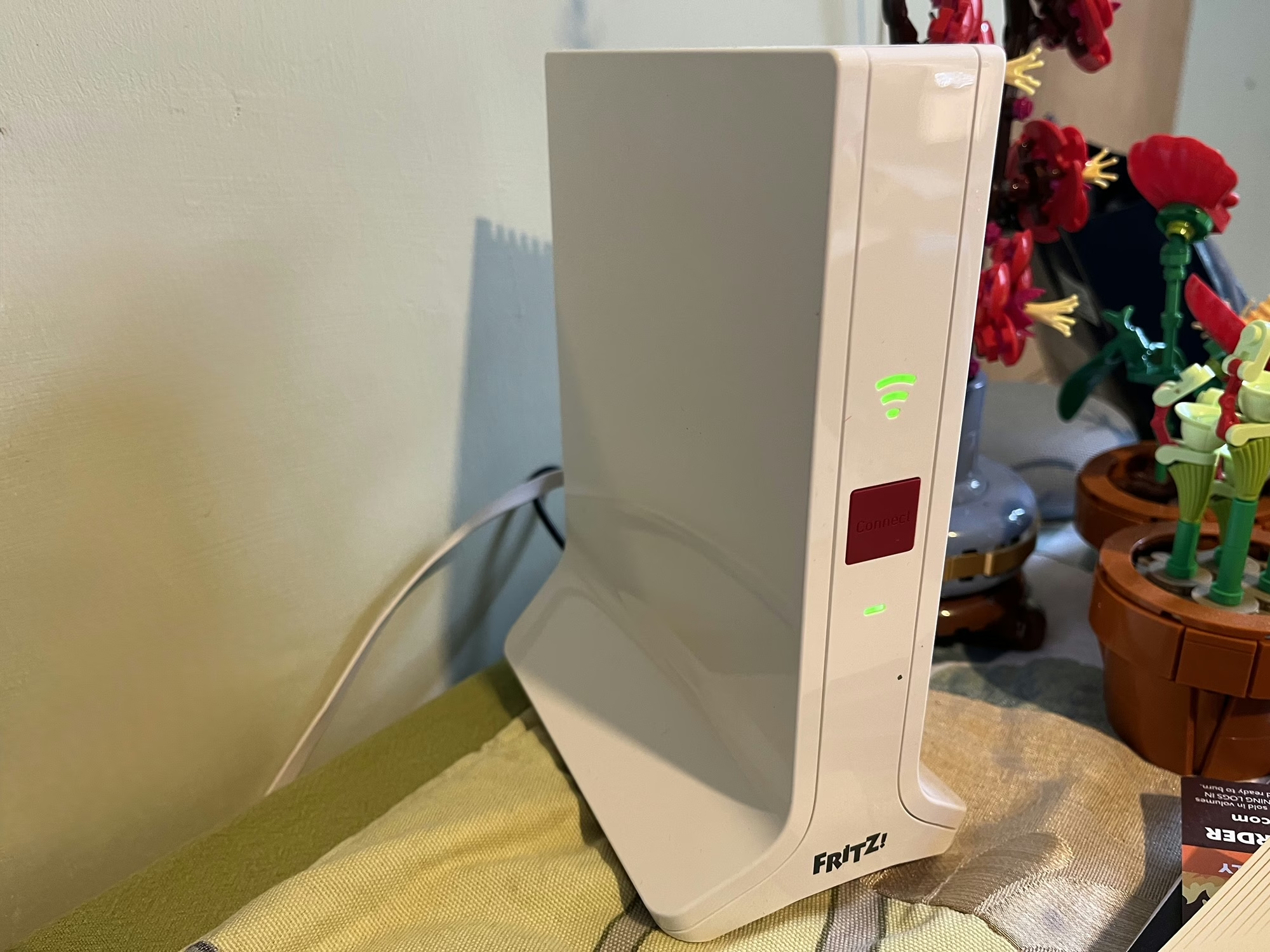
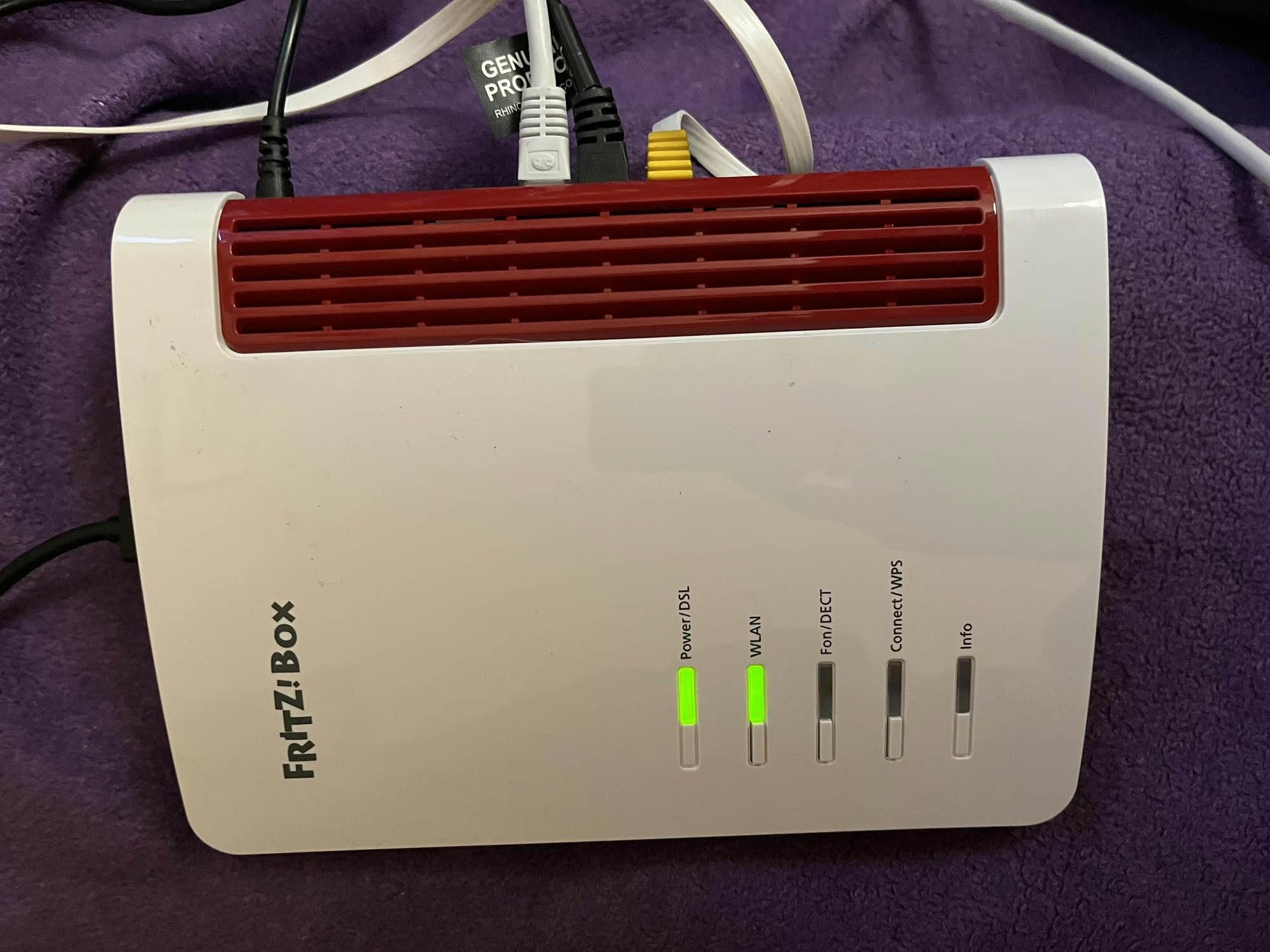
In recent years, it seems like the IT industry has changed how it names the various Wi-fi standards, with a move away from their IEEE names to a simplified version numbering system. This blog post is mostly me trying to get my head around what the old and new version numbers are, and the fact that Wi-fi 7 devices are starting to come onto the market.
Wi-fi version 1 (802.11b)
The first time I used Wi-fi would have been around 2003/4, and it was with a PCMCIA card that I slotted into my Toshiba laptop. 802.11b was the first version to launch in Europe, and offered speeds of up to 11 Mbps. By current standards, that’s really slow, but I was still using 56k dial-up in my university accommodation and my parents’ ‘broadband’ internet was only 512Kbps. A wireless, multi-megabit per second connection was pretty awesome.
Wi-fi version 2 (802.11a)
This would be a good time to note that versions 1, 2 and 3 of Wi-fi have never officially carried this designation, and would explain why standard A comes after standard B. IEEE 802.11a offered faster speeds – 45Mbps – but on the 5Ghz frequency band which wasn’t yet approved for Europe. Consequently, I never knowingly used any Wi-fi devices that used the 802.11a standard.
Wi-fi version 3 (802.11g)
The IEEE numbering jumped from B to G (standards C, D, E and F exist but aren’t relevant here) and this brought the 45 Mbps speeds of version 2 on the 2.4Ghz frequency band of version 1. This also saw me buy a new PCMCIA card for the same laptop, to be able to access the faster speeds, and use WPA encrypted networks rather than the weaker WEP security standard.
Some ‘Wireless-G’ routers offered ‘MIMO’ – multiple input and multiple output – which meant multiple antennae, and faster speeds, with up to 300 Mbps claimed. However, this usually required owning both a router and a Wi-Fi dongle by the same manufacturer and so wasn’t universal.
Wi-fi version 4 (802.11n)
With approval of the 5Ghz frequency band in Europe, 802.11n devices, first launched in 2009, could use both. The higher frequency band offers more bandwidth, but at the cost of shorter range and lower compatibility, hence the need to offer both 2.4Ghz and 5Ghz. The other big improvement came with mandating MIMO for all Wi-Fi 4 certified devices. Top speeds also jumped up as high as 600Mbps. This is the first standard to officially have a version number allocated by the Wi-Fi Alliance.
Wi-fi version 5 (802.11ac)
The IEEE numbering rolled over, and started back at A again with a second letter in 2013. I guess this may have been what prompted the Wi-Fi Alliance to start using its own numbering system, although it and Wi-Fi 4 were both named retrospectively. Interesting Wi-Fi 5 only works on the 5Ghz band (like Wi-Fi 2), and devices needing the 2.4Ghz band fall back to Wi-Fi 4. Again, there’s a boost in speeds, up to almost 7Gbps.
Both my Vodafone router and Google Wi-Fi system support up to Wi-Fi 5.
Wi-Fi version 6 (802.11ax)
This was the first version to launch with its version number from the Wi-Fi Alliance. It’s a much newer standard, from as recently as 2021, and boosts speeds up to almost 10Gbps. As with Wi-Fi 4, it operates on both the 2.4Ghz and 5Ghz bands, but there’s a sub-version called Wi-Fi 6E that introduces the 6Ghz band for the first time. The only device I have that supports this is my iPhone 13 Mini.
Wi-Fi version 7 (802.11be)
The 802.11be standard hasn’t been fully ratified by the IEEE but products supporting Wi-Fi 7 are already on sale, at the time of writing (October 2024). Therefore, if you’re willing to pay a premium to get a Wi-Fi 7 certified device now, make sure it’s from a well-known manufacturer, and that you update its firmware once the standard is fully ratified. Top speeds are now up to a theoretical 23Gbps which is just mind-blowing.
Wi-Fi version 8 (802.11bn)
In 2028, the next Wi-Fi version is expected to be ratified by the IEEE. We can potentially expect speeds as high as 100Gbps, and as with Wi-Fi 6E and 7, it’ll use the 2.4, 5 and 6Ghz bands.
Hopefully if you’re an old school techie like me, this will help you work out how the branded Wi-Fi Alliance numbers correlate with the IEEE standards.