A highly subjective ranking of UK cinema chains

I’m writing this a couple of weeks in the past, the morning after watching Mickey 17 at the cinema (it’s a good film, you should watch it if you haven’t already). With us having lost a weekend to Sci-Fi Weekender, I wrote a whole batch of blog posts ahead of time, including this one.

I wouldn’t say that we’re regular cinema-goers – generally, we go to watch family films that are suitable for our nine-year-old. Mickey 17 is clearly not a kid-friendly film and deserves its 15 rating – we only managed to go because we were able to arrange childcare in the evening. Whilst Sowerby Bridge itself no longer has its own cinemas, there are a number of different cinemas within easy reach of home. This includes some independent cinemas – the Hebden Bridge Picture House, the Rex Cinema in Elland, and the National Science and Media Museum in Bradford. But they’re mostly single-screen cinemas with a limited number of films on offer.

So, generally, we go to one of the chains. We’ve been to most of the chain cinemas in recent years, so, this is my high subjective ranking of the different chains:

1. Everyman

Everyman cinemas are top-tier. Instead of individual seats, you get sofas, with cushions and plenty of legroom. Every cinema has a bar, serving cocktails as well as beer and wine, and the food menu goes well beyond the basics into burgers, pizzas and sharing plates.

If there was an Everyman closer to us, we would go there almost exclusively. Alas, the nearest is in Leeds city centre, at the top of the Trinity Leeds shopping centre, and so we’ve only been once in recent months.

2. The Light

Whilst not quite as upmarket as Everyman, The Light offers an above-average experience. You don’t get sofas in the screens, but you do get big, comfy seats that can recline as standard, and the legroom is generous. Similarly, the food menu isn’t as extensive as Everyman, but you can buy freshly made pizzas and alcoholic drinks to take in. The Light specialise in smaller screens, so it’s a more intimate experience than other cinemas – we went to the Bradford cinema where six screens are squeezed into a relatively small space.

The Light in Bradford was where we saw Mickey 17, and it’s worth noting that if you park next door in the Broadway shopping centre, you can get 5 hours free parking. Also local for us will be their new cinema opening later this year in Huddersfield town centre, which will also include a bowling alley and other entertainment besides showing films.

3. Showcase De Lux

Showcase is also one of the smaller cinema chains in the UK. In my experience, it’s the nicest of the large multiplex chains. Again, the seating is a step down from The Light and Everyman, but fine. The food is also standard for cinemas, with the usual popcorn, nachos and hotdogs. Our nearest is at Birstall on the edge of Leeds, where we can park for free and it’s just off the M62.

4. Vue

Our nearest multiplex is the Vue in Halifax. Of the three big chains, I tend to find Vue to be the best, but not by much. You can pay a little extra for premium seating, but otherwise it’s standard seats with standard legroom. Other things that I like about Vue are:

  • they still have some cinemas in town centres, which was great before we could drive.
  • some of their cinemas only charge £5 for any film, generally making them one of the cheapest cinemas

5. Odeon

I would broadly consider Odeon to be equivalent to Vue but ranked them lower as, during the late 1990s and early 2000s, they had a policy of moving their cinemas out of town centres. Our closest Odeon cinemas are on the outskirts of Huddersfield, and halfway between Leeds and Bradford. Their locations mean that they’re well away from a range places to eat, so it’s hard to have a meal and then a film. In Huddersfield, for example, there’s just a Pizza Hut and a pub nearby. We would have considered seeing Mickey 17 here as it was closer and showing at a similar time, but the lack of food options meant we chose The Light in Bradford instead.

The exception is the Odeon at the Trafford Centre, which we used to use because the Trafford Centre had a crèche (sadly closed during the pandemic and never re-opened), but it’s a bit far.

6. Cineworld

Finally, Cineworld. The company has been in a bit of pickle recently and it shows. Until The Light came along, Cineworld was the only multiplex in Bradford city centre, and so I used to go there quite a bit when I lived there. We recently went to Cineworld in Bradford again to see Wicked, and it’s clear that it needs some work doing on it. I’m not saying I would never go to Cineworld again, but unless it was the only cinema showing a film we wanted to watch at a reasonable time, I would give it a pass.

One last thing to mention: CinemaGuide is a useful site that lets you select your local cinemas (including all of the above chains and some independents) and then view a list of everything that’s on across all of them, sorted by film title. It’s handy when you want to see a particular film, and can travel to multiple different cinemas if needed.

Playlist of the month: Robert Miles’ Children

Screenshot of the Children by Robert Miles playlist on Spotify

Last month was rock music, whereas this month, we’re mostly in dance music territory with Robert Miles’ most well-known song.

January marked 30 years since the original release of the song Children, by Robert Miles, in Italy. It went on to become one of the most iconic songs in dance music, creating a new, short-lived genre known as ‘dream house’. It was designed to be played as a more chilled track as the last song before closing at nightclubs, to help clubbers calm down and avoid getting into road accidents when driving home.

Miles sadly passed away in 2017, but over the years Children has been covered and sampled many times. Here’s a non-complete list – alas, some of the songs I wanted to include aren’t available on Spotify. The playlist is on Spotify if you want to listen along – I’ve mainly included the original or extended mixes where available, so it’s a longer playlist than normal.

  • ‘Children’ by Robert Miles. We’ll start with the original song. What most versions have in common is the piano tune, but many also sample the guitar melody as well.
  • ‘Children’ by Tilt. This cover version followed in 1999, and took the song more in a trance direction. It’s also much longer at over 10 minutes. I bought the CD single of this, although I think I leant it to someone who then didn’t give it back.
  • ‘Children’ by 4 Clubbers. Another trance remix that followed a little later.
  • ‘Children (Future Breeze vs Junkfood Junkies Remix) by 4 Clubbers. There was also a remix included with the above single, which is more well-known. This more of a glowstick waving, hands-in-the-air track.
  • ‘Children 2012’ by Jack Holiday and Mike Candys. This was an electro-house cover version.
  • ‘REACT’ by Switch Disco featuring Ella Henderson. This song from a couple of years ago heavily samples Children, but adds lyrics written and performed by Ella Henderson. It’s one of our nine-year-old’s favourite songs.
  • ‘Closer’ by Bou. This also came out a couple of years ago, and was in the UK Top 40 singles chart at the same time as React. At the time, one in four songs in the top 40 sampled other songs.
  • ‘Children’ by Tinlicker. This seems to be the most recent cover of the original song, from 2022. It slows the melody down slightly.
  • ‘Rollin’ by Jackie Chain and Kid Cudi. I found this through the excellent WhoSampled.com. Not my preferred king of music but you can hear Children sampled throughout. This came out in 2009.

Missing songs:

  • ‘$timulated’ by Tyga. It is on Spotify but seemingly not available to stream in the UK
  • ‘Children (Mandrake Remake)’ by Mandrake. Another trance cover from 2003, which I have on an old Euphoria compilation album.

Sci-Fi Weekender XVI – a retrospective

Paul McGann and Daphne Ashebrook being interviewed by David J Howe at Sci-Fi Weekender

So we got back from this year’s Sci-Fi Weekender on Sunday, and now that I’ve had a few days to recover, here’s what we got up to.

Thursday

We arrived on the Thursday evening. For lunch, we stopped off at Thaymar Ice Cream, which is just off the A1 near Retford and has a lovely tea room and farm shop. Oh, and the ice cream is great – I can particularly recommend the damson and liquorice flavour. After some food, we attended Pirate Pete’s Quiz and Karaoke. Sci-Fi Weekender normally opens with a quiz, and though the format was different this year, it was good fun.

With it being the first day, we called had a (comparatively) early night.

Friday

Our first on the Friday morning was a panel featuring Lauren K Nixon. Lauren is an author and a friend from university, and one of the people we gave a lift to down from Yorkshire on Thursday. Panel discussions are a big part of Sci-Fi Weekender, and Lauren was there for four of them, including discussions about traditional vs indie book publishing, and fantasy vs romantasy.

The headline guest for this year’s SFW was the eight doctor, Paul McGann, who appeared on stage with Daphne Ashbrook who played his assistant Grace Holloway in the 1996 TV film. They were both excellent guests, with really insightful answers to questions. Their interviewer was David J. Howe, one of the organisers of Sci-Fi Weekender and a writer of many Doctor Who handbooks.

In the evening, it was a welcome return for Jollyboat, who have performed at three previous SFW events.

Saturday

Whilst cosplay is encouraged throughout SFW, the cosplay competition normally takes place on Saturdays, starting with the preliminary round in the morning. The standard of cosplay is always really high, and there’s a really strong cosplay community around SFW. Throughout the weekend, there were several unofficial cosplay meets themed around fandoms like Star Trek.

There were also two events featuring John Robertson – a Q&A event at lunchtime, and then the The Dark Room in the evening. John has been at the majority of SFW events in recent years, but missed last year’s due to a clash. It was a welcome return – whilst the format of The Dark Room is consistent, there’s a lot of improvised material and it’s always hilarious.

Another session that we enjoyed on Saturday was a motion capture demonstration by Creature Bionics. They specialise in motion capture for films and videogames – especially for non-human creatures. It was really interesting and great to see the footage in realtime too.

There was also a great workshop by Artyfakes, a costume and props company, where they made an axe out of a plastic pipe and foam in about 90 minutes.

Right before The Dark Room were the Cosplay Finals on the main stage, where the 10 best entrants from the morning were asked to do a short piece of singing or acting. The winners were Hoggle and Ludo from Labyrinth, and much of the outfits were crocheted.

The Holodeck

SFW has normally been split between three rooms – the Main Void, the Spaceport, and the Timeport. The Main Void has the main stage, and the Spaceport is a smaller venue used more for panels. Over the past couple of years, the Timeport has just been used for vendors; this year it was home to various workshops. Meanwhile, the Games Room at the holiday park was rebranded The Holodeck, and was home to more vendors, a retro gaming set-up and ‘Full Size D&D’, which unfortunately we didn’t have time for. It was great to see this space better used; in previous years, it’s only been used for table-top gaming.

Things we didn’t get to see

Seeing as it’s split across four rooms, and we also needed to eat and drink occasionally, we didn’t get to see everything. The other big guest was Noah Hathaway, who we missed on the Friday, and there were some panels that we wanted to see but couldn’t. There’s more about this year’s event on Blazing Minds.

SFW XVII

Tickets for next year’s event are already on sale, and indeed may be close to selling out if the various emails and texts that I have received are anything to go by. There’s also a competition to win tickets – we were competition winners all the way back at SFW 9 in 2018, and it seems like lots of people have been lucky with the competitions in the past.

We’ve already booked for next year, and this time we will be sharing our accommodation with four of our friends to keep the costs down.

Dashboard Badges in Home Assistant

A screenshot of the Home Assistant Lovelace dashboard showing several badges at the top of the home screen

One feature of Home Assistant that I’ve only recently started using is Dashboard Badges. These are small widgets that appear at the top of your dashboard, and allow you to view information at a glance. There’s a screenshot above which shows the widgets that I currently have set up.

Badges have been part of Home Assistant for a long time, but they received a major overhaul last August in version 2024.8. In the (approximately) 18 months that I’ve been using Home Assistant, I’ve been gradually adding more and more data to my dashboard, to the point where I had to scroll through several screens worth of data to see what I needed. Which isn’t ideal. Badges are a potential solution, showing basic information at the top, where it’s most accessible.

Each badge widget can usually display the state of one entity. In the screenshot above, I’ve included:

  • The temperature in our dining room, as recorded by our Nest thermostat
  • The current weather (it was, in fact, not raining when I took this screenshot)
  • The current power output of our solar panels
  • How much charge our solar battery currently has
  • The current status of our dishwasher
  • The current status of the TV in the living room
  • The current status of the sun
  • The latest version of Home Assistant

There’s a moderate amount of customisation available. For example, as well as the status of the entity, you can include its name, and this text is also customisable to save space if needed. You can also tweak the colours and the icons.

Controlling visibility of badges

One great feature that badges have in Home Assistant is controlling when they’re visible. I actually have more badges than the eight mentioned above, but they’re not showing as I don’t currently need the information offered. For example, I have a badge that displays whether an update to Home Assistant is available. But I only want to see this when an update is available – if I’m running the latest version, I want the badge to be hidden. Here’s how I configured it:

A screenshot of the Entity Badge configuration in Home Assistant

Having selected the widget, I’ve gone to the ‘Visibility’ tab, selected the entity, and told Home Assistant to only display it when the ‘State is equal to’ and ‘Update available’.

I use this on some other badges too. For example, if there’s no power coming from the solar panels, that badge disappears. Similarly, if my solar battery is at 20% or below, which is its idle state, that’s hidden too. You can also control the visibility based on which user is currently logged in, or anything really – the state of one entity can control the visibility of the badge for another.

A useful badge is one that makes use of the custom Octopus Energy integration from HACS, and will display if I haven’t used my Octopus Wheel of Fortune spins that month. Last month, I won 800 Octopoints, which was nice, and it’s helpful to have a reminder to use them.

By using badges, and setting their visibility, I’ve reduced the number of cards on my dashboard significantly. It makes the dashboard less overwhelming, and prioritises the most important information that I need to see quickly.

Six port car charger review

A photo of a six port car charger in my car

With us having guests in the car for a long journey, I’ve recently bought a new USB car charger to go in the back of our car. Unlike others that I’ve bought in the past, which offer 2 or 3 USB ports, this offers six.

It’s currently on sale on Amazon for £13 (sponsored link), but I picked mine up cheaper elsewhere. There are two USB-C ports with Power Delivery, and then four USB-A ports. Of these four, there are two standard ports which offer 3 amps, and then a green one and an orange one, which support various proprietary quick charge specifications. I’m already using one of the USB-C ports for my CarPlay unit in the front, on a long cable.

Above the ports is a three digit display, which shows the current voltage coming in to the charger. This should nominally be 12 volts, but as you can see in my photo it’s higher at 14.4 volts. Should it go higher than 14.8, or below 11.6, that would be a cause for concern. The whole thing also glows blue when the engine is on and it has power.

Apparently you can’t use all six ports at once – the maximum is five. However, it’s apparently capable of quite high wattages. Whilst I’ve always known it as a ‘cigarette lighter socket’, the official name is the Automobile auxiliary power outlet, and the maximum current can be as high as 10 Amps. As such, 120 Watts is possible, assuming a 12 volt supply (see, I remember what I learned in GCSE Science). In practice, the maximum power from any one port will be around 60 Watts, but that’s still enough to charge a laptop.

For what it’s worth, I haven’t found any chargers offering more than six ports, so this seems to be the maximum. In the front of our car, we have a much smaller two port USB car charger, with one USB-A and one USB-C port. The location of the auxiliary power outlet, which is right next to the gear stick on the driver’s side, means that I prefer a smaller, low profile charger that doesn’t get in the way. Still, this means we have 3 USB-C and five USB-A ports available in the car.

Our car dates from 2012 and so it only came with one USB-A port built-in – I haven’t included it as it’s a 0.5A port and therefore a bit useless for charging. Also, if I plug my iPhone into it, the car stereo instantly starts playing the first song in my iTunes library, which is ‘Nothing’ by A. More modern cars presumably have many more USB ports, and I can see the cigarette lighter sockets becoming less common. Not least because it’s illegal to smoke cigarettes in a car with children in it in the UK, and barely anyone smokes nowadays anyway.

Sci-Fi Weekender XVI

A photo of Peter Davison being interviewed on stage at Sci-Fi Weekender 15

By the time you’re able to read this, Christine and I will be beginning our second day at Sci-Fi Weekender in Great Yarmouth, Norfolk. This is the seventh consecutive SFW event that we’ve been to, and we’ve always enjoyed it.

I wrote more about why we go and the history of SFW last year, so have a read of that if you’re interested. This year, the biggest guest is Paul McGann, continuing the theme of actors who have played The Doctor in Doctor Who (Peter Davison was there last year). Noah Hathaway, from The Never-Ending Story, will also be there along with two actors from Star Trek with whom I’m not familiar with. There’s also a welcome return for John Robertson and his show The Dark Room, who was absent last year.

This year will be different; it’ll be the first full SFW that we’ve been to where there’s no Professor Elemental, and it won’t be compered by Adam Washington, again for the first time in many years. But then there have been changes every year as the event changes and evolves.

A photo of Neil being molested by Orcs

We’ll be driving down again, and as with last year we’re offering friends a lift down so we’ll have a full car. It’s a rather long drive from West Yorkshire, mainly due to the A17 which we use to cut across Lincolnshire. It’s not a particularly fast nor scenic road, passing across mainly flat agricultural land. We call it the Sto Plains.

As for whether we decide to do cosplay this year – probably not. I’ll probably take my Steampunk gear but we don’t have any specific plans. In previous years, Christine has been Sadness from Inside Out, and a Feegle Kelda from Discworld. I think she just likes making herself blue.

Bookings are already open for next year’s event. At present, we’re still deciding whether to go. If we do, we’ll need to book our annual leave early, as it coincides with Eid al-Fitr at the end of Ramadan.

Does your phone have a wrist strap?

A photo of my iPhone 13 Mini with a third party case and wrist strap.

I’ve recently added a wrist strap to my phone. This is primarily on the back of Terence Eden’s advice for mobile security. As well as advising the use of a password manager, password/biometric lock and not sideloading apps from shady sources, he also mentions physical security of the handset.

In figures from April 2023, it’s estimated that 248 phones are stolen in London every day, 98% of which are never recovered. There may be a change in the law to allow police to search a property without a warrant, if they have reasonable suspicion that a stolen phone with location tracking on is there, but it’s not in force yet. And in any case, phone thieves will probably just put your phone in foil-lined box to block the signals. Previous victims have tracked their stolen phones only to find them ending up in China.

Whilst my phone “only” cost around £700, I’ll only finish paying it off next month. If you have an iPhone Pro Max with the maximum 1 terabyte of storage, you’ll have paid £1600 which is a lot of money to lose. Some Samsung Android phones also cost serious cash to buy new nowadays too.

I often have my phone out when walking around, mainly for playing Pokemon Go. All it takes is someone brazen enough to snatch it out of my hand for it likely to be gone for good. So I’ve finally decided that a wrist strap would be a good idea in the hope of preventing this.

Both the strap, and the phone case I use, are relatively cheap ones from AliExpress – collectively costing less than £5. The case has a pair of holes for threading a strap through, but you can also buy wrist straps that attach to the bottom of any phone case if yours doesn’t have holes. Somewhat annoyingly, the holes are on the left side of the phone, and I’m right-handed.

My wrist strap itself is adjustable, so you can tighten it around your wrist and reduce the risk it falling (or being pulled) out of your hand.

Whilst I was mainly motivated to reduce the risk of my phone being stolen, having a wrist strap also reduces the risk that you’ll drop your phone. As well as reducing the risk of the phone being damaged, it means you’re less likely to drop it in places where it can’t easily be retrieved. Maybe if Rebekah Vardy’s agent had a strap on her phone, she wouldn’t have ‘accidentally’ dropped it in the North Sea. Snide remarks aside, I use my phone’s camera quite a bit, so having a wrist strap makes me more confident that I’m not going to drop it into a lion enclosure at a zoo or something.

Just a quick word of caution though. If you keep your phone in a pocket, make sure you tuck the wrist strap in as well so it’s not hanging out. Otherwise, counter-intuitively, it might make your phone easier for pick-pockets to steal.

National Trust properties reachable from West Yorkshire (part two)

A copy of the 2025 National Trust handbook

Last time, I wrote about the National Trust properties that we’d visited within a 90 minute drive of where we live, in Sowerby Bridge. Today, this is about the properties that we haven’t yet visited. It’s a much shorter list.

Goddards Garden

Goddards is in York, and in fact is in walking distance of where I grew up. It was owned by the Terry family, they who introduced the world to the Chocolate Orange, and later on became the regional offices for the National Trust. I don’t remember it being open when I was younger, but nowadays you can pop in and see the gardens at weekends.

Rievaulx Terrace

Again, stretching the 90 minute journey time but it’s also closer to York, where my parents live. The village of Rievaulx is just outside the pretty little market town of Helmsley, and is better known as the home of Rievaulx Abbey. The Abbey is a ruin (yet again, Henry VIII had a lot to answer for) and managed by English Heritage. But above the abbey is Rievaulx Terrace, home to some formal gardens, woodlands, and a couple of folly temples. The National Trust suggest that you combine a trip with nearby Nunnington Hall if you want to make a day of it.

Beatles’ Childhood Homes

Going over to the West Coast, and you can visit the childhood homes of John Lennon and Paul McCartney. Access is by guided tour only, and has to be booked in advance with pickup from either Liverpool South Parkway station, or Speke Hall. There are only four tours offered each day, but they’re available seven days a week, except in low season when the houses are closed on Mondays and Tuesdays. Whilst many Beatles tours in Liverpool will take you past these houses, this is the only way that you can actually go inside.

The Hardmans’ House

Another house of a similar vintage in Liverpool is The Hardmans’ House, offering a chance to see how people lived in the 1950s. It was home to Edward Chambré Hardman and his wife Margaret – Edward was a well-known portrait photographer, so you can also see his dark room, and a selection of photographs. Currently it’s closed until May, and then only open on Fridays and Saturdays, with pre-booking advised.

Little Moreton Hall

I feel like I may have been to Little Moreton Hall in the past – as with nearby Biddulph Grange, we have family nearby. But I certainly don’t remember anything about it, so if I have been, it must have been a very long time ago. It’s a similar-looking Tudor house to Speke Hall and has an actual moat. Over the years, various bits have been added to it, making it probably one of ‘wonkiest’ houses that you would ever see.

Rufford Old Hall

Another Tudor survivor is up near Ormskirk. Rufford Old Hall may have been visited by William Shakespeare during his teenage years. As well as the house, there are large gardens and woodland to explore, and so if you’re not a member then it’s one of the higher-priced National Trust properties. But that should mean that there’s plenty to do there.

So there’s only six places that we haven’t yet been to within 90 minutes travelling time, and three of them have limited opening hours. That being said, I think we’ll make plans to go to Little Moreton Hall and Rufford Old Hall in the near future. As I mentioned at the start of the year, our summer holiday this year will be in North Wales, and there’s no shortage of National Trust properties up there either.

Shapewear: is it worth it?

Recently, my Facebook feed has been full of adverts for male shapewear – essentially vests which push your tummy in. The idea being that you can hide a beer belly and look more confident. Of course, the adverts have lots of before and after videos of men who have squeezed themselves into one of these vests.

Of course, when it came to writing this, none of the adverts showed up for me to take a screenshot.

Whilst I rarely drink beer nowadays, it’s fair to say I’m more portly than I used to be. Between the start of the Covid lockdown five years ago, and the summer of 2021 when things started re-opening again, my waist size increased by a couple of inches. It used to be that I did around 30 minutes of brisk walking every weekday, but despite my efforts to get out during lockdown, I don’t do as much exercise now as I used to.

Therefore, on the face of it, shapewear offers an easy solution – squish your belly into a tight-fitting vest to look better. But besides the price of these vests, I’ve been hesitant to try them, for a couple of reasons.

Shapewear health risks

A quick search with a well-known search engine brought up this article from BBC Science Focus about the ‘hidden health risks of shapewear’. Feel free to read it, but the summary is that shapewear may not be suitable for people who experience issues with breathing, digestion, skin irritation or who have nerve or circulatory issues. And I tick two of those boxes: I’m asthmatic, and, without wanting to go into TMI, I have some digestive issues. Wearing shapewear regularly could exacerbate both of those.

Health risks aside, forcing your body to look a certain way, or only feeling confident if you’re wearing shapewear, isn’t a healthy relationship with your body. I’m reading (well, listening to the audiobook of) You Are Not A Before Picture by Alex Light (sponsored link), which is a really good book about the history of the diet industry, and how to have a good relationship with your body regardless of its size. It also dispels the myth that fat = unhealthy and thin = healthy. For more, see HAES – Health At Every Size, which offers advice for healthcare professionals who work with differently-sized people in a way that is affirming and supportive.

So, no – as much as I’m not a big fan of my sticky-out-tummy, I won’t be trying to force it into a restrictive vest.

Abbey House Museum

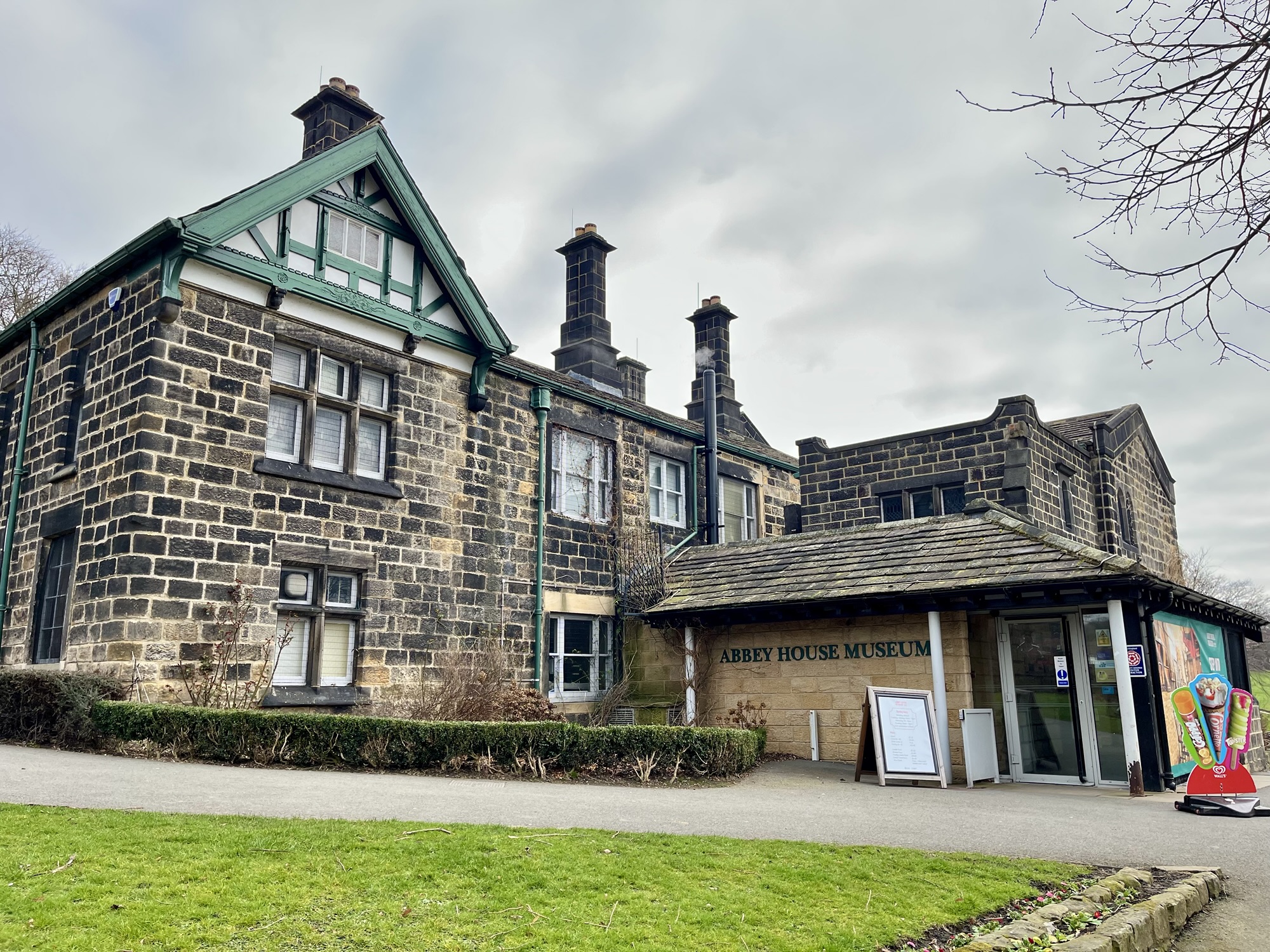
A photo of the outside of the Abbey House Museum.

Last weekend, I took our nine-year-old to the Abbey House Museum in Kirkstall, near Leeds. We’ve been a couple of times before, and it’s a nice little museum to visit for half a day. It’s also recently been reprieved from closure, but in the long term it needs more people visiting it to be viable.

The Abbey House Museum is essentially in three parts. The first is a recreated Leeds street scene, with various shops and houses that have been saved and transplanted into the museum. There’s a pub, a pharmacist, a general store, and many others. It’s a bit like Kirkgate in the York Castle Museum, but on a smaller scale. It’s designed to show how ordinary, working class Loiners would have lived in the past.

Exhibitions

Next, you go upstairs to an exhibition space. Previous exhibitions that we’ve seen have included one about various common household objects from the past now considered dangerous, back in 2019. Older Lego bricks contained various heavy metals like cadmium, there were sore throat pastilles containing potassium chlorate which can spontaneously combust, and there were plenty of things with asbestos in them. The last time we went, which was in 2021, the exhibition was about the Leeds music scene and various bands and venues.

This year’s exhibition is called ‘Story Time‘, and is all about children’s stories. Expect to see lots of books and toys, both old and new.

In the next room are various entertainment machines, which can tell your fortune or show an animated diorama. They require one or two old pennies, which can be obtained from an exchange machine that takes modern day British currency. Each 1d coin costs 10p and so have a pound coin spare if you want to try every machine.

The final space is the childhood collection. There’s a collection of dollhouses and toys, spread across several rooms.

The street scene at the Abbey House Museum

History of the Abbey House Museum

The Abbey House Museum gets its name from Kirkstall Abbey, across the road, and it used to be the gatehouse. Parts of the building date back to the year 1152, and after Henry VIII dissolved the monasteries (yes, him again!) it was repurposed as a farmhouse. It became a museum in 1927, and so hopefully it’ll be able to celebrate its 100th anniversary now that it has been saved from closure.

Expect to be able to spend half a day at the museum – we combined our visit with a trip to Tropical World, but you could pop across the road to the abbey itself as well, if you want to make a day of it.

Accessibility

Access at the Abbey House Museum is pretty good. The street scene does have some uneven floors and narrow doorways, but there is a lift. A Changing Places toilet is also available, and there is a Max Card discount as well. There used to be a café in the museum but this is now only open as a picnic room for school visitors – instead, the Abbey has a café and there’s a pub nearby.

Free parking is available (at the time of writing, though note that Leeds City Council has recently introduced modest parking charges at many of its sites), and it’s on major bus routes from Leeds city centre. If you’re arriving by train, it’s roughly equidistant from both Headingley and Kirkstall Forge stations – both of which are about a mile’s walk.