Recycling your food waste

If you live in England, then from the 31st March 2026, your local authority will need to collect your food waste every week.

Now, you might be reading this and thinking ‘hang on, my local authority already collects my food waste every week’! And many do, including our local authority, Calderdale Council. Indeed, we’ve been able to recycle our cooked and uncooked food waste every week since we moved into our current house ten years ago.

But many don’t at present – City of York Council currently tell you to consider home composting. Which, to be fair, my parents have been doing for years. But this is limited to uncooked food waste, such as banana skins, eggshells and vegetable peelings. Better than nothing, and it means my parents have a good supply of compost, but all their cooked food waste just goes to landfill with their general waste.

The problem with food waste in landfill

Food waste in landfill is especially bad. When food rots in anaerobic environment (like a landfill site), it can be broken down by bacteria into Methane. Methane, as well as being the main component of the gas that we use for central heating boilers, is a greenhouse gas. If you think back to GCSE Science, you may know that Methane’s chemical symbol is CH4, which is four hydrogen atoms bonded to a carbon atom, so Methane contributes to carbon emissions. There was a landfill site not far from my grandparents’ house in East Yorkshire, and at night, you could see blue flames where the Methane released from the rubbish was being burnt off.

It’s also worth noting that local authorities have to pay landfill tax, which gets passed onto council tax payers. The less waste goes to landfill, the less landfill tax is paid, so local authorities also have a financial incentive to encourage recycling.

How food waste recycling works

Once your local authority rolls out food waste recycling, you’ll typically get three things:

  1. A large, kerbside food waste caddy
  2. A smaller kitchen food waste caddy
  3. A supply of food waste bags, to go in the kitchen caddy

You can then put all your food in the waste bag in your kitchen caddy. When the caddy is full, seal up the waste bag, and put it in your kerbside caddy. Then, leave the kerbside caddy out for emptying on your assigned recycling collection day. Finally, feel smug that you’re reducing your carbon footprint.

What happens to food waste when it’s recycled

I mentioned home composting earlier, and I’m sure my parents will carry on composting their uncooked food waste as they’re both keen gardeners. But from next April, or earlier, they should be able to have their cooked food waste recycled as well, and this will also be composted – just not by them at home.

Instead, the food waste typically goes into a big, industrial composting unit, to make compost on a commercial scale. Usually this involves heating the waste to around 70°C to speed up the process.

I mentioned Methane and how it’s the main component of the gas we use for cooking and heating. Some food waste may be converted to Methane gas deliberately, but in a controlled way that allows that gas to be collected as bio-gas. That can then be used like mains gas is, or burnt to generate electricity. I’m not a big fan of this, as it’s still a carbon-based fuel, but at least it’s being done in a controlled and sustainable way.

Getting all of England on board with food waste recycling will hopefully reduce the amount of waste going to landfill overall, reduce our carbon emissions, and provide sustainable sources of compost and bio-gas. It’s going to require cash-strapped local authorities to invest in recycling schemes, but the benefits to the environment are clear.
Setting WPA mode on ESPHome

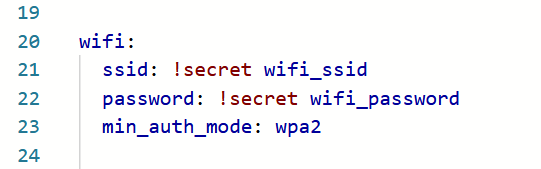
The YAML code for ESPHome to specify the WPA version

If you’ve upgraded to last month’s release of ESPHome 2025.11, you may start seeing this warning message about WPA when validating your YAML scripts, or compiling new versions:

WARNING The minimum WiFi authentication mode (wifi -> min_auth_mode) is not set. This controls the weakest encryption your device will accept when connecting to WiFi. Currently defaults to WPA (less secure), but will change to WPA2 (more secure) in 2026.6.0. WPA uses TKIP encryption which has known security vulnerabilities and should be avoided. WPA2 uses AES encryption which is significantly more secure. To silence this warning, explicitly set min_auth_mode under ‘wifi:’. If your router supports WPA2 or WPA3, set ‘min_auth_mode: WPA2’. If your router only supports WPA, set ‘min_auth_mode: WPA’.

The warning message is pretty self-explanatory, but it concerns upcoming changes to Wi-Fi Protected Access (WPA) in ESPHome that are due to be introduced in June next year.

A bit of a history of WPA

Honestly, if you’re using ESPHome, you’re probably sufficiently tech-savvy to know what WPA is, but if this blog post is less than 300 words, it’ll probably be largely ignored by search engines. So, you can skip this bit if you like.

WPA is what makes a secured Wi-Fi network secure. The ‘Wi-Fi password’ you put in when connecting to secure Wi-Fi networks is the WPA security key. It replaced Wired Equivalent Privacy, dating from the earliest days of Wi-Fi, which is so weak that you can probably crack it with a standard laptop nowadays in a few minutes. It used 64 or 128-bit RC4 keys.

There are three versions of WPA:

  • The original version, which uses 128-bit keys with TKIP
  • WPA2, which replaces TKIP with the more secure AES
  • WPA3, the newest version, which improves the security of the key exchange and mitigates against easily guessable Wi-Fi passwords

Many devices that were originally designed to only support WEP could be upgraded to support WPA through software. At the time, this was a good thing – plain vanilla WPA was (and is) more secure than WEP. But as more security research has taken place, and computers have become more powerful, WPA is now also no longer recommended. WPA2 was ratified over 20 years ago, and so there are very few devices still in use that don’t support it. WPA3, meanwhile, is still quite new, having been ratified in 2018.

ESP devices and WPA

So, to bring this back to ESP devices and ESPHome in particular. At the moment, ESPHome defaults to the following WPA versions:

  • Original, plain vanilla WPA on ESP8266 chips
  • WPA2 on ESP32 chips

Remember, ESP32 is newer than ESP8266, despite the numbers. ESPHome has long supported YAML variables, that over-ride these defaults, to specify a specific WPA version to use when compiling.

What has changed with ESPHome 2025.11 is that, where you don’t specify the WPA version, you’ll see the above error when validating or compiling ESPHome for ESP8266 devices. Remember, these default to standard WPA at present.

Next June, when ESPHome 2026.06 is due for release, support for WPA will be dropped. So, if you don’t specify the WPA version, then from around June 2026, your ESP8266 devices will start using WPA2 the next time you re-compile them. This shouldn’t cause any issues, unless your Wi-Fi router is really old and doesn’t support WPA2. To which, I would say that replacing your router should be your priority, rather than amending your ESPHome configurations.

As for WPA3, this is only supported by the newer ESP32 family of chips. That means that, from June 2026, WPA2 will be the only option for ESP8266 chips.

How you can make the WPA warning go away

If you want, you can edit your YAML configuration files for your ESPHome devices to specify the WPA version to use. In the ‘wifi:‘ block, add ‘min_auth_mode: WPA2‘ underneath the network name and key, as so:

wifi:
  ssid: !secret wifi_ssid
  password: !secret wifi_password
  min_auth_mode: WPA2

That will ensure that ESPHome always uses WPA2 on your devices, and will hide the warning. If your devices have ESP32 chips, and your router supports WPA3, you can add ‘min_auth_mode: WPA3‘ instead; this will offer better security. For more information, see the guide to the ESPHome Wi-Fi component.

Will ESPHome eventually phase out WPA2 support as well? Perhaps, but WPA3 is still pretty new – if your router is more than five years old then it may not support it. Maybe it will in another 15 years or so.

Fritz!Box 7530 AX review

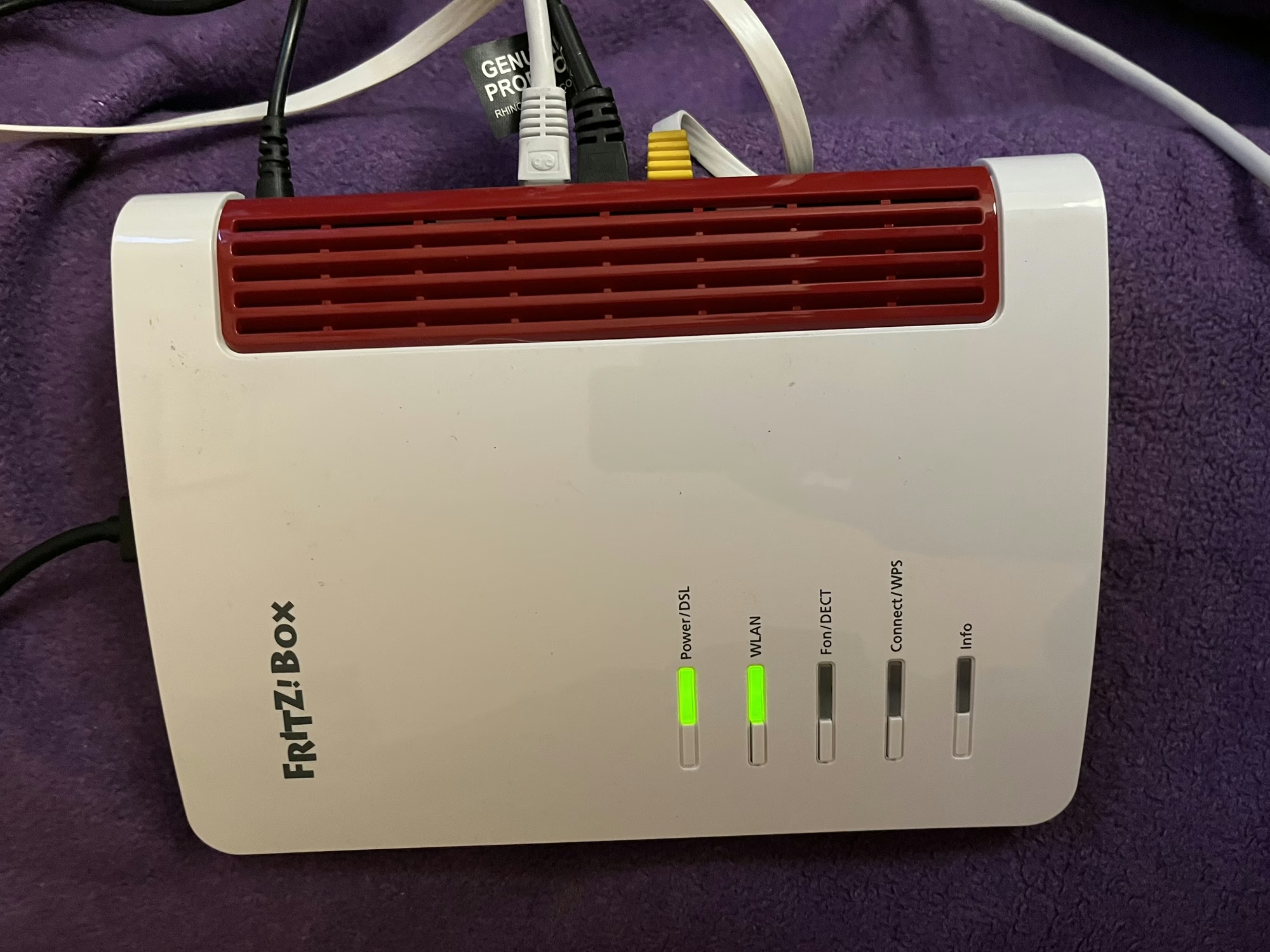
A photo of the Fritz!Box 7530 AX

As is usual when you sign up to a new Internet Service Provider, we were offered a new router as well. We signed up with Zen Internet, who unlike their larger rivals, don’t offer their own branded router hardware. Instead, we’ve now got a Fritz!Box 7530 AX as our home router.

Fritz! devices are more common in mainland Europe – Fritz! is a German company – and Zen are one of the few ISPs that offer their devices in the UK. Indeed, their UK range is much smaller than the range available elsewhere in Europe, where you can also buy Fritz! branded smart plugs.

Connectivity

As for the Fritz!Box 7530 AX, the ‘AX’ indicates that it supports 802.11ax, better known as Wi-Fi 6. It’s ‘standard’ Wi-Fi 6, not the enhanced Wi-Fi 6E, so it uses the 2.4 GHz and 5 GHz bands only. Still, it’s an upgrade over our previous Google Nest Wi-Fi system which only supported Wi-Fi 5. As well as Wi-Fi, you get 4 Gigabit Ethernet ports, and a USB port which can be used for media sharing. It should be noted, however, that you’ll need to use one of these Ethernet ports to connect to the Optical Network Terminal, if you have fibre broadband.

Another difference with our previous Google Nest Wi-Fi system is that there’s no Thread support. This means I just have the one Thread border router now, which a USB dongle plugged into my Home Assistant Green. There is a newer Fritz!Boz, the 7690, which supports Wi-Fi 7 and Zigbee, but this is what Zen offered to us.

If we opted to have a Digital Voice Line, then we could plug our landline phone into the Fritz!Box, and it supports IP-based DECT phones as well.

Design

The design of the Fritz!Box is, frankly, a little dated. It feels like it’s made of quite cheap plastic, and I’m not a fan of the colour scheme. But to be fair, it lives in our spare room, so we don’t actually need to see it very much. It can be wall-mounted, if needed – there are a couple of screw hooks on the bottom.

All the ports are on one side, except for the USB port which is at the top.

What it’s like to use

All Fritz!Box devices ship with Fritz!OS, which is their custom Linux distro. There’s a web-based interface, and apps for iOS and Android. In fact, there are several apps – one for managing the device itself, and one for testing the Wi-Fi signal.

The web interface is pretty good, and gives you a lot of control over the box and your home network. Indeed, it was very good at showing a network topology, including those devices connected via my Powerline adaptors. Plus, the web address is ‘fritz.box’ which is nice and easy to remember.

It supports the creation of a separate guest network, which appears as a separate Wi-Fi network (SSID) to your own, and can be open or secured with a separate password.

Wi-Fi speeds and coverage

In the couple of weeks that we’ve had the Fritz!Box, the speed and coverage of the Wi-Fi signal has been excellent. There hasn’t been anywhere in our house where I’ve noticed any issues. How much of that is down specifically to the Fritz!Box, and how much is due to improvements in Wi-Fi 6 over Wi-Fi 5, I’m unsure. But either way, I’m happy with the connectivity that we’re getting.

Something I will pass on is a comment our Openreach engineer made; Fritz!Box devices don’t seem to like a change from being a DSL router to a router connected to a fibre ONT. Not a problem for us, as we’re already on with fibre, but something to bear in mind if you’re considering one and don’t have full fibre yet.

Home Assistant integration

When I first connected my Home Assistant Green to the Fritz!Box, it found several new devices. These included UPnP and DLNA, which come up when you connect most routers, but also two Fritz! specific integrations: Fritz! Smart Home and Fritz!Box Tools. Of these, the second is most useful, as it allows you to control whether individual devices on your network have Internet access, or whether they’re at home or away. This may result in a large number of devices appearing in your Home Assistant install, however, on those where the devices’ MAC address is available in the integration, the device will be shared and only appear once. That means that my ESPHome devices show as both ESPHome and Fritz! devices with the controls combined. It’s not perfect – my Matter devices show up twice, for example – but it allows you to track where devices like phones without having location services on.

Verdict

So, should you get a Fritz!Box? It’s certainly a very capable router with good Wi-Fi performance, and lots of settings for expert users to access. The web interface is clean and simple to use. However, the design is a bit dated, and there are some nice-to-have features that would make it better if they were included.

As I mentioned earlier, ours came with our Zen broadband package, but you can buy a Fritz!Box from Amazon if you wish (sponsored link). They’re about £145 for the 7530 AX model.

Zen also offer Eero Wi-Fi routers on their faster full fibre packages; I haven’t tested one, but they do look nicer. Eero is owned by Amazon, and is the major competitor to Google Wi-Fi.

How will electric car owners pay the new mileage tax?

In last week’s budget, a new electric vehicle mileage tax was announced. This will apply to all electric and plug-in hybrid vehicles from 2028, and will mean electric vehicle owners will initially pay 3p per mile, and plug-in hybrid owners will pay 1.5p per mile.

According to the BBC’s reporting, the mileage will be checked when the car has its annual MOT once it is three years old, or at other annual checks at the end of years one and two. The charge should then be combined with the annual Vehicle Excise Duty payments, which electric vehicle owners now have to pay as well as of the 1st April this year.

This method probably makes the most sense, but when the tax was first mooted earlier in the year, there were various theories about how it could be collected. I’m going to go through some methods, including the most likely one, to compare their feasibility.

Recording mileage at the MOT

All cars registered in the UK, once they are three years old (four years in Northern Ireland), have an annual MOT test (MOT just standard for Ministry of Transport) to ensure that they’re roadworthy, safe, and meet exhaust emissions requirements. The car’s mileage is also recorded at this point, and so it makes sense that this is used as the basis for calculating the mileage tax as it builds on something that already takes place. There presumably would need to be some backend IT changes at the DVLA to arrange for the tax to be charged to the vehicle’s registered keeper, but this method seems to make the most sense.

Where there is an issue, is that, as mentioned, cars don’t need to appear for the MOT until they’re three or four years old. I seem to remember that, historically, cars needed an annual MOT after one year, but I couldn’t find anything to back this up so it may be me mis-remembering. If I did remember correctly, then a re-introduction of an annual MOT would resolve this. However, very few cars need major repairs after a year of use, and there would likely need to be an expansion of garages offering MOT tests to cope with an increase in demand.

What seems to be proposed instead, is a simpler test to record the mileage. I guess there would need to be new legislation in place to make this mandatory, in the same way that it’s illegal to have a car on a public road without a valid MOT (unless you’re driving straight to a garage to a pre-booked MOT appointment). However, if it’s a simple case of reading the odometer, these could potentially be done at home and wouldn’t require a garage trip.

There may also need to be better enforcement of dodgy garages which alter odometers or pass vehicles which would otherwise fail an MOT.

Include the tax when charging

At the moment, owners of cars with internal combustion engines (ICE) pay fuel duty when they buy petrol or diesel from a petrol station. So you could argue that electric car drivers should pay the text when they recharge at a public charge point, as that’s the equivalent. Right?

As I write this, I haven’t used a public car charger in four months – the last time was on the way back from Little Moreton Hall in August. All my charging has been at home (or my parents home – thanks for the free electricity, Dad). So including it in the fees paid at public chargers wouldn’t work – especially as being able to charge at home is much cheaper and one of the major benefits of having an electric car.

Indeed, home charging provides something of a conundrum here – how do you work out what electricity is being used for charging a car, and then convert the kWh used to miles? Whilst we have a dedicated electric car charger, it’s just connected to our fuse box like any other high load device. From the perspective of our energy supplier, it would be hard to tell when we’re charging the car or using our electric shower, for example. We’re not on an EV tariff (because our smart meter still isn’t working) and, in any case, our charger isn’t one that’s directly supported on intelligent EV tariffs.

Even if our charger was modified to report its usage to the DVLA, if we wanted to we could just use a slower ‘granny charger’ to get around this.

The conversion from kWh to mileage will vary for different cars. For ours, 1 kWh of power is about enough for 4 miles, but we have a relatively small Nissan Leaf. Many EVs are bigger and heavier to increase their range, and so may need more power to move.

Modifying cars to send mileage data to the DVLA

Most electric cars have internet-connected systems probably that could be configured to send mileage data to the DVLA on a regular basis, via a software update. For those that can’t, there would need to be a hardware modification, which could be enforced at the car’s next MOT. However, I could see this being unpopular from a privacy perspective, and the car manufacturers may need an incentive to spend time and money on developing this.

The advantage would be that the data could be collected in real time, rather than annually.

Include it in self-assessment tax returns

Every year, around 4000 people file their self-assessment tax returns on Christmas Day, ahead of the deadline on the 31st January. I’ve never needed to do a self-assessment tax return, as my employer handles it through Pay-As-You-Earn.

As this is a tax, I suppose it could be added to the income tax system, but then that would make (potentially) millions more people like me have to do an additional tax return that we don’t have to do presently. This may also have to rely on self-reporting of car odometers and so would be open to abuse. Let’s not go there.

How much will the mileage tax affect me?

Right now, as we’re not on a dedicated EV charging tariff, we pay 23p per kWh to charge. That also assumes that we’re charging when it’s dark (no energy from our solar panels) and our home battery is empty; it can be much less than that on a really sunny summer’s day. As mentioned, each kWh gets us about 4 miles; with the new tax, we’ll additionally pay 12p to cover those 3 miles. That’s about a 50% increase. I reckon, based on an annual mileage of around 6000 miles, we’ll pay an additional £180 each year. The Treasury are keen to stress that this is half of what we would typically pay in fuel duty, however.

Whether this will be a lump sum, or payable monthly by direct debit, remains to be seen – I assume we would pay the previous year’s accumulated mileage tax in arrears the following year. There would also need to be some mechanism for ensuing a part year of mileage tax is settled when the car is sold to a new owner.

I agree for the need for EV owners to pay for upkeep of the roads. Maintaining roads costs money, and if the money to pay for this comes from fuel duty, then there needs to be a new income stream as more people switch to electric vehicles. After all, it won’t be possible to sell new ICE cars from 2030 – that’s only four years away now. And, as electric cars tend to be heavier than an equivalent ICE model, I also agree that EV owners should cover the increased damage to road surfaces that this will cause. Basing it on mileage makes sense, as those that drive the most pay the most. Perhaps I would have liked to see a variable tax, with smaller and lighter vehicles paying a lower rate, but I don’t know how feasible this would be.

Achieving a state of internet Zen

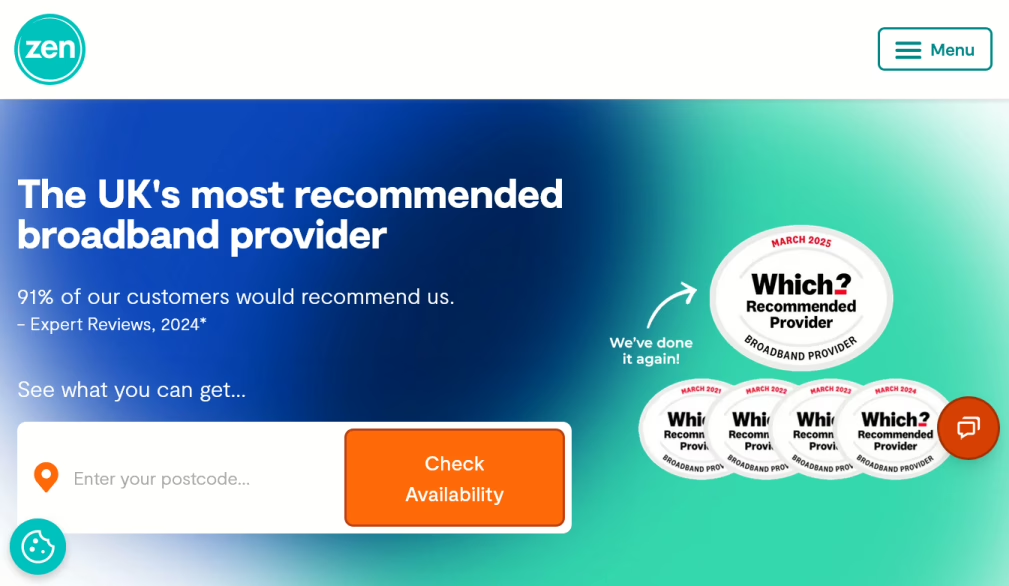
Screenshot of the Zen internet home page

So, following on from our full fibre (FTTP) broadband installation, we also switched to a new internet provider: Zen Internet.

Zen is one of the oldest Internet Service Providers (ISP) in the UK, having been founded 30 years ago, and in that time it has resisted being bought out by a larger rival. It remains one of the smaller players in the UK ISP market, but has a reputation for offering a better standard of service – it’s been Which magazine’s recommended provider for five years running, for example. A friend of mine who works in IT also uses them at home, and recommended them.

In the past, I’ve considered Zen, but found other companies to be cheaper. However, they now offer fibre-only packages (without a digital voice line) that are only a little more expensive than the mainstream providers, and so we’ve signed up.

Our previous provider was Vodafone. They were cheap, but the service wasn’t the best – a number of small outages here and there, but a big one in October was quite disruptive. Pre-2020, I would have put up with the occasional outage, but now that I work from home 2-3 days per week, and use video conferencing almost every day, I need a reliable home broadband service.

A screenshot of Ookla Speedtest results for our Zen home broadband connection

Broadband speeds

So, do Zen internet offer their advertised speeds? In my experience yes – eventually. Part of the reason why I’ve held off writing this for a couple of weeks is to give our internet speed time to settle. When your line is first installed, speeds can fluctuate for the first week or so.

I’ve shared a screenshot of a Ookla Speedtest result above – it shows that we’re getting about 105 Mbps download, and 20 Mbps download. Which is roughly the fastest advertised speeds that we should be getting. We were coping well with 80 Mbps before and so I didn’t see a reason to pay for much faster speeds. Zen apparently offers a 2 Gbps package, which I suppose is great if your household has four teenagers all running separate Twitch streams, but it would be overkill for us.

So far, I’ve been happy with Zen, but as we’ve only had the service a couple of weeks, it’s perhaps too early for a full review. The contract is for 18 months, so I’ll see if I’m still thinking positively with them in late spring 2027.

92% done with 2025

It’s the 1st of December today, and so begins a busy month for us.

At work, we have our winter graduation ceremonies, and so I’ll be helping out with these, as well as meeting some colleagues visiting from another university. Due to school holidays, I’m only working the first three full weeks of December, and then I have a nice two week break over the Christmas period.

Next weekend, we’re celebrating a family member’s 25th wedding anniversary with a big meal and a party. I’ve hired a dinner suit for it – I own a couple of suits, but the dress code mandates a dinner suit – and Christine and our nine-year-old have treated themselves to new outfits. In fact, I’m probably spending more on hiring my suit, which I have to return, than they did combined on new outfits that they get to keep. Oh well.

We also need to fit in time to see Wicked: For Good. It’s been difficult finding a time when all three of are available to see it, especially as it’s over two hours long and so not really suitable for a weeknight. Christine and I both love the stage show, having seen it in London’s West End many years ago, and our nine-year-old really liked the first film.

In terms of blog posts that I’m expecting to write – I have a couple in mind to follow up our fibre broadband installation. One is about changing ISPs, and the second is about the new router hardware. These should be going live over the next week or so.