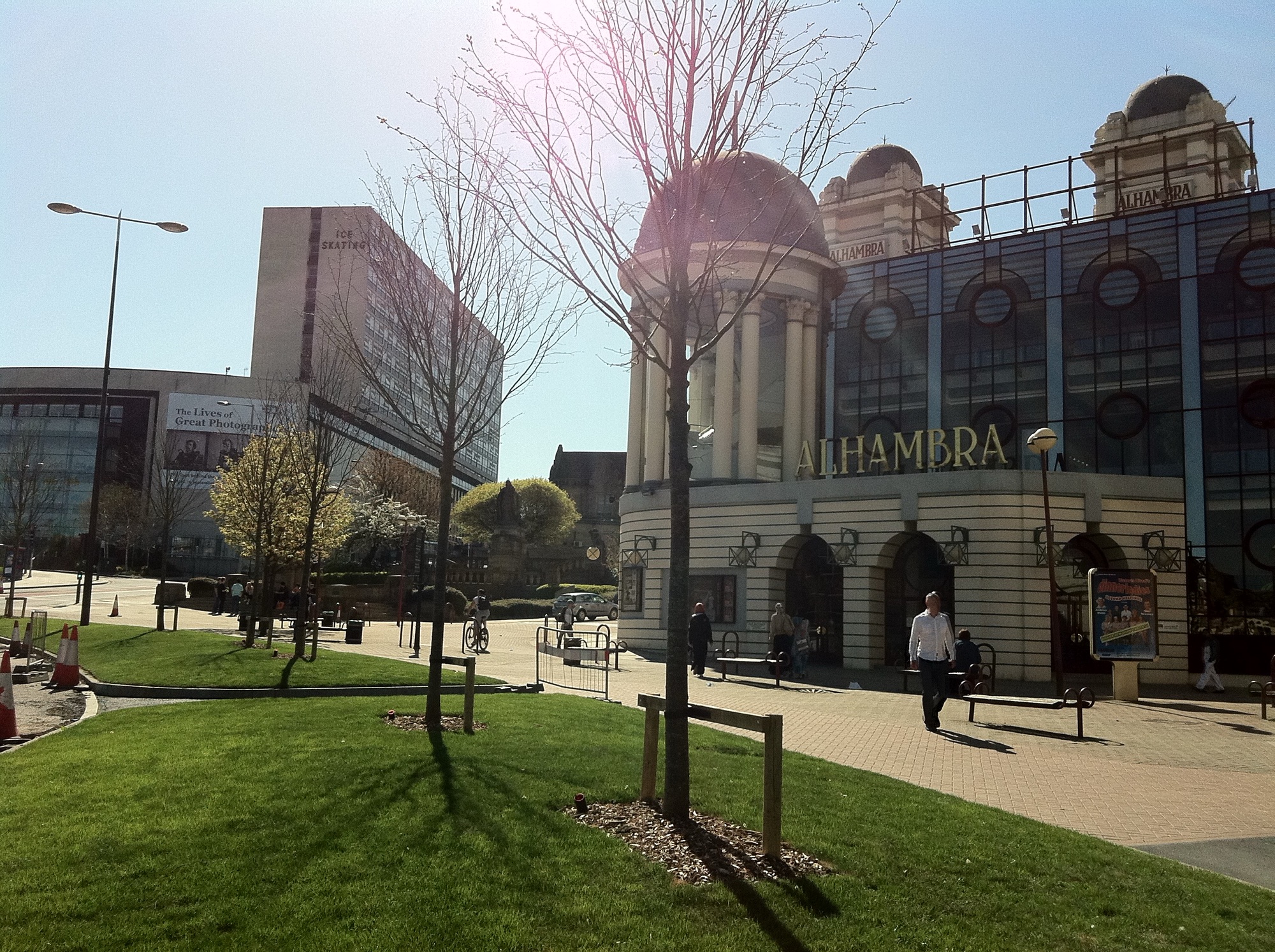
A couple of weeks ago, the hit musical Operation Mincemeat made its way to Bradford’s Alhambra Theatre, and so Christine and I went to see it. It’s very good.
The true story of Operation Mincemeat
Like Kinky Boots, which we saw last month, Operation Mincemeat is based on a true story. The actual Operation Mincemeat took place in 1943 and was a distraction strategy by allied forces during the Second World War. It involved planting the body of a street tramp, disguised as a high ranking military official, off the coast of Spain. The body contained important (but crucially faked) documents implying that the Allies planned to invade Sardinia. Instead, the actual plan was to invade Sicily, which, at the time, was heavily guarded by Nazi forces. Sure enough, forces were re-allocated from Sicily to Sardinia, allowing the Allies to liberate Sicily.
Two books have been written about Operation Mincemeat; a novel in 1950 called Operation Heartbreak, and a second book in 1953, The Man Who Never Was. This second book was written by Ewen Montagu, one of the intelligence officers involved, and it was adapted for a film in 1956. A later film followed in 2021, called Operation Mincemeat, and now there’s a musical adaption too.
The musical
The musical largely follows the actual events of Operation Mincemeat, with some artistic license. It’s performed with just five actors, who, through many rapid costume changes, play lots of different parts. The set is relatively simple, with lighting used to great effect throughout. The songs are all original, and number over 20 – much of the show takes place in song.
It’s a lot of fun to watch. The cast were all great singers and performers, and despite the many, many costume changes, it always felt slick and well-rehearsed. A nice touch comes towards the end, where there is a tribute to the street tramp, and a revealing of his actual identity.
Whilst not aimed at children, Operation Mincemeat is fine for families with children to watch. I don’t think our ten-year-old would have liked it, but teenagers may be interested.
The musical opened in London in 2019, and moved to the West End in 2023 where it’s still running. It’s therefore unusual for a musical to go on tour so soon afterwards, but it appears that the West End run is almost completely booked up for months. Indeed, there appears to be a ballot to get tickets now. As such, you have more chance of seeing it on tour. Whilst the Bradford Alhambra Theatre run is over now, as I write this it is coming to the end of a two week run in Sheffield, after which it is off to Stoke-on-Trent and then Chester. It makes it back to Halifax in October, and I’m highly tempted to see it again.
Seeing as it’s UK City of Culture this year, and theatres are places where you can see cultural things, how many theatres are there in Bradford? I think there’s eight, and here’s a list.
By the way, I’m defining Bradford as the area within the A6177 Bradford ring road. That means that I’m not including the theatres and arts centres in Ilkley, Bingley and Keighley that are in the wider City of Bradford district. And I’m defining ‘theatre’ as anywhere with a stage and seating that can be used for performances.
1. The Alhambra Theatre
Probably the best known theatre in Bradford is the Alhambra Theatre in the city centre. Opening shortly before the First World War, and extensively refurbished in 1986, it seats 1456 people and is where most major shows take place. It’s Grade II listed, and next month it’ll be hosting the touring production of Matilda, Tim Michin’s musical adaptation of the Roald Dahl novel. Earlier this month, it hosted the annual CBeebies Pantomime which will be on TV and BBC iPlayer this Christmas.
The last show we saw here was Unfortunate, last year, but we may well go to see Matilda as it’s a favourite in our household. It’s a Grade II listed building.
2. The Studio
Right behind the Alhambra Theatre is The Studio. As the name suggests, it’s a ‘black box’ studio theatre with a movable seating rig. This can seat up to 200, and is used for smaller productions and stand-up comedy. We saw George Egg here 10 years ago, but haven’t been to another show since.
3. Theatre in the Mill
Okay, disclosure alert: The Theatre in the Mill is run by my employer, the University of Bradford. As the name suggests, it’s in part of what was the Phoenix Mill, and now forms one of the university buildings. Like The Studio, it’s a black box studio theatre with movable seating, and seats around 100 people. Its programme of events includes stand-up comedy – both performances and workshops – film screenings and shows. I’ve also been to a number of student shows here over the years, but as Bradford isn’t really a performing arts university, there currently aren’t many of these.
4. Siobhan Ullah Performance Space
Next door to the university is Bradford College, which is home to Bradford Arts School, and in turn, the Siobhan Ullah Performance Space. Although it’s primarily used by the college students, it can also be used for events and seats 125 people. Again, it’s a black box studio theatre. It’s named after a former performing arts student of the college who sadly died of an asthma attack, aged just 18. I haven’t been to this theatre before.
5. Bradford Live
Back down towards the city centre, and next door to the Alhambra is Bradford’s newest and biggest performance venue, Bradford Live. It only opened this summer, and seats over 3000 people. It’s hosted in what was the Victoria Theatre, and later and Odeon Cinema which closed in 2000, and laid empty for almost a quarter of a century. Indeed, it survived a plan to demolish it in the late 2000s, and has now undergone a huge amount of restoration. It’s not currently a listed building.
As the name suggests, Bradford Live is more about live events and will be hosting a number of bands in coming months. Ocean Colour Scene are playing next month, as is CBeebies entertainer Justin Fletcher, and the Kaiser Chiefs are playing their first album in full in the new year. But there are some shows that you would typically expect in a theatre playing there too, such as Bluey’s Big Play, which I’m sure we’d be dragged to if our nine-year-old was a bit younger. We haven’t yet been here.
6. Bradford Arts Centre
Okay, technically the Bradford Arts Centre is even newer than Bradford Live, having opened under its current name as recently as this month. Previously, it was known as Kala Sangam, with a focus on South Asian arts. Its new name reflects its broader remit and engagement across all of Bradford’s populations. It’s located at what used to be Bradford’s crown post office at Forster Square, around the back of the Broadway shopping centre and next to Bradford Cathedral. The building is Grade-II listed.
There are several spaces in the arts centre, including a 200 seater studio theatre. We’ve been once, to see a pantomime that a friend was in about 10 years ago.
7. Bradford Playhouse
A few years ago, I used to volunteer at the Bradford Playhouse, and so it’s come up on here a few times. It was at risk of closure in 2014, but is now flourishing and is now fully accessible, following a successful crowdfunder early this year. The theatre offers two spaces: an art deco main auditorium seating up to 265 people, and a smaller black box studio theatre, seating up to 40 people. It hosts a mixture of professional shows and performances by amateur dramatic societies and dance schools. The building isn’t listed, but it was registered as an Asset of Community Value for five years in 2014.
8. St Georges Hall
Like Bradford Live, St Georges Hall is more of a live events venue than a theatre, with stand-up comedy and live bands. It’s also the oldest on this list, having opened in 1853. At one time, over 3000 seats were squeezed into the space, but nowadays its seating capacity has been reduced to 1335, or 1550 for standing events. It’s Grade II* listed, and was renovated between 2016 and 2019. The last show we went to see was a recording of I’m Sorry I Haven’t A Clue in 2014.
I think that’s quite an impressive list of theatres, actually, considering Bradford’s size.
Having lived in Bradford for over 7 years I wholeheartedly disagree that Bradford is ‘dangerous, ugly and boring’ as the survey suggests. It’s no less dangerous than any other major UK city and while Bradford has its fair share of 1960s monstrosities in architecture, there are some fine examples of stone-built Victorian buildings which have been faithfully restored and look rather splendid, all over the city.
As for boring, there are plenty of attractions for tourists to visit:
1. In the city centre:
National Media Museum – this is the UK’s most visited museum outside of London, and has a wide range of galleries focussing on film, photography, television, radio and new media such as the internet. Its latest addition is an arcade games gallery, where you can play a range of 1980s arcade machines. It’s also home to Yorkshire’s only Imax cinema. Best of all, it’s free to go in (bar the cinemas and some special exhibitions). It was influential in Bradford’s successful bid to become the world’s first UNESCO City of Film, which launches this weekend.
Peace Museum – one of Bradford’s lesser-known gems, this has a fantastic collection of items and records. It’s open on Wednesday and Fridays, and for pre-booked groups.
Bradford Sculpture Trail – around the turn of the millennium, a series of sculptures were commissioned across the city. This trial takes you around 27 different sculptures and statues, including those of JB Priestley, the famous Bradford-born author.
Curry houses – Bradford has a huge range of curry houses across the city and any visit isn’t complete without visiting at least one. There’s the world famous Mumtaz, the student favourite Omar’s, Markaz on Centenary Square and many more. What’s more is that they’re all very affordable.
Bradford Cathedral – being one of Britain’s newer cities (the Royal Charter was granted in 1897) the cathedral is quite small compared to the likes of York, Lancaster and Lincoln, however, it’s still an old building with parts dating from the 15th century. It holds regular events and sits in an area of Bradford known as ‘Little Germany’, full of well-preserved and renovated Victorian buildings.
Alhambra Theatre – one of several venues in Bradford (there’s also St George’s Hall, Bradford Playhouse and the Theatre in the Mill), the interior of this theatre has been thoroughly restored and looks magnificent. It hosts many major shows throughout the year.
The Wool Exchange – once the centre of Bradford’s wool trade, this fantastic piece of 19th century architecture has been restored and now hosts probably the nicest-looking branch of Waterstones in the country. There’s also a Starbucks on the mezzanine level.
Bradford Industrial Museum – located in late 19th century mill, this working museum has various examples of mill machinery, as well as a horse-drawn tram, worker’s houses and a transport exhibition. Entry is free and it’s open 7 days a week.
Lister Park – open to the public since 1870, this large park includes a boating lake, café, adventure playground, gardens and is also home to the Cartwright Hall art gallery which has recently been host to an exhibition of work by David Hockney, who originally came from the Bradford area. It was named Britain’s Best Park in 2006.
Peel Park – across the valley from Lister Park, this opened in 1850 and now plays host to the annual Bradford Mela which is one of the biggest festivals of British Asian culture in the UK.
Undercliffe Cemetery – Bradford was at the heart of the UK wool industry and many of the great and good from Bradford’s past have been buried here with some very elaborate and decorative memorials.
Bolling Hall – a mansion house which now houses exhibitions showing the life and times of Bradford families over the past few hundred years. Like many of Bradford’s other museums, entry is free.
3: Further afield:
Saltaire – a UNESCO world heritage site, and home to Salt’s Mill, which houses a permanent exhibition of art by David Hockney and a range of specialist shops and restaurants.
Keighley & Worth Valley Railway – a working steam railway that takes you through the pretty Worth Valley. Connects with the main line at Keighley station.
Haworth – a hillside village with a great range of independent shops and fine public houses.
While I think this list is pretty exhaustive I’m sure there’s bits I’ve missed. But there’s certainly no shortage of things to see and do as a tourist in Bradford and it’s well worth spending a day or two to look around. There’s also the City Park which is under construction and will be open by next summer.