On our way back from our holiday in Wales, we stopped off at the RHS Garden Bridgewater to the north of Manchester. We’ve been several times before, as we had an RHS membership in 2023, but this was my parents’ first visit.
A quick history of Bridgewater
The RHS has a more detailed history of the Bridgewater garden on its web site, so I’ll keep this brief. It’s the newest of the five gardens that are permanently managed by the RHS, having come into their care in 2017 and opened to the public in 2021, and alongside Harlow Carr (visited in June), is their second in Northern England.
The site used to be home to a country house, Worsley New Hall, which was built in the mid 19th Century for Francis Egerton, the 1st Earl of Ellesmere. At the time, it cost around £100,000 – about £6.7 million adjusted for inflation, so not quite as much as Penrhyn Castle but still a big, expensive house. The house overlooked a lake, and further on, extensive walled gardens. Queen Victoria visited twice, in 1851 and 1857, arriving by the Bridgewater Canal which runs along the edge of the site. The Bridgewater Canal was built by a different member of the Egerton family, also called Francis Egerton, but his title was the 3rd Duke of Bridgewater.
The site saw use in both World Wars, as a British Red Cross hospital during the First World War and as a training ground for the Lancashire Fusiliers in the Second World War. The Egerton family left Worsley New Hall and after that the site declined, with the house falling into disrepair and later demolished in the 1940s. The site then returned to nature, with some use of the woods by the Scout movement as a campsite, and the walled garden as a plant nursery, until the early 2010s.
The Bridgewater Garden today
Broadly speaking, the RHS Garden at Bridgewater consists of five areas:
- The original walled garden
- New borders by the main entrance pavilion, known as the Worsley Welcome Garden
- A Chinese stream-side garden
- Middle Wood
- Ellesmere Lake
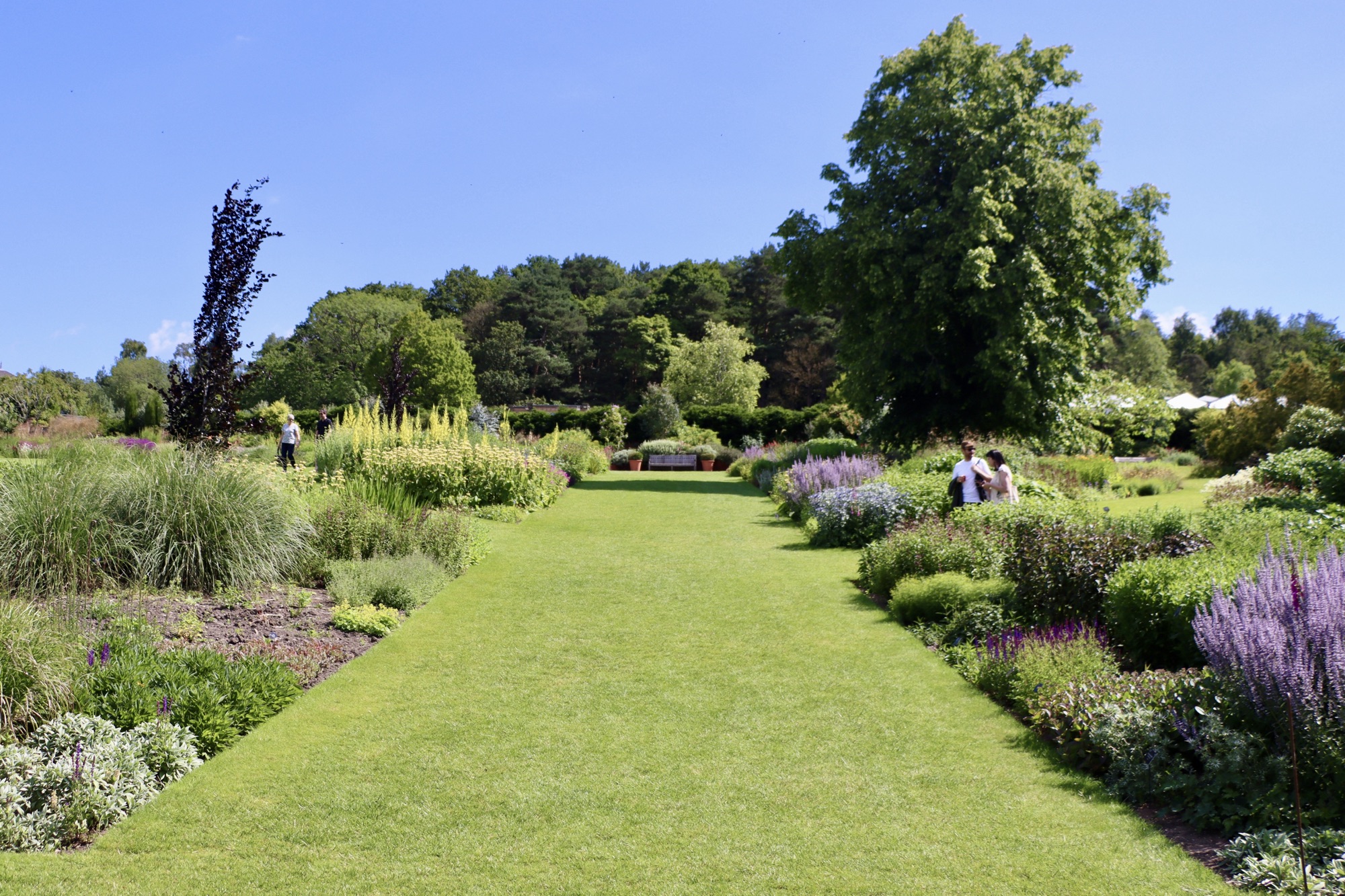
The walled garden has been further sub-divided into different parts, including a kitchen garden, a learning space, space for community groups, and a Blue Peter garden transported from a previous Chelsea Flower Show. Middle Wood is the established wooded area which has been cleared of invasive buddleja to encourage more biodiversity, and it hosts a playground. Ellesmere Lake is the original lake that sat in front of where Worsley New Hall stood and has been partially restored.
The Chinese garden is new, and arguably the most interesting. Whilst it has been there since the garden opened in 2021, it is still under development, and a large pavilion is currently under construction. This has been built using traditional Chinese methods, and will hopefully be ready in the new year. The planting around the new pavilion includes lots of cherry trees, and I expect it’ll look fabulous come spring. It’s a good thing we’ve bought a year’s RHS membership as I’m sure we’ll be back.
Animals and wildlife
Beyond the walled garden there’s a chicken coop, with several heritage breeds of chicken on show. Also, beyond the play area, there used to be several Berkshire pigs which were used to help clear the ground whilst the garden was being established. However, they moved on to a new home elsewhere last year.
The increased biodiversity on site has encouraged more wildlife to move in. Every time we’ve visited, we’ve seen plenty of dragonflies, and on this visit, we saw a huge common hawker dragonfly which was several inches long. We also saw several caterpillars that will likely become cinnabar moths, along with plenty of bees and butterflies.
Accessibility
As befits an attraction opened in 2021, accessibility is good. The site is relatively flat, and where it isn’t, there are gentle slopes and paved paths. There are some steps and stepping stones, but there’s always an alternative accessible way round.
Disabled toilets are available in the welcome building, and in the potting sheds and garden cottage. The welcome building is also host to a Changing Places toilet. There are several cafés, including in the welcome building where this is also free Wi-Fi.
There’s a large car park which includes six standard-plus AC electric car chargers on the Raw Power network. It looks like additional rapid chargers are about to be made available too; these were covered up on our visit last month, but may be available by the time you read this.
If you arrive at Bridgewater by other means of transport, then there’s a 30% discount off tickets. The nearest railway station is Walkden, which is around an hour’s walk, but you can hire a bike until the 31st October. Walkden has regular services from Manchester Piccadilly station.
There’s also a direct bus, the number 33, from Shudehill interchange in Manchester city centre, which runs from the end of March to the end of August. It’s part of Manchester’s Bee Network, so you can catch a Bee Network bus to a flower garden.
RHS members get into Bridgewater for free. It’s usually cheaper to pre-book tickets online, and those in receipt of certain benefits can pre-book tickets for £1.
Events at Bridgewater
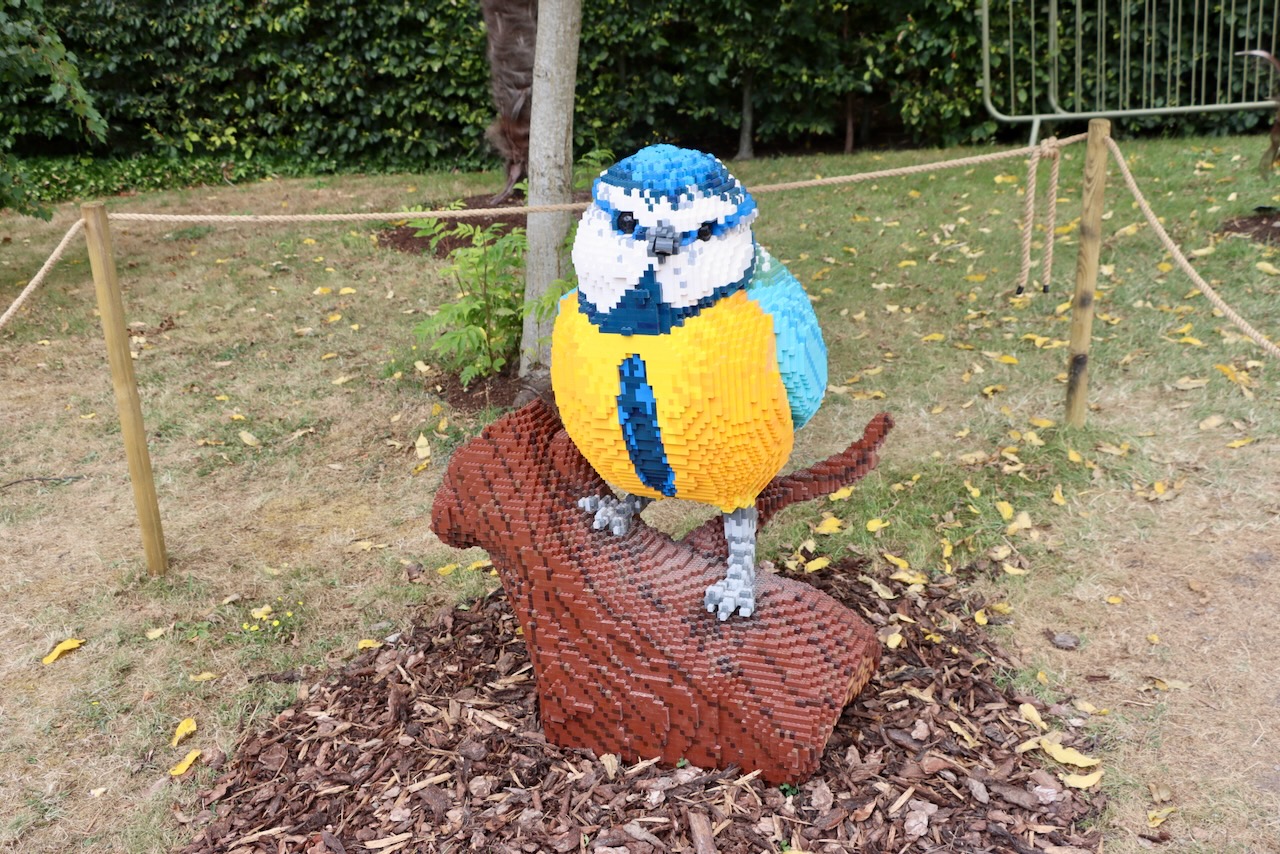
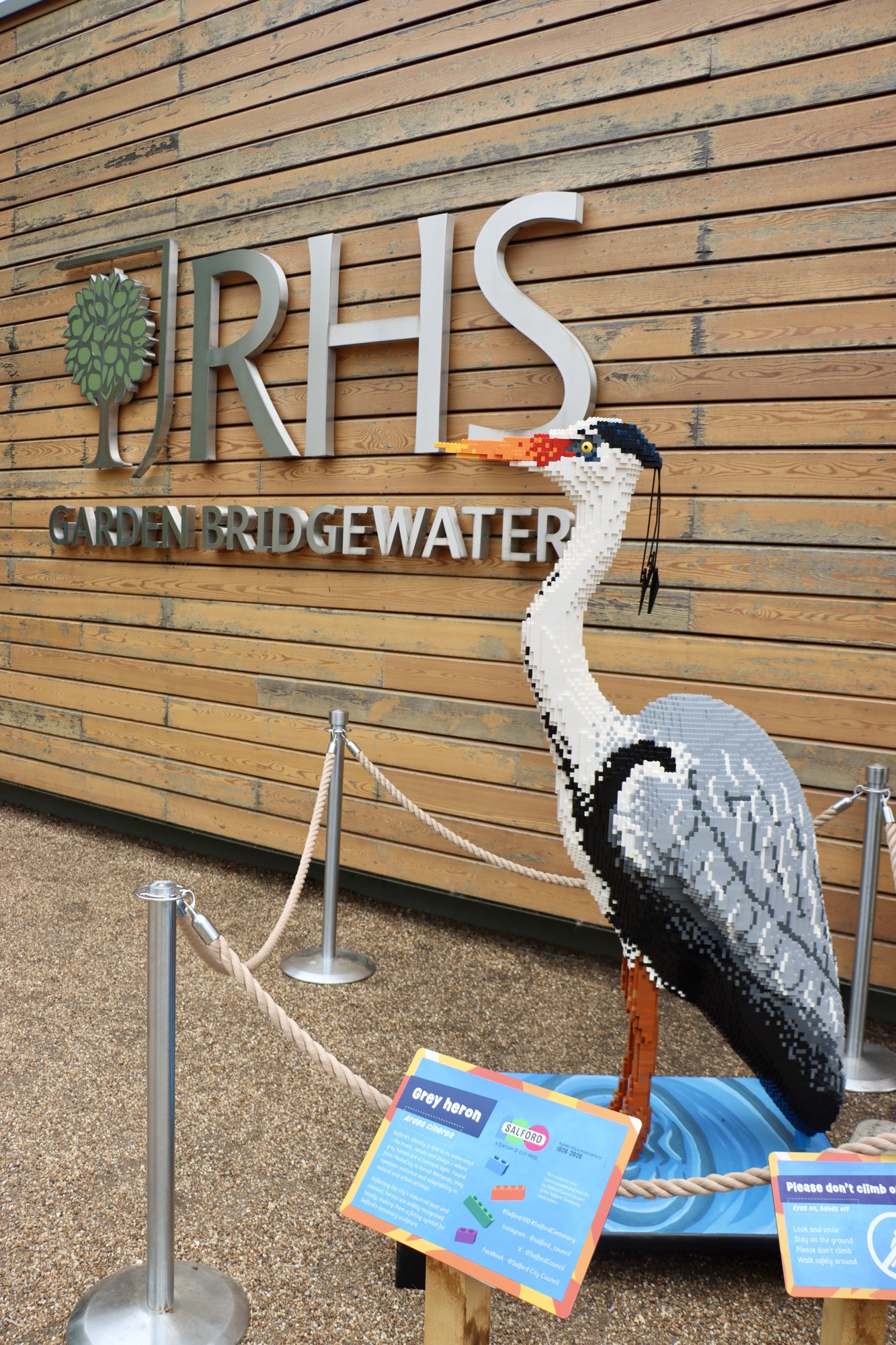
You may have noticed the heron in the top photo, made out of plastic bricks (which may or may not be Lego). This is part of the Brick Explorers event which runs until the end of the month. It takes place at other RHS gardens too, including Harlow Carr, with a different set of models to find. Our ten-year-old really enjoyed this.
There’s also a longer term Wind in the Willows trail on at present.