Metrolink to the Trafford Centre, 2026 update

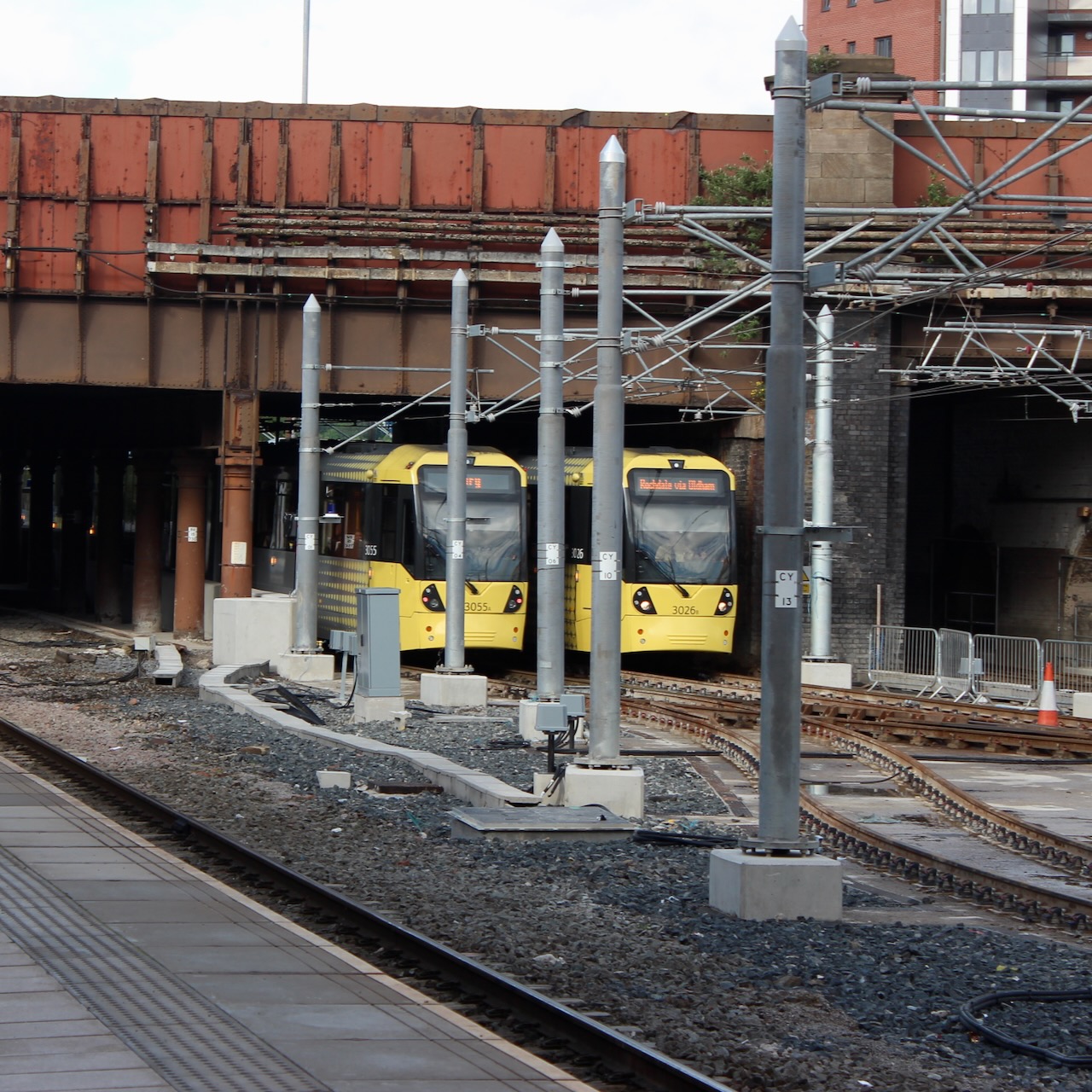
Two Metrolink trams approaching and leaving Manchester Victoria station

Back in 2013, I wrote a lament about how Manchester’s Metrolink tram network didn’t reach its biggest shopping centre, the Trafford Centre. Well, now it does, and I used it for our visits to the Legoland Discovery Centre and the Sea Life Centre.

Two tram stops

Being as it is Britain’s third largest shopping centre by floor area, the Trafford Centre is large enough to have two stops serving it. One is called Trafford Centre, and is the (current) end of the Trafford Park line. The second is the penultimate stop, and is called Trafford Palazzo. This is actually its third name:

  1. During development, it was known as EventCity which was the name of an events and conference centre located next to the tram stop. However, a few months before the tram stop was due to open, EventCity announced plans to move and the building has subsequently been demolished. The site is now due to become Therme Manchester.
  2. On opening, the tram stop therefore took the name of the road that went past it, Barton Dock Road.
  3. Finally, earlier this year, it was renamed Trafford Palazzo after the shopping centre next to it.

This is where I should perhaps explain the difference between the Trafford Centre and the Trafford Palazzo. They were once all the same shopping centre; what is now the Trafford Palazzo was the Barton Square extension to the Trafford Centre. The original builders of the Trafford Centre, the Peel Group, sold the Trafford Centre to Capital Shopping Centres (CSC) in 2011, and around 2013, it was rebranded the ‘intu Trafford Centre’ as part of a group-wide rebrand of CSC to ‘intu‘. The pandemic in 2020 resulted in intu going spectacularly bust, and its largest creditor, CPP Investments, took control of the Trafford Centre. In doing so, they spun out Barton Square as a separate entity, which was bought back by its original owners, Peel Group. They then rebranded Barton Square as the Trafford Palazzo. They remain linked by a covered footbridge, and use the same architectural style, but are technically competitors. It’s a bit like Eldon Square (another ex-intu property) and Eldon Garden in Newcastle, which are linked but owned and managed separately.

Opening

The Trafford Park tram line opened to little fanfare in March 2020. Partly because this was almost a year later than planned, but also because it was right at the start of lockdown. It splits off from the Eccles Line next to Ponoma tram stop, at a junction that was designed when the Eccles Line was first built. In all, it runs for just over three miles. Trams run approximately every 12 minutes (so 5 trams an hour). At present, they run through central Manchester to Crumpsall, meaning that I can get to the Trafford Centre from Sowerby Bridge with just a single change at Manchester Victoria. However, I gather this is a temporary arrangement, and normally the Trafford Park line trams only go as far as Deansgate-Castlefield. I hope the trams continue to go through central Manchester as otherwise we’ll have an additional change.

The Trafford Centre stop

Getting off at the Trafford Centre stop, you are presented with two ways into the shopping centre. One is through the back entrance of Selfridge’s, and the other leads you into one of the car parks where a series of escalators takes you into the upper level of the shopping centre roughly in the middle. It does feel like something of an afterthought, and it’s not the most welcoming way in, which was also my criticism of the bus station. It feels a bit like the tram stop was designed for people who work at the Trafford Centre and not shoppers.

Speaking of the bus station, this is located out on a limb at another part of the shopping centre. This seems like a bit of a missed opportunity to create a multi-modal transport interchange. After all, other out of town shopping centres like Meadowhall and the MetroCentre both have huge transport interchanges with buses, coaches, trains and, in Meadowhall’s case, trams. The Trafford Centre tram stop was designed such that it could easily be extended in future, and so maybe there could be a third stop added in a future phase which interchanges with the bus station. Original plans saw the line cross the Manchester Ship Canal and the M60, and head out towards the Salford City Stadium and Port Salford, but this hasn’t been built.

On the day we visited, the line did seem well-used, but it was also the day of the Manchester Half Marathon which starts and ends at Old Trafford. I’m therefore not sure how typical our experience was.
Sea Life Centre in Manchester

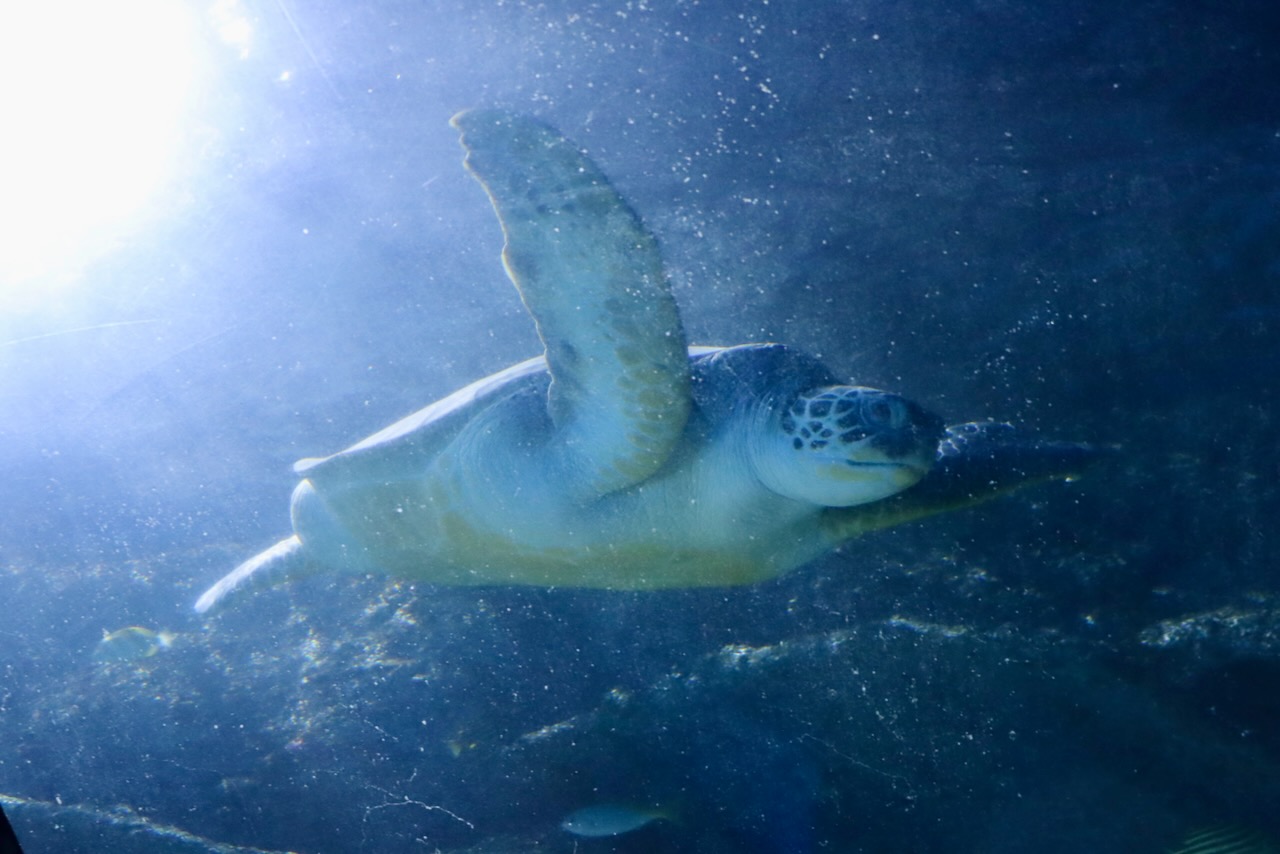
A photo of a sea turtle at the Manchester Sea Life Centre

Next door to the Legoland Discovery Centre at the Trafford Palazzo is another Merlin attraction in the form of Manchester’s Sea Life Centre. We visited both on the same day.

Sea Life Centres tend to vary. We’ve been to the one in Scarborough a few times, most recently in 2019, and it’s branded as a ‘Sea Life Sanctuary’ as it includes a seal hospital. The Manchester Sea Life Centre, being quite far inland, is very much a tourist attraction. It’s all indoors, and whilst there are endangered species there, it doesn’t have as much of a focus on protecting wildlife not already in its collection.

Sea turtles

On entering the Sea Life Centre, you first watch an interactive film about sea turtles, and how they lay their eggs on sandy beaches. You then pass through a series of themed zones, including a glass tunnel where you can see into the largest tank. This is home to several sharks, and Ernie, the sea turtle. There’s a tank focussing on rays, a coral reef, a rockpool, and another turtle exhibit including lots of terrapins which have been captured in the UK as an invasive species. Finally, just before the exit, is a large soft play frame for kids.

This was our third visit to the Manchester Sea Life Centre, the last one being in the run up to Christmas in 2019. We’ve generally whizzed around in about an hour each time; there are usually some talks and demonstrations to pad out your visit to perhaps two hours, but it’s not a full day out. We did this and the Legoland Discovery Centre next door in one afternoon.

Accessibility

Most of the Sea Life Centre is step-free, apart from some areas used for VIP experiences. Standard disabled toilets are available inside the attraction; a Changing Places toilet is available elsewhere in the Trafford Palazzo.

You can book both the Sea Life Centre and the Legoland Discovery Centre together if you wish, and Merlin will claim that this will save you money. In my experience, it doesn’t – it was cheaper to book both separately a few days in advance. I think that’s because the combo deal includes a fully flexible ticket, rather than one for a specific date and time – if you’re able to book for a certain time slot, it’ll probably be cheaper.

There is a shop inside, but no café – just a couple of vending machines selling drinks and ice cream. There are a number of food outlets elsewhere in the Trafford Palazzo though, and loads in the Trafford Centre which claims to have Europe’s largest food court.

All the rest of the information about getting there and discounts is the same as it was for the Legoland Discovery Centre, so I won’t repeat myself. In my view, it’s not the best Sea Life Centre – the Scarborough one is much better – but as somewhere easily reachable by public transport it fit the bill.

Legoland Discovery Centre in Manchester

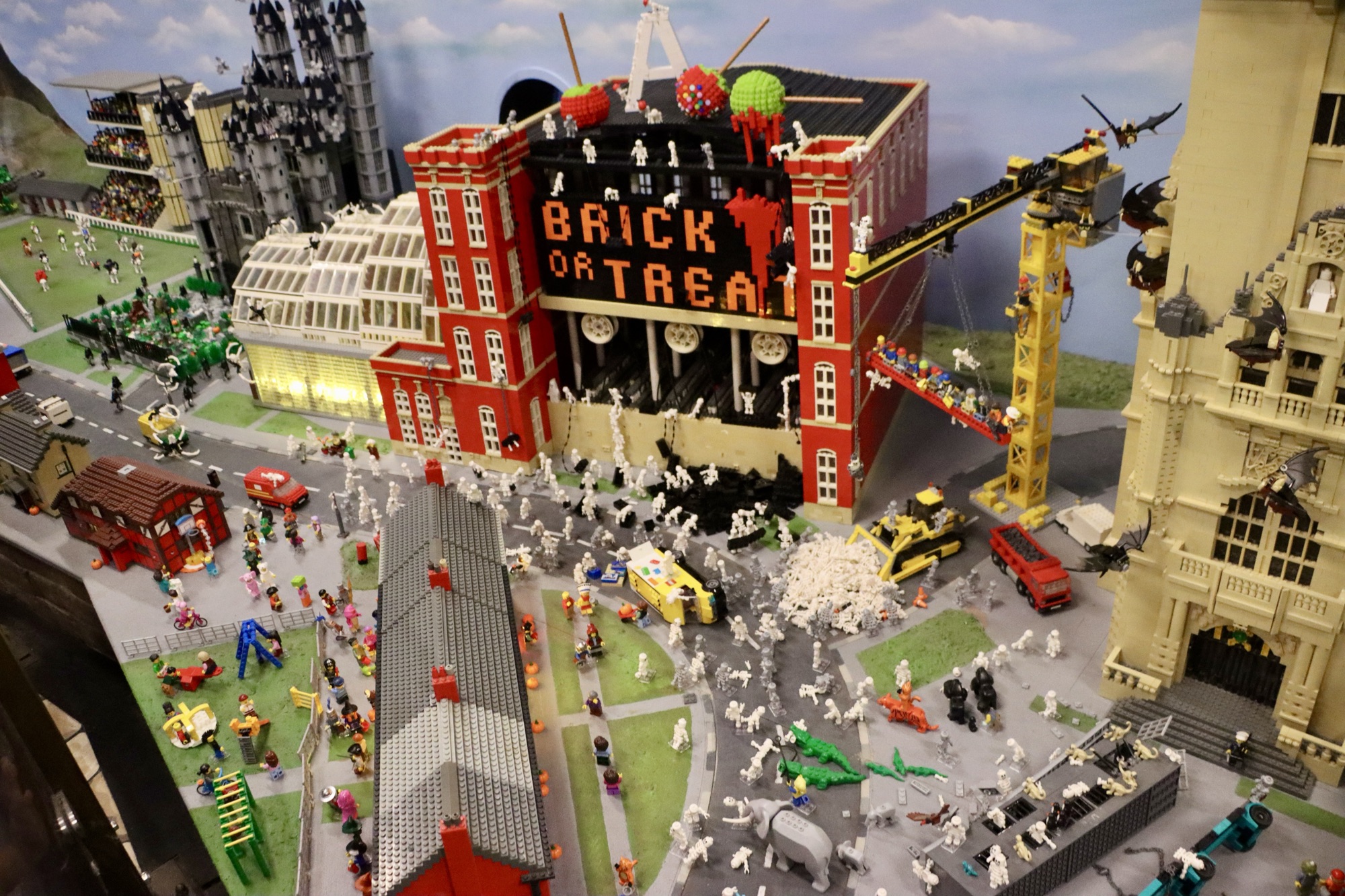
Some Lego models inside the Legoland Discovery Centre in Manchester

A couple of weekends back, Christine had some coursework to do and wanted me and our ten-year-old out of the way for a day. So, we went to the Legoland Discovery Centre, located at the Trafford Palazzo in Manchester.

This was actually our second visit; our first was in August 2017. Back then, our now ten-year-old was only about 18 months old, and as such, way too young. Whilst there is a small Duplo area, it’s not a big attraction and so we didn’t get much out of it at the time. It’s best for primary school aged kids, so 4 to 12-year-olds. Older kids may find that they’re too big for some of the attractions.

What’s inside the Legoland Discovery Centre

Like I said, the Legoland Discovery Centre isn’t a big attraction, especially compared to Legoland Windsor. We went to Legoland Windsor in 2021, at which you really need two days to see everything. Handily, there are two themed hotels on site, but at a price – instead, we stayed in a Premier Inn in Slough. By comparison, you can do pretty much everything at the Legoland Discovery Centre in two hours. Indeed, at busy times, you may find your visit is actually limited to two hours.

It’s all indoors, and starts off with an exhibit showing how Lego bricks are made. On our previous visit, this was an interactive exhibit with a member of staff walking us through it and presenting us with a special exclusive Lego brick at the end. On this visit, it was a static exhibit with information panels.

Next, was Miniland, where there are Lego models of real places. These are all in the north west of England, so Manchester but also Chester and Blackpool. If you visit this month, like we did, the models have all been spooked up for Hallowe’en. So, expect to see spiders attacking the model of the Blackpool Tower and tentacles coming out of a model of the Trafford Centre.

There are two rides:

  • Kingdom Quest, where you sit in a chariot and shoot lasers at invading trolls
  • Merlin’s Apprentice, which spins you round and lifts you up and down as you pedal

There’s a Ninjago themed soft play area, the aforementioned Duplo area and a ‘4D cinema’ where you get to watch a short 3D computer-animated film and have air and water sprayed at you. This was also Hallowe’en themed. This is all included in your entry fee.

Paid-for extras

Without realising, I booked the ‘Legoland Discovery Package’, which includes some paid-for extras. As I write this, these cost an extra £5.50 per ticket when booked in advance, which is cheaper than buying on the day.

These included the Lego VR Experience, where you sit in a pod and put on a virtual reality headset. The pod then moves in time with a virtual reality film. You get to choose one of two films – a Lego race, and a roller-coaster, which our ten-year-old chose for both of us. The roller-coaster is actually set in nearby Salford Quays, just by the Imperial War Museum North, and has you descending a huge tower on the roller-coaster.

We also got two bags of Lego (presumably one each) on entry, which were probably worth the extra £5 or so each on their own.

The other thing we paid extra for was a green screen photo. We went for the £20 package, which got us two large printed photos, the same two photos on keyrings, and digital downloads of all the photos that were taken, including one on the Kingdom Quest ride. A bit pricey, but these things always are.

In all, we spent a little over two hours at the Legoland Discovery Centre. Having booked in advance and used a discount (see below), it was merely moderately expensive. I would not have wanted to pay the full, on the gate price.

Accessibility

There is full step-free access to the attraction, and inside there is a Changing Places toilet. The regular toilets are currently closed for refurbishment, but there are plenty of toilets elsewhere in the Trafford Palazzo.

It’s always cheaper to book at least 24 hours ahead of time, and entry charges vary depending on the time of day, so you can save even more if you’re willing to be even just a little bit flexible. Like all Merlin attractions, there are lots of ways to save money – I got 15% off via the CSSC, but you can also get a similar discount with a Max card when booking in advance. It’s also worth checking the Merlin Deals page on MoneySavingExpert.com – right now, you can save 25% by buying a packet of Kellogg’s cereal (although I’m not 100% sure that the Legoland Discovery Centre is included).

There’s a café inside, and a Lego shop on the way out.

The nearest car parking is at the Trafford Palazzo itself, and there is plenty of car parking at the nearby Trafford Centre too. Electric car charging of all types is available across the site.

We got there by tram; the Trafford Palazzo tram stop is right outside, and it’s the penultimate stop on the Trafford Park line. The Trafford Centre bus station is a 10-15 minute walk away, but at least it’s an indoor walk.

There are multiple Legoland Discovery Centres across the world; the other UK one is in central Birmingham, near Brindleyplace.

MCR Made Icons at the Manchester Arndale

MCR Made Icons balloons at the Manchester Arndale shopping centre

If you fancy seeing a bit of free public art, head along to the Manchester Arndale Centre some time in the next three weeks to see the MCR Made Icons. These are massive balloons, suspended from the shopping centre’s ceilings, depicting various famous Mancunians.

All the designs are by Mancunian illustrator Stanley Chow. He’s done quite a lot of work, and indeed until very recently the social media profile picture for Andy Burnham, now our prime minister, was one of his designs.

We didn’t go to the Arndale specifically to see the MCR Made Icons. We actually went in because our ten-year-old really likes eating at Five Guys, and happened to spot them. The majority of the balloons are in the ‘new’ bit with the posher shops and – crucially for balloons – higher ceilings. We first spotted the Emmeline Pankhurst balloon on the way in, and then got to see the likes of Marcus Rashford, the Gallagher brothers, Lemn Sissay and Alan Turing. The balloons in the older part of the Arndale are rather smaller.

If you’re wondering why there have been several Manchester-based blog posts in recent weeks, it’s because I was in Manchester three times last month; our trips to IWM North, Mackie Mayor and the Manchester Museum were all separate trips.

Accessibility

MCR Made Icons is on show every day at the Manchester Arndale until the 23rd October, and it’s free to get in, like the rest of the shopping centre is. The shopping centre is fully accessible, with lifts, disabled toilets and a changing places toilet. You can park your car there, but we tend to get the tram in from Hollinwood as Exchange Square tram stop is right outside.

Frogs behind the scenes at the Manchester Museum

A photo of one of the red eyed leaf frogs at the Manchester Museum, being handled

It’s taken us almost nine months, but we finally got to redeem Christine’s Christmas present, and go behind the scenes at the Vivarium at the Manchester Museum to meet their collection of frogs and toads at the weekend just gone.

The Vivarium is actually a little unusual for a museum to have. Whilst the Manchester Museum is full of animals, these are mostly stuffed, whereas the Vivarium includes live animal specimens. There are a variety of amphibians and lizards on show, but frogs and toads make up the majority of the exhibits. Some are on show, but a number of species are kept behind the scenes, and this was what our tour allowed us to see.

There are a couple of notable species of frog that the Manchester Museum cares for.

A photo of a Variable Harlequin Toad, one of the species of frogs at the Manchester Museum

The Variable Harlequin Toad

This species was, at one point, declared extinct as none had been seen in the wild for some time. Thankfully, a small colony was found in Panama, and six live specimens – three males and three females – were brought to the Manchester Museum. Thankfully, they’re now ‘merely’ critically endangered, and the Manchester Museum has been successful at breeding them. Indeed, it’s the only place in the world where you can see this particular species in captivity.

With the numbers remaining being so small, breeding is tightly monitored to encourage better genetic diversity, and so the males and females are kept separate. The tanks face each other, so the males could still see the females and were, to be frank, rather frisky when we visited. It was one of these toads that we sponsored when we bought the package.

Sylvia’s Leaf Frog

Most of the frog species at the Manchester Museum are leaf frogs, and one, the Sylvia’s Tree Frog, was ‘discovered’ here as recently as 2018. They were thought to be the closely related Splendid Tree Frog, which the Vivarium also holds, but had different markings and, following genetic testing, were found to be a different species. They’re kept in adjacent tanks, so you can see how to two species differ. ‘Sylvia’, incidentally, is the name of the granddaughter of the zoologist, Andrew Gray, who first described the species.

We also got to handle a couple of different species of frogs – namely the black-eyed leaf frogs and the red-eyed leaf frogs, pictured at the top. These species tend not to be on show as they’re largely nocturnal, so this presented a good opportunity to see them.

The Vivarium isn’t very big, and so the tour is only scheduled for an hour. As it was, we spent way longer than that chatting with our guide, so we definitely got our money’s worth. It was a great visit, especially for Christine and our ten-year-old who loved handling the frogs.

Closing for refurbishment

If you want to see the frogs for yourself, you’ll need to go to the Manchester Museum pretty soon, as the Vivarium will be closing next month for a refit. It’s due to re-open in the spring, but it does mean that the behind the scenes tours are not available to book at present. In the meantime, here’s a video (also embedded below) when Maddie Moate went on a similar tour around 10 years ago, with Andrew Gray (who would go on to describe Sylvia’s Tree Frog). As well as her YouTube channel, Maddie also presents science shows for young kids on CBeebies. It was this video that inspired me to book the visit in the first place.

Lunch at Mackie Mayor in Manchester

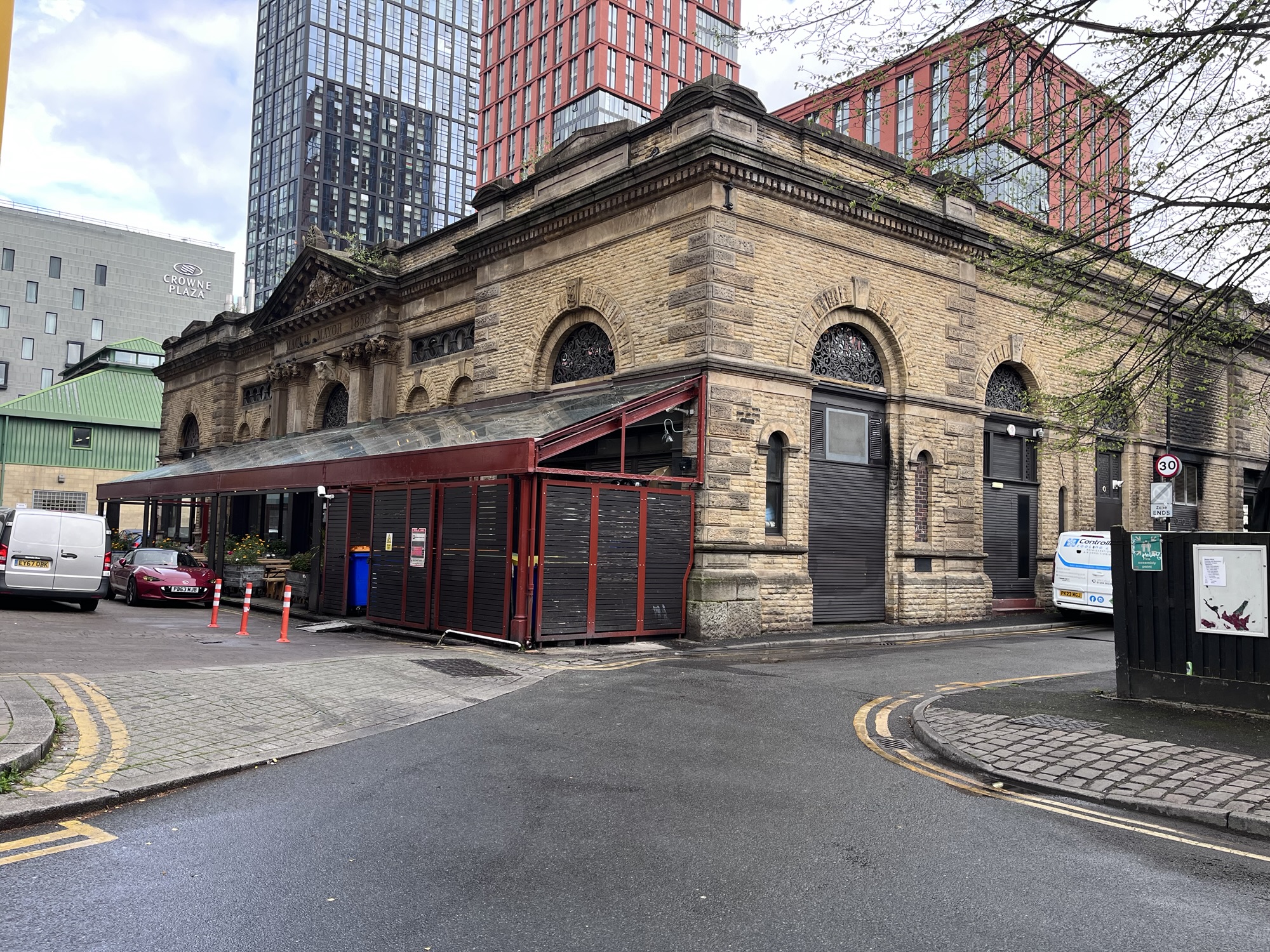
The outside of Mackie Mayor, a food hall at the old Smithfield Market in Manchester

Last week was Christine’s birthday, and so we both took the day off work to spend the day in Manchester. For lunch, we went to Mackie Mayor – an old market hall which is now a food court.

Mackie Mayor is so-called because that’s what’s written in stone on the outside. It was one of several buildings that formed Manchester’s Smithfield Market, and was opened by a Mr Mackie, the then Mayor of Manchester, hence the name. The market closed in the 1970s, and whilst it received a Grade II listing, it fell out of use. Later, the building spent some time as a skate park in the 1990s, but by 2017 it was derelict.

Thankfully, it has been restored and re-opened to the public, and is home to several independent food vendors serving a variety of different food and drink. It’s located on the edge of Manchester’s trendy Northern Quarter.

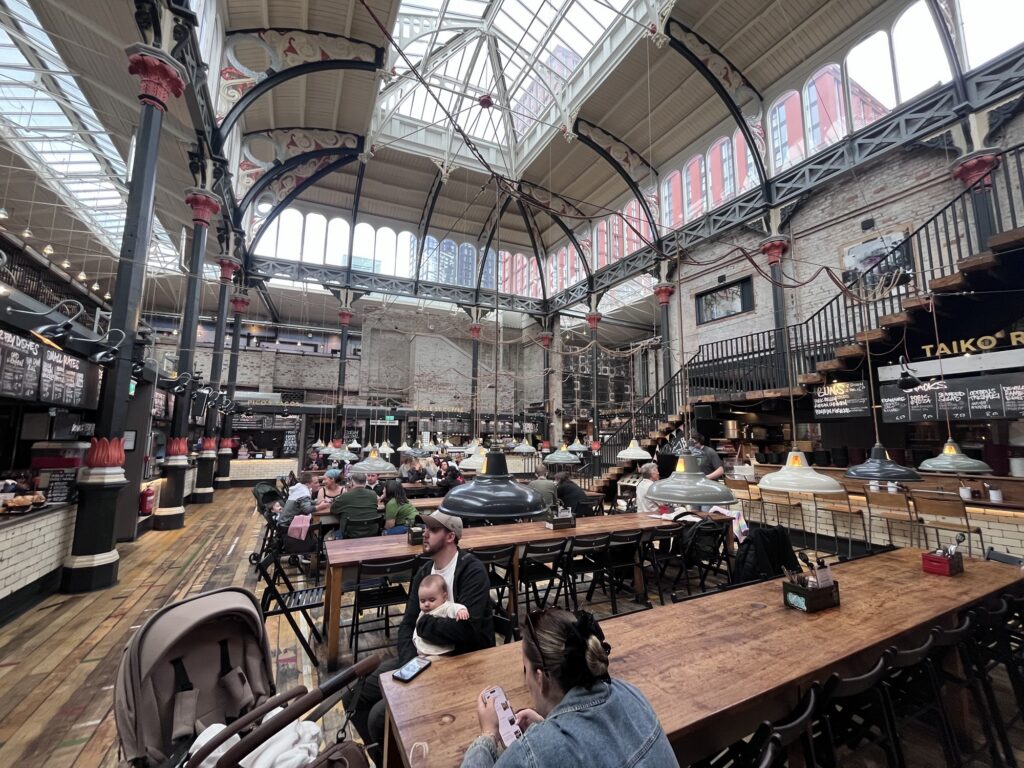
A wide-angle photo taken inside Mackie Mayor showing its glass roof

How to order food at Mackie Mayor

Inside are rows of tables and chairs. Find yourself a seat, and then once you’ve taken note of the table number, you can order your food and drink. You can go up to each counter and order that way, should you wish to.

But, you can also use a web app on your phone called Me&U. Scan the QR code, enter your table number, and you can then order food from any of the stands inside Mackie Mayor. You can even set up a tab for your table, and it’ll generate a separate QR code to allow your friends to order food on their phones and have it billed to your tab. As this was Christine’s birthday treat, I set up a tab and let Christine order whatever she wanted on her phone, with me paying for it at the end. When you set the tab up, you can set a maximum amount, which is then pre-authorised to your card.

My order of a chicken burger with waffle fries and a strawberry iced tea from Mummas at Mackie Mayor

Food at Mackie Mayor

I went for a chicken burger from Mumma’s, which came with seasoned waffle fries and a strawberry iced tea. Christine, meanwhile, went for Chicken Katsu from Chilli B, with a side order of prawn crackers. The food is brought to your table, and everything we ate was nice. Price-wise, it’s good considering the quality – not the cheapest, but nor was it too expensive either.

For dessert, we both had Creme Brulée Cookie Butter doughnuts, and I had a can of Steep Cola. Indeed, you’ll struggle to encounter big brand products here and even the soft drinks are from independent producers.

I suppose the big selling point of Mackie Mayor is the variety – if you’re visiting as a big group, everyone can get pretty much what they want. There’s no requirement for everyone to order the same cuisine, so it’s great if you have fussy eaters amongst your friend group. Vegetarian, Vegan and Gluten Free options are available from some of the stalls, and it’s okay to just visit for a drink and a snack, if that’s what you want. We went on a Tuesday lunchtime when it was relatively quiet, but I can see it being quite a loud place when it’s busy. And you’ll probably have to share your table with other people, since the tables are in long rows.

There is step free access across the building, with a lift up to the balcony area, and there are disabled toilets. There’s also a small children’s play area downstairs, well-behaved dogs are welcome, and free Wi-Fi is available. We certainly enjoyed our visit and I’m sure we’ll end up back there on a future visit to Manchester city centre.

Imperial War Museum North

A photo of the outside of the Imperial War Museum North museum in Salford Quays in Manchester.

Last weekend, I took our ten-year-old to the Imperial War Museum North, in Salford Quays. I’m choosing to post about it today, for a reason that will become apparent if you read on.

The Imperial War Museum North is one of the five branches of the museum; the first was in London, opening in 1917 towards the end of the First World War. There’s also a branch in Duxford, Cambridgeshire, and the Imperial War Museum also cares for HMS Belfast and the Churchill War Rooms. I’ve been to the London museum once; I was very young and so my memories are vague, but the Queen Mother was also visiting on the same day, presumably to open something. And I’ve been on HMS Belfast, as a teenager, and the Churchill War Rooms in 2012 (which I apparently didn’t blog about).

Anyway, this was my first visit to the Imperial War Museum North. Which, considering it’ll be celebrating its 25th anniversary next year, is perhaps odd. There are very few free museums in the north of England reachable by public transport that I haven’t been to yet.

Inside the museum

Our visit was just in the afternoon, and so we only had time to browse the main exhibition space. There’s a temporary exhibition upstairs on at present, called Outrageous Women: Marriage, Religion and Culture, but we ran out of time to see that.

The main space is one large, open space split off into five zones. Each zone represents a period of history:

  • The First World War
  • The Inter-war years
  • The Second World War
  • The Cold War
  • Into a new century (1990 to now)

You can follow them chronologically – this is what we did – but you don’t have to.

Whilst you will see tanks, planes and artillery in the museum, this isn’t a military museum per se. It’s more about the history of war and conflict, primarily in the UK and Europe, and its impact on people. You therefore learn about the events that led up to wars breaking out, how people lived through them (both on the front lines and at home), and what happened when the fighting stopped.

The Big Picture

On the hour, the lights in the main exhibition space dim, and a short 5-10 minute show is projected onto the walls. The shows vary depending on the time; there are six currently in rotation, and we got to see two of them:

  • Ukraine: Our Ordinary Lives. This follows several young Ukrainians who have remained in their country since the war with Russia broke out in 2022. It shows them trying to live as normal life as possible – attending school, celebrating birthdays, graduating from university – whilst bombings take place around them, friends and family are killed and there are regular interruptions to water and electricity supplies. It’s a reminder of the reality of living in a war zone in the 21st Century, and the bravery and stoicism of young people facing a horrendous situation.
  • The Roads We Walked. This video marks the 80th anniversary of the Fifth Pan-African Congress, which took place at Chorlton-on-Medlock Town Hall, Manchester, in October 1945. It’s delivered as a series of poems, but highlights the role that Manchester had in a number of African nations eventually achieving independence from the British Empire. I recognised some of the names mentioned: Kwame Nkrumah and Jomo Kenyatta, who both have universities named after them in their now-independent home countries.
A mangled and rusty window frame from the ruins of the World Trade Centre in New York, on display at the Imperial War Museum North

September 11th

The final zone, which focusses on the present day, includes some exhibits from the September 11th 2001 terrorist attacks in the USA, included the mangled and rusty remains of a window pane from the World Trade Centre in New York. Today is 25 years since those attacks took place, and there is a focus on the resultant wars in Afghanistan and Iraq that followed.

Also in this section is a huge doorway made up of hundreds of suitcases, representing those who have become refugees fleeing war. It’s a common theme throughout the museum, from the Kindertransport in 1938 and evacuations to the countryside in 1939, to the Homes for Ukraine Scheme in this decade.

It’s a good museum, and one that I’m sure we’ll re-visit. Whilst our ten-year-old is mature enough to handle the more difficult themes (and liked seeing the old children’s toys on display), they haven’t quite covered enough history at school to be able to appreciate everything just yet.

Accessibility

Being a new museum, accessibility is good – there are lifts and step-free access everywhere. There are disabled toilets with both left and right hand transfer; whilst there isn’t a Changing Places toilet, there are two within easy walking (or wheeling) distance at the Lowry Arts Centre and at MediaCity:UK. Wheelchairs are also available to borrow whilst visiting, and you can also borrow sensory backpacks. If you have sensory issues, particularly regarding bright or dim lights and loud noises, then you may wish to read their accessibility guide before going.

Entry to the museum is free, although you’re welcome to donate or buy a detailed guidebook. There is a café, but we didn’t eat there on this occasion. Free Wi-Fi is available, including on Eduroam.

Parking is available on site, but has to be paid for. I saw what looked like electric car chargers in the car park, but they’re not listed on any apps and so may not be available for the public to use. Instead, there’s parking at the nearby Quayside shopping centre which includes six Standard-Plus AC chargers on the Evyve network.

There are good public transport options – this, and it being free entry, were key reasons why we went. There is a Metrolink tram stop right outside, conveniently called Imperial War Museum, and this is on the Trafford Park line with trams from Manchester city centre and the Trafford Centre. Trams are typically every 12 minutes. It’s also only a short walk to the MediaCity:UK tram stop. The number 30 bus also stops right outside – this runs from Piccadilly Gardens to the Trafford Centre and seems quite frequent, even on Sundays.

A return visit to the People’s History Museum

A banner stating 'Murdoch is Bad News' encouraging people to boycott The Sun and The Times, at the People's History Museum in Manchester

Between returning from Wales, and our ten-year-old starting four weeks at summer holiday club, we had a fallow week where Christine and I took turns to look after them during the daytime. So, I took them for their first visit to the People’s History Museum in Manchester.

Christine and I have been before, back in 2013 before we got married, but neither of us have been since. The People’s History Museum was also in the news in June, as Andy Burnham, then newly-elected as the MP for Makerfield, essentially set out his vision for becoming Prime Minister. By the time we visited, he had indeed become Prime Minister.

Compared to 2013, the two main galleries remain similar. What has changed is the addition of some overlays, which give the experiences of recent migrants to the UK in relevant places. As part of my work in higher education, I found the section about migrants trying to get their professional qualifications recognised particularly interesting. Overall, the museum remains a very left-wing view of British history, with particular focus on the Labour Party, trade unions and the changing legislation to give different groups of people the vote. It’s a reminder of how far we have progressed over the years.

100 Years of Strikes and Solidarity

The current exhibition at the People’s History Museum is 100 Years of Strikes and Solidarity, which marks the 100th anniversary of the 1926 General Strike. As you would expect, the Miner’s Strike is a major focus but it includes more recent industrial action such as the Resident Doctors’ strikes and walkouts by Amazon workers. Indeed, until the end of this month, there’s a build-a-bot activity for kids where they can make their own paper model of a robot costume used by Amazon strikers that is on display in the exhibition.

Accessibility

The People’s History Museum is a model of good practice when it comes to accessibility, with lift access to all floors, more than one disabled toilet (offering a choice of left- or right-side transfer) and a Changing Places toilet. There are also Braille and large print guides to borrow and sensory packs.

It’s in Manchester city centre; we arrived by train and it was simply a case of walking out the main entrance to Manchester Victoria station and then following the River Irwell until we reached the museum, which took 15-20 minutes. It’s also not far from Manchester Piccadilly station either. I personally wouldn’t park in Manchester city centre and would instead recommend Park and Ride.

Entry to the museum is free, but a £10 donation is encouraged. There is free Wi-Fi if you ask for the password at reception, and there’s a café and gift shop.

RHS Garden Bridgewater

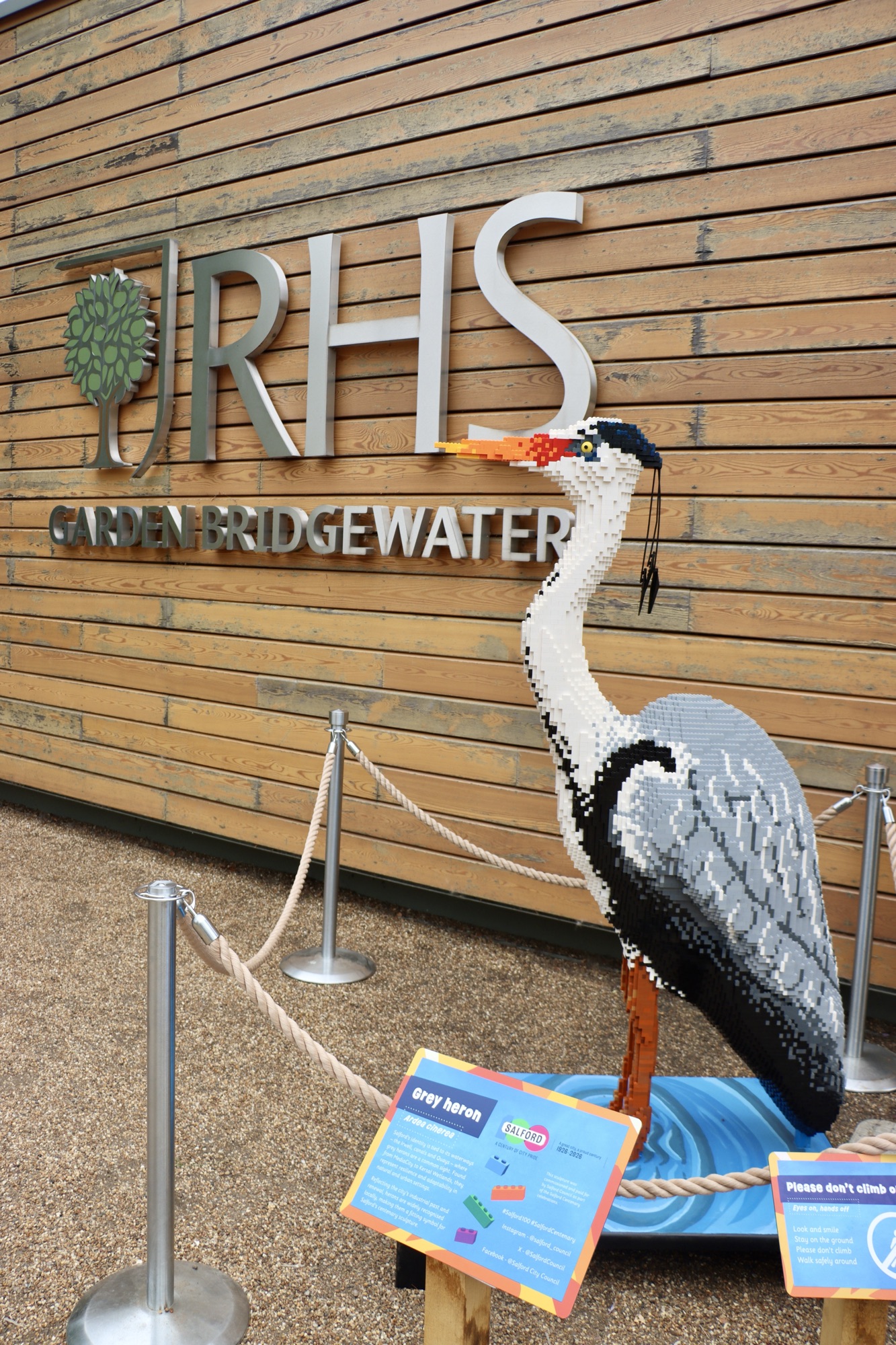
A photo of the entrance pavilion to RHS Garden Bridgewater, with a Lego brick Heron model

On our way back from our holiday in Wales, we stopped off at the RHS Garden Bridgewater to the north of Manchester. We’ve been several times before, as we had an RHS membership in 2023, but this was my parents’ first visit.

A quick history of Bridgewater

The RHS has a more detailed history of the Bridgewater garden on its web site, so I’ll keep this brief. It’s the newest of the five gardens that are permanently managed by the RHS, having come into their care in 2017 and opened to the public in 2021, and alongside Harlow Carr (visited in June), is their second in Northern England.

The site used to be home to a country house, Worsley New Hall, which was built in the mid 19th Century for Francis Egerton, the 1st Earl of Ellesmere. At the time, it cost around £100,000 – about £6.7 million adjusted for inflation, so not quite as much as Penrhyn Castle but still a big, expensive house. The house overlooked a lake, and further on, extensive walled gardens. Queen Victoria visited twice, in 1851 and 1857, arriving by the Bridgewater Canal which runs along the edge of the site. The Bridgewater Canal was built by a different member of the Egerton family, also called Francis Egerton, but his title was the 3rd Duke of Bridgewater.

The site saw use in both World Wars, as a British Red Cross hospital during the First World War and as a training ground for the Lancashire Fusiliers in the Second World War. The Egerton family left Worsley New Hall and after that the site declined, with the house falling into disrepair and later demolished in the 1940s. The site then returned to nature, with some use of the woods by the Scout movement as a campsite, and the walled garden as a plant nursery, until the early 2010s.

The Bridgewater Garden today

Broadly speaking, the RHS Garden at Bridgewater consists of five areas:

  • The original walled garden
  • New borders by the main entrance pavilion, known as the Worsley Welcome Garden
  • A Chinese stream-side garden
  • Middle Wood
  • Ellesmere Lake

The walled garden has been further sub-divided into different parts, including a kitchen garden, a learning space, space for community groups, and a Blue Peter garden transported from a previous Chelsea Flower Show. Middle Wood is the established wooded area which has been cleared of invasive buddleja to encourage more biodiversity, and it hosts a playground. Ellesmere Lake is the original lake that sat in front of where Worsley New Hall stood and has been partially restored.

The Chinese garden is new, and arguably the most interesting. Whilst it has been there since the garden opened in 2021, it is still under development, and a large pavilion is currently under construction. This has been built using traditional Chinese methods, and will hopefully be ready in the new year. The planting around the new pavilion includes lots of cherry trees, and I expect it’ll look fabulous come spring. It’s a good thing we’ve bought a year’s RHS membership as I’m sure we’ll be back.

Animals and wildlife

Beyond the walled garden there’s a chicken coop, with several heritage breeds of chicken on show. Also, beyond the play area, there used to be several Berkshire pigs which were used to help clear the ground whilst the garden was being established. However, they moved on to a new home elsewhere last year.

The increased biodiversity on site has encouraged more wildlife to move in. Every time we’ve visited, we’ve seen plenty of dragonflies, and on this visit, we saw a huge common hawker dragonfly which was several inches long. We also saw several caterpillars that will likely become cinnabar moths, along with plenty of bees and butterflies.

Accessibility

As befits an attraction opened in 2021, accessibility is good. The site is relatively flat, and where it isn’t, there are gentle slopes and paved paths. There are some steps and stepping stones, but there’s always an alternative accessible way round.

Disabled toilets are available in the welcome building, and in the potting sheds and garden cottage. The welcome building is also host to a Changing Places toilet. There are several cafés, including in the welcome building where this is also free Wi-Fi.

There’s a large car park which includes six standard-plus AC electric car chargers on the Raw Power network. It looks like additional rapid chargers are about to be made available too; these were covered up on our visit last month, but may be available by the time you read this.

If you arrive at Bridgewater by other means of transport, then there’s a 30% discount off tickets. The nearest railway station is Walkden, which is around an hour’s walk, but you can hire a bike until the 31st October. Walkden has regular services from Manchester Piccadilly station.

There’s also a direct bus, the number 33, from Shudehill interchange in Manchester city centre, which runs from the end of March to the end of August. It’s part of Manchester’s Bee Network, so you can catch a Bee Network bus to a flower garden.

RHS members get into Bridgewater for free. It’s usually cheaper to pre-book tickets online, and those in receipt of certain benefits can pre-book tickets for £1.

Events at Bridgewater

You may have noticed the heron in the top photo, made out of plastic bricks (which may or may not be Lego). This is part of the Brick Explorers event which runs until the end of the month. It takes place at other RHS gardens too, including Harlow Carr, with a different set of models to find. Our ten-year-old really enjoyed this.

There’s also a longer term Wind in the Willows trail on at present.

The Power Hall and Cosmic Chaos

The Power Hall at the Museum of Science and Industry in Manchester

A couple of weeks ago, we went back to the Science & Industry Museum in Manchester, to see the newly re-opened Power Hall, and their latest exhibition, Horrible Science: Cosmic Chaos. I’ve written about their previous exhibitions here and here.

The Power Hall

The Power Hall has been closed for six of years for a refurbishment. This has included replacing the roof, and installing a more efficient heating system. Indeed, the new heating system is now an exhibit in itself – it’s based around water-source heat pumps which pump water from an aquifer 90 metres below the museum. The heating system also incorporates a recovery system for the steam generated by the various machines on display in the Power Hall. Overall, the new system should be cheaper to run and better for the environment, and explaining how it works is just what the museum should be doing. It’s quite the comparison to see this fancy new system alongside machinery that’s over a hundred years old.

Speaking of the other machines, these are not all on at the same time, but there is a schedule for when they are powered up. These include a talk by one of the museum’s explainer staff, about where the machine came from and what it was used for. We got to see the Buxton diesel generator in action, which used to work in mine research site in Buxton at a time when the site wasn’t connected to the Nation Grid.

As well as static machines, the Power Hall is also home to some locomotives. There’s an enormous steam locomotive with two tenders, that was built in Manchester almost 100 years ago but worked in South Africa. A smaller locomotive, which was built for the Isle of Man, has been sectioned so that you can see inside it. There’s also Ariadne, a Class 77 electric locomotive that was built for services on the now-closed Woodhead Line between Sheffield and Manchester, and was later exported to the Netherlands. The Woodhead Line used a 1500 KV DC electrification system which isn’t used elsewhere in the UK (apart from on the Tyne & Wear Metro) but is common in the Netherlands.

The refurbishment of the Power Hall is good, and it’s nice to see some of the old exhibits again. It’s also nice for the museum to have more than one building open again; hopefully the rest of the site will be ready by 2030 for the 200th anniversary of the Manchester Liverpool Road station.

Entry to the Power Hall is free.

Inside the Cosmic Chaos exhibition at the Manchester Science and Industry Museum

Horrible Science: Cosmic Chaos

The BBC is following up its hit Horrible Histories series with Horrible Science, and this exhibition is themed around its central character, Dr Big Brain. At the start of the exhibition is a short video where you are recruited as one of his henchpeople, and you are tasked with helping him conquer the solar system. On the way, you get to see what passes for a toilet on a Soyuz-Mir spacecraft, how astronauts live in space, and what each planet in our solar system is like. There’s a good balance of objects from the museum’s collection, with videos and interactive activities for kids.

The exhibition is primarily aimed at 8-14 year olds, as you would expect for a CBBC TV series, but I learned a few things whilst there. As with other special exhibitions, you need to pay extra for entry. Advance booking is recommended for busier times, like school holidays, but when we went on a Sunday it wasn’t too busy.

Accessibility

I’m going to skip over the accessibility section for this one as it’s basically the same as last time we visited.

Creative Commons License
Except where otherwise noted, the content on this site is licensed under a Creative Commons Attribution-ShareAlike 4.0 International License.