Cliffe Castle Museum and Gardens

A photo of the outside of Cliffe Castle Museum

On Bank Holiday Monday, we went to Cliffe Castle Museum and Gardens in Keighley, which is about a 40 minute drive due north from where we live in Sowerby Bridge. We’d been to the gardens before on Good Friday in 2024, but the museum itself was closed and so we went to nearby East Riddlesden Hall instead.

History

Like Penrhyn Castle, Cliffe Castle was never a defensive castle, nor is it all that old as castles go – it’ll be celebrating its 200th birthday in the next few years. Instead, it was originally a smaller country house called Cliffe Hall which was then bought and expanded by the Butterfield family in 1848, adopting its current name in 1878. The expanded building gained a ballroom and conservatories, along with a tower over the main entrance.

In 1949, the castle and its grounds passed into public ownership, with financial assistance from a local benefactor, Sir Bracewell Smith. Smith also funded the building of an octagonal art gallery on the side, and it opened to the public as a museum in 1955. This replaced the previous Keighley Museum at Victoria Hall, which is now used as an events space.

A wide angle photo of the Octagonal gallery at Cliffe Castle

Inside Cliffe Castle

Cliffe Castle is a typical ‘local authority museum’ (a bit like The World of Glass in St Helens) in that its exhibits are an eclectic mix of objects bequeathed to the local authority and its predecessor organisations. However, they are grouped together in themed galleries, so it’s not a complete hodgepodge, and most objects come with detailed descriptions.

On entering, there are several rooms set out from Cliffe Castle’s time as a stately home – namely the reception room and drawing room. These are full of period furniture and some musical instruments. You also get to see the lavish decorations on the walls and ceiling.

Whilst there’s no set route around the museum, we next went into the Working Landscapes gallery, which shows artefacts from local crafts and trades from the past such as weaving and clog-making. That led onto the Archaeology Gallery, which includes various hoards of coins and other artefacts excavated in the area. The most recent of which was the Riddlesden Hoard, found in 2014, consisting of over 100 Roman coins.

Next, we went into what was the Butterfield’s ballroom, but is now the Natural History Gallery. This is full of taxidermied animals, the vast majority of which are either native to the UK or are/were regular visitors. Some of these stuffed animals are quite old, and so are rather faded or just badly stuffed, presumably by someone not familiar with what the animal looked like when it was alive. But it’s a decent-sized collection.

The Airedale gallery tells the geological history of the area, including many fossils, and then there’s a mineral gallery with lots of gemstones and geodes – some of which are quite large.

Upstairs galleries

Upstairs, there’s a small gallery of stained glass windows that have been rescued from local churches and halls. The majority of these windows were designed by William Morris or people working for him.

Then there’s a gallery focussing on Keighley’s local history, with various objects on show, ending with a live beehive. The last bit that we went into was the octagonal art gallery that was added in the 1950s, which has two levels.

Exhibitions

When we visited, there were a couple of small exhibitions. One was about the Keighley Cougars, the local rugby league team which is approaching its 150th anniversary, and the other marks 80 years since the founding of the Yorkshire Wildlife Trust.

Overall, we spent a little under two hours in the museum. This was mainly because we were going at the speed of our ten-year-old – I have no doubt that we could have spread it out to three hours or more if we’d had more time to engage with the exhibits. That’s not to say that there aren’t lots of things to keep kids entertained; there are various opportunities to dress up, or practice weaving, and there are trail guides that can be picked up in the entrance.

The gardens

Cliffe Castle’s gardens have undergone a relatively recent renovation. They are on a hillside, with some impressive water features at the bottom, a childrens’ playground in the middle and then a series of glasshouses and aviaries along the side. The aviaries are home to finches, budgies, cockatiels and, um, guinea pigs, with the glasshouses featuring more topical plants and succulents. There’s a wooded area at the very top, but we haven’t been into that.

Accessibility

The ground floor of the museum is all on one level with no steps, although wheelchair users will need to use a side entrance as the main entrance has a couple of steps. Sadly there’s no lift, although the majority of the exhibits are on the ground floor so those unable to use stairs can still see most of the museum. There is a disabled toilet; those needing a Changing Places toilet will need to go to Keighley Leisure Centre which isn’t too far away.

Entry is free, although a £3 per person donation is recommended. Normally the museum is closed on Mondays, but is open on some bank holidays.

There is a small car park on site, which is free. However, it has a maximum stay of three hours, probably because it’s so small. It was almost full when we got there, before the museum had opened. There is additional parking at the nearby Keighley Retail Park, but check the restrictions there too. The nearest electric car charger is at Keighley Leisure Centre, which is a rapid charger on the GeniePoint network.

Keighley railway station is a 20-25 minute walk from Cliffe Castle, with half-hourly trains to Leeds and Bradford and less frequent trains to Carlisle and Lancaster. Keighley bus station is a 15-20 minute walk; the 903 bus runs roughly hourly between 10am and 4pm Mondays-Saturdays and gets you much closer to Cliffe Castle.

Giving an honorary degree to Rosie Jones

A photo of (from left to right) me, Dr Jo Buckberry, Dr Emma Brown and Rosie Jones

I don’t often talk about my day job on here, but one of the things universities like to do is award honorary degrees to various celebrities, sportspeople and community champions, alongside our regular graduates. And on Wednesday this week, I had the honour of being a VIP guest at one of our graduation ceremonies where we awarded Rosie Jones with an Honorary Doctorate of the University (HonDUniv).

The photo above, taken after the ceremony, is of me, my colleagues Dr Jo Buckberry and Dr Emma Brown, and Rosie. I’m one of the co-chairs of the LGBTQ+ staff network at work, whilst Jo co-chairs the Disabled staff network and Emma co-chairs the Neurodivergent staff network. We all co-signed Rosie’s nomination for an honorary degree, alongside the chair of the Women’s staff network, way back in 2024, so it’s taken a while to become a reality. But I also think it speaks volumes that four staff networks all jointly nominated Rosie for the award.

A photo of Rosie Jones receiving her honorary degree from Anita Rani at the University of Bradford.

Polymath

Rosie is something of a polymath. She’s probably best known as a stand-up comedian, and appeared on Series 18 of Taskmaster, but she’s also a writer, podcaster, actress, and more recently started The Rosie Jones Foundation, which supports people who, like Rosie, have cerebral palsy. It’s a testament to Rosie’s strength and resilience that she has achieved so much, and I feel she’s a great role model for people with visible disabilities like cerebral palsy.

Her speech at the graduation ceremony was great; I often volunteer at the ceremonies and I don’t think we’ve had an honorary graduate drop an f-bomb like she did. To be fair, for those used to Rosie’s comedy, I would have been disappointed if she hadn’t swore. Also, we did give an honorary degree to Brian Blessed, but this was in the years before our ceremonies were recorded so I don’t know if he swore.

Her degree was conferred by our chancellor, Anita Rani, who is also known for several things including presenting Countryfile and Woman’s Hour, and as a former Strictly Come Dancing contestant. Her books are both great if you get a chance to read them. On the same day, we also conferred an Honorary Doctor of Health degree to former footballer and pundit Chris Kamara.

It was also great to chat to Rosie’s parents; Rosie hails from Bridlington, where my paternal grandparents lived for many years. I used to visit there a lot when I was younger. Rosie herself is absolutely lovely.

They say to never meet your heroes, but Rosie is one of mine and she’s fab. We need more disabled, queer, northern women in public life and Rosie is a trailblazer in this regard.

Unblogged November

I quite like doing these round-ups of previously unblogged minor things at the end of each month. You can read what I wrote in October, and now here’s November:

Peter Pan-to time (oh no it isn’t)

We’re off to see Peter Pan at the Bradford Playhouse this weekend. It’s the annual pantomime from one of the local amateur dramatics societies, The Bradford Players. It also marks ten years since I helped backstage with Sleeping Beauty, a previous pantomime production. We don’t see a panto every year, but we know some of the cast and so we want to support them. Some tickets still available for the performances taking place today and tomorrow, but be quick.

The Bradford Playhouse is hosting another panto next month – Cinderella. By contrast, this is a professional production – several showings have already sold out but others have good availability. It’s cheaper than many mainstream theatres, and by booking to see it, you’re supporting smaller independent theatres.

I suck at soldering

In last month’s unblogged update, I mentioned how I was playing with a ESP development board to add Wi-Fi control to an existing non-smart device. In the end, I gave up, as my soldering skills just weren’t sufficient to keep the wires soldered to the contact points on the circuit board. If you’re interested, the device I was modifying was an Ikea UppÃ¥tvind air purifier, and I was using this guide. To be fair, even if it had worked, I was using a much larger board than the D1 Mini recommended and so there’s no guarantee that I would have been able to re-assemble it anyway.

York Christmas Market

Whilst we were in York last weekend, alongside visiting York’s Chocolate Story, we also had a browse of York’s Christmas Market in Parliament Street. Even on a Sunday morning, it was very busy, and overall the city was the busiest I’ve seen it (remember, I grew up in York). Indeed, people have been complaining about how busy it is.

Christmas markets can be a bit hit-and-miss – I remember going to the Manchester Christmas market several years ago to find it was basically the same four stalls repeated across the whole city. York’s market is mostly local businesses, and it’s a good mix of food, drink and gifty things. We always buy a litre bottle of barbecue sauce from The Chilli Jam Man when we go.

Black Friday

I literally only bought two things on Black Friday this year, both from Amazon:

  • A 3 way plug with USB-A and USB-C (sponsored link). Christine has had one of these for a while and uses it daily; I’ve bought a second one because I want a charger for the bedroom that doesn’t have any LEDs on it.
  • The Actually Delicious One Pot Cookbook (sponsored link). This is the latest cookbook from Poppy O’Toole, aka Poppy Cooks, and it’s reduced to £10 (from £22) in their Black Friday sale. We already have her Potato Book and Slow Cooker books and use them both frequently.

Unblogged October

A photo of Fountains Church on Chester Street in Bradford

Last month, for the first time, I did a summary blog post of things we did in September, but that didn’t merit a whole blog post. So here’s some of the things I did this month.

Away day in a former nightclub

Every now and again, we have an ‘away day’ at work. This time, it was hosted at Fountains Church, located on Chester Street in Bradford, pictured above. I’ve been in the building before it was a church, as it used to be three separate nightclubs: Revolution (the national chain of vodka bars), Walkabout (the national chain of Australian-themed bars) and Dr Livingstone’s, a nightclub themed around Dr David Livingstone, a colonialist and explorer. I visited them all regularly back when I was a student.

It was weird seeing the building now used as a place of worship.

A blue postbox in Manchester

A blue postbox on Liverpool Road in Manchester

On the way back from seeing Brains, Bogies and You, we walked past a blue postbox on Liverpool Road in Manchester. Normally, British postboxes are painted red (or occasionally gold), so this one is unusual.

Fortunately, a plaque on the side explains all. Originally, blue postboxes were more common, as they were used for air mail post. Nowadays, air mail no longer needs to be sorted separately from domestic post, and so all but one of these have been removed. The only remaining genuine blue air mail post box is outside Windsor Castle. This one is actually just a regular post box, painted blue.

This specific post box was painted blue because it sits next to what was the Manchester Aerospace Museum. This later became the Air and Space Hall of the Museum of Science and Industry, but was permanently closed a few years ago.

Playing with an ESP development board

Back in July, I picked up an ESP development board (sponsored link) to use as a firmware flasher. I’ve been experimenting with it, to try to add Wi-Fi control to an existing non-smart device. Let’s just say that I need more soldering practice, but I’m hoping to write more about it should I succeed.

Danny Boyle in Sowerby Bridge

I didn’t spot the film crew myself, but Danny Boyle has been filming scenes for his new film Ink in Sowerby Bridge, near where we live. It’s a biographical film about the early life of Rupert Murdoch. It’ll be interesting to see if we can recognise the filming locations when the film comes out.

Much of Happy Valley was also filmed locally, as was the more recent CBBC series High Hoops, so we often see filming trucks parked up around the town.

Old posts brought back

I’ve also re-instated a number of old blog posts written in October 2015 from the Web Archive. These include Losing the Language of Love, which I quite enjoyed reading again, and several posts from a trip to London that month:

We also went to Crossness Pumping Station on that trip, but unfortunately my post about it was never indexed by the Web Archive and so it’s probably lost forever. It’s a shame – it’s a very interesting place. It’s not often that a sewage pumping station would be Grade I listed, and it’s only open on selected days of the year.

How many theatres are there in Bradford?

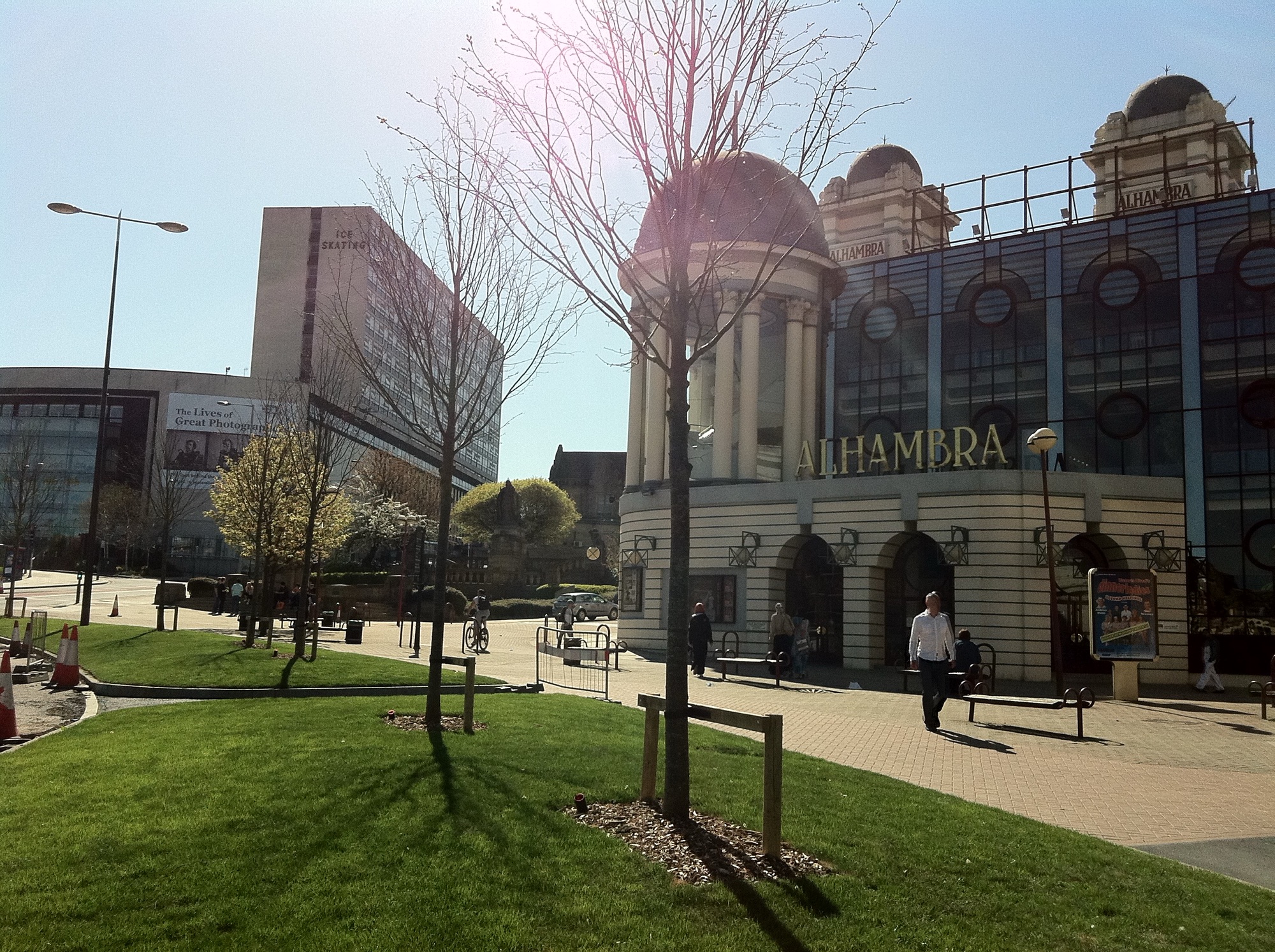
A photo of the Alhambra Theatre in Bradford.

Seeing as it’s UK City of Culture this year, and theatres are places where you can see cultural things, how many theatres are there in Bradford? I think there’s eight, and here’s a list.

By the way, I’m defining Bradford as the area within the A6177 Bradford ring road. That means that I’m not including the theatres and arts centres in Ilkley, Bingley and Keighley that are in the wider City of Bradford district. And I’m defining ‘theatre’ as anywhere with a stage and seating that can be used for performances.

1. The Alhambra Theatre

Probably the best known theatre in Bradford is the Alhambra Theatre in the city centre. Opening shortly before the First World War, and extensively refurbished in 1986, it seats 1456 people and is where most major shows take place. It’s Grade II listed, and next month it’ll be hosting the touring production of Matilda, Tim Michin’s musical adaptation of the Roald Dahl novel. Earlier this month, it hosted the annual CBeebies Pantomime which will be on TV and BBC iPlayer this Christmas.

The last show we saw here was Unfortunate, last year, but we may well go to see Matilda as it’s a favourite in our household. It’s a Grade II listed building.

2. The Studio

Right behind the Alhambra Theatre is The Studio. As the name suggests, it’s a ‘black box’ studio theatre with a movable seating rig. This can seat up to 200, and is used for smaller productions and stand-up comedy. We saw George Egg here 10 years ago, but haven’t been to another show since.

3. Theatre in the Mill

Okay, disclosure alert: The Theatre in the Mill is run by my employer, the University of Bradford. As the name suggests, it’s in part of what was the Phoenix Mill, and now forms one of the university buildings. Like The Studio, it’s a black box studio theatre with movable seating, and seats around 100 people. Its programme of events includes stand-up comedy – both performances and workshops – film screenings and shows. I’ve also been to a number of student shows here over the years, but as Bradford isn’t really a performing arts university, there currently aren’t many of these.

4. Siobhan Ullah Performance Space

Next door to the university is Bradford College, which is home to Bradford Arts School, and in turn, the Siobhan Ullah Performance Space. Although it’s primarily used by the college students, it can also be used for events and seats 125 people. Again, it’s a black box studio theatre. It’s named after a former performing arts student of the college who sadly died of an asthma attack, aged just 18. I haven’t been to this theatre before.

A photo of Bradford Live, a theatre in Bradford

5. Bradford Live

Back down towards the city centre, and next door to the Alhambra is Bradford’s newest and biggest performance venue, Bradford Live. It only opened this summer, and seats over 3000 people. It’s hosted in what was the Victoria Theatre, and later and Odeon Cinema which closed in 2000, and laid empty for almost a quarter of a century. Indeed, it survived a plan to demolish it in the late 2000s, and has now undergone a huge amount of restoration. It’s not currently a listed building.

As the name suggests, Bradford Live is more about live events and will be hosting a number of bands in coming months. Ocean Colour Scene are playing next month, as is CBeebies entertainer Justin Fletcher, and the Kaiser Chiefs are playing their first album in full in the new year. But there are some shows that you would typically expect in a theatre playing there too, such as Bluey’s Big Play, which I’m sure we’d be dragged to if our nine-year-old was a bit younger. We haven’t yet been here.

6. Bradford Arts Centre

Okay, technically the Bradford Arts Centre is even newer than Bradford Live, having opened under its current name as recently as this month. Previously, it was known as Kala Sangam, with a focus on South Asian arts. Its new name reflects its broader remit and engagement across all of Bradford’s populations. It’s located at what used to be Bradford’s crown post office at Forster Square, around the back of the Broadway shopping centre and next to Bradford Cathedral. The building is Grade-II listed.

There are several spaces in the arts centre, including a 200 seater studio theatre. We’ve been once, to see a pantomime that a friend was in about 10 years ago.

7. Bradford Playhouse

A few years ago, I used to volunteer at the Bradford Playhouse, and so it’s come up on here a few times. It was at risk of closure in 2014, but is now flourishing and is now fully accessible, following a successful crowdfunder early this year. The theatre offers two spaces: an art deco main auditorium seating up to 265 people, and a smaller black box studio theatre, seating up to 40 people. It hosts a mixture of professional shows and performances by amateur dramatic societies and dance schools. The building isn’t listed, but it was registered as an Asset of Community Value for five years in 2014.

8. St Georges Hall

Like Bradford Live, St Georges Hall is more of a live events venue than a theatre, with stand-up comedy and live bands. It’s also the oldest on this list, having opened in 1853. At one time, over 3000 seats were squeezed into the space, but nowadays its seating capacity has been reduced to 1335, or 1550 for standing events. It’s Grade II* listed, and was renovated between 2016 and 2019. The last show we went to see was a recording of I’m Sorry I Haven’t A Clue in 2014.

I think that’s quite an impressive list of theatres, actually, considering Bradford’s size.

Let’s make the Bradford Playhouse accessible

A screenshot of the Bradford Playhouse crowdfunder page for accessibility improvements

It was almost 11 years ago that I asked my blog readers to help save the Bradford Playhouse. The good news is that it was saved, and is still open. Unfortunately, being as it is a theatre from the 1920s, it’s not accessible – but its management team want to change that.

For anyone who can’t manage stairs, the building is essentially a no-go. There are stairs up to the main entrance, and once you’re inside, more stairs up to the seating or down to the bar. There is no lift, nor has there ever been one.

The good news is that planning permission has now been granted for accessibility improvements. There’ll be a new entrance, that much needed lift, and a facelift for the front of the building to restore its original art-deco appearance. In even better news, most of the money has been found to fund the improvements, partly thanks to Bradford being City of Culture for 2025. But there’s still a bit more money needed, and that’s where you can help.

Crowd funding

There’s a Crowd Funder, which needs to raise £10,000 by the 16th April. At the time of writing, they are 19% of the way there. Even if you can only spare £10, if another 800 people do the same, it’ll be enough to meet the target.

As regular readers will know, accessibility is something that is important to me and I include a section in all my newer days out reviews. Installing a lift at the Bradford Playhouse will open it up to many people who can’t manage stairs – not just wheelchair users, but others with mobility issues, and parents with prams. That way, more people can enjoy shows there, and it makes the venue more attractive to producers who currently may be deterred by its lack of accessibility. It would be fantastic if the funding target could be met, and the work completed before the end of Bradford’s year as City of Culture ends in 10 months time. I’ve already contributed; if you can, please contribute as well.

A trip to the Company Shop

A screenshot of the home page of the Company Shop web site

Shortly before Christmas, I popped in to the Company Shop in Bradford, and picked up a basket of groceries for only £8.

Company Shop is a surplus supermarket, and sells discounted groceries sourced from excess stock from other supermarkets. Inside, you’ll see some branded products, and also own-label products from the likes of Ocado, Lidl, Tesco and Asda. Stock ends up at the Company Shop either because mainstream supermarkets have over-ordered, or because they have large quantities of stock which is very close to its use by date.

Consequently, what’s on offer can vary widely from day to day. Most fresh produce tends to be short-dated, so ideally things that need to be cooked and/or eaten the same day. So it’s handy to pop in on a day when you can be open-minded about what to cook for dinner that day. However, it’s not a supermarket where you can rely on a fixed shopping list. For example, there was plenty of cheese on sale when I went, but it was small blocks of fancy cheese with added fruit and not plain cheddar for cooking with.

Other reasons why stock makes it to the Company Shop include:

  • The packaging is slightly damaged, so expect to see plenty of dented cans of things. If that doesn’t bother you, then you can pick up some real bargains.
  • Products from failed, missed or returned deliveries.

Some food is sold frozen, and there are also homewares on offer as well as food.

Locations

There are currently 13 Company Shop outlets across England and Scotland. The majority of these are across the north of England and the midlands, as, like Greggs Outlets, they’re concentrated in areas with low incomes. There isn’t a Company Shop in London, for example, and the only store in the south is in Southampton. Back in November, a Metro reporter went to the Southampton store and wrote about her experience.

Company Shop membership

As with Mordor and Costco, one does not simply walk into the Company Shop. You need to be a member, and, like Costco, there are eligibility requirements. I was able to join through my employer, and many public sector and charity workers should be eligible. You can also join if you are in receipt of certain means-tested benefits, such as Universal Credit. The whole ethos of Company Shop is about widening access to groceries to those from low incomes, so unlike Costco, membership is free.

Members can bring a limited number of family and friends along with them, and can share their membership with up to two other people who do not necessarily need to meet the eligibility criteria.

On my visit, I picked up two boxes of my usual breakfast cereal, two litres of long-life lactose free milk (good until April), some onions, oranges and potatoes, some short-dated crisps and some dishwasher rinse aid. Like I said, all that came to around £8 – indeed, the crisps were 10p for a bag of six.

Whilst we’re a fairly high income household, I’m sure we’ll drop in to the Company Shop every now and again when we’re in the area with the car. We picked up some genuine bargains there, and, most importantly, all the food got used. And that’s better than it all going to waste.

Bradford 2025 – UK City of Culture

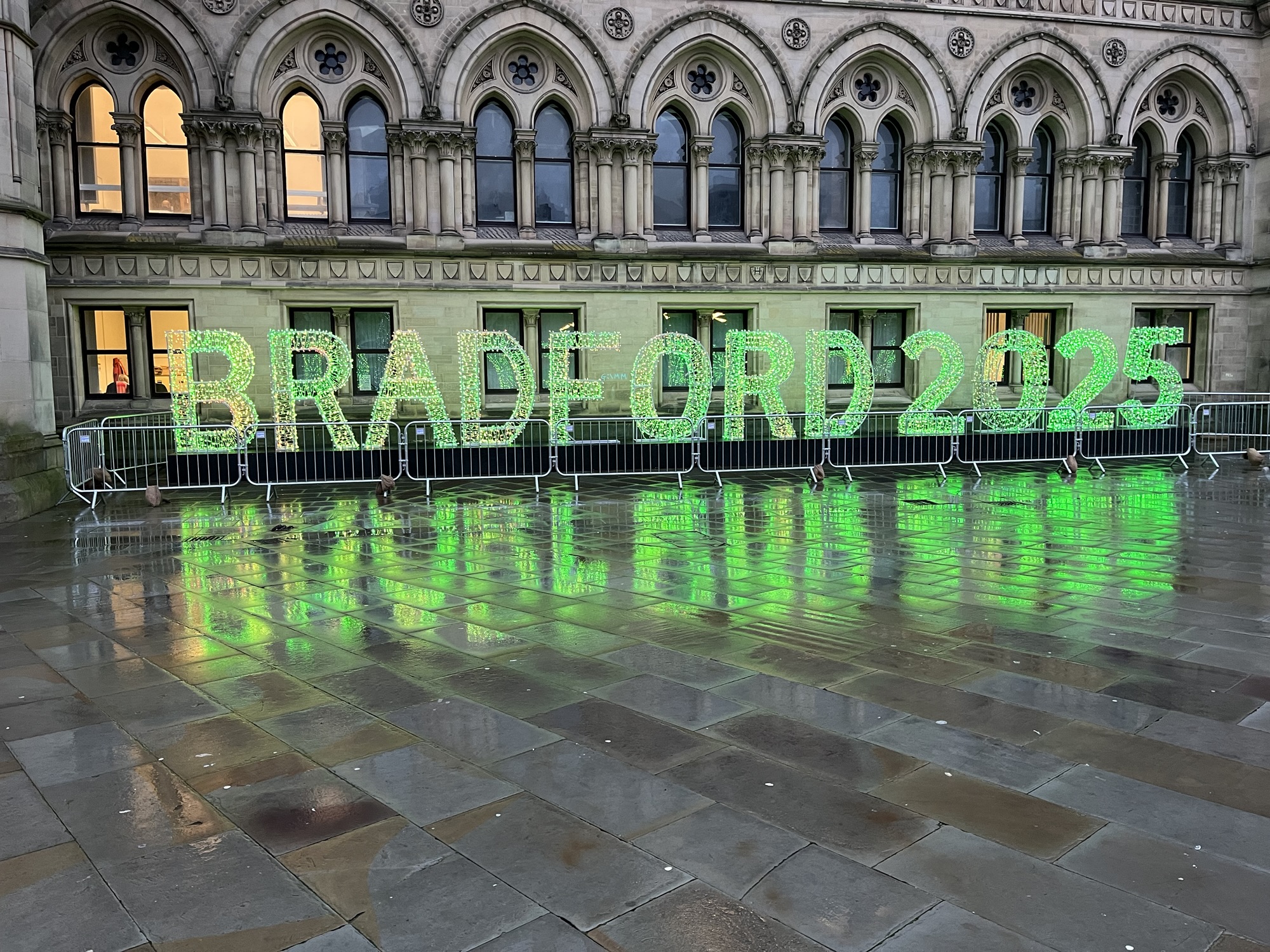
A photo of some large illuminated letters spelling out 'Bradford 2025' in green, outside Bradford City Hall

Every four years, a different UK city is designated a City of Culture for the year. And this year, it’s Bradford, the city where I work and used to live.

This isn’t Bradford’s first rodeo. Back when we were still an EU nation, it was decided that a British city would be the European Capital of Culture in 2008. Bradford put in a bid, but wasn’t shortlisted. Ultimately, Liverpool won the bid, but the success of Liverpool’s year as European Capital of Culture resulted in the creation of the UK City of Culture designation, to take place every four years. Derry/Londonderry, in Northern Ireland, won the first designation in 2013, followed by Hull in 2017, Coventry in 2021, and now Bradford in 2025.

Now, I’m biased; I spent eight years living in Bradford and still work there, and indeed my employer is a major Bradford 2025 partner. But I was genuinely delighted when it was announced that the Bradford bid had been successful. When the bid was being prepared, way back in 2019, it was claimed that Bradford has the youngest population of any city in Europe, with 29% of people aged 19 or under. Bradford is also well known for being very multi-cultural, with a large population of British Asians. And there are a number of interesting cultural places in Bradford, including the Theatre in the Mill, Kala Sangam, Impressions Gallery and Cartwright Hall. Bradford itself became the first UNESCO City of Film.

The Bradford 2025 bid includes the wider Bradford district as well, so there’s the Saltaire UNESCO World Heritage Site and Salts Mill, and Haworth, long-associated with the Brontë sisters.

There’s already a long list of events planned throughout 2025. These include the re-opening of the National Science & Media Museum, which has undergone a year-long refurbishment. Bradford 2025 kicked off with Rise, an outdoor event which attracted around 10,000 people on both nights, hosted by Bradford-born illusionist Steven Frayne (who previously went by the name Dynamo).

It’s not just the Media Museum that’s had a refit. If it’s your first time visiting Bradford city centre in a while, you’ll find that much of 2024 was spent pedestrianising many of the streets, making it a much more pleasant place to walk through. Whilst there is some work still to complete, it looks much nicer and the extra trees and shrubs are welcome.

When Hull was City of Culture in 2017, it resulted in the creation of almost 800 jobs in the city, and regeneration of some run down areas by the docks. I hope that Bradford 2025 will be similarly transformational.

Bolling Hall Museum, Bradford

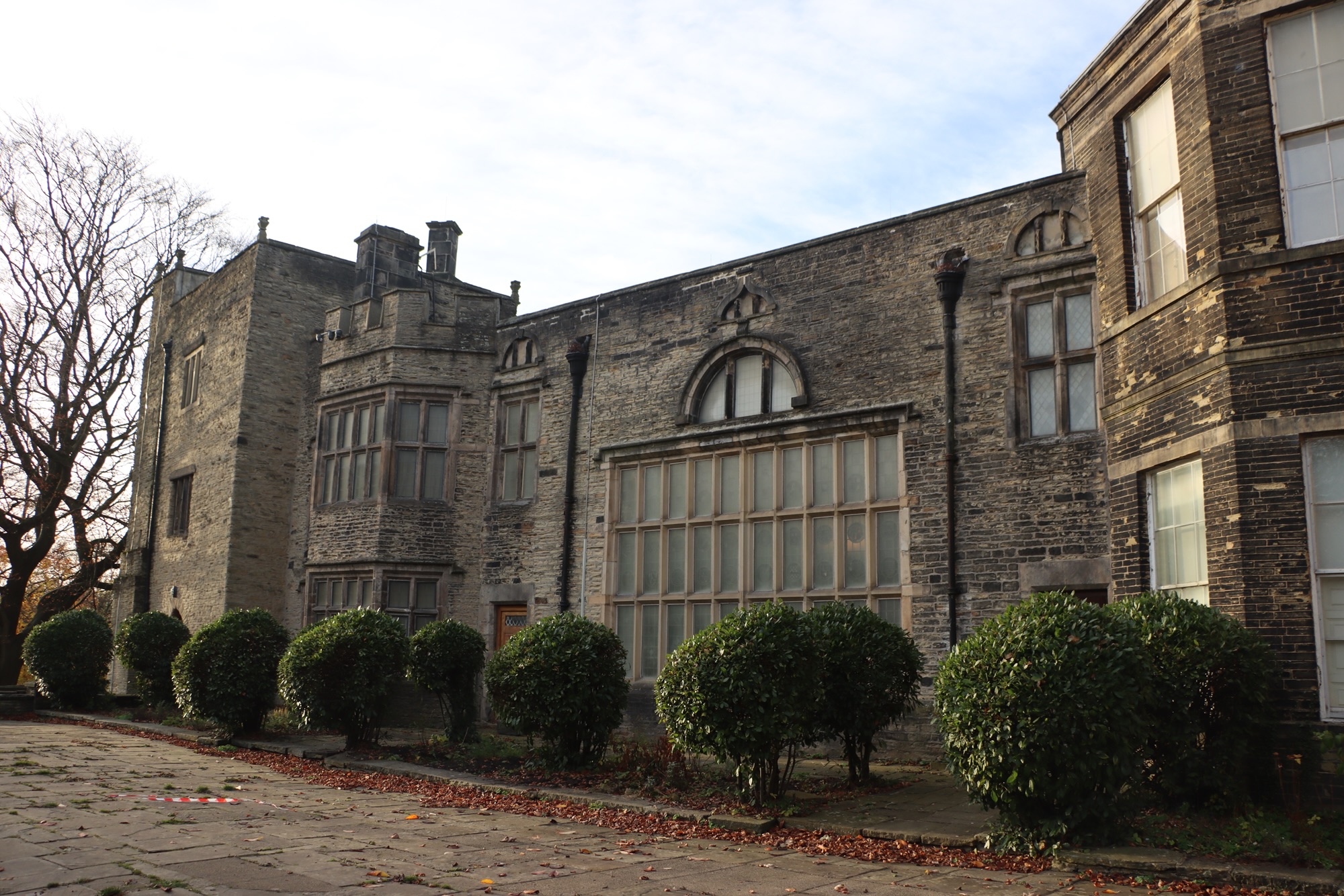
A photo of the outside of the Bolling Hall Museum in Bradford. It's a stone-built stately home.

Last month, we met up with a couple of friends to go to the Bolling Hall Museum in Bradford. Now, long time readers of this blog will know that I lived in Bradford between 2002 and 2010, and still work there, so surely I must have been here loads of times.

Nope. This was the first time I’ve been.

Bolling Hall is an old stately home that has been altered many times over the years. Parts of it date back to the 14th century, and in the early 20th century it was passed to what would eventually become Bradford Council, who run it as one of their museums. As various parts of the building date from different times, there is a variety of architectural styles on show.

Bolling Hall overlooks Bowling Park, to the south of the city centre, and is in what is now mostly the residential area of West Bowling.

A photo of a piano that belonged to Frederick Delius

Inside, the rooms have been mostly laid out as they would have been in Georgian times, including the kitchen and several bedrooms. There’s also a small exhibition about Bolling Hall’s role in the English Civil War; its owners at the time supported the Royalists, whereas the wider Bradford area backed the Parliamentarians.

As with most council-run museums, Bolling Hall is home to various objects in Bradford Council’s collection. This includes the first piano owned by Bradford-born composer Frederick Delius.

It’s not a big museum, and we spent about an hour there. Whilst there are gardens outside, these were mostly roped off when we went.

Amusingly, it was me who created its listing on Foursquare, thirteen years ago, so it was nice to be able to finally check in there.

Accessibility

Being a very old building that has been altered several times, accessibility is not great. If you’re unable to manage stairs, then you can use an accessible entrance to see some of the ground floor rooms, but there isn’t a lift and the upstairs rooms are on different levels.

Bolling Hall Museum is closed on Mondays and Tuesdays. Entry is free. Parking is available on site, and it’s well-signposted. It’s served by bus 635 from Bradford city centre.

Have you ever been to a Greggs Outlet?

A photo of the Gregg's Outlet on Great Horton Road, opposite the university in Bradford

Greggs, the UK bakery chain, is basically everywhere nowadays. What started out as one shop in the north east in the 1950s has grown to approximately 2500 stores across almost all of the UK. Most towns and cities have at least one; whilst Sowerby Bridge doesn’t have one, nearby Halifax has three. Even the New York Times wrote a gushing article about them earlier this year.

What’s less well known about are the smaller number of Greggs Outlets. These sell excess stock from other Greggs stores at a discount. And there’s one opposite the university where I work.

The Greggs Outlet in Bradford wasn’t always an outlet. Pre-pandemic, it was a regular Greggs, selling the full standard range including the vegan sausage rolls that seemed to boil Piers Morgan’s piss. But when shops could open again, it received new red branding and had the indoor seating area closed.

Inside, you can buy most of the things that you can normally buy in a regular Greggs, but not everything; it depends what has been left over elsewhere. Nor will it be quite so fresh; the sandwiches will have been made the previous day, for example. You also can’t get things like bacon sandwiches, although usually coffee is available to take away.

But it is much cheaper – typically everything is half price. Baguette sandwiches are around £1.60 each, and sweet treats are almost always under £1. Great for students on tight budgets at the university and nearby college, but also for those on low incomes.

Indeed, the reason why you may not have come across a Greggs Outlet is that they’re strategically located in areas of social deprivation. This includes some in its home territory around Newcastle, but also Bradford, Birmingham, Glasgow, Liverpool, Cardiff, Leicester, Leeds, Preston, Sheffield, Oldham, and some in London. Greggs is planning to have 50 outlets open by the end of next year, representing about 2% of its estate. Food that remains unsold then gets passed to charities, and Greggs claims to have distributed over 1000 tonnes of food in 2023.

Whilst I can afford to go to a regular Greggs, I appreciate having an outlet in easy reach. And it’s a good way of avoiding food waste. Schemes like Too Good To Go are great for smaller businesses to offload excess stock, but for larger chains like Greggs, making cheaper food available all day for those less likely to be able to afford it is welcome.

Creative Commons License
Except where otherwise noted, the content on this site is licensed under a Creative Commons Attribution-ShareAlike 4.0 International License.