
Legoland Discovery Centre in Manchester

Some Lego models inside the Legoland Discovery Centre in Manchester

A couple of weekends back, Christine had some coursework to do and wanted me and our ten-year-old out of the way for a day. So, we went to the Legoland Discovery Centre, located at the Trafford Palazzo in Manchester.

This was actually our second visit; our first was in August 2017. Back then, our now ten-year-old was only about 18 months old, and as such, way too young. Whilst there is a small Duplo area, it’s not a big attraction and so we didn’t get much out of it at the time. It’s best for primary school aged kids, so 4 to 12-year-olds. Older kids may find that they’re too big for some of the attractions.

What’s inside the Legoland Discovery Centre

Like I said, the Legoland Discovery Centre isn’t a big attraction, especially compared to Legoland Windsor. We went to Legoland Windsor in 2021, at which you really need two days to see everything. Handily, there are two themed hotels on site, but at a price – instead, we stayed in a Premier Inn in Slough. By comparison, you can do pretty much everything at the Legoland Discovery Centre in two hours. Indeed, at busy times, you may find your visit is actually limited to two hours.

It’s all indoors, and starts off with an exhibit showing how Lego bricks are made. On our previous visit, this was an interactive exhibit with a member of staff walking us through it and presenting us with a special exclusive Lego brick at the end. On this visit, it was a static exhibit with information panels.

Next, was Miniland, where there are Lego models of real places. These are all in the north west of England, so Manchester but also Chester and Blackpool. If you visit this month, like we did, the models have all been spooked up for Hallowe’en. So, expect to see spiders attacking the model of the Blackpool Tower and tentacles coming out of a model of the Trafford Centre.

There are two rides:

  • Kingdom Quest, where you sit in a chariot and shoot lasers at invading trolls
  • Merlin’s Apprentice, which spins you round and lifts you up and down as you pedal

There’s a Ninjago themed soft play area, the aforementioned Duplo area and a ‘4D cinema’ where you get to watch a short 3D computer-animated film and have air and water sprayed at you. This was also Hallowe’en themed. This is all included in your entry fee.

Paid-for extras

Without realising, I booked the ‘Legoland Discovery Package’, which includes some paid-for extras. As I write this, these cost an extra £5.50 per ticket when booked in advance, which is cheaper than buying on the day.

These included the Lego VR Experience, where you sit in a pod and put on a virtual reality headset. The pod then moves in time with a virtual reality film. You get to choose one of two films – a Lego race, and a roller-coaster, which our ten-year-old chose for both of us. The roller-coaster is actually set in nearby Salford Quays, just by the Imperial War Museum North, and has you descending a huge tower on the roller-coaster.

We also got two bags of Lego (presumably one each) on entry, which were probably worth the extra £5 or so each on their own.

The other thing we paid extra for was a green screen photo. We went for the £20 package, which got us two large printed photos, the same two photos on keyrings, and digital downloads of all the photos that were taken, including one on the Kingdom Quest ride. A bit pricey, but these things always are.

In all, we spent a little over two hours at the Legoland Discovery Centre. Having booked in advance and used a discount (see below), it was merely moderately expensive. I would not have wanted to pay the full, on the gate price.

Accessibility

There is full step-free access to the attraction, and inside there is a Changing Places toilet. The regular toilets are currently closed for refurbishment, but there are plenty of toilets elsewhere in the Trafford Palazzo.

It’s always cheaper to book at least 24 hours ahead of time, and entry charges vary depending on the time of day, so you can save even more if you’re willing to be even just a little bit flexible. Like all Merlin attractions, there are lots of ways to save money – I got 15% off via the CSSC, but you can also get a similar discount with a Max card when booking in advance. It’s also worth checking the Merlin Deals page on MoneySavingExpert.com – right now, you can save 25% by buying a packet of Kellogg’s cereal (although I’m not 100% sure that the Legoland Discovery Centre is included).

There’s a café inside, and a Lego shop on the way out.

The nearest car parking is at the Trafford Palazzo itself, and there is plenty of car parking at the nearby Trafford Centre too. Electric car charging of all types is available across the site.

We got there by tram; the Trafford Palazzo tram stop is right outside, and it’s the penultimate stop on the Trafford Park line. The Trafford Centre bus station is a 10-15 minute walk away, but at least it’s an indoor walk.

There are multiple Legoland Discovery Centres across the world; the other UK one is in central Birmingham, near Brindleyplace.
Getting free prescriptions in England

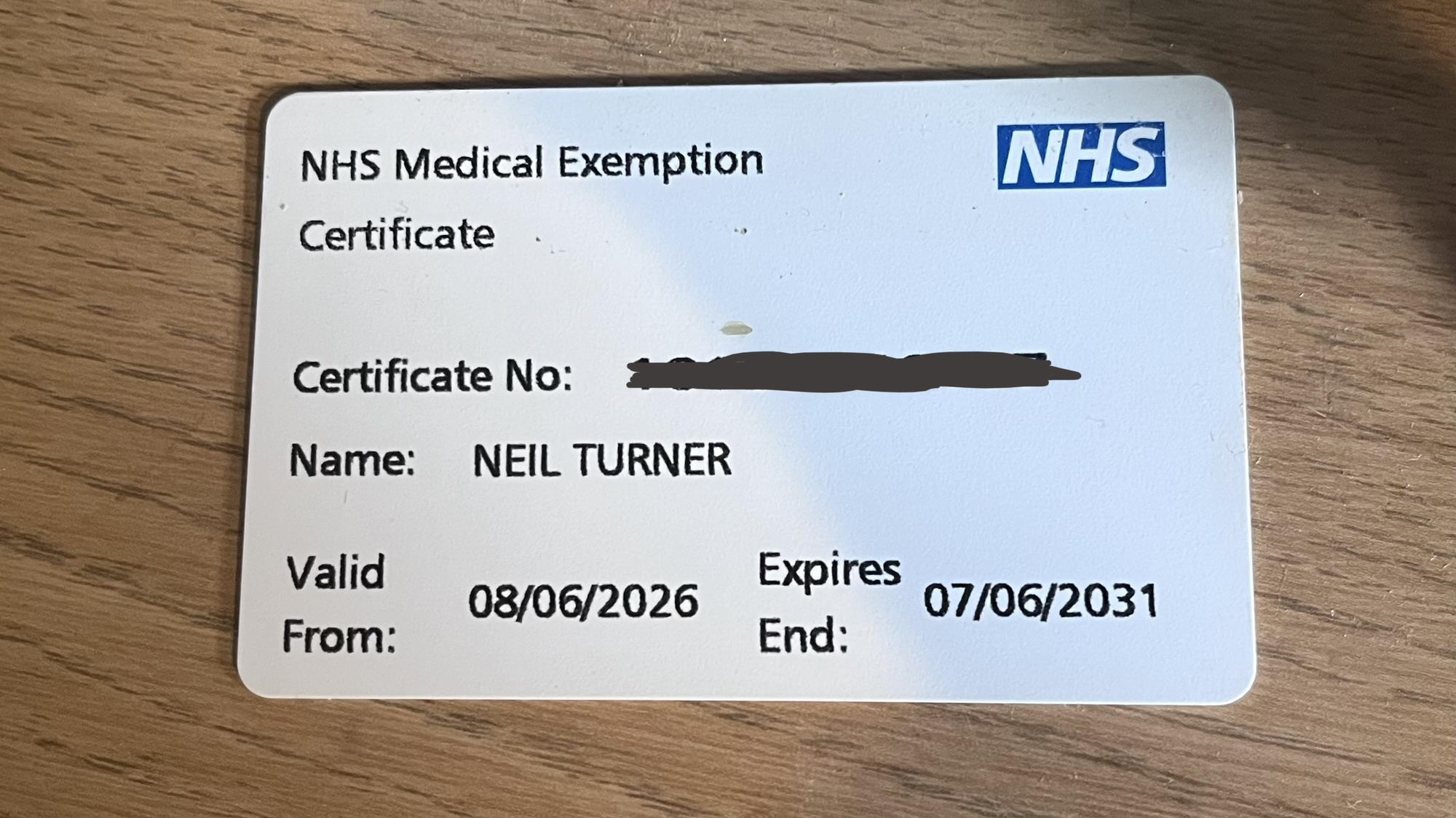
A photo of my NHS Medical Exemption Certificate which entitles me to free prescriptions

As well as a free bus pass, one of the silver linings of being diagnosed with epilepsy is that I no longer have to pay for prescription medication. Epilepsy is one of several medical conditions which makes me eligible for a medical exemption certificate which you can get from the NHS Business Services Authority.

There are several other reasons why you may qualify for free prescriptions:

  1. You live in Scotland, Wales or Northern Ireland. The devolved administrations in these countries have abolished prescription charges, so all their residents get free prescriptions. Yorkshire hasn’t yet obtained sufficient devolution from the rest of England to roll this out, and we’re not in a position to move over the borders at the moment.
  2. You’re under 16, 16-18 and in full-time education, or over 60. Children don’t pay for prescriptions, nor do those receiving full-time further education, and once you turn 60, you don’t have to pay either.
  3. You’re in receipt of certain benefits. Some recipients of universal credit, pension credits or who are on low incomes can claim free prescriptions too.
  4. You have a medical condition that requires regular medication. This is the one I now fall into.

Asthma and free prescriptions

Now, I’ve been asthmatic since I was three, and have had to take prescription medication every day since then to literally help me breathe. However, asthma is not one of the medical conditions where you can claim a medical exemption certificate. This means that, since I turned 19, I have been paying for my asthma medication – until this summer, that is.

In recent years I have had an NHS Prescription Prepayment Certificate (PPC), which is like a season pass for prescriptions. I make 10 monthly payments by direct debit, and can then get as many medicines as I am prescribed without having to pay for them individually. If you need at least one item of medication each month, then a PPC will save you money.

How to apply for free prescriptions

Once it became clear that I would need to take Levetiracetam twice a day, every day, probably for the rest of my life, I filled out an exemption form. Most pharmacies should have a supply of these forms (which are on paper), and you’ll just need to take it along to your GP practice for it to be signed and stamped. Within a few weeks, I had received my medical exemption certificate – a credit-card sized piece of card which gives me free prescriptions for five years. Notably, my direct debit payments for my PPC were also automatically cancelled when this was issued, which was nice.

It would have been nice if my asthma would have been enough to get free prescriptions on its own. Over the years, I have literally spent thousands of pounds on medication just to ensure that I can breathe. But at least now I probably won’t have to pay any prescription charges again – unless we manage to somehow cure my epilepsy within the next five years.

Setting the Stage at the Media Museum

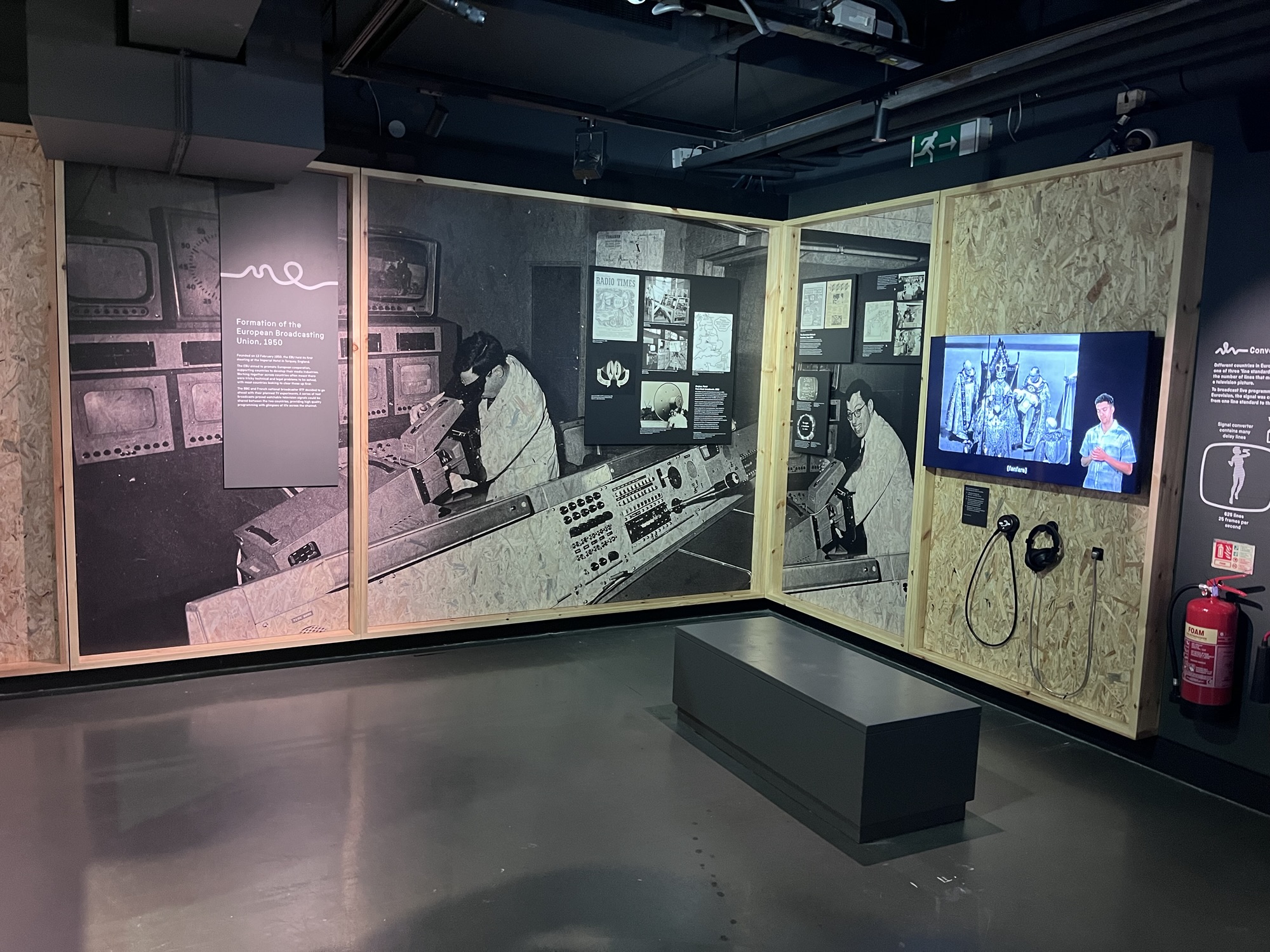
A photo of the inside of the Setting the Stage exhibition about the Eurovision Song Contest at the National Science and Media Museum in Bradford

2026 marked 70 years since the very first Eurovision Song Contest, and so the National Science and Media Museum in Bradford is holding a special exhibition called Setting the Stage. I visited a couple of weeks ago, along with our ten-year-old and some friends from university.

Setting the Stage spans two floors, taking up both of the museum’s temporary exhibition spaces, so it’s a large exhibition. You start off on the first floor, and with it the beginnings of the European Broadcasting Union. Here, there’s a lot about the technical challenges that had to be overcome in the 1950s to be able to broadcast the same TV programme live across multiple countries. A network of broadcast masts had to be set up across the continent to relay TV pictures and sound, and mountain ranges like the Alps provided particular challenges, as did differing TV standards in use in different countries.

Even now, the Eurovision Song Contest is a massive technical undertaking for the host nation, requiring a huge venue, multiple cameras, microphones, staging, lighting and crews to make it all run smoothly.

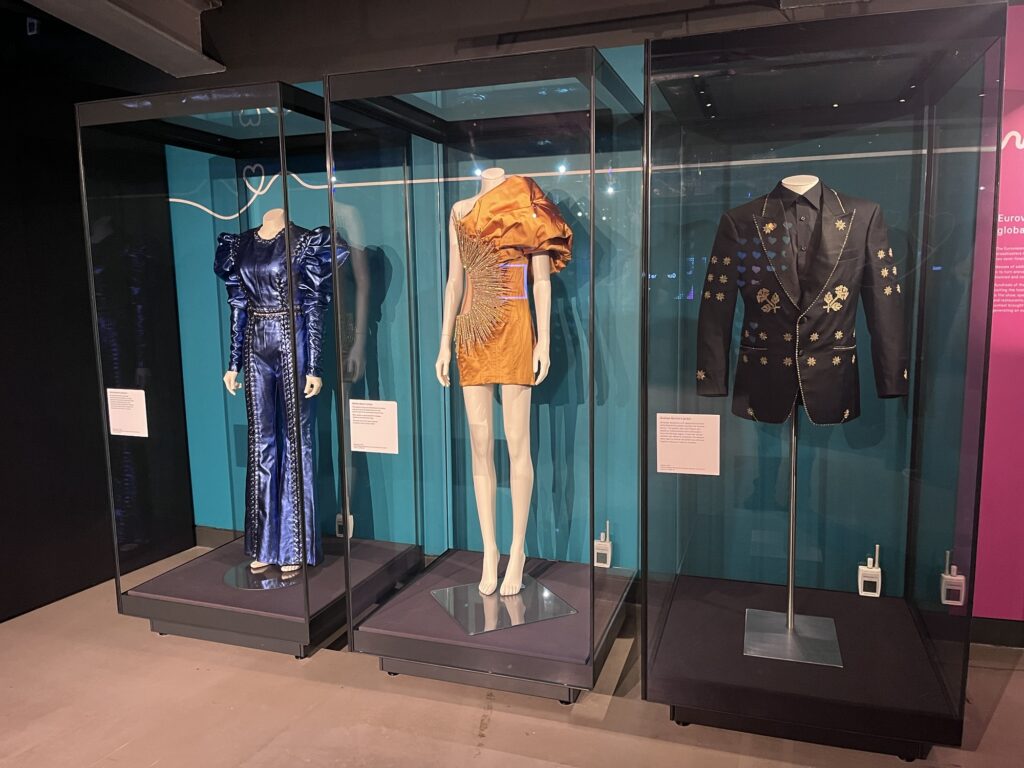
Outfits worn by Julia Sanina, Alesha Dixon and Graham Norton for the 2023 Eurovision Song Contest, on show at the Setting the Stage Exhibition

Fan stories and Objects

The Media Museum has used the Setting the Stage exhibition as an opportunity to put on show various objects related to Eurovision in its collection. It helps that the UK was a recent host of Eurovision, as we hosted the 2023 competition on behalf of the 2022 winners, Ukraine. The exhibition has the outfits worn by the hosts, Julia Sanina, Alesha Dixon and Graham Norton on show, pictured above. There’s also one of the flight attendant uniforms worn by a member of the band Scooch, for their 2007 entry Flying the Flag.

There are also plenty of objects donated by fans, including some home made items. Expect to see more than one star hat based on the one worn by 2007 Ukrainian act Verka Serduchka, for example. It’s similar to an earlier exhibition that I visited in 2014 about Doctor Who which focussed on the show’s relationship with its fans.

Upstairs, you have a chance to do a bit of karaoke with a choice of songs. Thankfully, no-one videoed my rather poor attempt at Oooh Aaah, Just A Little Bit by Gina G.

Setting the Scene is running at the National Science and Media Museum until the 24th January, so you still have some time to go and visit. If you’re a Eurovision fan, then I’d definitely recommend it, but even if you’re not, you may learn quite a bit about what it’s like to put on a massive live show across an entire continent (and Australia, for some reason).

Accessibility

Accessibility at the National Science and Media Museum is good; all floors are level and there’s lift access available. Disabled and Changing Places toilets are provided.

Entry to the museum is free, as it’s home to several national collections, but a £5 per person donation is encouraged. There’s limited pay and display parking behind the museum, and there are apparently two electric vehicle charge points (standard AC, Type 2) here which show up on Google Maps, but not on Zapmap. I personally park at the Broadway shopping centre and walk across. The museum is only a short walk from both Bradford Interchange and Bradford Forster Square railway stations and indeed we visited by train on this occasion.

My disabled bus pass

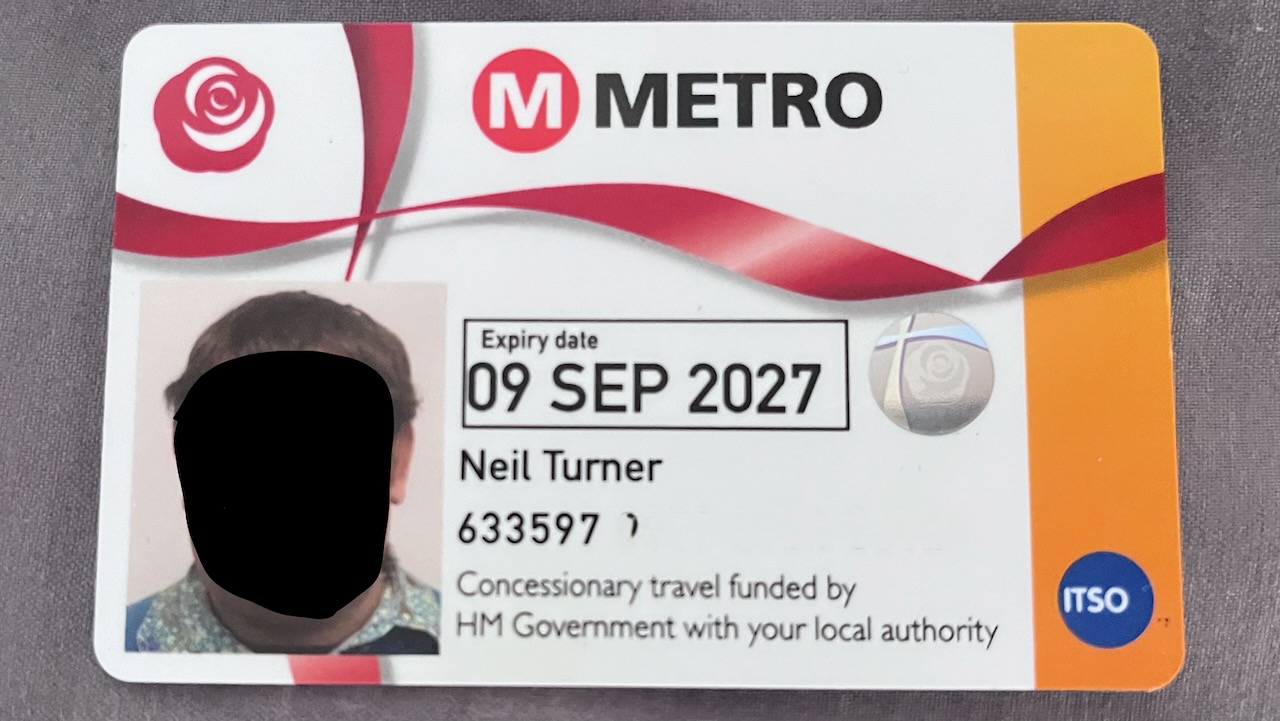
A photo of my Disabled Person’s Travel Pass - a bus pass giving me free off-peak bus travel

As I’m currently unable to drive for health reasons, I’ve applied for a Disabled Person’s Travel Pass to give me free bus travel. Indeed, the letter I received from the DVLA notifying me that I was unfit to drive was sufficient proof that I’m eligible for a bus pass.

I wish I’d known this when I first got my letter through in June. As it was, it took me until mid-August to apply, and then it took around a month for my application to be approved. The card then arrived in the post around a week later. In that time, I’d made a number of bus journeys that would’ve been free, had I received my card sooner.

Applying for your bus pass

Generally, you apply for your bus pass via your local authority’s web site, or in person at their offices. However, some counties, like where we live in West Yorkshire, have county-level passenger transport organisations. Ours is currently called Metro, hence the big red ‘M’ on my card, but they’re in the process of re-branding to the Weaver Network. This in the same way that Transport for Greater Manchester is now more commonly known as the Bee Network, thanks to Andy Burnham’s time as Mayor of Greater Manchester. Information about bus passes for blind and disabled people is here on Metro’s web site, if you live in West Yorkshire.

If you think you’re eligible for a disabled bus pass, then generally your local authority is a good starting point. Their web site should signpost you elsewhere if it’s handled by another organisation.

What your bus pass entitles you to

As I write this in October 2026, having a Disabled Person’s Travel Pass entitles me to free bus travel between the hours of 9:30am and 11pm, Monday to Friday, and all day at weekends and on public holidays, across the whole of England. However, one of the first things that Andy Burnham announced when he became Prime Minister was that time restrictions would be abolished from the 1st April 2027. That means that, in just under six months time, my disabled bus pass will be valid 24 hours per day, across England. Because we’re disabled, not werewolves, and sometimes disabled people have places we need to be before 9:30am. Some of my hospital appointments require more than one bus to get to, and each journey is £2.50, or £6 for an all-day ticket when my bus pass isn’t yet valid.

Individual counties and local authorities can also offer additional benefits to bus pass holders from their area. For example, on buses in West Yorkshire, my pass can be used until midnight, rather than 11pm. I can also use it on train journeys within West Yorkshire, although not for free travel – instead, I get half price off-peak travel. This doesn’t help me with commuting, although my Disabled Person’s Railcard is valid at peak times so I can still use that on the way to work. I’ve used my 50% bus pass discount once on a weekend recently, and most online ticket booking web sites seem to have an option to use it as a railcard when buying tickets.

If you live in Greater Manchester and have a Disabled Person’s Travel Pass, then I believe it’s already valid 24 hours per day within Greater Manchester. In effect, come April 1st, Andy Burnham is rolling out one of his Manchester mayoral policies nationally. You also get free off-peak travel on all trams and trains within Greater Manchester.

Within my local authority area, it can also be used at many of the places that a Passport to Leisure card can be used, which offers discounts at council-run gyms, and discounted entry to some local attractions.

Eligibility

Whereas the Disabled Person’s Railcard has wide eligibility – I was able to get one simply because I’m a hearing aid user – you have to me more profoundly disabled to qualify for a Disabled Person’s Travel Pass. As mentioned, having the DVLA declare you medically unfit to drive is one such criteria. For West Yorkshire, here’s the list along with the evidence required.

My pass has only been issued for a year; hopefully, I’ll have no more seizures and will be back to driving, at which point I’ll no longer be eligible for my bus pass. Which would be okay – when I could drive, I rarely used the bus. The few occasions that I did use it were when our car was in the garage, or I needed to get home when all the trains were cancelled. But at the moment, I’m using buses at least weekly, and so having a free bus pass is a great help.

By the way, if you’re wondering why I have blanked out my face on my card it’s because:

  • It’s an awful photo
  • The same photo is on my passport

Recent ESPHome things

A screenshot of the ESPHome Device Builder Build Server dashboard

This is a miscellaneous post about recent things that have happened with the ESPHome project, and how I’ve implemented them at home. As well as a little bit of troubleshooting.

ESPHome Remote Build server

The fact that you can compile ESPHome binaries for each individual device is both a good thing and a bad thing. It’s good, because the binaries can be very efficient, typically using less than half of the storage space even on older ESP8826 chips. That means you can update them easily ‘over the air’ (OTA).

But the re-compiling process can take a while, especially if you are running the ESPHome Device Builder on low-powered hardware. If you use it alongside Home Assistant, then this may mean that you run it on a Raspberry Pi, or a Home Assistant Green like I do. And that’s good from the perspective of having a low-powered device that’s always on, but not so good when it comes to compiling software. Even a relatively basic compile on my Home Assistant Green takes about 10 minutes.

Now, there’s the option of using a Remote Build Server. This is where you install the ESPHome Device Builder on a more powerful machine – in my case, my MacBook Neo, and the build is done on this. You just need to have the more powerful device on with the device builder running in the background, link it with the device builder on your Home Assistant device, and all future builds will be done on the faster device. Device builds now take around a minute, instead of ten minutes. This is especially good if you’re tinkering with settings and need to re-compile several times in a short space of time, or have lots of devices to update when a new version of ESPHome is released.

Fixing OTA failures

One of the old Tuya smart plugs that I re-flashed with ESPHome has been temperamental with over-the-air updates recently. It hasn’t always accepted the latest firmware when a new ESPHome release has come out, and given a rather unhelpful error message. I would see things like “set Error flag: unspecified” and “unknown error from esp“, and it would time out after about 10 minutes of doing nothing after “preparing to upload“.

What was bizarre was that I have four of these plugs, all running essentially the same ESPHome configuration (just with different names), and yet only this one was problematic. Anyway, I managed to solve it by taking the nuclear option and manually re-flashing it. I even followed my own guide that I wrote last summer, which helped with matching up the pins on the device with my USB-UART converter. A manual re-flash worked, and a subsequent OTA update worked as well. This suggests that there may have been some corrupt code left on the flash memory of the device that the manual re-flash wiped.

Changing to OTA Encryption

Last month’s release of ESPHome introduced OTA encryption for over-the-air updates. Previous updates would include a password in the YAML code, but things like your Wi-Fi key were sent unencrypted across your home network when updating. This improves security, but also makes the firmware more efficient; it uses your Home Assistant API key as an encryption key, and this typically frees up about 30 KB of flash memory on your device. That might not sound like a lot, but on ESP8266 devices with only a single megabyte of memory, that’s about 3% more space freed up.

To enable it, you’ll need to update your devices to ESPHome 2026.9 with the existing YAML code, but then once the update is installed, the ESPHome device builder will ask you to change from a password to encryption. A single click of the button, and a re-compile of the firmware, and you’re done.

It’s great to see continual improvement in ESPHome, with useful new features being added every month and a concerted effort to make it easier to use. Having smart devices running on open source firmware that isn’t tied to an anonymous cloud server is great.

My new glasses

A selfie photo of me wearing my new varifocal glasses at the Manchester Museum

I have new glasses now. These are my third pair since I started wearing glasses in 2021, and, for the first time, I have varifocal lenses in them.

My eye test was actually back in July, and I picked up the new pair in August, so I’ve had almost two months to get used to them. As with last time, I also picked up a new pair of sunglasses with the same prescription. I brought our ten-year-old with me, and they help me choose the style of frame. They’re actually very similar to my first pair, and not very different to my second pair either, but we agreed that they suited me and weren’t too expensive.

Varifocals

Varifocal lenses are quite common nowadays, but these were my first pair. Although I’ve primarily worn glasses for distance vision until now, since my last eye test in 2024, it seems like I also need the lenses to help me with near vision as well. In years gone by, this would have meant bifocal lenses, where there’s a clear line across the lenses with the top half for distance vision and the bottom half for near vision. I remember my parents wearing bifocals when I was younger.

Varifocal lenses are an improvement on this. Instead of a clear line, the shape of the lens varies from top to bottom. This makes it feel more natural; you still look out of the bottom part of the lens for near vision and the top part for distance, but there isn’t a defined line between the zones.

The bad news is that varifocal lenses are more expensive than standard lenses, and so buying two pairs of glasses (a regular pair and sunglasses) cost the best part of £400 from a well-known high street chain of optometrists. Potentially I could have saved money by taking my prescription to an online seller, but at least when you have them fitted in person, there’s a qualified dispensing optician there to make sure your glasses fit properly.

Getting used to my new glasses

Mine probably need some minor adjustments – they keep sliding down my nose, making it harder to see through the lower part of the lenses for near vision. But I’m happy with them on the whole. They’re still a relatively weak prescription, but not having my glasses on for long periods does tend to hurt my eyes after a while as I’m so used to wearing glasses now.

As an aside, if you’re a glasses wearer and need to keep the lenses clean, these cloths are excellent (sponsored link). I bought a pack of 30 back in April, and Christine and I have them on hand basically everywhere. Great value for £10.

MCR Made Icons at the Manchester Arndale

MCR Made Icons balloons at the Manchester Arndale shopping centre

If you fancy seeing a bit of free public art, head along to the Manchester Arndale Centre some time in the next three weeks to see the MCR Made Icons. These are massive balloons, suspended from the shopping centre’s ceilings, depicting various famous Mancunians.

All the designs are by Mancunian illustrator Stanley Chow. He’s done quite a lot of work, and indeed until very recently the social media profile picture for Andy Burnham, now our prime minister, was one of his designs.

We didn’t go to the Arndale specifically to see the MCR Made Icons. We actually went in because our ten-year-old really likes eating at Five Guys, and happened to spot them. The majority of the balloons are in the ‘new’ bit with the posher shops and – crucially for balloons – higher ceilings. We first spotted the Emmeline Pankhurst balloon on the way in, and then got to see the likes of Marcus Rashford, the Gallagher brothers, Lemn Sissay and Alan Turing. The balloons in the older part of the Arndale are rather smaller.

If you’re wondering why there have been several Manchester-based blog posts in recent weeks, it’s because I was in Manchester three times last month; our trips to IWM North, Mackie Mayor and the Manchester Museum were all separate trips.

Accessibility

MCR Made Icons is on show every day at the Manchester Arndale until the 23rd October, and it’s free to get in, like the rest of the shopping centre is. The shopping centre is fully accessible, with lifts, disabled toilets and a changing places toilet. You can park your car there, but we tend to get the tram in from Hollinwood as Exchange Square tram stop is right outside.

A not so autumnal start to October

A cupcake with a bat on it, made out of Oreo cookies

The very warm summer has given way to quite a warm autumn. We still haven’t yet put the heating back on, which is nice from a money saving perspective, but makes me a little concerned about climate change. Certainly, many trees still seem to have most of their leaves – at least, those that didn’t shed them in the summer when they got too hot. We’ll see how the rest of the month pans out weather-wise, but I’m sure the heating will be back on before Halloween rolls around.

Back in July, I mentioned that I would be getting new glasses in August. And I did, and yet I haven’t written the promised blog post. That should be coming this month, by which time I will have had them for a couple of months.

Work on the bathroom may start this month, if our appointed contractor is able to finish some jobs earlier, but it’s more likely to be next month. So, we still have a bath in our living room, and now have the new bathroom window sat in our dining room. If you’re wondering, the materials were bought early to take advantage of a sale, but as our contractor is a one-man operation, he doesn’t have anywhere to store them in the meantime. Whilst having a bath taking up most of our living room isn’t ideal, it is saving us money.

Another thing that is actually happening next month, but will see me do some preparation this month, is another overseas work trip. I don’t get many of these, and this will only be my third after Athens last year and Jordan and Oman in 2015. It’s a short, two night trip, but it’s to somewhere that I’ve not been to before, so that’s exciting.

We’ve got more secondary school visits to do this month, ahead of submission of our ten-year-old’s secondary school application before the end of the month. We’ve pretty much decided now what our top three will be, and we’re confident that they’ll get their first choice, but we’ll find out in the new year.

Health-wise, my weekly physiotherapy sessions continue this month, and I have another ENT appointment to come. I’m keeping my fingers crossed for no more seizures; though the past two have been minor, I would like to be able to drive a car again before the end of next year.

Unblogged September

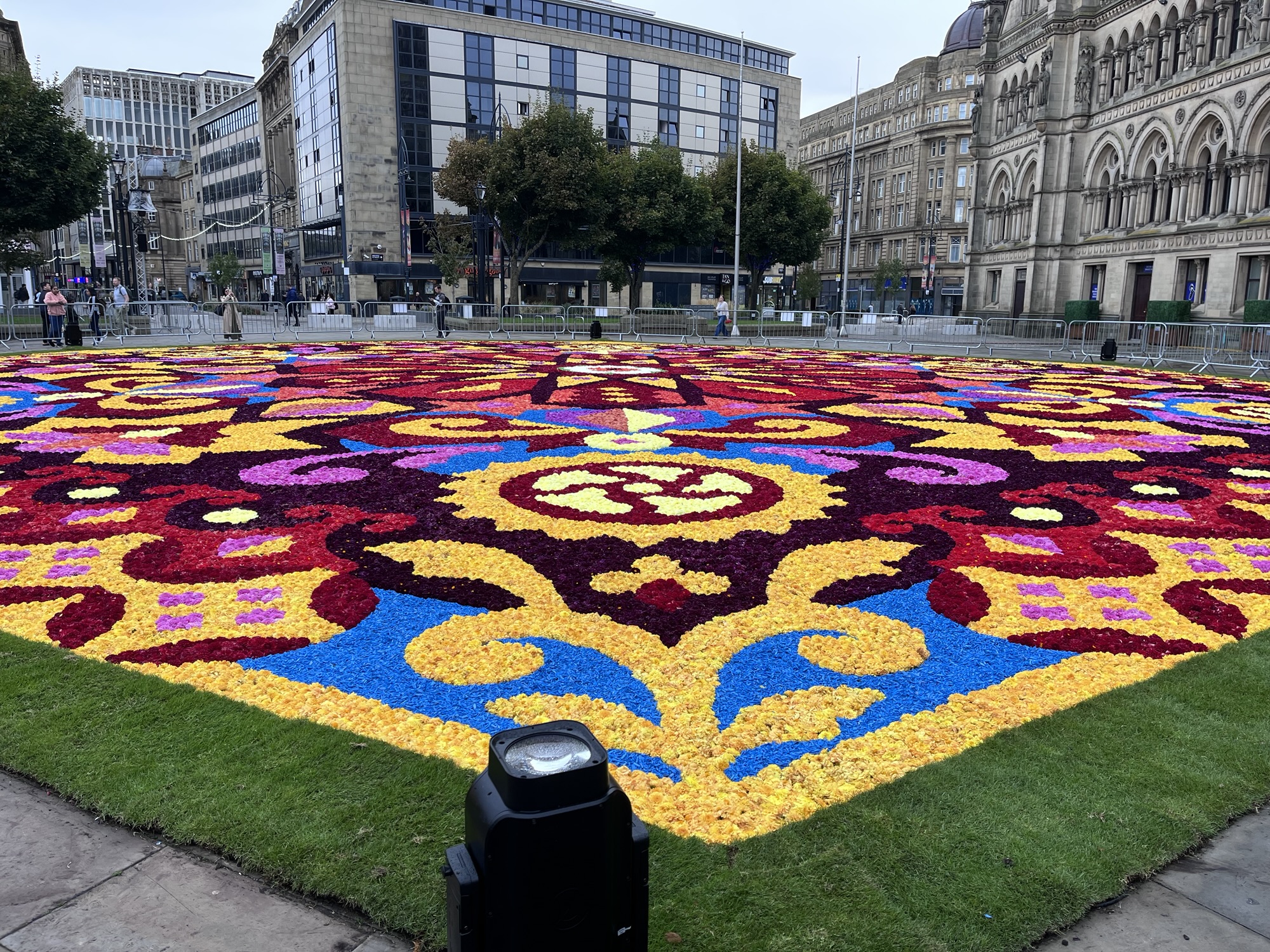
A photo of the Flower Carpet in Centenary Square in Bradford

It’s been a year since I started doing these round-ups of things that haven’t warranted a full blog post at the end of each month. There’s a few things to talk about this month, which has once again been a busy one. Work has been busy as it’s the start of term, and we’ve had some time with family to mark Christine’s birthday.

Bradford Flower Carpet

Bradford may no longer be UK City of Culture, but that doesn’t mean that cultural events aren’t still happening in Bradford. On Friday, on my way into work, I had a quick peek at the flower carpet in Centenary Square, which was made up of over 300,000 flowers and put together by volunteers. Hence the photo above this blog post.

Sadly, as flowers don’t last forever, the carpet was dismantled yesterday. Quite how many more cultural events we’ll have in Bradford remains to be seen, as the local authority have redirected £400,000 of culture funding to re-opening a tip near Keighley.

Health update

Last month’s health update warranted a full blog post, but this time I’m just doing a couple of paragraphs. I did have another minor seizure this month, making it number four. Like the previous two, this happened at bedtime, whilst already in bed, and seemingly resulted in no ill effects apart from me having bitten my tongue. I had forgotten to take my Levetiracetam in the morning, so I’m putting it down to that. As a precaution, I have a strip of Levetiracetam in my work bag now, and so far there’s been no repeat.

I’ve had some more blood tests, following my Osteopenia diagnosis, and I’m now having weekly physiotherapy sessions along with additional exercises. My mobility continues to improve, but I still need assistance with showering, and some actions like getting dressed and putting a backpack on still have to be done in a rather ungraceful way.

Fuel prices

Although I’m not driving at the moment (and that latest seizure has reset the 12 month timer until I can drive again), I’m becoming increasingly glad that we ditched our diesel car for an electric one. As I write this, the price of basic diesel at our local petrol station has broken the £2 per litre mark – for Americans reading this, that’s more than $10 per gallon at current exchange rates. For premium diesel, which we were recommended to use every other time we refuelled, that’s now £2.16 per litre. A full tank would therefore cost close to £130.

Meanwhile, when we charge our electric car at home (which we do the majority of the time), our electricity prices are fixed at 24p per kWh until August 2027. And, we can use some of the energy from our solar panels and battery to lower this further, along with Weekend Happy Hours from our energy supplier. A full charge costs about £6 and offers around 150 miles of range, compared to over £100 for a full tank of diesel in our old car, which would give around 400 miles of range.

Of course, the fact that most lorries use diesel is going to have a knock-on effect with prices in shops, as delivery costs go up. So, the sooner we can get away from fossil fuels and switch to more sustainable sources of energy, the better.

The Washing Line Index

A screenshot of the Washing Line Index for our local area

Is it worth hanging your washing out to dry? If you live in the UK, then The Washing Line Index is a web site designed to help you make that decision. It was created by a guy in Sheffield, and gives a score from 1-5 for how likely it is that your wet laundry will dry if hung out.

I’ve written about how we dry laundry before, using a combination of a tumble dryer, heated drying rack and hanging clothes outside. Obviously, we hang out clothes more in the summer, when the weather is better, but an app like The Washing Line Index comes into its own at times like this, when the weather is more unpredictable. Indeed, we’ve had a rather warm end to September, and I’ve been able to hang washing out and get it dry twice this week, which has been nice.

How The Washing Line Index works

The Washing Line Index looks at four key metrics:

  • Maximum temperature
  • Chance of rain
  • Peak wind speed
  • Humidity

A good drying day will be warm, with little to no chance of rain, quite windy and lower humidity, and so this will most likely score 5 on The Washing Line Index. Obviously, a day with a high chance of rain is going to be a poor drying day, but the other factors come into play as well. A day where there’s no rain forecast, but it remains cold, overcast and with no rain, is not going to be conducive to drying your clothes.

I’ve used it a few times this past week, and it’s been mostly right. However, on Tuesday, it only offered a score of 3, whereas I decided to risk it and actually got a full load of laundry dry within just three hours. It’s therefore only as good as the data being fed into it, which comes from OpenMeteo. As well as offering live data, you can get a three day forecast, as shown in the screenshot above.

I’m sure it’ll come in use over the next few weeks, as the occasional good drying day might still crop up as we get closer to winter. After that, we’ll be back to our heated drying rack, which works well but is slow and expensive to run all night.

Creative Commons License
Except where otherwise noted, the content on this site is licensed under a Creative Commons Attribution-ShareAlike 4.0 International License.