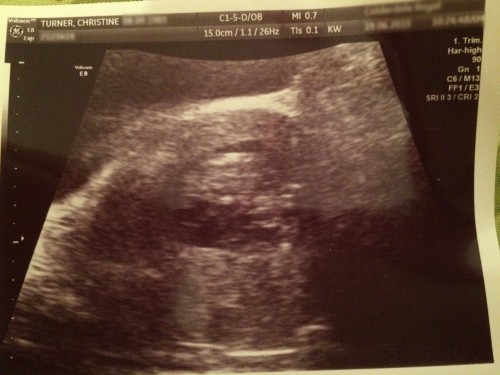
The separation of messaging into proprietary silos is a problem – and it’s far from being a new problem either. I felt it was something that was interesting enough to write around 1500 words on – which Medium estimates will take you around 6 minutes to read.
I chose to publish the piece on Medium, rather than on here, partly as an experiment. I decided that it would be sufficiently interesting to warrant exposure to a wider audience, but I also wanted to see just how much attention a Medium post from a regular person like me would get. How it performs will dictate whether I post further long-form blog posts there, or whether everything stays on here in future. It follows an experiment with Buzzfeed last year, which ultimately didn’t achieve anything.
Don’t worry – even if it is a success, I’m not going to switch over to Medium for everything. I like being able to manage everything myself, and I doubt that there’s such a wide audience for what we’re doing in our new house, or pregnancy announcements.
I was surprised at how easy it is to write on Medium. Generally, the pieces I have come across have all been high quality and so I assumed there was some kind of vetting procedure. But no – apparently anyone with a Twitter account can write anything. The writing tools are minimalist, but functional.
So far, my post has been up on Medium for about 90 minutes. It’s been viewed 11 times and read 5 times. That’s about how much a typical blog post on here would get – not great, but at least it’s not being totally ignored. And a couple of my Facebook friends liked it and commented on it, which is nice.
Hello. My name is Neil, and I bought a selfie stick.
No, I haven’t lost my mind. I saw genuine instances when I would want to use one – especially when the little one arrives – and so I went onto Amazon to find a reasonably good one. Of those, the Camkix Extendable Selfie Stick(sponsored link) seemed to have the best overall reviews and wasn’t too expensive, so I bought it.
The term ‘selfie stick’ is a relatively recent invention. Technically, this is a ‘handheld telescopic universal smartphone monopod’. It comes in three parts – the handheld monopod itself, a smartphone grip, and a separate Bluetooth remote. The monopod hand-grip is available in a variety of colours – I went for green, but you can also get pink, black and other colours. On the model I bought, the grip wasn’t very well-glued to the body, but otherwise I’m reasonably happy with the build quality, considering the price.
Retracted, the selfie stick is about 30 centimetres (11 inches) but it can extend to around a metre (40 inches).
The smartphone mount allows you to clip in a smartphone. My iPhone 5 fitted comfortably, and I’m sure the larger iPhone 6 would fit too. I’m not sure about phablet-sized smartphones like the iPhone 6 Plus or Samsung Galaxy Note but theoretically anything that 8 centimetres wide or less should fit. It won’t take a tablet computer like an iPad or iPad Mini, but if you are using a tablet to take photos on a selfie stick, then you are truly a horrible person and should reconsider your life choices.
The smartphone mount is detachable, leaving a standard screw-in tripod mount on the monopod, so you should be able to use it with any regular camera. I was able to mount my Canon EOS 600D onto it, although the extra weight meant that it was hard to control it when fully extended. If you are planning to use a regular camera, remember that you’ll either need to buy a separate remote for it, or use your camera’s timer function. And unless you have a screen that flips around, you won’t be able to see the picture until you’ve taken it (the EOS 600D has a flip-out screen).
Finally, there’s the remote. Some selfie sticks come with a button on the handle, which connects to the smartphone either using an audio cable to plug into the phone’s headphone socket, or wirelessly via Bluetooth. This selfie stick has a separate Bluetooth remote. There are two buttons – the larger one is designed for Apple devices running iOS 6.0 or above, but should work on many Android phones as well. The second button is for some fussy Android phones that need a different command. Whilst iOS users can use the built-in camera app, Android users may or may not need to install a third-party camera app to use the remote.
The remote also has an on/off switch so that you don’t inadvertently take photos of the inside of your pocket. Pairing it with your phone is straightforward.
On the whole I like the selfie stick. It’s small enough to fit in my camera bag, albeit with the smartphone mount folded downwards, and both the monopod and remote have decent wriststraps. And I promise that I won’t be one of those horrible people who ends up taking people’s eyes out in the pursuit of a selfie in a busy place.
Christine and I had our first experience as mystery diners recently.
Ages ago, I signed up for the Mystery Dining Company, an intermediary that arranges mystery shopper visits for various restaurants in the UK. Whilst I got regular emails about available visits, none of the establishments interested me – they were mainly pubs that I wouldn’t consider visiting. Finally, an urgent visit for a restaurant that we actually like came up, and so I booked us in. I can’t tell you which restaurant it was, but it was a large multi-national chain.
As part of the task, we had to book a table online, but also call the restaurant using a call recording service (Record Your Call in this case) and upload the recording. There was a questionnaire to complete which had several questions that related specifically to aspects of the experience that the restaurant aims to offer at its locations, so it wasn’t a case of simply reviewing the food and the service. Fortunately, the restaurant and the staff did well on the whole, although I did have to put a few negative comments in places.
Obviously the major benefit of being a mystery shopper is that you get reimbursed for the meal, so effectively it was free. There are limits as to how much you can claim in total though, and you’re usually restricted to no more than one alcoholic drink each. To be reimbursed, you upload copies of your receipts; I learned that after submitting mine that I should have uploaded both the food and card receipts so that I could claim back the tips.
We’d happily do it again, although sadly visits are a bit few and far between in the Halifax and Bradford areas at the moment.
The Mystery Dining Company is just one such company that arranges visits; another is Market Force Information, and you can find out more about them in this blog post from Money Saving Expert. They offer a small additional fee on top of the reimbursement but it’s only a few pounds.
If you’re literate, enjoy eating out and are flexible enough to go to places at short notice, then I’d recommend signing up as a mystery shopper. You effectively get free meals out of it, and you’re helping the restaurant companies improve their customer experience.
It’s been a couple of weeks since we my last update on the house. We’re now four weeks on from having got the keys, but it’s likely to be around 6 weeks before we move in unfortunately. Here’s where we’re up to.
Plastering
The damp-proof plastering is done. We had to get this done as a condition of the mortgage, but thankfully we’ll get money back from the mortgage lender now that the job has been completed. Considering that the cost of the work was a four figure sum, this is quite welcome.
We have some more plastering to do, however. Last time, I mentioned that the existing plaster was in a poor state; fortunately it’s not universally bad. Once we got more wallpaper off the walls we found some re-plastering work had taken place more recently, and bar a few small holes it’s in good condition. But there are still some larger holes that need re-plastering, and some (presumably original) plaster that needs replacing or skimming over.
Wallpaper
Most of the old wallpaper is now gone. In some areas, it was four layers thick – three layers of backing paper and then a thick outer layer – so it’s been a challenge. Several walls had some hideous woodchip wallpaper, which is also an absolute pain to remove. Others had wallpaper over the top of a thin layer of polystyrene, which, whilst insulative, is also a bit of a fire hazard. Especially behind radiators. Thankfully this was easily removed.
We reckon we’ll have the last of the wallpaper off this week.
Painting
We started painting the bathroom some time ago, but other jobs got in the way. We’ll be picking up on this once the downstairs is further on. The damp-proof plaster can’t be painted at all for at least another four and a half weeks, and the additional plaster that we’ll have done soon will also need time to dry before we can paint it. So we might as well crack on with the bathroom in the meantime.
Cleaning
Obviously all of the work that we’ve been doing has created a lot of mess, so we spent much of Saturday cleaning the kitchen – with friends and parents to help. The kitchen didn’t need any urgent work doing to it, barring the installation of extra plug sockets – those are now in, so the kitchen is basically ‘done’ for now and we can use it. We will need to do some tiling at some point soon but it’s a job that could be done after we’ve moved in if needed.
We’re slowly moving forward with the house. The offers of help that we’ve had from friends and relatives have been most welcome, and it’s stopped the project from getting too overwhelming. Still, I’m very much looking forward to it all being finished, and for us to be able to live there.
For the last blog post on my Middle East trip, I thought I’d spend a bit of time writing about Dubai, or specifically its airport. As I flew with Emirates, I passed through Dubai airport both on the way out and coming back.
The travel agents we use at work offered Emirates as one of three airlines to fly with. The others were Etihad, via Abu Dhabi, and British Airways via London Heathrow. Having asked for advice on Facebook and Twitter, British Airways was discounted pretty quickly. Eventually I chose Emirates for the more convenient flight times – the late finishes and early starts that I had on my trip would have been even worse if I’d flown with Etihad.
One of the world’s biggest
Dubai airport is big. It’s the world’s busiest airport when ranked by international passenger numbers, and third overall when you count all passengers (domestic and international). Last year, over 70 million passengers passed through Dubai airport – more than the entire population on the UK, and 35 times more than Dubai’s total population.
Despite being busier than London Heathrow (ranked second globally for international passenger traffic), Dubai has three terminals compared to Heathrow’s five. Terminal three is the biggest of these and is split into two halves, connected by an automated people mover. It’s basically an underground metro train, but it’s driverless and runs on pneumatic tyres, rather than steel wheels on rails, and only runs between the two halves of the terminal.
Coming back, my flight from Muscat arrived into terminal three, but my onward flight to Manchester departed from terminal one. The concourse of terminal one is connected to terminal three, but I still had to use the people mover and then had a long walk. At least it was all indoors, and all ‘airside’ so no need to go through immigration. Terminal two is completely separate though, and a shuttle bus can take 20 minutes.
Altogether, terminal 3 is the second largest building in the world by floor space. It’s big, and is almost exclusively for flights with Emirates, with just a few Qantas services calling there.
Shopping
Modern airports aren’t just designed to help you get on and off planes, and in parts Dubai airport feels more like a shopping mall than an airport. Most shops exist in multiple locations in each terminal, because of the size, and are generally run by the airport operator with just a few branded concessions like Starbucks and Boots. In all, Dubai Duty Free makes over £1billion a year from sales. Outbound, I didn’t buy much, apart from a couple of drinks (which were far cheaper than in the UK). But coming back, I picked up a couple of things, having forgotten to buy any souvenirs whilst in Jordan or Oman.
As with most airports free Wi-Fi was available, but only for one hour. Thankfully I had a phone and two iPads (one work, one personal) to stretch this out.
Dubai
I didn’t leave the confines of the airport but it’s worth talking about Dubai itself. Dubai is an ’emirate’ – essentially a city-state within the larger nation state of the United Arab Emirates (UAE). Abu Dhabi is another emirate, and there are several others that are less well-known. Originally a series of sheikhdoms under British control, independence was granted in 1971. The majority of sheikhdoms joined together to form the UAE, but two – Qatar and Bahrain – split off to become independent nations. Dubai residents are known as Emiratis, along with those from other emirates.
The UAE is an Islamic country and so there are restrictions on alcohol – in the airport, there were just a handful of Heineken-branded bars where drinking was permitted. There are also dress codes; these primarily relate to women and oblige them to dress modestly. Not doing so is a criminal offence.
Qatar has been in the news for the deaths of hundreds of migrant workers who have been building venues for the 2022 Fifa Football World Cup. Migrant workers in the UAE also suffer from a lack of rights and are forbidden from unionising, despite the huge amount of ongoing construction.
Flying back
My outbound flight from Manchester to Dubai was on a Boeing 777, but on the return I got to travel on one of Emirates’ Airbus A380s. These are the largest passenger planes in use today, with the cabin spanning two levels. Dubai airport has specially-adapted air-bridges that connect to both levels, with those travelling in Economy using the lower level and first class passengers going upstairs. In-flight Wi-Fi is available, and it starts at just $1 USD for up to a gigabyte of data, which is far cheaper than many hotels. The downside is that it’s so slow to be almost unusable, but better than nothing I suppose. And you have the opportunity to post a boastful tweet that you have internet access whilst in the air, which, for people like me who grew up with dial-up internet, is pretty amazing.
My return journey from Salalah back to my flat in Sowerby Bridge took the best part of 24 hours, in all. I woke up at about 10pm UK time on the Thursday, and was home at a similar time on the Friday. In all, it involved a minibus, three flights, a people mover, a train, a taxi, and a fair bit of walking.
I haven’t been asked to do any more overseas events for work as yet, and with a baby on the way I’m not sure if I would agree to any if offered. But it was a good experience in all, and one that I’d consider doing again in a few years time perhaps. With less overnight travel, hopefully.
The third of the three cities I visited on my trip was Salalah, Oman’s second city. Located in the south of the country, I reached it via an internal flight from Muscat, as otherwise it would be a 10 hour journey by road. Not that it’s very, very far from Muscat, but the roads in Oman are of variable quality, especially outside built-up areas. I heard that a new motorway was being built, and that will bring the journey time down to closer to seven hours. And eventually the Gulf Railway will reach Salalah – this will be Oman’s first railway and will head north all of the way to Kuwait when completed.
Salalah is much smaller than Muscat. It’s a port, but is also beginning to establish itself as a tourist resort. I stayed at the Hilton Resort there (this was where the event that I was part of took place) and it seemed quite popular with German tourists. Indeed, German seemed to be the unofficial third language in Oman after English.
Salalah used to be the capital of Oman, and there’s still a large palace there which the Sultan visits every few years. Sultan Qaboos was born in Salalah, but when he came to power in the 1970s he moved the capital to Muscat. Its climate is a little wetter than Muscat which means that plants grow naturally without the need for massive amounts of irrigation. Fruits like bananas and coconuts grow there and are available from various market stalls. There’s also a souk, which we spent around an hour in. Many of the stalls specialised in frankincense, but there were also plenty of clothes stalls and shops which sell the traditional hats that Omani men wear.
I didn’t buy anything, because by this point I realised that I’d lost all of my local currency, and, more worryingly, my passport. Fortunately the tour operators were able to make some phone calls and re-unite me with both later in the day, but I was dreading having to make the ten hour road journey back to Muscat to get to the British consulate.
As part of our visit we went to the local university, Dhofar University. Ranked second in the country after Sultan Qaboos University (albeit from a list of 5), it was only completed in 2010. If you have 15 minutes spare, watch its corporate video which is rather different from the videos that British universities produce.
Our visit to Salalah wasn’t as heavily-loaded as previous days and so we had a bit of free time. Consequently I have more photos of Salalah than I do of the other cities that I visited, and I was able to actually use my Canon SLR camera. Most other photos were taken on my iPhone as that’s all I had to hand.
Whereas most people I encountered in Muscat spoke English quite well, this was less the case in Salalah. With it being a more isolated city away from international travel, I suppose there’s less need for the locals to speak English. A slight issue for me as I didn’t (and still don’t) speak any Arabic.
The Omani government have plans to develop the area south of Salalah as a container port. The photo above shows the view from my hotel room and you may just be able to see the existing port on the right hand side of the horizon. This would tie into the Gulf Railway, and an expanded airport – like in Muscat, a new terminal was under construction. Salalah Airport, as it stands, is just one very small terminal with only three or four gates, but there are international flights from there across the region and out as far as India.
Salalah has its eyes on the tourism market, but right now only really caters for those wanting to stay at a premium all-inclusive resort, or those after something a bit off the beaten track. I imagine that, as the port develops, it will welcome a wider variety of visitor.
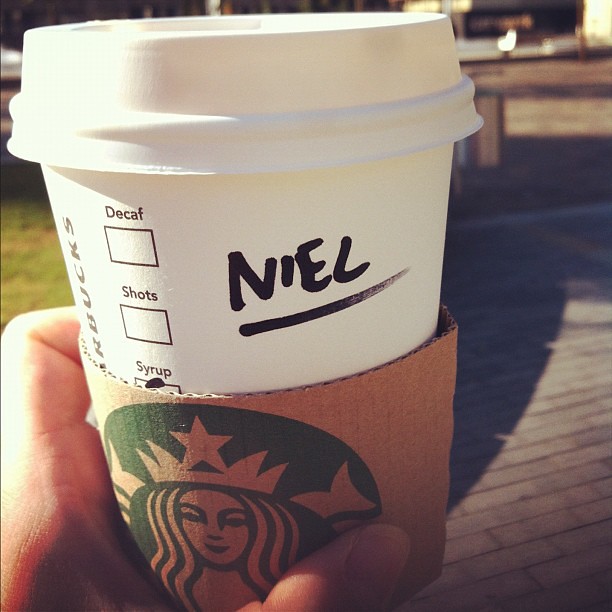
Many frequent Starbucks visitors know that its coffee comes in three sizes:
‘Tall’, which is the small size, at around 350 millilitres (12 US fluid ounces), or about the size of a standard drinks can.
‘Grande’, which is the medium size at 470 ml (16 US fl oz) and a bit less than an average drinks bottle.
‘Venti’, which is their largest size at 590 ml or 20 US fl oz. ‘Venti’ means 20 in Italian, hence the name.
Quite why they can’t use ‘small’, ‘medium’ and ‘large’ is beyond me, but never mind.
But actually, there are seven sizes in total. They’re not widely advertised, but here they are:
Short
If you look more closely at the menu the next time you’re in Starbucks, you’ll see there’s a kid’s hot chocolate on there, which comes in a ‘Short’ serving size – smaller than ‘Tall’. However, your Starbucks barista may be able to make you any hot drink in the ‘Short’ size, which will cost a bit less than ‘Tall’. I don’t think cold drinks like Frappuccinnos are available in the ‘Short’ size in the UK, but you can ask. ‘Short’ is 240 millilitres (8 US fl oz) and should be available in most outlets.
Mini
This one is US-only, and is a limited-time offer for this summer. It’s only for Frappuccinos, and is 10 US fl oz (300 ml) – halfway between short and tall.
Demi
Demi is the smallest size of them all, at just 89 millilitres (3 US fl oz). It’s basically a single espresso shot, and should be available in most Starbucks outlets.
Trenta
Finally, if you want a drink that’s larger than ‘Venti’, then try asking for a ‘Trenta’ size. It was announced four years ago in the US, but was primarily for the Refresha range of light cold drinks. However, theoretically, it may be possible to have any other cold drink in this size. At over 900 millilitres (31 US fluid ounces), this is a big drink – almost three times the size of a ‘Tall’ drink. As far as I am aware it was only ever available in certain outlets in the US, and as the Refresha range has seemingly been phased out, it’s probably no longer an option. ‘Trenta’ means 30 in Italian.
Starbucks ‘secret menu’
If you want to know more about ‘off the menu’ drinks that may or may not be available at your local Starbucks, Starbucks Secret Menu and Hack the Menu were two web sites that I found during my searches. Not all of the items on these sites are official, but if you’re in a Starbucks outlet and it’s not busy, you can probably ask the barista to vary the drink based on the recipes listed. You can also sometimes get seasonal drinks like the infamous Pumpkin Spice Latte out of season if the outlet has stock left over, and sometimes new drinks are available to Starbucks Rewards customers before they appear on the menu.
I go to Starbucks quite a lot nowadays, as I pass one of their outlets on the way to work. So much so that I’m a gold member of Starbucks Rewards. Considering that, four years ago, I didn’t drink coffee at all, it’s quite a turnaround.
Manchester Victoria station has had a rather large makeover. It’s not the dark, dreary place that it once was, and now sports a new roof that lets in far more light. And not before time, too.
One of the worst
Back in 2009, Victoria was named as one of the worst railway stations in Britain. The roof over platforms 1 and 2 and the Metrolink platforms was in a poor state of repair, following damage sustained in the 1996 IRA bomb attack that was never fixed. It leaked, and was partially covered in tarpaulins which made the station seem dark. To prevent fare evasion, ticket inspectors had erected temporary barriers around the platforms with confusing one way systems. Platforms 3-6 were now underneath the Manchester Arena, and were poorly-lit with a confusing layout for the footbridge.
It wasn’t a very inviting station to spend any time in, especially at night.
Management
To understand why the situation at Victoria got so bad, it may be worth looking at the management of the station over the years.
When the railways were privatised in the 1990s, the running of most smaller and medium sized stations was taken over by the largest train operating company (TOC) that called there. Control of major stations was passed to Railtrack, and then Network Rail when Railtrack went bust in 2002. Many of these major stations underwent major regeneration work, which usually involved massive expansion of retail space to bring in more rental income.
Manchester Piccadilly is the biggest station in Manchester and so Railtrack managed it, but management of Victoria has always been with a train operating company: since 2004, this has been Northern Rail. Northern Rail’s franchise was let on a ‘no growth’ basis and so very little investment has been made in either trains or infrastructure, despite Victoria being a major hub for Northern Rail.
Capacity
Victoria was once a much bigger station than Piccadilly, with 17 platforms at its peak. But in the early 1990s, the decision was made to re-route most trans-pennine services away from Victoria to Piccadilly, which is on the West Coast Main Line. Previously, passengers travelling from, say, Leeds to Stoke would have to take a short shuttle service between Stalybridge and Stockport – now they could simply make one change at Manchester Piccadilly. This shuttle still runs, albeit only once a week.
Victoria was subsequently downsized to 6 rail platforms, and 2 platforms for the then new Manchester Metrolink tram system. The now disused platforms on the north side of the station were demolished and the land sold off to build the Manchester Arena which sits above part of the station.
At the time, re-routing services to Piccadilly made sense, as the railways were in a period of managed decline. But following privatisation, passenger numbers have rocketed to record levels, and now capacity at Piccadilly is becoming an issue. Those trans-pennine services have to cross the paths of mainline trains from London on flat junctions, which limits the number of trains that can depart and arrive from Piccadilly station. And of Piccadilly’s 14 platforms, 12 of them are bay, or terminating platforms. Any train that needs to pass through Manchester has to use the two through platforms, numbered 13 and 14, which are now full to capacity. Work is planned to add an additional two through platforms, but in the meantime there can’t be any additional services that cross Manchester city centre via Piccadilly.
The Northern Hub
The Northern Hub project is a Network Rail initiative to improve rail capacity in the north of England, and it’s focussed on Manchester. Part of this will involve a new section of track, called the Ordsall Chord, which will allow trains to leave Victoria going west, and then loop around to Piccadilly. At the moment, most trains that call at Victoria terminate there, even though 4 of its 6 rail platforms are through platforms, which is a poor use of capacity. Upgrades at stations such as Rochdale and Stalybridge will allow trains that currently terminate at Victoria to continue, in turn allowing more trains to stop there. Last year, a new direct Liverpool to Newcastle service started calling at Victoria, and this is likely to be the first of several new long-distance services that will call at Victoria, rather than Piccadilly.
Making Victoria Posh
Eventually, money was found to refurbish Victoria and bring it up to the same sort of standard of other major stations. The old roof is gone, and has been replaced with a new ETFE roof. New flooring has been lain on the concourse, automatic ticket barriers have been installed, and a new footbridge has been erected to improve access to the Manchester Arena. New shop units have been opened and the existing ones refurbished – the old first class refreshment room is now a Starbucks, but retains its original tiled interior.
Meanwhile the Metrolink platforms have also been rebuilt, and expanded from two to four, albeit with only three tracks. Some trams will call at both platforms B and C – they’re lettered to avoid confusion with the rail platforms.
Together, these projects have been branded as ‘Making Victoria Posh’ a pun presumably inspired by Victoria “Posh Spice” Beckham.
A separate project has seen the lines coming into Victoria from the west electrified for the first time. This means that electric trains can run from Victoria to Liverpool Lime Street – these services started earlier this year. Eventually electrification will extended eastwards towards Stalybridge.
The works still aren’t quite complete – there’s a little bit left to do, and only a couple of the retail units are occupied (both of which are coffee shops). But the station already looks so much better than before. No longer will it be an embarrassment to the city.
I arrived into Muscat at a ridiculously early time on a Monday morning from my flight in from Bahrain. Thankfully, Muscat airport isn’t too far out of the city centre and so it wasn’t long before I was in my hotel bed – for all of about an hour before a 6am start.
Muscat is the capital city of Oman, a coastal kingdom in the Arab Gulf which has seen massive change since the 1970s. Oman’s ruler is Sultan Qaboos bin Said al Said, who rose to power by ousting his father in a coup, and then set about redistributing the country’s wealth to its citizens. Consequently a lot of the country’s infrastructure is very new, and the Sultan is generally revered by the Omanis for the investments that he has made. This was made very apparent during my visit, as on the Monday evening the Sultan returned to Oman after a 9 month absence in Germany for cancer treatment. There were many street celebrations that evening and the Tuesday was declared a public holiday.
Oman History and Culture
The aim of my trip was to recruit students for the university that I work for, and so the history of education in Oman was of particular interest to me. In 1970, Oman had just three schools and no universities. That’s now changed, with a large number of schools, including a number of international schools that teach the British and American systems or the IB, and several universities. We visited Sultan Qaboos University, which was the first to open in 1986 and is still the only public university in the country. By British standards, it would rank as an upper-medium sized university with just under 18,000 students.
Oman isn’t the only gulf country to see massive development in recent years. Indeed, the United Arab Emirates and Qatar, amongst others, have changed massively. But what sets Oman apart is that it is trying to retain a link with its heritage through its architecture. There are no high-rise buildings in Muscat, and all new buildings maintain an Arabian influence in their design. Similarly a majority of Omani men choose to wear traditional, rather than western clothing. This included the border staff at the airport who could only really be identified as such by their lanyards. By maintaining its links with tradition, Oman sets itself apart from its other developed neighbours.
Compared to Jordan, telephony isn’t as good. There are just two communications companies, one of which is state owned, although 4G internet access is slowly becoming available in major cities, like Muscat. That being said, Oman was one country where my mobile phone operator, 3, did not have a data roaming agreement, so I had no choice but to use Wi-Fi where it was available.
Muscat
Oman is mostly a desert country. Despite this, Muscat is very green with most major roads lined with trees, lawns and decorative plants – and a lot of irrigation. They were well-tended-to, with plenty of gardeners working on them all through the day.
Muscat airport, as it stands, is quite small, but a completely new terminal is in the final stages of construction, closer to the main runway. Indeed it currently takes ages for planes to taxi between the current terminal and runway, and even then there are no air-bridges. It’s home to the national flag carrier, Oman Air, which operates more than half of the flights, including a number of internal flights.
Compared with Jordan and Bahrain, Oman is a much more peaceful country. There were some protests in 2011 as part of the Arab Spring, but these were quickly quelled and some positive change has happened since. There is a democratically-elected government, but Oman is an absolute monarchy and so the Sultan can overrule his government. Women’s rights are better than in some countries, but women have only been able to vote since 1997. There are a number of allegations about human rights violations.
Arabic is the main language used in Oman but most signage is also in English. Most Omanis that I encountered in Muscat had at least a basic grasp of English, although as I was recruiting students wanting to study in England, and stayed in a Western hotel chain, this is hardly surprising.
As with my visit to Amman, I didn’t get to see a lot of Muscat whilst there – my itinerary was jam-packed. It’s certainly an attractive city, thanks to the commitment to traditional architecture and I’d maybe consider visiting again in future.