By the time you’re able to read this, Christine and I will be beginning our second day at Sci-Fi Weekender in Great Yarmouth, Norfolk. This is the seventh consecutive SFW event that we’ve been to, and we’ve always enjoyed it.
This year will be different; it’ll be the first full SFW that we’ve been to where there’s no Professor Elemental, and it won’t be compered by Adam Washington, again for the first time in many years. But then there have been changes every year as the event changes and evolves.
We’ll be driving down again, and as with last year we’re offering friends a lift down so we’ll have a full car. It’s a rather long drive from West Yorkshire, mainly due to the A17 which we use to cut across Lincolnshire. It’s not a particularly fast nor scenic road, passing across mainly flat agricultural land. We call it the Sto Plains.
As for whether we decide to do cosplay this year – probably not. I’ll probably take my Steampunk gear but we don’t have any specific plans. In previous years, Christine has been Sadness from Inside Out, and a Feegle Kelda from Discworld. I think she just likes making herself blue.
Goddards is in York, and in fact is in walking distance of where I grew up. It was owned by the Terry family, they who introduced the world to the Chocolate Orange, and later on became the regional offices for the National Trust. I don’t remember it being open when I was younger, but nowadays you can pop in and see the gardens at weekends.
Rievaulx Terrace
Again, stretching the 90 minute journey time but it’s also closer to York, where my parents live. The village of Rievaulx is just outside the pretty little market town of Helmsley, and is better known as the home of Rievaulx Abbey. The Abbey is a ruin (yet again, Henry VIII had a lot to answer for) and managed by English Heritage. But above the abbey is Rievaulx Terrace, home to some formal gardens, woodlands, and a couple of folly temples. The National Trust suggest that you combine a trip with nearby Nunnington Hall if you want to make a day of it.
Beatles’ Childhood Homes
Going over to the West Coast, and you can visit the childhood homes of John Lennon and Paul McCartney. Access is by guided tour only, and has to be booked in advance with pickup from either Liverpool South Parkway station, or Speke Hall. There are only four tours offered each day, but they’re available seven days a week, except in low season when the houses are closed on Mondays and Tuesdays. Whilst many Beatles tours in Liverpool will take you past these houses, this is the only way that you can actually go inside.
The Hardmans’ House
Another house of a similar vintage in Liverpool is The Hardmans’ House, offering a chance to see how people lived in the 1950s. It was home to Edward Chambré Hardman and his wife Margaret – Edward was a well-known portrait photographer, so you can also see his dark room, and a selection of photographs. Currently it’s closed until May, and then only open on Fridays and Saturdays, with pre-booking advised.
Little Moreton Hall
I feel like I may have been to Little Moreton Hall in the past – as with nearby Biddulph Grange, we have family nearby. But I certainly don’t remember anything about it, so if I have been, it must have been a very long time ago. It’s a similar-looking Tudor house to Speke Hall and has an actual moat. Over the years, various bits have been added to it, making it probably one of ‘wonkiest’ houses that you would ever see.
Rufford Old Hall
Another Tudor survivor is up near Ormskirk. Rufford Old Hallmay have been visited by William Shakespeare during his teenage years. As well as the house, there are large gardens and woodland to explore, and so if you’re not a member then it’s one of the higher-priced National Trust properties. But that should mean that there’s plenty to do there.
So there’s only six places that we haven’t yet been to within 90 minutes travelling time, and three of them have limited opening hours. That being said, I think we’ll make plans to go to Little Moreton Hall and Rufford Old Hall in the near future. As I mentioned at the start of the year, our summer holiday this year will be in North Wales, and there’s no shortage of National Trust properties up there either.
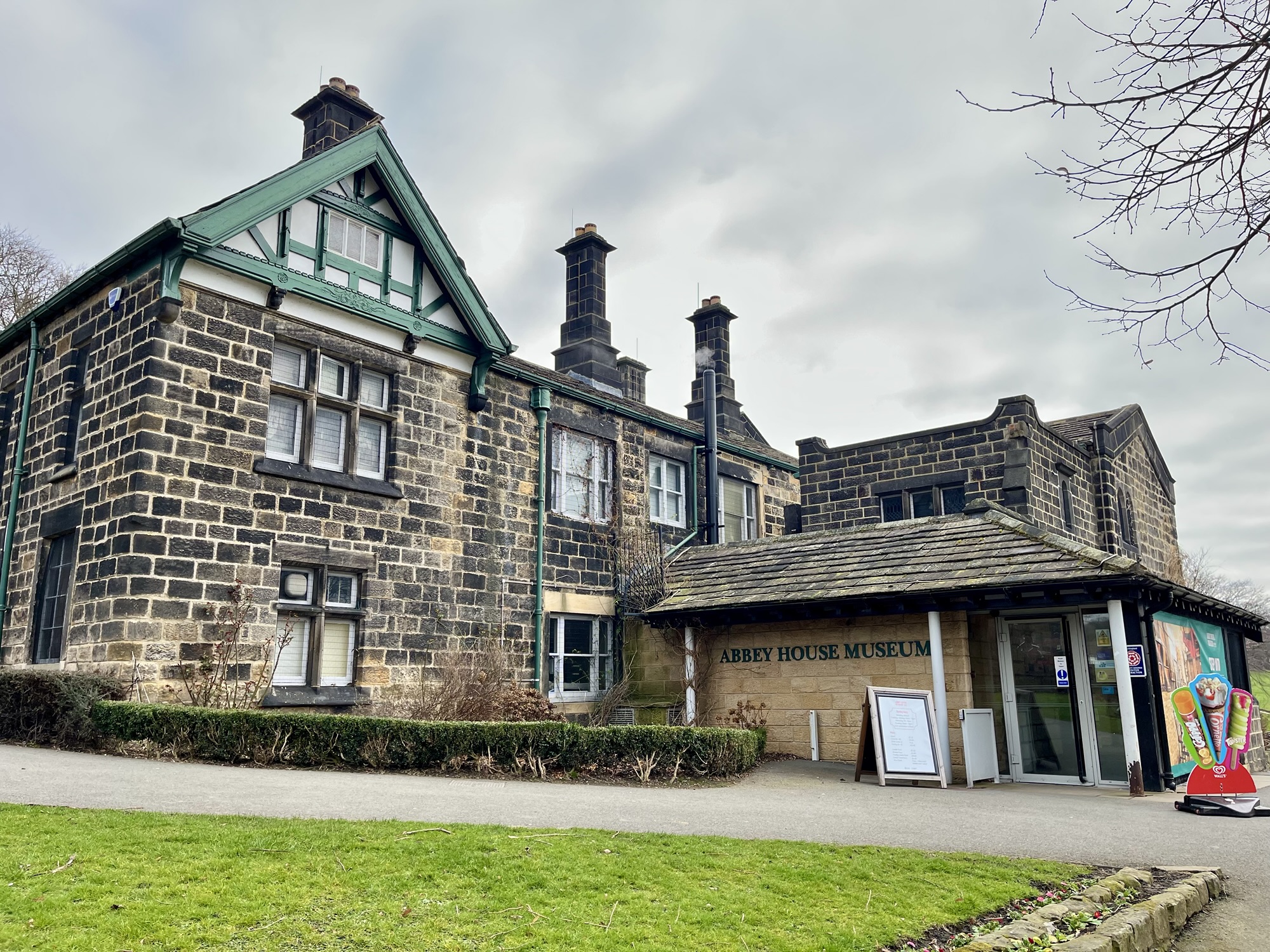
Last weekend, I took our nine-year-old to the Abbey House Museum in Kirkstall, near Leeds. We’ve been a couple of times before, and it’s a nice little museum to visit for half a day. It’s also recently been reprieved from closure, but in the long term it needs more people visiting it to be viable.
The Abbey House Museum is essentially in three parts. The first is a recreated Leeds street scene, with various shops and houses that have been saved and transplanted into the museum. There’s a pub, a pharmacist, a general store, and many others. It’s a bit like Kirkgate in the York Castle Museum, but on a smaller scale. It’s designed to show how ordinary, working class Loiners would have lived in the past.
Exhibitions
Next, you go upstairs to an exhibition space. Previous exhibitions that we’ve seen have included one about various common household objects from the past now considered dangerous, back in 2019. Older Lego bricks contained various heavy metals like cadmium, there were sore throat pastilles containing potassium chlorate which can spontaneously combust, and there were plenty of things with asbestos in them. The last time we went, which was in 2021, the exhibition was about the Leeds music scene and various bands and venues.
This year’s exhibition is called ‘Story Time‘, and is all about children’s stories. Expect to see lots of books and toys, both old and new.
In the next room are various entertainment machines, which can tell your fortune or show an animated diorama. They require one or two old pennies, which can be obtained from an exchange machine that takes modern day British currency. Each 1d coin costs 10p and so have a pound coin spare if you want to try every machine.
The final space is the childhood collection. There’s a collection of dollhouses and toys, spread across several rooms.
History of the Abbey House Museum
The Abbey House Museum gets its name from Kirkstall Abbey, across the road, and it used to be the gatehouse. Parts of the building date back to the year 1152, and after Henry VIII dissolved the monasteries (yes, him again!) it was repurposed as a farmhouse. It became a museum in 1927, and so hopefully it’ll be able to celebrate its 100th anniversary now that it has been saved from closure.
Expect to be able to spend half a day at the museum – we combined our visit with a trip to Tropical World, but you could pop across the road to the abbey itself as well, if you want to make a day of it.
Accessibility
Access at the Abbey House Museum is pretty good. The street scene does have some uneven floors and narrow doorways, but there is a lift. A Changing Places toilet is also available, and there is a Max Card discount as well. There used to be a café in the museum but this is now only open as a picnic room for school visitors – instead, the Abbey has a café and there’s a pub nearby.
Free parking is available (at the time of writing, though note that Leeds City Council has recently introduced modest parking charges at many of its sites), and it’s on major bus routes from Leeds city centre. If you’re arriving by train, it’s roughly equidistant from both Headingley and Kirkstall Forge stations – both of which are about a mile’s walk.
Now that the weather is improving a bit, and the days are getting longer, we’ll be planning to make the most of our National Trust membership by getting out and visiting places. In this blog post, I’m going to detail all the National Trust properties that we can get to from our home in Sowerby Bridge, West Yorkshire, within a maximum of 90 minutes driving team (one way). We’ve visited the majority of them, and I’ve blogged about many of them, so this will hopefully serve as a useful guide for me to see where we haven’t been to.
I’m armed with my copy of the National Trust 2025 handbook, and have been through all the properties listed that I know we can get to.
Part one: Properties we’ve been to
I’ll start with the places that we’ve been to before.
Hardcastle Crags
Starting with the most local is Hardcastle Crags, in the hills above Hebden Bridge. I’ve never blogged specifically about our visits to Hardcastle Crags over the years, but it’s been mentioned in passing a few times. Most recently, I mentioned how the main visitor centre at Hardcastle Crags is off-grid, and it came up in last year’s book review as several scenes in Juno Dawson’s Her Majesty’s Royal Coven series take place there. Our most recent visit was in 2023, and it gets a mention in my year-end review. Over the years, I’ve been many times, as it was reachable by train and on foot from Bradford. I’m sure we’ll end up back there in time.
Beningbrough Hall
Beningbrough is close to where my parents live in York, and so I’ve been a few times – the most recent time was in 2022. I blogged about our 2017 visit.
Beningbrough Hall is, I suppose, typical of what you think of when you imagine a National Trust property – a big, stately home, with nice gardens.
Brimham Rocks
Another place I used to go to a lot whilst growing up, and again whilst at university. Brimham Rocks is home to various rock formations, many of which have been given names and backstories over the years. We last visited in 2014, so over 10 years ago and so we’re probably due a repeat visit at some point.
East Riddlesden Hall
This is the nearest indoor property to where we live, on the outskirts of Keighley. We’ve been a few times, with the most recent visit just last year. East Riddlesden Hall is a smaller site, so best for half a day, and isn’t as grand as some other country homes. If anything, that makes it more interesting. There are also gardens at the back.
Fountains Abbey and Studley Royal
One of the National Trust’s larger estates, Fountains Abbey and Studley Royal Water Garden includes the ruins of an abbey and monastery, a water garden with ponds and fountains, a stately home, a church, a water mill and a huge deer park. It’s big enough to require two separate car parks and entrances.
Our last visit was in early autumn in 2020, during a time when we could meet relatives outdoors. It was the first time I’d seen my parents face-to-face in almost six months, and would be the last time in a while too. Prior to that, our previous visit was in 2015, so again, we’re probably due another trip.
Mount Grace Priory
Mount Grace Priory is rather pushing the 90 minute journey time. I’ve been before with my parents, but it was many years ago. Both English Heritage and National Trust members get in free, as it’s jointly managed by both organisations.
It’s another ruined church and monastery (Henry VIII had a lot to answer for) but on a smaller scale than Fountains Abbey. There’s also a 13th Century Manor House, and formal gardens.
Nostell
I mentioned Nostell earlier this month as somewhere we’d planned to go, but the weather had other ideas. We’re back to large country house and formal gardens territory here; Nostell is well-known for having masses of snowdrops at this time of year. Inside the house is a range of Chippendale furniture.
I’ve been twice; once with Christine and my parents, and once with our nine-year-old when they were much younger. We haven’t been as a family yet, and I haven’t previously blogged about it.
Nunnington Hall
Nunnington Hall is another place I’ve been to as a child, but not as an adult. Again, it’s pushing the 90 minute journey time – it’s actually further away than Mount Grace Priory, but on slower roads. That being said, it’s also somewhere that we could go when staying in York with my parents.
The hall is smaller than others, but hosts regular exhibitions, and the garden has been completely organic for over 20 years.
Treasurer’s House
Being as it is in York city centre, I’ve been to the Treasurer’s House a few times. It’s so named as it was the home given to whoever was the Treasurer at the nearby York Minster. It’s also very haunted, and on Hallowe’en one year I went on a ghost tour. Though I’ve been past it a few times in recent years, I haven’t visited as an adult.
Wentworth Castle Gardens
Wentworth Castle Gardens is one of the newest properties to join the National Trust’s portfolio, having been taken over as recently as 2018. We went in 2021, on a gloriously sunny day that let us see the flowers in the gardens in full bloom. More work has been undertaken since, and so we’re probably due another visit.
The most recent National Trust property that we went to was Gawthorpe Hall. We went at the end of August. It’s also a smaller property; whilst there is extensive parkland, the gardens are small. It’s fine for half a day.
Hare Hill
Hare Hill is a nice, peaceful garden in Cheshire, and home to lots of rare trees. It’s not very big – it was enough for a morning, but not a full day out. Thankfully, there are other National Trust properties nearby, including…
Nether Alderley Mill
Nether Alderley Mill is a medieval corn mill, that has been restored to working order, and one a few that survive to this day. Indeed, it was still in commercial use as recently as 1939, using the power of water to mill corn.
We combined our visit with Hare Hill, back in September 2022, which is nearby. It’s only open on Thursdays and Saturdays during the summer months, and visit is by guided tour only. There’s also limited parking.
Lyme
Lyme is not far from Stockport, and it’s another larger site with a big country house, formal gardens and a deer park. There’s plenty to do and it’s certainly one for a full day out – especially if you want to walk out to a viewing point with a view across most of Greater Manchester. We went in June 2021, and previously I had been in my late teens as well.
Quarry Bank
Another top-tier National Trust property, this time on the western side of Greater Manchester and not far from Manchester Airport. Quarry Bank is big, with the main attraction being a restored cotton mill. It’s now a museum, and has lots of hands-on activities for kids. Elsewhere, there are formal gardens as well as a huge kitchen garden, and a hydroelectric generator with a fish bypass system. My first visit was in 2017, and we went back in 2019 and 2020.
Speke Hall
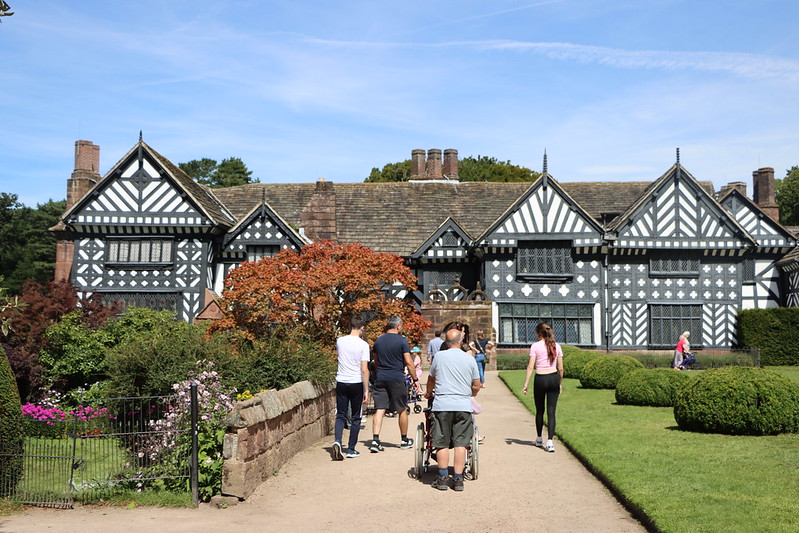
Speaking of properties near airports, Speke Hall rubs up against the runway of Liverpool John Lennon Airport. If you haven’t already guessed from the architecture, it was built in Tudor times, and Catholic priests were hidden there (like I said, Henry VIII had a lot to answer for). It was restored in the 19th century, so a lot of the interior decor is in the Arts and Crafts style.
Outside, there are extensive gardens, including a ‘secret’ garden accessible by a tunnel, a maze, and a story trail for kids. We’ve been a couple of times, in winter 2019 and August 2022.
Tatton Park
Another large site, although the National Trust is only responsible for part of it. That means members have to pay for parking, and the farm. That said, the farm is worth it, as it’s home to many rare breeds and plenty of talks about the animals.
The gardens at Tatton Park are really good. On the times we’ve visited, we’ve only had time for the farm and the gardens; we haven’t been into the houses yet. Yes, there’s more than one house there; the one pictured, and a medieval house now known as Tatton Old Hall. Our visits were in May 2019, May 2021 and June 2022.
Biddulph Grange Garden
Biddulph Grange is in North Staffordshire, and again at the limits of how far we would go in a day. I went there lots of times as a kid, as I had family nearby, and it’s one of my happy places. To call it simply a ‘garden’ isn’t doing it justice – there are lots of different themed areas, with various follies and hiding places. The Japanese garden is my favourite. Our recent visits were February 2019 and during lockdown in August 2020, seeing as it’s mainly outdoors. I haven’t blogged about our visits before.
Later this week, I’ll post part two – the places where we’ve not been to yet.
For anyone who can’t manage stairs, the building is essentially a no-go. There are stairs up to the main entrance, and once you’re inside, more stairs up to the seating or down to the bar. There is no lift, nor has there ever been one.
As regular readers will know, accessibility is something that is important to me and I include a section in all my newer days out reviews. Installing a lift at the Bradford Playhouse will open it up to many people who can’t manage stairs – not just wheelchair users, but others with mobility issues, and parents with prams. That way, more people can enjoy shows there, and it makes the venue more attractive to producers who currently may be deterred by its lack of accessibility. It would be fantastic if the funding target could be met, and the work completed before the end of Bradford’s year as City of Culture ends in 10 months time. I’ve already contributed; if you can, please contribute as well.
In last weekend’s post about Magna, I mentioned that it had escaped the fate of another nearby Millennium Project, The Earth Centre, further down the Don Valley. The Earth Centre opened in 1999, but closed just five years later.
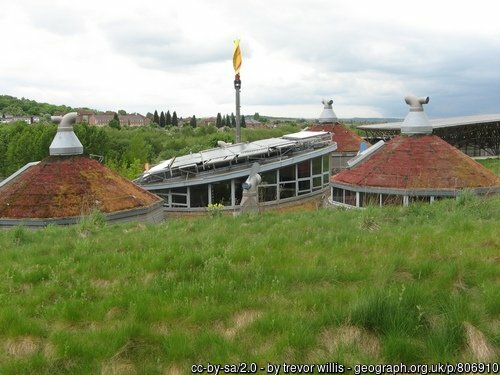
Thankfully, unlike Transperience (another failed museum near Bradford that I wrote about in 2010), I did manage to visit the Earth Centre whilst it was open. That being said, my visit was around 25 years ago. I don’t think I still have any photos of my visit, and even if I did, they would’ve been shot on photographic film as I didn’t get a digital camera until 2003. The image above is from Geograph and re-used under this Creative Commons license. This also means that my observations are from rather old memories.
The Earth Centre was a visitor attraction to showcase ways that we could be more sustainable, and reduce our negative impacts on the environment. There was a large solar panel array, and I remember there being a building with a small wood burner that could generate heat from fast-growing willow trees on-site. There were also play areas and things for kids to do. The architecture was modern too, and the buildings were designed to be highly energy efficient – many with grass roofs. A series of reed beds ensured that any sewage produced could be cleaned up before being discharged into the River Don.
It was quite a large site, and as well as walking around, I remember there being a kind-of ‘bike bus’ where every passenger could also peddle, so it didn’t consume any diesel.
Getting there
The Earth Centre was located near the town of Conisbrough in South Yorkshire, on the site of a former coal mine. The site was within walking distance of Conisbrough railway station, and visitors were encouraged to use sustainable forms of transport to get there. Indeed, the relatively small car park was located some distance away. That may have been one of the reasons why it struggled – getting there wasn’t easy. I know we went there by train, but whilst Conisbrough station is on the line between Doncaster and Sheffield, only local stopping services call there. Again, I can’t remember how frequent the trains were back then, but nowadays Conisbrough gets just one train an hour in each direction.
Reasons for failure
The main reason why the Earth Centre closed was a lack of visitors. In its later years, it closed to the general public and was only open to pre-booked groups (e.g. schools), but even that wasn’t enough. I’ve mentioned the difficulties getting there, but I also remember Jeremy Clarkson giving it a hard time on his TV talk show, Clarkson, which ran from 1998 to 2000. He was filmed taking his son there, and made it out that the Earth Centre was some kind of really boring theme park.
But I also think it was maybe ahead of its time. Our knowledge about the environment, and the effects of climate change, have significantly increased in the 20+ years since the Earth Centre closed. Maybe a similar attraction would do better if opened today – especially if it was built somewhere with better transport links.
Over in Wales, there’s the Centre for Alternative Technology which is kind-of similar, and indeed pre-dates the Earth Centre. Sadly, like the Earth Centre was in its later years, it’s now only open to pre-booked groups.
As for the Earth Centre’s fate following closure? For a while, it became an air-soft arena, was used as a filming location, and then in 2011 it became an outdoor activity centre. Although the company that now owns it went into administration last month, so who knows what will happen in future.
I remember my trip to the Earth Centre quite fondly, and for a while later I had a t-shirt from the gift shop which had been made from unbleached cotton (again, a novelty at the time). It was a shame that it closed.
What if I told you that Rotherham was home to one of Britain’s best science museums? Well, it is, in the form of the Magna Science Adventure Centre. I feel like it’s somewhere that I would’ve written about before, but can’t find a previous blog post about it. We’ve been a few times – I went with my parents when it first opened, and I’ve taken our little one several times, including last weekend.
History of Magna
Magna was one of a number of visitor attractions funded by the Millennium Commission, to mark the turn of the Millennium. It opened in 2001, with high expectations – further down the Don Valley, the Earth Centre in Conisbrough had opened in 1999 and was already struggling to meet its visitor targets. The Earth Centre ultimately closed in 2004 – a shame, as I’d enjoyed my visit there and felt it was perhaps ahead of its time.
Anyway, the good news is the Magna was more popular, and is still open today. Indeed, it had something of a refit in 2022, so if you’ve been before, there are some new things to see. Magna essentially fills two roles: a history of the area and, in particular, steelworking; and as a more general science museum.
Magna is housed in the former Templeborough Steelworks, or ‘Steelo’s’ as it was known colloquially. This steelworks used electric arc furnaces to recycle scrap steel – relatively new technology at the time, and allowed a significantly higher throughput than coal-powered furnaces. It did require a lot of electricity, however – a staff member commented that, if it was still running today, the steelworks annual electricity bill would be around £100million.
Templeborough Steelworks was massive – housed in a building around 1/3 mile (530 metres) long. Most of the building is still there now – it’s not quite as long as it once was, but it’s still massive. The site closed as a steelworks in 1993, with much of the massive industrial equipment remaining behind in situ, and it wasn’t long before it re-opened as Magna.
Four pavilions
The main ‘sciencey’ bit of the museum is split into four ‘pavilions’ – air, fire, water and earth. The Air pavilion is in what looks like a blimp, suspended from the ceiling; fire is at the main level of the museum, water is on the ground floor and earth is underground. Almost everything is hand’s on, in the way that the best museums for kids are these days, so there’s lots of things to press, push and twist. In the Fire pavilion, there’s a demonstration of a fire tornado approximately every 10 minutes, and at weekends there’s also a forge demonstration where you can see how a piece of steel can be melted and shaped.
The water pavilion teaches the water cycle, and lets visitors compare different ways of moving water upwards. Down in the earth pavilion, you can control a digger and learn about quarrying and archaeology, and up in the air pavilion, you can see how wind energy and vacuums work.
The other major indoor attraction is The Big Melt, which runs on the hour four times a day. It’s a big light and sound show, which simulates how the electric arc furnace would have worked in its heyday.
Outside, there is a huge adventure playground, and in summer, there’s Aqua-Tek, which is a small waterpark. Obviously, this being February, it was shut.
Our nine-year-old pretty much demanded a return trip to Magna, hence our visit, and it’s one of their favourite places to visit. I agree.
Accessibility
Having been opened in 2001, mobility access to Magna is pretty good – there are lifts between the different floors and no stairs to manage. That being said, there are some uneven floors in the Earth pavilion in places.
If you experience sensory issues, it may be worth brining ear defenders. Some parts, like The Big Melt, are very loud. Also, on a practical note, it’s worth bringing a change of clothes and some swimming gear for kids, as they will get wet in the Water pavilion and/or Aqua-Tek.
Tickets are cheaper if booked online, and automatically become an annual pass for free repeat visits.
There is a car park on site, but be aware that Magna also has a huge events space, and so the car park may be full at weekends. When we went, there was a junior boxing competition, and this weekend it’s the Camra Great British Winter Beer Festival, so you may need to park some way from the entrance if you’re driving. It’s not far off the M1 junction for the Meadowhall Shopping Centre.
If you want to get there by public transport, then you can catch the X3 bus from Sheffield, Meadowhall or Rotherham, and it drops you outside the back entrance to Magna. In the near future, you’ll also be able to get to Magna by tram, as the Supertram Tram-Train service from Sheffield to Rotherham passes by the site.
Last week, we took our nine-year-old for their first visit to the Jorvik Viking Centre in York. Now I grew up in York, and so have been many times over the years, but the last time Christine and I went was in 2012.
Jorvik is undoubtedly one of York’s best known tourist attractions, having opened celebrated its 40th anniversary last year. However, I’m writing about it now because, until the 23rd February, Jorvik is dressed up for winter.
Recreation of Jorvik ride
The main part of Jorvik sees visitors sitting in carriages that move around a recreation of York, or ‘Jorvik’ as it was known in the time of the Vikings. The carriages seat six, and feature a commentary in multiple languages. This part takes around 15 minutes, and the carriages rotate to highlight different parts of the recreated city. The buildings are laid out roughly as they were found when the site was excavated in the 1970s.
Before you go on the ride, there’s a glass floor to walk over which has a recreation of that 1970s archaeological dig. Previously, the site had been a factory for Cravens Confectionery, a now defunct sweet and chocolate manufacturer (alongside Rowntrees, now part of Nestlé, and Terry’s, now part of Mondelez). Local planning rules in York mean that an archaeological dig must take place whenever foundations are to be dug, and this large site resulted in a five year excavation that unveiled many artefacts of York’s past. Indeed, once the ride has finished, you can view some of the finds that were excavated, and find out more about how the Vikings settled in York.
As mentioned, Jorvik has been dressed up for winter, so at present there’s snow on all the recreated buildings and on the ground. If you’ve been to Jorvik recently, maybe give it another visit as it looks very different at present. I didn’t take any photos on my visit this time unfortunately.
Accessibility
Jorvik is accessed down some stairs, although there is a lift. If you’re a wheelchair user, you’ll need to book in advance by phone (not online), as only one of the carriages has been adapted for a wheelchair and the staff will need to give you a specific timeslot. However, all the carriages offer a hearing loop for hearing aid users, and subtitles for the commentary. Famously, Jorvik recreates the smells of Viking York and this is worth being prepared for if you’re sensitive to unusual scents. There’s an extensive accessibility page on Jorvik’s web site, detailing what you can expect and how they can help you.
The days of there being massive queues for Jorvik snaking around the Coppergate Shopping Centre are mostly gone, as you now need to pre-book. You should do this online if you can; you can book on your phone on arrival, but be prepared to have to come back later. We turned up without pre-booking and had to return after 45 minutes. However, the following day, there were signs up saying that all time slots were booked up and no more bookings were being taken that day.
Last month, we met up with a couple of friends to go to the Bolling Hall Museum in Bradford. Now, long time readers of this blog will know that I lived in Bradford between 2002 and 2010, and still work there, so surely I must have been here loads of times.
Nope. This was the first time I’ve been.
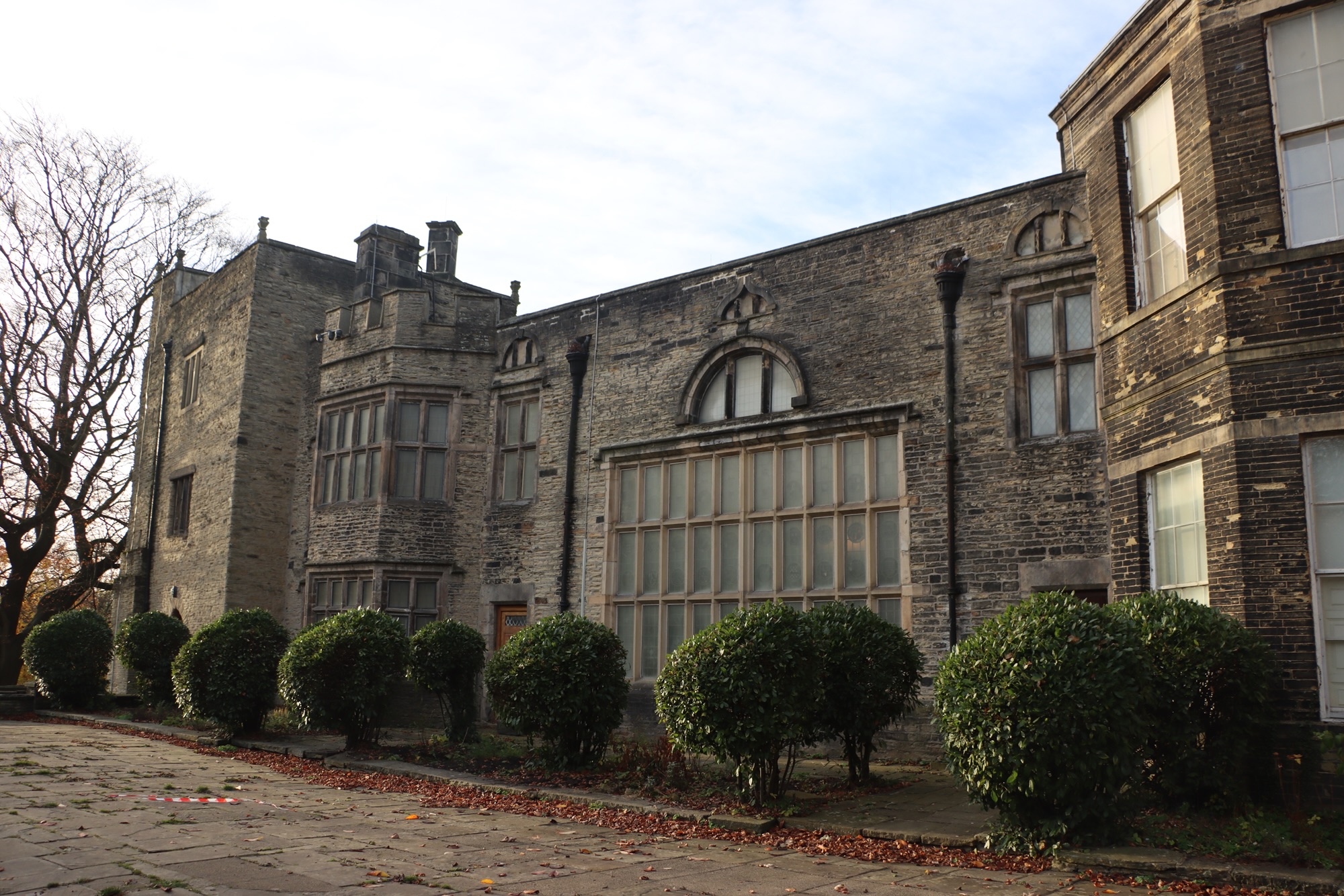
Bolling Hall is an old stately home that has been altered many times over the years. Parts of it date back to the 14th century, and in the early 20th century it was passed to what would eventually become Bradford Council, who run it as one of their museums. As various parts of the building date from different times, there is a variety of architectural styles on show.
Bolling Hall overlooks Bowling Park, to the south of the city centre, and is in what is now mostly the residential area of West Bowling.
Inside, the rooms have been mostly laid out as they would have been in Georgian times, including the kitchen and several bedrooms. There’s also a small exhibition about Bolling Hall’s role in the English Civil War; its owners at the time supported the Royalists, whereas the wider Bradford area backed the Parliamentarians.
As with most council-run museums, Bolling Hall is home to various objects in Bradford Council’s collection. This includes the first piano owned by Bradford-born composer Frederick Delius.
It’s not a big museum, and we spent about an hour there. Whilst there are gardens outside, these were mostly roped off when we went.
Being a very old building that has been altered several times, accessibility is not great. If you’re unable to manage stairs, then you can use an accessible entrance to see some of the ground floor rooms, but there isn’t a lift and the upstairs rooms are on different levels.
Bolling Hall Museum is closed on Mondays and Tuesdays. Entry is free. Parking is available on site, and it’s well-signposted. It’s served by bus 635 from Bradford city centre.
At the weekend, I took our eight-year-old to Lotherton Hall and Estate near Leeds. We’ve been many times before (the last time I wrote about a visit was 2016), but this was the first time that we’d been during its Halloween event, Spooky Skeletons. Indeed, as Lotherton isn’t far from York, I’ve been coming since I was young. One of my earliest memories was one of my primary school teachers being on the receiving end of a flying bird’s defecation, which, when you’re not yet ten-years-old, is hilarious.
Spooky Skeletons
As well as being the first time that I’d been to their Halloween event, this was also the first time that I had been inside the actual hall. All the downstairs rooms have been decorated with lots of skeletons – some rather anatomically questionable – and there’s a general theme of a seaside funfair of the undead as you go between the rooms. It’s not as opulent as Castle Howard’s Christmas events (we went in 2022) and clearly done on a local authority budget, but there was plenty of whimsy.
Outside, there were plenty more skeletons, and the theme was fairytale characters. For example, Robin Hood (with an arrow in his mouth), Peter Pan and Hook, and Sleeping Beauty (both before and after pricking her finger). If you’ve ever been to Lotherton’s Christmas events, it uses the same woodland walk but there were skeletons all over the grounds, including the formal gardens.
Spooky Skeletons is running until this Sunday (the 3rd November).
Lotherton Wildlife World
When I was growing up, the main reason to visit Lotherton was the Bird Garden, which had a wide collection of different species of birds. A few years ago, this became Lotherton Wildlife World, and now has a wider range of animals, including tapir, capybara, wallabies and a nocturnal area with bats and cloud rats. Some parts are a little run down, but it’s also clear to see that work is ongoing to renovate it. We were lucky enough to see feeding time for the humboldt penguins.
Accessibility
Lotherton is normally open every day. It’s not far from Junction 47 of the M1 and there’s plenty of car parking. Public transport is more of an issue; the nearest bus stop is in the village of Aberford and then it’s a 20 minute walk. Micklefield is the nearest railway station and has regular trains from Leeds towards York and Selby, but again, it’s a very long walk.
The site is mostly flat, although there are some uneven surfaces. A changing places toilet is available. Tickets are slightly cheaper if you book in advance online. A Max card discount is available.