Jodrell Bank

A photo of the Lovell Telescope at Jodrell Bank

Last June, I took our then seven-year-old to Jodrell Bank in Cheshire. Because you get an annual pass for free, we decided to make a return trip a few weeks ago, and this time we brought Christine. Christine had never visited before; before last year, I had been once with my parents in the 1990s.

The star of the show at Jodrell Bank is the Lovell Telescope, which was the largest radio telescope ever built when it was finished in 1957. It remains the third largest moveable radio telescope in the world, only beaten by telescopes in Germany and the USA. The last time we came, it was parked and was pointing directly at the sky. This time, it was in use, and we got to see it move ever so slightly a couple of times during our visit.

Interestingly, the Lovell Telescope was built without planning permission. However, it’s now a Grade I listed building, and Jodrell Bank is now a UNESCO World Heritage Site.

As Jodrell Bank is still an active research facility (it’s part of the University of Manchester), it’s a designated ‘radio quiet’ zone. This means turning all mobile devices off, or to airplane mode, throughout your visit. I even turned Bluetooth and Wifi off on my camera.

Pavilions

Besides the Lovell Telescope, there are four pavilions that visitors can go to. One focuses on the work that the telescope does now. This includes an exhibit which updates the list of known exoplanets each month, and the locations of other radio telescopes across the world. Another is a lecture theatre, used for a couple of talks each day. The third has the usual shop and café, as well as a clockwork orrery that you can wind up.

The newest pavilion is the First Light Pavilion, at the far end of the site. This was opened in 2022, and from the outside looks a bit like the Tellytubby house as it’s covered with grass. Inside, there are really thick concrete walls (radio quiet zone, remember) and an interactive exhibition about Jodrell Bank and its history. There are videos projected onto old panels that were salvaged from the Lovell Telescope during its most recent renovation.

Also in the First Light Pavilion is the ‘space dome’, an auditorium with an immersive curved screen. Some shows are included with your entry (one is narrated by Prof Brian Cox, because he’s a Manchester physicist) and others cost extra, such as We Are Stars which is narrated by Andy Serkis. We gave it a miss the second time we went, as we’d seen it before at the National Space Centre near Leicester.

It’s a good place to visit, and I think kids from the age of seven up will get a lot out of it. It’s interesting for adults too.

Accessibility

Jodrell Bank is on one level on flat ground, and so there should be no issues getting around in a wheelchair. There is an autism familiarisation guide on the web site. It’s open Tuesdays to Sundays, plus bank holidays. There’s a large car park, but the nearest major railway station is Macclesfield and it’s a 20 minute taxi journey from there. Alternatively, there’s a station at Goostrey and a 2.5 mile walk along narrow country lanes.

Tropical Butterfly House

A photo of a black butterfly feeding off a red flower at the Tropical Butterfly House

A few weeks ago, I took our eight-year-old to the Tropical Butterfly House near Sheffield, after a request to go somewhere with parrots. We’ve been many times – the first was in 2017, before our now eight-year-old had turned two. And whilst the name implies that it’s just about butterflies, it’s actually a small animal zoo with both indoor and outdoor areas.

There is, of course, a tropical butterfly house there, and the house itself is actually new. The previous indoor bit is now a dedicated bird house. There’s a wide range of different butterflies, along with tropical plants. Outside, there are farm animals, various birds (including parrots), the obligatory meerkats, otters and lemurs. The parrots are often involved in aerial displays, although we didn’t stay for one this time.

The zoo isn’t very big, and you can see everything in half a day. It’s also very much aimed at families with younger children – there are various things that spray water, and lots of fibreglass dinosaurs. It’s worth going to during school holidays, as there are lots of extra activities around Halloween, Christmas and Easter in particular.

The photos from our most recent visit are on Flickr.

Accessibility

The Tropical Butterfly House is about five minute’s drive away from Junction 31 of the M1, and there should be sufficient parking on site. If you don’t have a car, then the X5 bus from Sheffield gets you to within a 15 minute walk away. The site is almost all on one level, with good wheelchair access throughout. Sensory packs and loan wheelchairs are available if booked in advance.

Not going out

No, this isn’t a blog post about Britain’s second-longest running sitcom. It’s about how we haven’t had many days out this month.

As we’re parents who both work full-time, we try to do something fun with our eight-year-old at weekends, and this is often a trip somewhere. Indeed, in March, we had a weekend in London, Sci-Fi Weekender, Snook spotting in York and a visit to East Riddelsden Hall.

But we’re still paying off some of the money that we borrowed to buy our solar panels. And as mentioned earlier in the week, we’ve had to spend a lot of money on our car recently. And if our car reaches the point where it’s beyond economic repair, we’ll need to take on more debt to buy a new one. This, combined with typical changeable April weather, has meant that we’ve tightened our belts and had quieter weekends at home this month. We’ve also tried to have more meals at home, and not eaten out or had as many takeaways. We’re fortunate that we had quite a lot of leftovers in the freezer to work through.

This is partly to explain why I haven’t blogged about any trips out recently. Our trip with friends to see Unfortunate was a bright spot in an otherwise relatively dull month. The good news is that we have managed to save quite a bit of money this month, and can use this to pay off some of the debts.

As for next month? Well, we are planning some adventures for May. I’ll be turning 40 (no, I can’t believe it either) and so we’re looking at having a nice weekend away to celebrate. So hopefully, I’ll have some fun things to write about and new photos to share.

East Riddlesden Hall

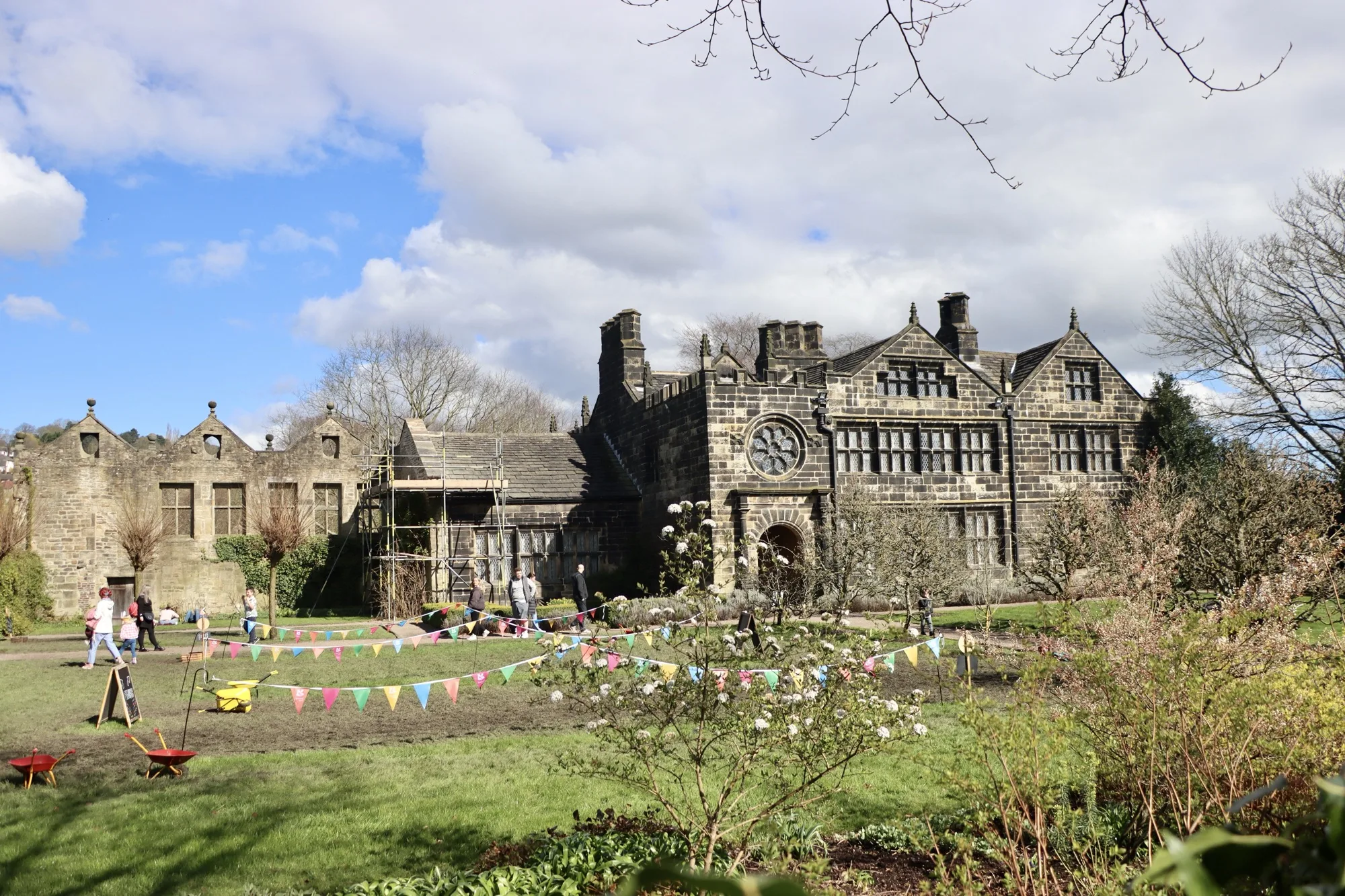
A photo of East Riddlesden Hall, a National Trust property near Keighley

On Good Friday, we went to East Riddlesden Hall, a National Trust property not too far away from us near Keighley. It wasn’t quite our original plan – we went to Cliffe Castle in the morning, but the museum was closed, and East Riddlesden Hall isn’t far away. Plus, we’re National Trust members and so we get in free.

The hall itself was mostly built in the 17th Century, although bits date from the 14th Century and there’s evidence of a dwelling from the 7th Century. I’ve been a few times as a child, and we also visited in June 2021 whilst there were still some lockdown restrictions. Now, everything’s open again, and with it being the Easter weekend, there were plenty of additional activities taking place. This included the usual National Trust Easter Egg hunt, but with plenty of extra things for kids.

When I visited in my childhood, a lot was made of how haunted the hall was. Indeed, there seemed to be a ghost in just about every room, and in the small pond outside. This seems to have been de-emphasised in recent years.

As with many National Trust properties in recent years, there’s been a renewed focus on making them more accessible to families and children. So there are now two playgrounds – one behind the shop, and another beyond the formal gardens. Indeed, compared to my childhood visits, much more of the outdoor spaces have been opened up.

The hall itself is interesting because it has changed significantly over the years. One wing of the hall was demolished in the early 20th century, with just a facade remaining. The hall is now grade-I listed, and is one of only two buildings in Keighley that have this status. As it happens, the other is West Riddlesden Hall, which is very close by but isn’t open to the public.

Accessibility

There’s limited car parking on site, and the hall is around 25 minutes walk from Keighley railway station. It’s served by the 662 bus service between Bradford, Shipley and Keighley which runs approximately every 15 minutes throughout the day (every 20 minutes on Sundays).

The outdoor areas are all wheelchair accessible and blue badge parking spaces are provided. The hall has some steps to enter, and there is no lift inside, so the upper floor is only accessible to those who can manage stairs.

On the Snooks Trail in York

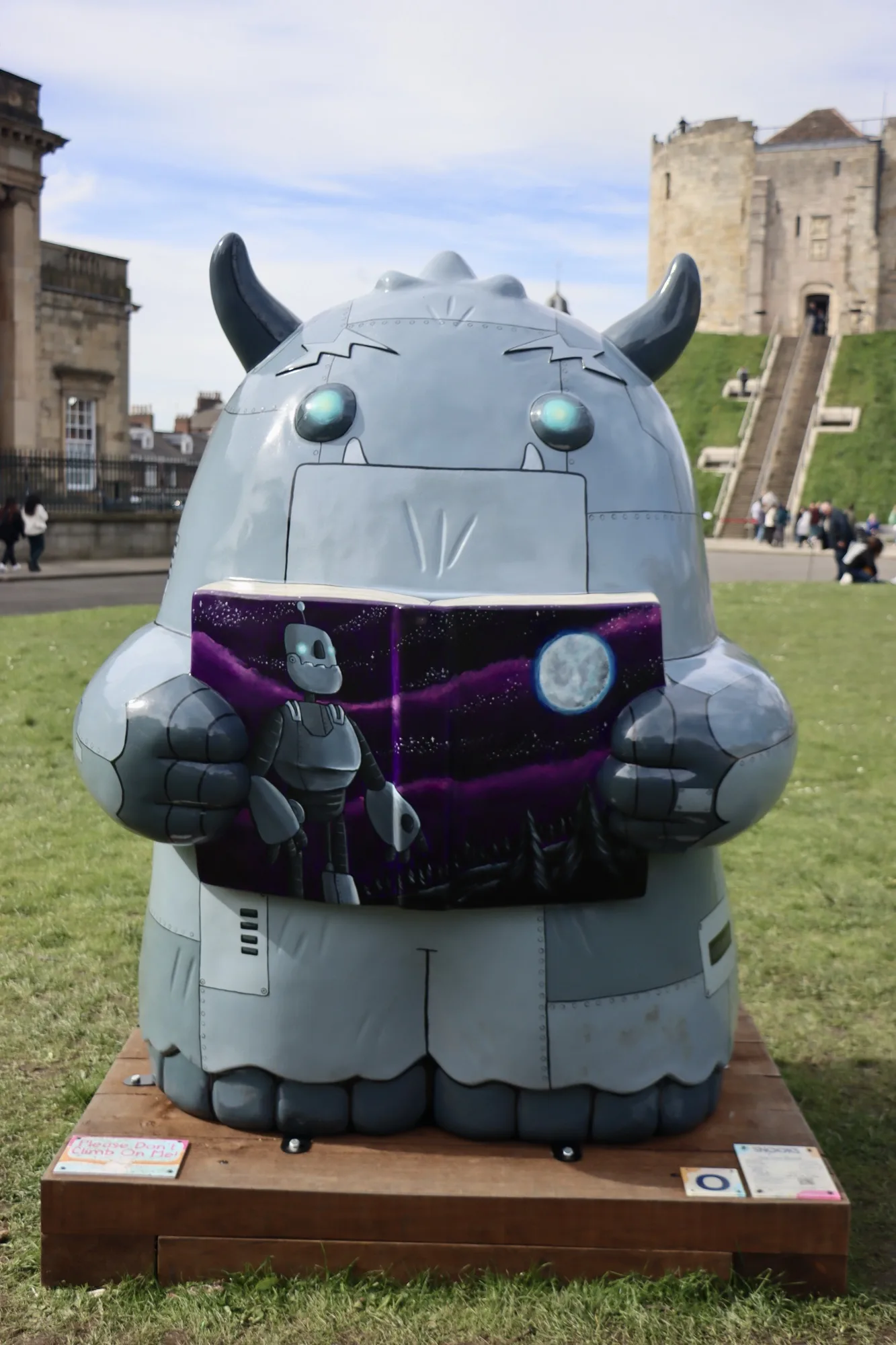
One of the Snooks outside Cliffords Tower in York

If you go to York (my home town) between now and the 25th April, you may encounter several large painted fibreglass monsters reading books dotted around. They’re the Snooks, and they’re part of the The Snooks Trail around the city.

There are 21 snooks in total, mostly in the city centre but a couple located further out. We spent part of our Easter Sunday hunting the snooks, and managed to see 12 of them. Our eight-year-old thought that ‘Frankie the Fostering Snook‘ was the best one – it’s outside York Central Library and sponsored by the York Fostering Service. Whilst the full list is on the web site, we also saw a few two-dimensional Snooks in the windows of buildings that we passed that presumably aren’t part of the official trail.

Each of the snooks has a letter attached, and if you put the letters in order, you can find a secret web address. Unfortunately, we didn’t have time to visit all of the snooks and didn’t get the full code.

Placing painted fibreglass sculptures around cities is hardly a new idea; CowParade was the original, but many cities have copied the idea. In the UK, Manchester was the first in 2004 with their version of CowParade, and Liverpool did its own thing when it was European Capital of Culture in 2008 with Go Superlambananas (I took a handful of photos in 2010). More recently I’ve seen Larkin with Toads in 2010, Reindeer in Leeds (2014), and Snowdogs in Huddersfield (2022).

After the trail finishes on the 25th April, there’ll be an auction where you can win one of the snooks. The funds raised from the auction will go to St Leonard’s Hospice in York.

The Cartoon Museum

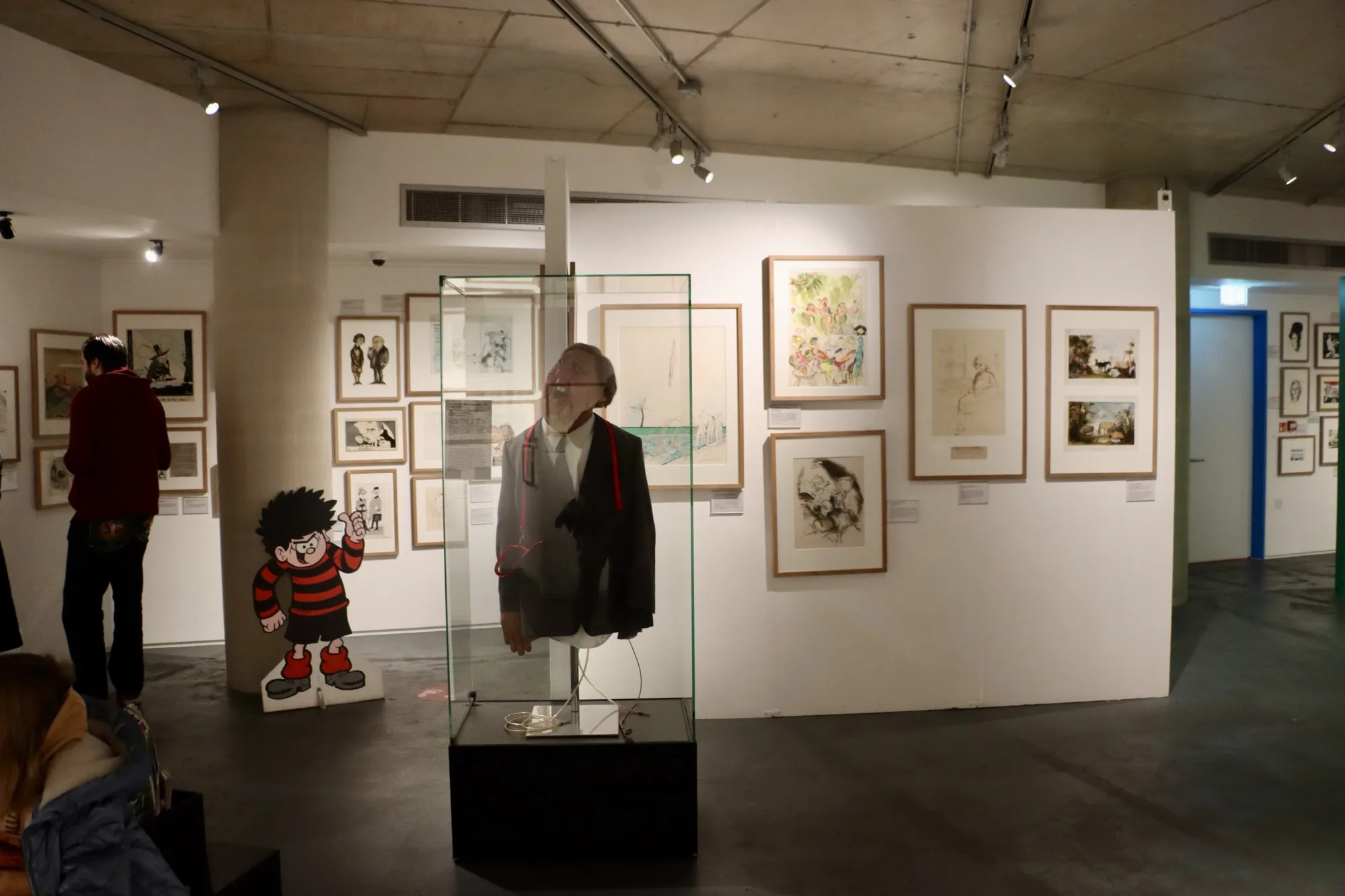
Inside the Cartoon Museum in London.

This is the fourth in the series of blog posts about places we went to in London – you can also read about the Bank of England Museum, the Cute exhibition at Somerset House, and the Young V&A.

On our last day in London, we went to the Cartoon Museum in Soho. It’s a relatively new museum, opening initially in 2006 and in its current location in 2019. It’s also quite small – allow a maximum of two hours – but with plenty to see. The walls are packed with illustrations going back a couple of hundred years, right up to now – the newest being Ben Jennings’ cartoon of Queen Elizabeth II taking the Elizabeth Line into the light when her death was announced in September 2022. It is mostly lots of pictures on walls, but there is a Spitting Image puppet on display as well.

At the moment, there’s a Wallace & Gromit exhibition, marking 30 years since the release of The Wrong Trousers. There’s several models on show, as well as some behind the scenes photos and some of the equipment used to film it. You can also see the actual Oscar that Nick Park won, although no photos are permitted of this. The exhibition is on until the 16th April.

A smaller exhibition shows the work of Oluwasegun Babatunde, a Nigerian comic artist who created a team of superheros based in Sub-Saharan Africa during the Covid-19 pandemic. This is on until the end of this month.

There’s also an activity room where you can create your own comic strips, and of course the ubiquitous shop.

Accessibility

The nearest tube stations to the Cartoon Museum are Oxford Circus and Tottenham Court Road. The museum is located in a basement, down a set of stairs, and sadly the lift has been broken since 2022. A recent crowdfunder to fit a new lift didn’t quite reach its goal but hopefully this will be fixed soon. Ear defenders and sensory backpacks are available to borrow once inside.

Young V&A

A photo of the interior of the Young V&A.

This is the third in the series of blog posts about places we went to in London – you can also read about the Bank of England Museum and the Cute exhibition at Somerset House.

The Young V&A is the new name for the V&A Museum of Childhood. It’s still in the same place, outside central London in Bethnal Green, but the new name reflects a complete refurbishment. We last went in 2017, and it’s changed massively since then. Before, it was very much a museum, with lots of objects in big glass cases and not much to interact with. Now, whilst there are still some objects to look at, it’s a much more interactive space, and somewhere to bring young children to play. Indeed, our eight-year-old was probably one of the older kids there. Dropping the ‘museum’ from the title therefore makes sense.

The gallery spaces have been split into themes – Play, Imagine and Design. Play arguably caters for the youngest children, although there’s a big screen with a playable Minecraft version of the museum (thankfully it resets regularly to discourage hogging). Imagine includes the dollhouse collection from before, and design looks at how products are designed. There’s a particular focus on recycling waste into useful furniture.

Japan: Myths to Manga

Japan: Myths and Manga

Then there’s an exhibition space, and the opening exhibition is called Japan: Myths to Manga. Whilst the main museum is free to enter, you have to pay to access the exhibition space, and tickets are limited. We made the mistake of not booking in advance, so when we were ready to visit the exhibition on a Saturday afternoon, no more tickets were left. So, we ended up booking tickets for the Sunday and came back the following day.

Personally, I concur with Ianvisits and found the exhibition a little under-whelming, but my wife and child seemed much more engaged. The exhibition is rather sparse, and I would have expected to see more objects there. However, I’m not in the target market for this and we did spend over an hour in the exhibition. There’s several clips from Studio Ghibli films to watch and plenty of Pokemon; but it was also good to read about the traditional Japanese stories and myths which inspired these works.

Accessibility

Because our hotel was located between Aldgate and Whitechapel, we caught the bus to the Young V&A, but it’s also a short walk from Bethnal Green tube station which is on the Central Line. It’s also not too far from Cambridge Heath station on the London Overground, on what will soon be known as the Weaver Line. Around the corner is the new permanent home of the Vagina Museum, although we didn’t have chance to visit this time around.

As you would expect from a recently-renovated museum, there is step free access everywhere, and there’s a dedicated quiet space in the Reading Room. Which we found quite welcome; although the renovation has been extensive, it’s a listed building and so there are limits. Any building popular with children is bound to be noisy, and the open space in the middle is quite echo-y.

Sci-Fi Weekender XV

A photo of a panel interview at a previous Sci-Fi Weekender in Great Yarmouth.

If you’re reading this blog post today or tomorrow, then I’ll be at Sci-Fi Weekender XV in Great Yarmouth, along with Christine and a large group of friends. As usual, I’m writing this in advance on a very old and wet Sunday – perfect blogging weather.

This is our seventh Sci-Fi Weekender event; the first one we went to was SFW 9 in 2018, near Pwlheli in North Wales. Our child was only two at the time so we went as a family, although that meant missing out on the evening activities, including John Robertson’s The Dark Room. It took us a while to work out why everyone was calling each other Darren and why there were so many pineapples everywhere.

Sci-Fi Weekender has moved around a bit over the years. The first event was in Pontins in Camber Sands on the south coast of England, but it had spent a few years in Wales before our first visit. SFW X (part I) was in Sheffield city centre, after changes to the site in Wales meant it could no longer be held there, and it’s been at the Vauxhall Holiday Park in Great Yarmouth since 2019 (SFW X part II). We’ve been to all of them since 2018, although after our first time we’ve had childcare in place. Not least because it’s a Thursday-Friday-Saturday event and it’s not a valid excuse for taking a child of school on the Friday.

Neil and Christine with Brian Blessed at Sci-Fi Weekender XIII

What is Sci-Fi Weekender?

Sci-Fi Weekender is perhaps best described as a residential science fiction and fantasy festival (or ‘Space Butlins’, if you will). It’s not a comic-con (like Thought Bubble, which we went to in 2014 and 2015), and there are usually only a handful of stalls. The main focus is entertainment, cosplay and interviews with actors and celebrities. It doesn’t tend to get many big names, although Peter Davidson (the fifth Doctor, and father-in-law to David Tennant) is the top-billed name this time. Previous SFW events have included Brian Blessed and Nina Wadia.

It tends to take place in holiday parks (the Sheffield years excepted) so that the majority of attendees can stay on site, and it also gives it a more intimate feel. Many guests stay the whole weekend, and some even mingle with attendees. Professor Elemental, who we’ve now seen seven times (eight if you include this weekend) always performs and usually gets involved in hosting a panel. We’re also looking to Madam Misfit‘s third visit.

Whilst the Vauxhall Holiday Park at Great Yarmouth is good, it’s a bit of a trek from Yorkshire. It’s roughly a four hour drive, and about the same by train but with three changes from Sowerby Bridge. We’re driving down as we’re offering a lift to some friends who are also going.

Also, don’t ask about the numbering. SFW X was delivered as two events, and then XI and XII didn’t happen because of you know what.

Cute at Somerset House

The Cute exhibition at Somerset House in London.

After we spent the morning at the Bank of England Museum, the second place we visited on our trip to London was Somerset House for their Cute exhibition.

Like previous exhibitions at Somerset House, Cute includes some new commissioned art and existing pieces, as well as donated memorabilia. Back in 2021, we went to an exhibition about the Beano, and this filled the same space in the South Wing. It’s an exploration of cute things and its impact on society, including kawaii.

Hello Kitty

The exhibition also marks the 50th anniversary of Hello Kitty, and a large section of the exhibition is devoted to the memorabilia collected by one person. Including Hello Kitty Spam.

There are some interactive parts too. There’s a room with some arcade games, old and new, including some indie games like Froggy Pot.

Some of the art produced for the exhibition is AI generated, and the theme image features a kitten with a unicorn horn and seemingly seven paws. I suspect that they’ve kept this in because it shows the weird-er side of cuteness.

Pop-up cafe

Alongside the exhibition is a pop-up Hello Kitty themed café. We had to queue to get in, as it’s a small space, but the food was nice albeit very full of sugar.

The exhibition runs until the 14th April, so you’ve got about five weeks to go to see it. We went on a Friday when walk-up tickets were available, but I imagine it’ll be busier at weekends and so you may wish to consider pre-booking. You can also look at all of the objects online at cute.guide.

Accessibility

The southern entrance to Somerset House is the closest to the exhibition, and is very close to Temple tube station on the District and Circle lines. It’s also close to Waterloo Bridge. Whilst there are stairs, all are duplicated by several lifts giving access to the exhibition, which currently have furry insides. Access packs, containing large print guides, noise-cancelling headphones, magnifying glasses and a stress ball, are available to borrow from the box office.

Bank of England Museum

A photo of the new King Charles coins and bank notes at the Bank of England Museum in London

The first place we went to on our trip to London last weekend was the Bank of England Museum. Which is pretty much what you would expect it to be – a museum based at the Bank of England headquarters in the City of London. Access is via a side entrance, and, as you would expect, you have to go through a security scanner to get in.

This is only the second time that I have been to the Bank of England Museum. The first time was a long time ago. I can’t remember exactly when, but I was definitely still living at home, so probably 25-ish years ago. Part of the reason for this is that the museum is only open on weekdays, and we normally visit London at weekends. As we had the benefit of an extra day, we were able to visit last Friday.

It’s not a big museum – a typical visit will take 1-2 hours – but it’s free to get in. And the exhibits are regularly updated. As shown in the photo above, there are samples of the new coins and banknotes featuring King Charles III which are not yet in general circulation. I was also amused by the satirical FTX t-shirt in an exhibit about cryptocurrencies. These are in a new exhibition called The Future of Money, which opened a couple of days before we travelled and runs until next September.

Like many museums, the Bank of England Museum has also acknowledged the darker sides of its past. Recent new exhibits include copies of ledgers listing the names of slaves that came into the bank’s possession, and there’s a display about the Windrush generation. On arrival in the UK, many of those who travelled on the Empire Windrush to start new lives were denied access to traditional banks, and the museum has a series of panels on Pardner Hand to allow people to borrow or save money.

Other permanent exhibits include some examples of forged bank notes (including some introduced by the Nazis in the Second World War to de-stabilise the economy), and of course there’s plenty on the history of the bank.

If you haven’t been to the Bank of England Museum before, I’d recommend going. It’s not a full day out, but it’s free and there are some interactive elements for children.

Accessibility

Predictably, the nearest tube station is Bank, which has step-free access from the Northern and Waterloo & City Lines, and the DLR. There are steps in the museum, including at the entrance, however, security staff can escort those with mobility issues from the bank’s main entrance and ramps can be provided once inside. There isn’t a quiet room, but ear defenders are available to borrow.