Have you ever been to a Greggs Outlet?

A photo of the Gregg's Outlet on Great Horton Road, opposite the university in Bradford

Greggs, the UK bakery chain, is basically everywhere nowadays. What started out as one shop in the north east in the 1950s has grown to approximately 2500 stores across almost all of the UK. Most towns and cities have at least one; whilst Sowerby Bridge doesn’t have one, nearby Halifax has three. Even the New York Times wrote a gushing article about them earlier this year.

What’s less well known about are the smaller number of Greggs Outlets. These sell excess stock from other Greggs stores at a discount. And there’s one opposite the university where I work.

The Greggs Outlet in Bradford wasn’t always an outlet. Pre-pandemic, it was a regular Greggs, selling the full standard range including the vegan sausage rolls that seemed to boil Piers Morgan’s piss. But when shops could open again, it received new red branding and had the indoor seating area closed.

Inside, you can buy most of the things that you can normally buy in a regular Greggs, but not everything; it depends what has been left over elsewhere. Nor will it be quite so fresh; the sandwiches will have been made the previous day, for example. You also can’t get things like bacon sandwiches, although usually coffee is available to take away.

But it is much cheaper – typically everything is half price. Baguette sandwiches are around £1.60 each, and sweet treats are almost always under £1. Great for students on tight budgets at the university and nearby college, but also for those on low incomes.

Indeed, the reason why you may not have come across a Greggs Outlet is that they’re strategically located in areas of social deprivation. This includes some in its home territory around Newcastle, but also Bradford, Birmingham, Glasgow, Liverpool, Cardiff, Leicester, Leeds, Preston, Sheffield, Oldham, and some in London. Greggs is planning to have 50 outlets open by the end of next year, representing about 2% of its estate. Food that remains unsold then gets passed to charities, and Greggs claims to have distributed over 1000 tonnes of food in 2023.

Whilst I can afford to go to a regular Greggs, I appreciate having an outlet in easy reach. And it’s a good way of avoiding food waste. Schemes like Too Good To Go are great for smaller businesses to offload excess stock, but for larger chains like Greggs, making cheaper food available all day for those less likely to be able to afford it is welcome.

Mr Fitzpatrick’s Temperance Bar

A photo of the outside of Mr Fitzpatrick's Temperance Bar in Rawtenstall, Lancashire

At one time in northern Britain, there were hundreds of ‘temperance bars’ – essentially pubs that didn’t serve alcohol. Nowadays, just one of the original temperance bars survives: Mr Fitzpatrick’s in Rawtenstall, Lancashire. We called in on the August Bank Holiday Monday, on our way to Gawthorpe Hall.

The Temperance Movement

The Temperance Movement came about during the Industrial Revolution in the 19th Century, as a way of steering workers away from the perils of drink. In England, the movement started in Preston in 1835 and spread across the newly-industrialised northern towns and cities. Followers of the temperance movement took a pledge to stay away from all alcohol, whether that be spirits, beer or cider. Therefore, temperance bars offered alcohol-free social spaces for the movement’s followers.

Temperance bars would offer a variety of flavoured non-alchohlic drinks, such as Sarsaparilla, Blood Tonic and Dandelion and Burdock. In our household, we’re heavy consumers of Vimto, and this fruity blend also came out of the Temperance Movement. Back in 2013, we went to an exhibition all about the Temperance movement at the People’s History Museum.

Mr Fitzpatrick’s

Nowadays, Mr Fitzpatrick’s is better known as a brand of cordials, which are on sale at many independent shops across the north of England and include the aforementioned flavours. They’ve hung on to this one remaining temperance bar, in the Lancashire town of Rawtenstall, where you can try their full range of cordials mixed with still or sparkling water. They also do milkshakes, and a decent food menu – we called in for lunch and our eight-year-old thought it was amazing. Upstairs, there’s a model railway suspended from the ceiling.

Whilst Mr Fitzpatrick’s is the last surviving of the original temperance bars, it’s an idea that seems to be coming back around. There’s a BBC piece about the ‘rise of the sober bar’ from 2019, and I’d argue that the various dessert bars that have popped up in majority Muslim areas in the UK are a response to the need for non-alcoholic social spaces. Many young Generation Z adults don’t drink, regardless of religious affiliation, and it’s nice to have bars that offer a wide range of interesting soft drinks. Even if you’re not teetotal, it’s a bit depressing when you’re not drinking and all there is on offer is cola or lemonade.

Accessibility

Being a very small and old building, accessibility isn’t great – the toilet is up a narrow, steep staircase although accessible facilities may be available at the nearby Rawtenstall Bus Station. Free parking for up to three hours is available nearby but you’ll need a Parking Disc (Sundays and Bank Holidays are free all day). Regular X43 Witch Way buses run towards Burnley and Manchester.

Rawtenstall is the northern terminus of the heritage East Lancashire Railway, which runs from Bury.

Our go-to cookbooks

A photo of the four cookbooks mentioned in this blog post

Cooking at home is one of my wife’s passions, although it’s something I enjoy too. Over the years, we’ve amassed a selection of cookbooks, but there are four that we use the most at present. So, partly as a way of sharing nice recipes, and partly as a cynical way of getting Amazon affiliate commission, here are our four go-to cookbooks.

All the links to Amazon below pay me a small amount of commission should you choose to buy these books from there. However, we often borrow cookbooks from our local libraries. I’ve also added links where some of these recipes are available online.

A photo of the cover of the India Express cookbook by Rukmini Iyer

India Express by Rukmini Iyer

Of the four cookbooks mentioned today, India Express by Rukmini Iyer is our newest. We found it first in our local library, and then bought a copy as there were so many recipes that we wanted to try. All the recipes are vegan, vegetarian or pescatarian, and are generally quite quick – almost all can be done in an hour and many less.

Our favourite recipe so far is Spiced Roasted Paneer with Tomatoes and Peppers (available at this link). Paneer is an Indian soft cheese that you can usually get at larger supermarkets – our local Sainsbury’s stocks it in the chilled world food section. The recipe is basically a traybake – preheat the oven, put the ingredients in a roasting tin, and cook for 30 minutes. We’ve also enjoyed the South Indian-Style Black Pepper & Fennel Prawns recipe and had this a couple of times.

A photo of the cover of 'Bored of Lunch: The Healthy Slow Cooker Book' by Nathan Anthony

Bored of Lunch by Nathan Anthony

Nathan Anthony’s Bored of Lunch: The Healthy Slow Cooker Book, is apparently the biggest selling slow cooker cookbook in UK publishing history. I can see why – there’s some really good recipes, and the majority just require you to throw all the ingredients together and leave the slow cooker to do its thing. Other slow cooker cookbooks add on significant extra preparation, and undermine much of the ease and time saving that a slow cooker offers.

We typically have a slow cooker meal once a fortnight, using the slow cook mode on our Instant Pot. Almost all of the recipes come from this book, and the most recent we had was the Chicken and Peanut Curry, made from peanut butter and coconut milk. We also like the Thai Basil Beef and Gin-Infused Spiced Beef, and I was really impressed with the Garlic Parmesan Chicken with Potatoes which involves layering the ingredients to get a full meal in one pot. We also have the follow-up, Even Easier, but use the first book more.

A photo of the cover of the Persiana Everyday cook book by Sabrina Ghayour

Persiana Everyday by Sabrina Ghayour

We’re both big fans of Sabrina Ghayour’s Persiana cookbook, but we use the follow-up Persiana Everyday more often. I would recommend both if you like Middle Eastern cookery or food with a lot of flavour. We’ve recently tried the Sage Butter, Feta & Black Pepper Pasta, and our favourites are the Baked Halloumi and Za’atar, Paprika & Garlic Chicken.

There’s also some good side-dish recipes, especially for making flavoured rice.

A photo of the cover of Nigella Express by Nigella Lawson

Nigella Express by Nigella Lawson

Christine had this book when I met her, and though it was published 17 years ago, it still gets plenty of use. We have several of Nigella’s cookbooks, but Nigella Express is the one we use the most.

We recently had Mirin-Glazed Salmon for the first time, and Chicken Schnitzel with Bacon and White Wine is a favourite of ours. No Churn Pomegranate Ice Cream is a great base for lots of ice cream flavours that can be made without a dedicated ice cream maker.

Honourable mentions

We don’t own it, but we’ve cooked several good recipes from Donal Skehan’s Super Food in Minutes – we particularly like his Red Lentil Daal which we have with paratha. Most of the recipes in this book come with lots of vegetables.

If you have an Instant Pot, or another brand of pressure cooker, then Modern Pressure Cooking by Catherine Phipps is a worthwhile purchase.

Dishonourable mentions

My wife has gotten rid of several of her cookbooks recently, having not really used them. Jamie Oliver’s 15 and 30 Minute Meals both went – I’m sure you could cook the meals in 30 minutes with a full team of staff but they seemed to take us far longer. We also picked up the first two River Café cookbooks at a charity shop, and they’ll probably end up back there soon too. The Grains as Mains book seemed like a good idea, but we were underwhelmed – some are really basic recipes that just happen to have some extra wholegrains sprinkled on.

Baking our own bread

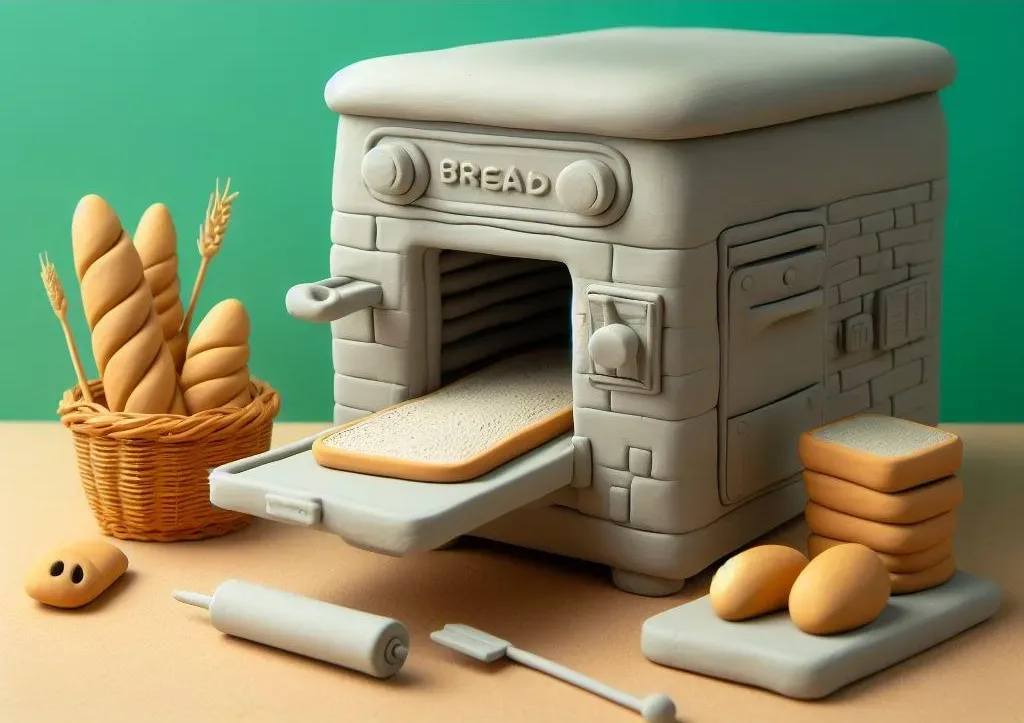
An AI generated image of a bread machine made out of clay

For the past year or so, we’ve had a Panasonic bread machine that we’ve used to bake our own bread. We eat bread most weekdays – usually, I have home-made sandwiches for lunch, and Christine makes her own sandwiches at least a few days every week. Whilst we weren’t quite so far down our ultra processed food avoidance journey when we bought the machine, baking our own bread seemed like a good way to stay healthy.

We’ve used the bread machine 2-3 times every week since then. Most of the time, we use it for basic loaves. These just contain contain yeast, flour, butter, sugar, salt and water, or olive oil instead of the butter and sugar. But I’m also partial to a couple of slices of toasted fruit loaf when I start work, and so we use the bread machine for this too. It’s the basic recipe but with raisins added (the machine has a hopper to add ingredients) and a tablespoon each of ground sweet cinnamon (cassia bark) and mixed spice in with the dough mix.

What I like most about the bread machine is that you can ‘set it and forget it’. Most recipes just require you to add the ingredients to the mixing bowl, close the lid, and then it’ll do its thing. When the timer goes, you should have a freshly baked loaf waiting for you. The proving, mixing and baking is all done for you by the machine automatically. You can set a time delay as well, so that you can add the ingredients on an evening and wake up to a loaf the following morning. Most bread recipes take around four hours, but you can bake a ‘rapid’ loaf in about two hours if you double the yeast.

Fancy bread

The bread machine manual comes with plenty of recipes to try, and the internet isn’t short of suggestions either.

If we have time, we’ll make a multi-seeded loaf, which adds sesame and poppy seeds to the dough at the start, and then pumpkin, sunflower and linseeds in the hopper. Sometimes we also make a milk loaf, where you swap out the water for milk.

More recently, I’ve tried a tomato loaf. For this, you swap about half of the water for tomato juice and add some chopped up sun-dried tomatoes. However, you have to add the tomatoes to the dough manually and so it’s not a ‘set it and forget it’ recipe, even if the bread does taste really nice.

The machine also good for proving pizza dough. Indeed, the machine has several dough-only modes where you can take the dough out and cook it in a conventional oven. You can also use it to make cakes, but we’ve not tried that yet.

In future, I may try making soda bread (here’s a sample recipe that I found), which is common in Ireland and swaps the yeast for baking soda and uses buttermilk. I’d also like to try making Guinness bread, again continuing with the Irish theme.

Things to bear in mind

We have had a few mishaps though. Previously, I’ve forgotten to put in the little paddle in the bread pan which mixes the dough. This resulted in a pile of mixture that’s baked on top and raw at the bottom. On more than one occasion, I’ve forgotten to add any water, and ended up with some nice-smelling sand. And one time, the dough rose too quickly during baking and then collapsed, resulting in a dense, inverted loaf.

It’s also worth bearing in mind that home-made bread does go stale more quickly than shop-bought bread. After about three days, any leftover bread is usually only suitable for toast. Of course, you can freeze bread to keep it fresh.

Christine bought the bread maker and so I’m not sure how much it cost, but similar models seem to sell for £180-£200 on Amazon (sponsored link). It’s therefore quite the investment, although you may find that the ingredients are cheaper than buying a good loaf from a shop. Also, the ingredients keep well, so you can buy in bulk. For baking, the bread machine uses less energy than a conventional oven, as it’s heating a smaller space.

I really like having access to freshly-baked bread, and it tastes so much nicer than shop-bought loaves.

Omar’s Balti House in Bradford

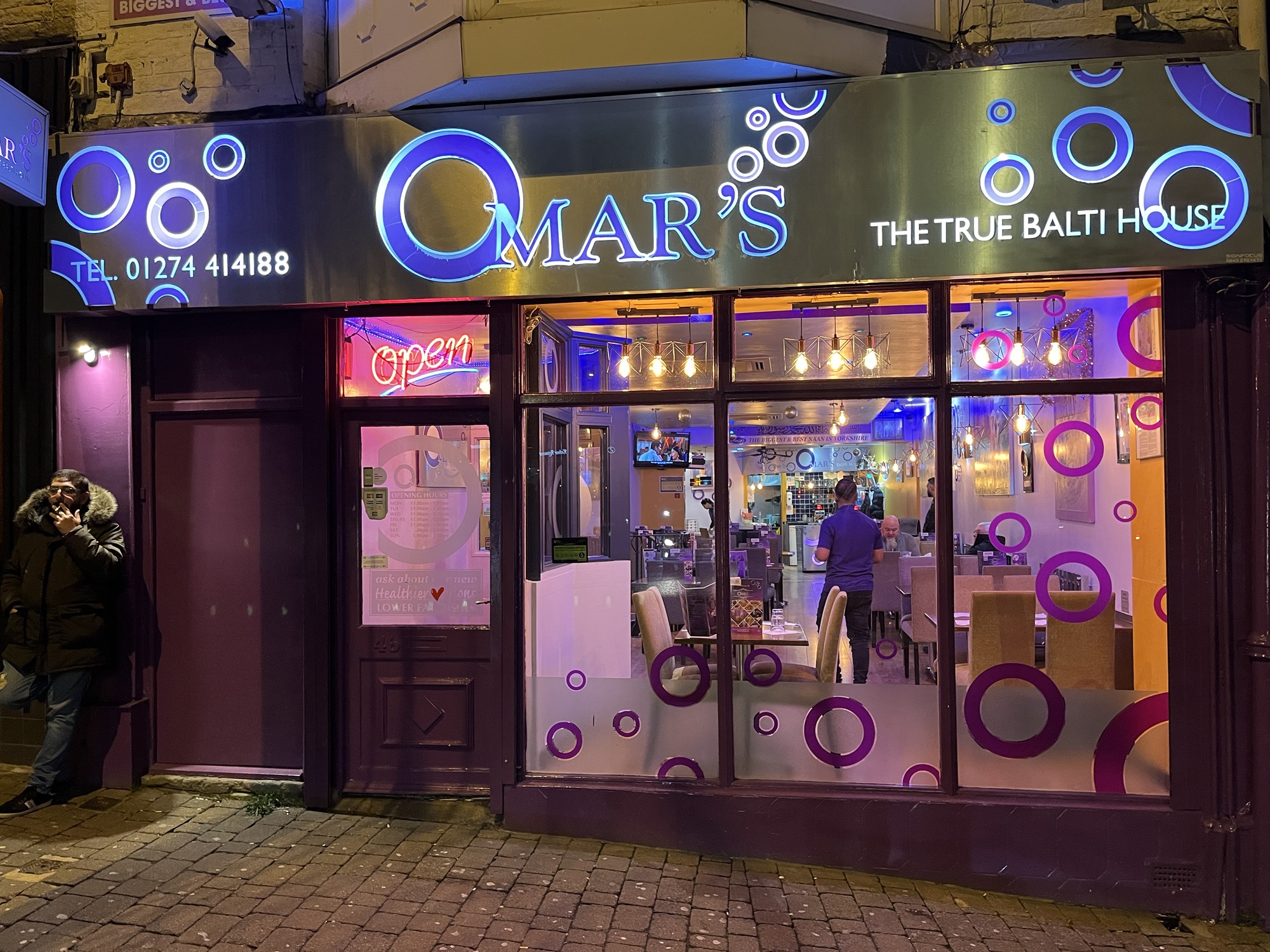
A photo the outside of Omar's Balti House in Bradford

I’m sure I must have written about Omar’s Balti House on Great Horton Road in Bradford at least once before, although I don’t think I’ve ever written a whole blog post about it. We went there last week with a group of friends, which is an excuse to write about it.

Bradford is not short of curry houses and has repeatedly won the title of ‘Curry Capital of Britain’ over the years. And whilst Omar’s may not have the renown of other curry houses like Mumtaz, or the likes of Aagrah and Akbars which have become chains, it’s one that is held with affection amongst people who have lived in Bradford. Indeed, I’d argue that it’s a rite of passage for students who study in Bradford. I first visited early on in my first year at university, and have been back many, many times since.

Omar’s is known for serving its meals in the same metal balti dishes that they’re cooked in, and for it’s enormous naan breads. No really, they’re claimed to be the largest in Yorkshire and typically measure almost a metre across. Indeed, eating one of these naans on your own, with a balti dish, is a food challenge – and the record is currently 35 minutes having been last set in 2019. Before that, the record had stood for over a decade.

Massive naans aside, the food at Omar’s is good, and despite being a small restaurant they do cater for large groups. They also serve some western food, which is good when you have an eight-year-old who hates even the mildest spicy food.

Ultra Processed Food

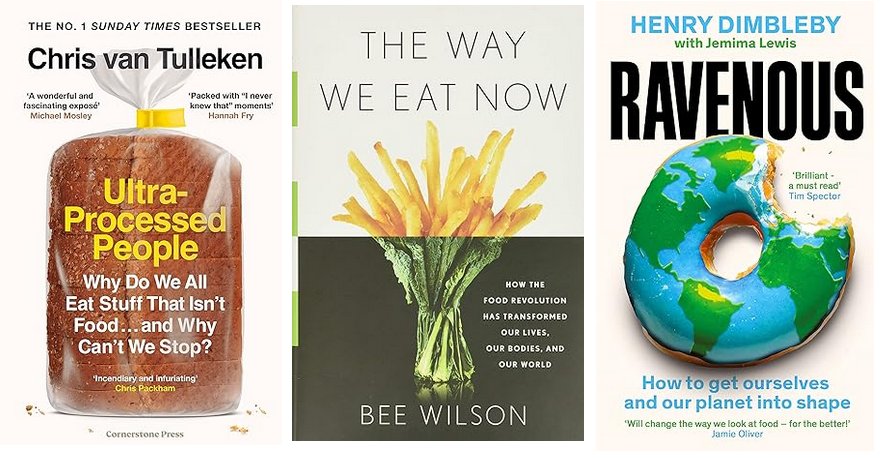
Cover images of the books about ultra-processed food mentioned in the article

Something that I’ve become more concerned about in our household is our consumption of so-called ‘ultra-processed food’. My wife has had a few health issues over the past 18 months, including an elevated risk of developing type two diabetes which has seen her cut her sugar intake. But this coincided with the publishing of several books related to ultra-processed food, and has seen us made some changes to reduce our exposure to them.

The books

Before I go into much detail, here are the books I’m talking about:

  1. Ultra-Processed People by Dr Chris van Tulleken
  2. The Way We Eat Now by Dr Bee Wilson
  3. Ravenous by Henry Dimbleby

Note: these are sponsored links, but feel free to purchase these books from your local independent tax-paying bookshop, or borrow them from a library.

If you only read one of these, read Chris van Tulleken’s Ultra-Processed People. Chris is probably better known as ‘Dr Chris’ from the CBBC show Operation Ouch, which he presents with his twin brother Dr Xand (and later Dr Ronx). He’s a triple-threat: a GP who is also a research scientist and a TV presenter, and it shows. He’s able to digest some academic research into an easily readable format, which isn’t surprising when you consider that this is what he does for his patients and his TV audience. But it also means that there’s academic rigour behind this book.

Dr Xand pops up quite a bit in this book; Chris and Xand are identical twins but have different physiques. Chris puts this down to Xand’s time in the USA, where he was exposed to higher amounts of so-called ‘ultra-processed food’, and so he’s ended up higher on the BMI scale than his brother (although Chris acknowledges that BMI is discredited). When they both contracted Covid-19 in 2020, Xand was more seriously ill than Chris.

Over the course of the book, we discover that there’s increasing evidence that ultra-processed food is linked to obesity, and how the food industry tries to downplay it.

How do we define ultra-processed food?

Chris acknowledges that it can be hard to define what ultra-processed food is. The best model that we have is the Nova classification, developed by Prof Carlos Augusto Monteiro at the University of Sao Paulo in Brazil. Essentially, this splits food into 4 groups:

  • Nova 1 – wholefoods, like fruit, vegetables, nuts etc that can be eaten with little to no processing
  • Nova 2 – culinaries, like vinegar, oils, butter and salt that require some processing
  • Nova 3 – processed food. This is basically anything that’s been cooked, so home-made bread would fall under here. Foods from the Nova 1 and 2 categories are combined to create the foods in the Nova 3 category.
  • Nova 4 – ultra-processed food, which is made from formulations of food additives that may not include any ingredients from the Nova 1 category.

Probably the easiest way to work out if something fits into the Nova 4 category is by looking at the list of ingredients. If there are one or more ingredients listed that you can’t expect to find at a typical large supermarket, then it’s probably ultra-processed food. Things like emulsifiers, artificial sweeteners, preservatives and ingredients identified only using those dreaded E numbers that my mum used to be wary of back in the 1980s.

And there’s a lot of food that fall into the Nova 4 category. Almost all breakfast cereals, and any bread that is made in a factory, are examples.

Why are ultra-processed foods so common?

Fundamentally it’s to do with cost and distribution. For example, a tin of tomatoes that contains some additional ultra-processed ingredients may be cheaper than a tin just containing tomatoes (and perhaps a small amount of acidity regulator). It’s a bit like how drug dealers cut drugs with, for example, flour, to make more money when selling their drugs on.

Distribution is also a factor. A loaf of bread that is baked in a factory may take a couple of days to reach supermarket shelves, where it also needs to be ‘fresh’ for a few days. So the manufacturers will add various preservatives and ingredients to ensure that bread remains soft.

You can bake your own bread using only yeast, flour, salt, olive oil and water. But Tesco will sell you a loaf of Hovis white bread that also contains ‘Soya Flour, Preservative: E282, Emulsifiers: E477e, E471, E481, Rapeseed Oil, and Flour Treatment Agent: Ascorbic Acid’. These are to keep the bread soft and extend its shelf life, as a homemade loaf may start going stale after 2-3 days. This means that a shop-bought loaf may go mouldy before it goes stale.

Other common examples

Breakfast cereals brand themselves as a healthy start to the day, but often contain worryingly-high amounts of sugar. And there’s evidence that their over-use of ultra-processed ingredients interferes with the body’s ability to regulate appetite, leading to over-eating.

Ice cream is also often ultra-processed, if you buy it in a supermarket. The extra additives ensure that it can survive being stored at varying temperatures whilst in transit. It’s notable that most UK ice cream is manufactured by just two companies – Froneri (Nestlé, Cadbury’s, Kelly’s, Häagen-Dasz and Mövenpick brands) and Unilever (Walls and Ben & Jerry’s). There are many small ice cream producers, but the challenge of transporting ice cream and keeping it at the right temperature means that they have limited reach.

I’m also worried about a lot of newer ‘plant-based’ foods that are designed to have the same taste and texture as meat and dairy products. You can eat a very healthy plant-based diet, but I would argue that some ultra-processed plant-based foods would be less healthy that the meat and dairy products that they’re mimicking.

What we’re doing to cut our intake of ultra-processed food

We now bake our own bread in a bread machine. Not only do you avoid ultra-processed ingredients, but freshly-baked bread tastes so much nicer than a loaf bought in a shop. It takes a little more planning, but most of the ingredients don’t need to be kept fresh.

We also buy more premium products where we can. Rather than refined vegetable oils, we buy cold-pressed oil for frying, and I’ve mentioned chopped tomatoes above. Of course, these products cost more, and it’s something that both Chris and Henry mention in their books. It should come as no surprise that there’s a link between obesity and poverty, if people on low incomes cannot afford good food.

And we’ve had to give up Pringles. Chris devotes practically a whole chapter to them, and how they trick the brain into wanting more.

You can download the Open Food Facts app to help decipher food labels. It includes a barcode scanner, and will warn you if what you’ve scanned is ultra-processed food. The good news is that there are still plenty of convenience foods which are not ultra-processed – there’s some suggestions in this Guardian article.

Whilst I haven’t yet given up on artificially-sweetened soft drinks, we reckon that we’ve cut our sugar intake and our exposure to artificial additives. In many cases, we don’t know the long-term health effects of these additives, although we do know that some people struggle to lose weight despite eating a supposedly ‘healthy’ diet and exercising regularly.

Brewing my own beer with Brew Barrel

The Brew Barrel kit - a barrel and a box with ingredients

The folks at Brew Barrel approached me to review their eponymous home brewing kit. For £25, you can get everything you need to make 8 pints of beer, with a choice of different hops and flavouring to make different styles. It’s made by a German company, which, considering that Germany is famed for its beers, means it should be good.

The Brew Barrel kit includes a five litre barrel, and the ingredients – hops, yeast, flavourings and rather a lot of malt syrup. To make the beer, you combine all of these in the barrel, along with lots of water. Instructions are, of course, provided. It takes around 10 to 15 minutes of preparation initially, but after that it doesn’t require much attention – you have to turn the barrel after 24 hours, and then refrigerate it after five days. Two days later (so a total of seven days since starting), your beer is ready to serve from a small tap at the bottom of the barrel.

A photo of the Brew Barrel ingredients

I decided to brew an IPA, which is one of my favourite beer styles. Putting it together was quite easy – all the components are numbered so that you can be sure of the required order. Unfortunately, I couldn’t get the barrel in the fridge – our fridge is rather small, and full. As you have to keep the barrel upright, I would have needed to extensively re-arrange the fridge and get rid of the contents, which I doubt my wife would be best pleased about. Especially as she doesn’t like beer.

So when it came to trying the beer, it probably wasn’t at its best. Despite this, I liked it – it was rather sweet and very, very foamy, but drinkable and certainly nicer than some other homebrews that I have tried in the past. Once opened, the beer in the Brew Barrel should keep for around two weeks, if kept refrigerated.

Should you buy one? If you want to brew your own beer, but are completely new to it, then yes – the Brew Barrel keeps it simple for you and doesn’t require too much effort. Those with existing home brew experience may find it useful to have all of the necessary materials in one package, but could feel limited as it’s aimed more at novices. Financially it’s probably more expensive than just buying eight pints of beer to consume at home, but where’s the fun in that?

George Egg – Anarchist Cook

Photos of the recipe cards from George Egg's Anarchist Cook show.

Last week, as part of the British Science Festival, we went to see George Egg perform his show ‘Anarchist Cook’ at The Studio theatre in Bradford. George Egg is a touring stand-up comedian who consequently spends a lot of time in budget hotels. As he finishes his comedy gigs in the late evenings, it’s often difficult to find any decent food available (apart from pizza and kebab shops).

So, the show is based on the premise of: what can you cook in an average hotel room, using only the equipment that’s there?

This is, of course, bearing in mind that you don’t usually get a cooker, oven or any cooking utensils in an average hotel room. Instead, George Egg cooks a three course meal in just over an hour, using an iron, a kettle, a pillow case, some of the complementary salt and pepper sachets, some foraged plants from hotel reception, and a Gideon Bible.

The starter includes crostini toasted on the iron, ricotta that had been strained through a pillow case using UHT milk sachets (209 sachets to be exact), and a salad with leaves from a spider plant (which until now I didn’t know was edible). For the main course, he steamed sea bass in the travel kettle, and desert was pancakes, again cooked on the iron.

These were just three of the recipes that George has come up with, and he mentions others in his show. This includes curing your own salami sausages (requires a hotel room with removal ceiling tiles and being able to request the same room a few weeks later), and making bread using a complimentary wine bottle as a rolling pin and the countertop in the bathroom.

It was a good show, clocking in at around an hour long, and the audience were invited to try the food at the end. Alas, by the time we’d made it out, it had all been eaten – the show was free, funded by the science festival’s sponsors, and so it was a full house. We did, however, buy the recipe cards – although we’ll probably use more conventional cooking utensils to make them.

The Anarchist Cook show has recently run at the Edinburgh Fringe Festival, and George Egg is due to reprise it at a couple of dates in Wales next month. Hopefully he’ll be able to tour it elsewhere soon as it’s a good show to watch – it’s both entertaining, and educational. If not, he also has plenty of stand-up dates coming up as well.

Disclosure: I work for the University of Bradford who were this year’s host of the British Science Festival.

Mystery meal

Homemade burger

Christine and I had our first experience as mystery diners recently.

Ages ago, I signed up for the Mystery Dining Company, an intermediary that arranges mystery shopper visits for various restaurants in the UK. Whilst I got regular emails about available visits, none of the establishments interested me – they were mainly pubs that I wouldn’t consider visiting. Finally, an urgent visit for a restaurant that we actually like came up, and so I booked us in. I can’t tell you which restaurant it was, but it was a large multi-national chain.

As part of the task, we had to book a table online, but also call the restaurant using a call recording service (Record Your Call in this case) and upload the recording. There was a questionnaire to complete which had several questions that related specifically to aspects of the experience that the restaurant aims to offer at its locations, so it wasn’t a case of simply reviewing the food and the service. Fortunately, the restaurant and the staff did well on the whole, although I did have to put a few negative comments in places.

Obviously the major benefit of being a mystery shopper is that you get reimbursed for the meal, so effectively it was free. There are limits as to how much you can claim in total though, and you’re usually restricted to no more than one alcoholic drink each. To be reimbursed, you upload copies of your receipts; I learned that after submitting mine that I should have uploaded both the food and card receipts so that I could claim back the tips.

We’d happily do it again, although sadly visits are a bit few and far between in the Halifax and Bradford areas at the moment.

The Mystery Dining Company is just one such company that arranges visits; another is Market Force Information, and you can find out more about them in this blog post from Money Saving Expert. They offer a small additional fee on top of the reimbursement but it’s only a few pounds.

If you’re literate, enjoy eating out and are flexible enough to go to places at short notice, then I’d recommend signing up as a mystery shopper. You effectively get free meals out of it, and you’re helping the restaurant companies improve their customer experience.

The Record Café, Bradford

The Record Café

Last night I went to a preview night at Bradford’s newest bar, The Record Café, on North Parade. Officially it opens tonight, and it will be a great new addition to Bradford’s new independent quarter.

The Record Café is three things. First and foremost it’s a bar, with four hand-pulled cask beers and six keg beers, along with a fridge full of bottled beer. Most of the beers are either British (Saltaire, Great Heck, Brewdog and Camden Town were present when I visited) or American, including the Anchor Steam Brewery’s Porter available in a keg – this is the first time I’ve seen their beers in anything other than a bottle in this country. There were also a small number of bottled continental beers, and an eclectic selection of gin that eschews the more common brands. No mass-produced mainstream lager here.

It’s also a delicatessen, offering platters of ham and cured meats – there were plenty of samples available at the preview, and it was good quality stuff. In this sense, by offering beer and charcuterie it’s a bit like Friends of Ham in Leeds, but less hipster-y.

The Record Café

Where it differs is the third thing, and the clue is in the name – as well as being a bar, it’s also a record shop. There’s an upstairs mezzanine where you can browse and buy records on vinyl. This wasn’t quite ready with limited stock and some decorating to do, but the emphasis will be on new music, rather than it being an exchange for old records.

It’s located just opposite The Sparrow, which was Bradford’s first ‘bier café’ – that opened in 2011, just as craft beer started becoming popular in the UK. That’s still going strong, and joins Al’s Dime Bar further along North Parade, in an area becoming known for bars serving good beer. Next year, the Bradford Brewery opens around the corner, along with another new bar called The Beerhouse and an independent cinema which will have a bar as well.

The Record Café

For once, it’s becoming an exciting time to be in Bradford, and I hope these bars will do something to improve Bradford’s nightlife. In recent years people have travelled from Bradford to Leeds, Halifax and Huddersfield for nights out and I hope some of those will choose to stay in the city in future.

I took a number of photos last night and these are available to view on Flickr.

With thanks to Keith Wildman and his colleagues at The Record Café for inviting myself and the Bradford University Real Ale & Cider Society along.