Learning French and Welsh with Duolingo

A screenshot of my Duolingo profile.

Considering the millions of people who already use it, I probably don’t need to tell you about Duolingo. It’s arguably the most popular app for learning a new language, and I’ve been using it daily for over three years now.

Until now, I’ve been learning French. Now, I studied French for seven years at school and college, obtaining a Grade A* at GCSE, and then a Grade D at A-level. But my A-levels were in 2002, and my opportunities to practice French were limited in subsequent years.

I first dabbled with Duolingo in 2018, when we were due to go to France on holiday. I kept a streak for a few weeks to brush up my French, but didn’t manage to keep it up. I tried again the following year, as we went to France again in 2019, but I couldn’t keep the momentum going. Then lockdown happened and I couldn’t go anywhere.

Super Duolingo

However, we did book a France holiday for 2022. And coincidentally, on the 1st January 2022, Duolingo offered a year’s premium membership for £48, which was 60% off the standard price. So, I took advantage, and, apart from one day in 2023 (ironically because we were in France), I’ve kept my streak going. Having Super Duolingo made a big difference – not having to sit through repetitive adverts, and having unlimited retries, made it a more pleasant experience. I think that’s why I’ve stuck with it.

Indeed, as per the screenshot, I’ve managed to remain the Diamond League for 114 weeks – which is more than two years, if you’re counting. I have managed to come top of the Diamond League a few times, although I’ve yet to come top of the Diamond Tournament.

In terms of progress, my Duolingo French score is currently 105. On the CEFR, that puts me at the lower end of the B2, or ‘vantage’ scale. A high B2 score would probably be enough to study a degree course in French, should I ever have the desire to. Currently, the maximum obtainable Duolingo score for French is 130, which is high B2. In future, the maximum score may go up to 160, which would be C1, or ‘Advanced’ on the CEFR.

Switching to Welsh

Whilst my aim is to complete Duolingo’s French course up to a score of 130, I’m planning to switch to Welsh for a while. Our summer holiday this year will be in Wales, and it would be nice to learn a few phrases to use. And yes, I’m fully aware that almost every native Welsh speaker also speaks English, but so far all I know is ‘Bore Da’ (hello) and ‘Diolch’ (thank you). And Welsh is technically one of the UK’s official languages, albeit one that is little used outside of Wales.

The Welsh course on Duolingo is significantly shorter than the French course, and it apparently hasn’t been updated since 2023. It’s therefore possible that I may complete it before our holiday in July, at which point, I can go back to finishing the French course.

What’s next

After I’ve completed French and Welsh, I would have to decide what to do next. A while ago, I stopped doing the ‘legendary’ levels on Duolingo in French, so I could go back and re-do those. Or, I could switch to another language entirely. Alongside my A* in French GCSE, I also got an A* in German, having studied both, so maybe I could start the German course. After 25 years, I only remember small bits of German, and so I would probably still have to do the course essentially from the start. I’ve also never actually set foot in a German-speaking country (apart from a very brief visit to Switzerland in 1992), although I would like to.

Splitting and renaming the Underground

An extract of the London Underground map showing the Northern Line around Camden Town

This is the second of two blog posts about the new London tube map, which saw the six lines that make up the London Overground gain their own identities. The previous blog post was about the ambiguous nature of the Waterloo & City Line’s step-free access. Meanwhile, today, I’m wondering whether some lines that make up London Underground could be given their own identities, like the Overground.

Some lines on the London Underground are simple through routes, with no branches – namely, the Jubilee, Victoria and Bakerloo Lines. For others, it gets a bit more complicated, and so this is a discussion of splitting some lines up, and giving them their own identity. None of these ideas are new – they’ve been talked about for years and exist in some official Transport for London plans – but it’s an opportunity to think of some names for them.

A history of splitting Underground lines

If you look at one of Harry Beck‘s tube maps from the 1930s, broadly speaking, you’ll be able to compare it easily to a modern day tube map – certainly when looking inside the Circle Line. The Victoria, Jubilee and Elizabeth Lines aren’t there, but otherwise, not a lot has changed in 90-odd years.

What you will notice, however, is the Metropolitan Line has lots more branches than it does now. Over time, however, the Metropolitan Line has been split up; firstly, the branch to Stanmore became a branch of the Bakerloo line, and is now part of the modern-day Jubilee Line. Then, in 1990, the line from Hammersmith to Barking was given its own identity as the Hammersmith & City Line, and the isolated East London branch became the East London Line. Incidentally, the East London Line is now part of London Overground, and recently gained its new identity as the Windrush Line.

I mention this because branches of tube lines have been given their own identities before, and so there is precedent for doing this.

The Wimbleware Line

Oh where is the Wimbleware? It’s a colloquial name for a service on the District Line, where trains run from Wimbledon in the south, to Edgware Road in the north. Wimbleware is a portmanteau of Wimbledon and Edgware, a bit like how the Bakerloo Line is a portmanteau of Baker Street and Waterloo, and indeed a contraction of its old name, the Baker Street and Waterloo Railway.

Operationally, the Wimbleware has always been somewhat separate from the rest of the District Line. Whilst nowadays, all District Line services operate using S Stock trains, it used to be that Wimbleware services used a different type of rolling stock to the rest of the line. Most District Line services used D78 stock (some of which is enjoying a new life as Class 230 and Class 484 trains on the main line), whilst Wimbleware services used C stock trains, more commonly found on the Circle Line.

Taking the Wimbleware out of the District Line, and giving it a distinct identity, would significantly simplify how the District Line appears. Right now, you essentially have two eastern branches, to Edgware Road and Upminster, and four branches to the west – to Ealing Broadway, Richmond, Wimbledon, and very occasionally Kensington (Olympia). The Wimbleware would just operate Wimbledon to Edgware services, leaving one eastern branch and essentially just two western branches.

But what will we call it?

I doubt we’ll see the name ‘Wimbleware’ on any tube maps in the future. It’s a nice colloquial name, but we also know that several lines of the London Overground had colloquial names that weren’t used. The Overground line from Gospel Oak to Barking was known as ‘The Goblin’, but its new official name is the Suffragette Line, and the Watford DC Line between Watford Junction and Euston has become the Lioness Line.

My suggestion would be the ‘Carnival Line‘ as it passes through Notting Hill, home of the annual Notting Hill Carnival. As with the new names of the Overground lines, like the aforementioned Windrush line, it highlights and celebrates London’s diverse culture, as well as giving a really obvious suggestion of which line to take if travelling to the carnival.

Alternatively, if permission could be obtained from the estate of Elizabeth Beresford, how about the Womble Line? It would celebrate the famous fictitious residents of Wimbledon Common, who look after the environment by reusing people’s rubbish.

Splitting the Northern Line

Another line that’s rather confusing is the Northern Line, which has two branches which pass through central London, meet up again between Euston and Camden Town, and then separate again. Now, Transport for London has long planned to split the line in two, but the aforementioned Camden Town station is the sticking point.

What is now the Northern Line was formed from two separate railways. The ‘Bank branch’ was the world’s first successful deep tube line, and was known as the City and South London Railway, first opening in 1890. Meanwhile, the ‘Charing Cross branch’ was formed from the Charing Cross, Euston and Hampstead Railway between 1907 and 1914. Whilst both reached Euston station, they were completely separate until the 1920s. They collectively became known as the Northern Line in the 1930s, as part of the ambitious Northern Heights plan to take over some suburban rail lines in North London. Alas, only some of the Northern Heights plan ever came to fruition.

Splitting the Northern Line into separate branches has some key advantages. Currently, with trains from both the Bank and Charing Cross branches serving both the Edgware and High Barnet branches, there’s a limit on capacity. At peak times, there are 24 trains per hour on the Northern Line – which is still pretty frequent, especially by the standards of trains that I’m used to up here in the north of England. But having two fully separate lines could allow much more frequent trains – potentially as many as 36 per hour. That would be a 50% capacity increase and make each branch of the Northern Line equal to the Victoria Line in terms of service frequency.

The Camden Town problem

I mentioned that Camden Town tube station would be a sticking point. Along with nearby Euston, and Kennington in the south, it would be one of three stations where passengers would need to change from one branch to the other. Remember, the plan would be to completely separate each branch, so trains heading north from Charing Cross would only go to Edgware, and trains heading north from Bank would only go to High Barnet or Mill Hill East. At the moment, you can get a direct Northern Line train from Charing Cross to High Barnet, if you’re prepared to wait long enough – about 10 of the 24 trains per hour make this journey at peak times. Should the split be implemented, you would have to change at either Euston or Camden Town, but with the benefit of much more frequent trains.

So why is Camden Town a problem? Well, it’s just not big enough for a huge increase in passengers changing trains. Indeed, it’s just not big enough full stop; on Sunday afternoons, the station is typically exit-only (meaning you can’t enter the station from the street) to manage crowds. Transport for London plans to build an additional entrance, and add extra passenger tunnels and more escalators. The plans also include providing lift access, making it completely step free; at present, there’s step-free interchange between the two Northern Line branches, but it’s not possible to enter or exit the station without using steps or an escalator.

The plans to rebuild Camden Town have existed for years, but funding hasn’t been forthcoming.

Also, simply rebuilding Camden Town station will not, in itself, be enough. To operate a more frequent service, London Underground will also need extra trains. There were plans to order additional trains for both the Northern and Jubilee Lines, which operate similar trains built around the same time by the same manufacturer (Alstom). However, the business case was hard to justify at the time. Perhaps new trains could be ordered just for the Jubilee Line, and then the old Jubilee Line trains would operate on the Northern Line?

But what do we call it?

If the split does occur, it would be interesting to see if both new lines get a new name, or whether one remains the Northern Line. And if so, which one? I would argue that the Morden to High Barnet/Mill Hill East line (Bank branch) would be the best to rename, as Morden is actually the most southerly tube station on the network. It seems a bit strange that the most southerly tube station is on the Northern Line.

It could honour the original builders of the line and be called the Southern and City Line. The original train company was the City and South London Railway, but I’ve re-ordered the name to match the other two ‘and City’ lines – the Hammersmith and City, and the Waterloo and City Lines. That might get a little confusing with the Southern railway company, although with rail franchises now being brought back in house, that might not be such an issue.

I also note that one suggested name for the line back in the 1920s was the ‘Tootancamden Line‘, as it passed through both Tooting and Camden but also sounded a but like Tutankhamun. However, whilst there are several Egyptian mummies in the British Museum, Tutankhamun isn’t one of them, and the British Museum is closer to Goodge Street on the Charing Cross branch of the Northern Line. Also, I don’t think we need another reminder of Britain’s colonial past.

Another suggestion could be the Market Line, as the line passes via both Borough and Camden Markets, and the London’s financial centre. That being said, the closest tube station to the London Stock Exchange is St Paul’s on the Central Line. Although to be fair, the newly-named Mildmay Line is not the closest Overground line to the Mildmay Hospital.

Now, I’m not a Londoner – I generally only have the opportunity to visit London once a year – so I’m sure locals could think of some much better names. I quite like the new names for the Overground Lines, and they celebrate ordinary, modern, diverse Londoners. Which is nice since the three most recent new lines, the Victoria, Jubilee and Elizabeth, have all been about royalty. I’d hope that Transport for London would carry on with interesting new names for any newly-split Underground lines.

Is the Waterloo & City Line Step Free? It’s Complicated

An excerpt of the Step Free Tube Map showing the Waterloo & City Line

A couple of weeks ago, a new Tube Map was published, to coincide with the new names for the London Overground lines. Besides the fact that north-east London is no longer a sea of orange but several different colours, another thing stood out to me. According to the Tube Map, there’s no step-free access on the Waterloo & City Line:

An excerpt of the Standard Tube Map showing the Waterloo & City Line

Stations that are step-free have a pictogram of a person in a wheelchair. But the platforms for the Waterloo & City Line show a regular empty circle at both of its stations, indicating no step-free access. So, surely the answer to the question of whether the Waterloo & City Line is step-free is ‘no’?

What does the step-free map say?

Actually, the answer is more complicated than that. Certainly, the Waterloo & City Line wasn’t step free in the past, as I noted in a previous blog post from 2017. But work at both Waterloo and Bank stations has resulted in the installation of lifts, meaning that the line is actually step free.

Transport for London publish a separate step-free Tube map, which offers more detail than the standard one. For example, there are letters (A, B and C) showing how big the gap between the train and the platform edge is (mind the gap), or the letters R and M if a ramp or mini-ramp can be used to help to bridge the gap. And here’s how the Waterloo & City Line appears:

An excerpt of the Step Free Tube Map showing the Waterloo & City Line

Note that there’s an ‘R’ at both ends, and, unlike the nearby Bakerloo line which is shaded out as being completely inaccessible, the Waterloo & City Line is in its usual colour. So, we can conclude, the Waterloo & City Line does offer step-free access. With the help of staff with a ramp.

So, why do the two Tube Maps contradict each other?

Complicated interchange

Well, I did say it was complicated. The step-free tube map also includes exclamation marks next to some station names. These indicate that there’s additional information to read about how accessible each station is. For Waterloo, it only covers the Jubilee Line; all the information about the Waterloo & City Line is on the Bank listing:

Lifts to the Waterloo & City line are available Mondays – Fridays, via the entrance on Walbrook. Step-free exit at Waterloo is via the National Rail lift (usually available Monday to Saturday 0430 – 0105, Sunday 0530 – 0105). Please check before you travel. Step-free interchange between the Waterloo & City line and the Northern line and DLR requires a 290m journey via street and lifts.

It’s that last sentence that’s worth paying the most attention to. Bank, along with nearby Monument station, is a massive interchange and the second largest on the London Underground after King’s Cross St Pancras. It’s also just had a massive upgrade, adding step-free access to the Northern Line for the first time, and step-free interchange with the Docklands Light Railway (DLR). However, there isn’t a direct step-free interchange between the Northern Line and DLR, and the Waterloo & City Line.

Say, you arrive at Bank on the DLR and can’t use steps or escalators. To get to Waterloo, you need to exit the station via the Cannon Street entrance, walk/roll along Cannon Street itself, turn right up Walbrook and re-enter Bank station underneath the Bloomberg building.

Similarly, the interchange at Waterloo, from the Jubilee Line to the Waterloo & City Line, would require you to go up to street level and through Waterloo mainline station.

So yes, the Waterloo & City Line is step-free, and is indeed the only London Underground line to be entirely step free, by virtue of having just two stations. But it doesn’t offer step-free access in a way that is useful to interchanging passengers. I suppose if you arrive on a mainline train in Waterloo, and your destination is Bank, then it’s fine. But say you arrived on a mainline train at Liverpool Street and needed to get to Waterloo, there are better options that changing at Bank (in this case, Elizabeth Line to Bond Street and then Jubilee Line to Waterloo). And that’s why the standard Tube Map doesn’t show it as step-free.

Quirks of the Waterloo & City Line history

The Waterloo & City Line has always been an oddity. It only became an official London Underground line in 1994, and was previously operated by British Rail. Indeed, its trains originally carried the old Network SouthEast livery, rather than the standard tube livery. When British Rail was privatised, it was seen as an anomaly and so given to London Underground, rather than parcelled up with the other services to Waterloo that become South West Trains (now South Western Railway). As far as I am aware, it’s never operated on Sundays, as it mostly serves commuters, and since the pandemic, there has been no Saturday service either.

It was only the second deep tube line to be built in London, after the City & South London Railway (now the Northern Line). It was built by the London & South Western Railway (LSWR) to provide a link from its major terminus at Waterloo, under the River Thames and into the City of London. At the time, many rival railway companies had stations in the city, and this was the LSWR’s way of competing without needing to buy lots of land, demolish buildings and build new bridges. It’s also the only tube line to be entirely underground, including the depot at Waterloo station (the Victoria Line’s depot is above ground), and it’s completely isolated from all other railway lines. When trains require heavy maintenance, they have to be lifted out of the depot by crane and taken by road.

Since it opened in 1898, the Waterloo & City Line has remained a simple, two station shuttle. Over the years, there have been many enhancement ideas banded around. These have included adding additional platforms to serve Blackfriars station, or trying to somehow join it on to the DLR at Bank to allow through journeys to Waterloo.

The Mersey Tunnels

The George's Dock building which houses the ventilation shaft for the Queensway Tunnel, one of the two Mersey road tunnels

Why yes, I am stretching out a single day trip to Liverpool and Wirral into four blog posts. The first was our trip to Eureka Science + Discovery in Wirral, the second about the Mersey ferries, the third about the Museum of Liverpool, and now this, about the tunnels that run under the River Mersey between Liverpool and Wirral.

There are three tunnels under the River Mersey; the oldest is the railway tunnel, which is now part of the Wirral Line of Merseyrail. The Queensway Tunnel opened in the 1930s, and is the oldest road tunnel, with the Kingsway Tunnel opening in the 1970s to relieve congestion. As it happened, Google Maps directed me through the Queensway Tunnel on the way there, and Kingsway Tunnel on the way back. And I got to experience the Mersey Railway tunnel back in 2010, so I’ve now been through all three.

Both road tunnels charge a toll – it’s about £2 for cars, but check the Mersey Tunnels web site for current prices. The toll plazas are on the Wirral side; unlike the newer Mersey Gateway Crossing further upstream, you have to pay to enter or leave the tunnels and can’t pay later online. Thankfully, card payments are accepted as well as cash.

The two tunnels differ in design. Both have two lanes of traffic easy way, but the newer Kingsway Tunnel has two separate bores rather than one single wide bore. The Kingsway Tunnel is also the only one open to heavy goods vehicles; the Queensway Tunnel has a 3.5 tonne weight limit, and buses must use the offside lane due to the lower ceiling. They’re also different lengths; the Queensway Tunnel is about 1 km longer than the Kingsway Tunnel, even though the Kingsway Tunnel is further downstream.

Another interesting fact is that the tunnels have their own police force; indeed, there are four police forces active in Liverpool. As well as the Mersey Tunnels Police and Merseyside Police, Liverpool Cathedral and the Port of Liverpool also have their own police forces. That’ll make a good pub quiz question.

The tunnels need ventilation shafts, and many of these are now landmarks alongside the River Mersey; indeed, the Georges Dock shaft in Liverpool is now grade II listed.

If you don’t want to pay the tolls, then expect to make a much longer journey. The next two crossings upstream, the Silver Jubilee Bridge and Mersey Gateway Crossing, also charge tolls (and the prices are similar), so the first ‘free’ bridge over the River Mersey that you can drive across is in Warrington. When I was planning my journey, a route avoiding the tolls took me down the M6, across on the M56 and up into Wirral on the M53, adding around 7 minutes and 32 km (20 miles) onto my journey. The extra fuel burnt would probably have equated to the toll.

My life in railcards

A photo of my current Disabled Persons Railcard, and an older Young Persons Railcard

Over the years, I’ve had five different types of railcard, to get discounted travel on Britain’s railways. I guess it’s one way of showing how my life has changed over the years.

Staff privileged travel card

Before he retired, my dad used to work for the railways, and this meant that he got free and discounted rail travel for himself and his dependents – i.e. myself and my mum. It was a pretty good deal: 20 days of free travel per year. Except each ‘day’ was actually 48 hours, so (for example) an outbound trip on a Saturday with a return on Sunday would only use one ‘slot’. These were recorded by writing the day on a credit-card sized piece of card, which was paired with another piece of card with my passport photo on.

Once the 20 free days were used up, or if I was saving them, I could get 2/3rd discount on any other tickets.

I was able to hold onto the card until my early 20s – basically, the point at which I was no longer a dependent of my parents and earning my own wage. I miss the days of being able to simply jump on a train to London from Bradford, to attend something like Open Tech, without having to pre-book tickets or worry about the cost. Oh, and did I mention that I was able to travel in first class too?

There were limitations. First class travel was for off-peak only, and there were no seat reservations. Indeed, I would have to give up my seat to a paying passenger if required. But considering how much long distance train fares cost even then, it gave me a lot of freedom in my early adult life. I have travelled first class since then – our return trip from St Andrews, and some London trips where we won upgrades using Seatfrog – but it’s not a frequent occurrence.

If you’ve read this and thought about a career in the railway industry, just be aware that staff travel privileges have almost certainly changed and may be nowhere near as generous as this nowadays.

Young Persons Railcard

Once I was self-sufficient – or at least, earning my own money through work – I had to get my own railcard. At the time, this was the ‘Young Persons Railcard’ but it’s now known as the 16-25 Railcard, which are the age ranges it’s open to. Like most railcards, it costs £30 per year, and gets you a 1/3rd off any train fares, with some exceptions. It does work at peak times, as long as the discounted ticket would cost £12 or more.

Despite the name, you can buy a 16-25 Railcard if you’re 26 or over, as long as you’re in full-time education. And, it doesn’t expire on your 26th birthday – indeed, you can buy one the day before your 26th birthday and it’ll still be valid for a year.

26-30 year-olds can now buy the 26-30 Railcard, but this wasn’t available when I was in that age range. It offers the same discount as the 16-25 Railcard, but it’s digital-only and not available as a physical card.

Two Together Railcard

I wrote about this one in 2014, when it was still a trial in the West Midlands. Thankfully, the Two Together Railcard trial was deemed enough of a success for it to be rolled out nationally, and so Christine and I have had a few of these. As the name suggests, it allows two named people travelling together to get a 1/3rd off rail fares, but can only be used off-peak.

As it’s £30 to buy the card, I remember someone (probably Martin Lewis) doing a stunt at Euston station one day, finding two random people travelling to the same destination, and have them purchase a Two Together Railcard. Even though they were complete strangers, the £30 cost was less than the 1/3rd saving on the two tickets.

Friends and Family Railcard

Children under 5 travel free on the railways, but they need their own ticket from age five onwards. So, the next railcard we had was a Friends and Family Railcard. With this, you save 1/3rd on adult fares and 60% on child fares, and it’s valid for 1-4 adults and 1-4 children travelling together. Ours is a digital railcard and so it lives in the Trainline app, and can be used by myself and/or Christine when we’re travelling with our eight-year-old (and potentially up to three of their friends). For most of the UK, it can be used at any time, but it’s not valid for journeys within London and the South East during peak times.

Disabled Persons Railcard

I fully expected to carry on using a Friends and Family Railcard until our eight-year-old turned 16 and would need their own railcard (see above), but then I found out I was deaf. The definition of ‘disabled’ is quite broad for the Disabled Persons Railcard, and includes anyone who uses a hearing aid – even if your hearing loss isn’t severe or profound. I suppose this is because Railcards are a commercial paid-for product offered by the rail industry; I’m not (yet) eligible for a free bus pass, for example, which would be paid for by my local authority.

As with other railcards, you get a 1/3rd discount, but with no time restrictions. As such, I can use it on my commute to work, and in the year that I’ve had it, it has paid for itself several times over. You can’t (yet) use it to buy season tickets, so I have to purchase a return fare every day that I’m in the office. If another adult is travelling with you, they also get a 1/3rd discount too – they can be a friend, family member, carer, or anyone else really.

You do need to demonstrate that you’re eligible for the card; in my case, I had to email a PDF form to my local authority who stamped and returned it for me, to vouch for my deafness.

We’ll still keep our Friends and Family Railcard, as this ensures discounts for our eight-year-old too, but we’ve no longer any need for a Two Together Railcard. And, unless there’s some way that my hearing can be restored in future, I probably won’t need a Senior Railcard when I reach 60 either. Assuming that railcards are still around in 20 years time.

Furthest compass points

A common question that comes up in various social media memes is about how far north, south, east and west you have been in your life. Over the years, I’ve travelled a fair amount, although I’ve always lived in one of two neighbouring counties in Yorkshire. That means that the compass points below are all relative to Yorkshire.

I’ve tried to include different modes of transport as well.

A photo of the ruined castle at St Andrews in Scotland.

Furthest north

Being in northern England, I’m already at a comparatively high latitude and so the furthest north I’ve been is St Andrews in Scotland. My mum has a friend from university that lives nearby, and so we’ve been a few times. The last time was in 2015 for a friends’ wedding, when Christine was pregnant. We went by train, as I had only just passed my driving test.

The furthest north I have driven is to Lindisfarne back in July.

A photo taken in Barbados in the summer of 2000

Furthest south

Again, being at a high latitude means there’s a lot of south. So far, I haven’t ventured beyond the equator. The furthest south I have been is St Lawrence Gap, on the south coast of Barbados. I went there with my parents on holiday in 2000; it was the year I turned 16, and also their 25th wedding anniversary.

Sticking to land transport, I have travelled by train from Agde on the south coast of France, all the way back up to York in a day before. It took 9 1/2 hours, although this was in the days before High Speed 1 had opened and so the same journey would probably be closer to 8 hours now. This was in 2003, again on holiday with my parents. The journey down was by car, but I had opted to join the holiday late as was after my first year at university. My parents were booked onto Motorail to travel back from the south of France to Calais, where you put the car on the train overnight and travel in sleeper carriages. Alas, it wasn’t possible for me to be added to the Motorail booking so I made my own way home.

As for the further south that I have driven, this was our 2019 holiday in the Dordogne in France.

A photo of the grand mosque in Muscat, Oman

Furthest east

As well as going north, I also went very far east in 2015. This was travel for work, and so far it’s the one and only time I’ve been abroad for work. The trip took me to Jordan and Oman, with layovers in Dubai and Bahrain. Specifically, the furthest east was in Muscat, the capital of Oman.

When it comes to driving, the furthest east I have been is probably Great Yarmouth, for Sci-Fi Weekender. Looking at a map, Great Yarmouth is slightly further east than some of the places I’ve driven to on holiday in France. And though I have caught a train into Italy before, this was a flying holiday in 2001.

Furthest west

Our trip to Barbados is the one time I’ve crossed the Atlantic Ocean, and so it’s also the furthest west that I’ve been. We stayed in a self-catering apartment in Holetown on the western coast.

If we zoom in on Europe, then Dublin was the most westerly place, but we flew there. We haven’t been back to Ireland yet but it’s somewhere that I’d like to see again.

Driving-wise, the furthest west I’ve gone is the peninsula of Quiberon in Brittany, France, where we went in 2022. As for by train, this would probably have been Gloucester, where I went on a PGL canoeing holiday in 1998.

All in all, I’m lucky to have been able to travel so far. I definitely want to go further, and I’m sure a list of places that I haven’t been to yet would make a good future blog post.

How do you solve a problem like the Central Line?

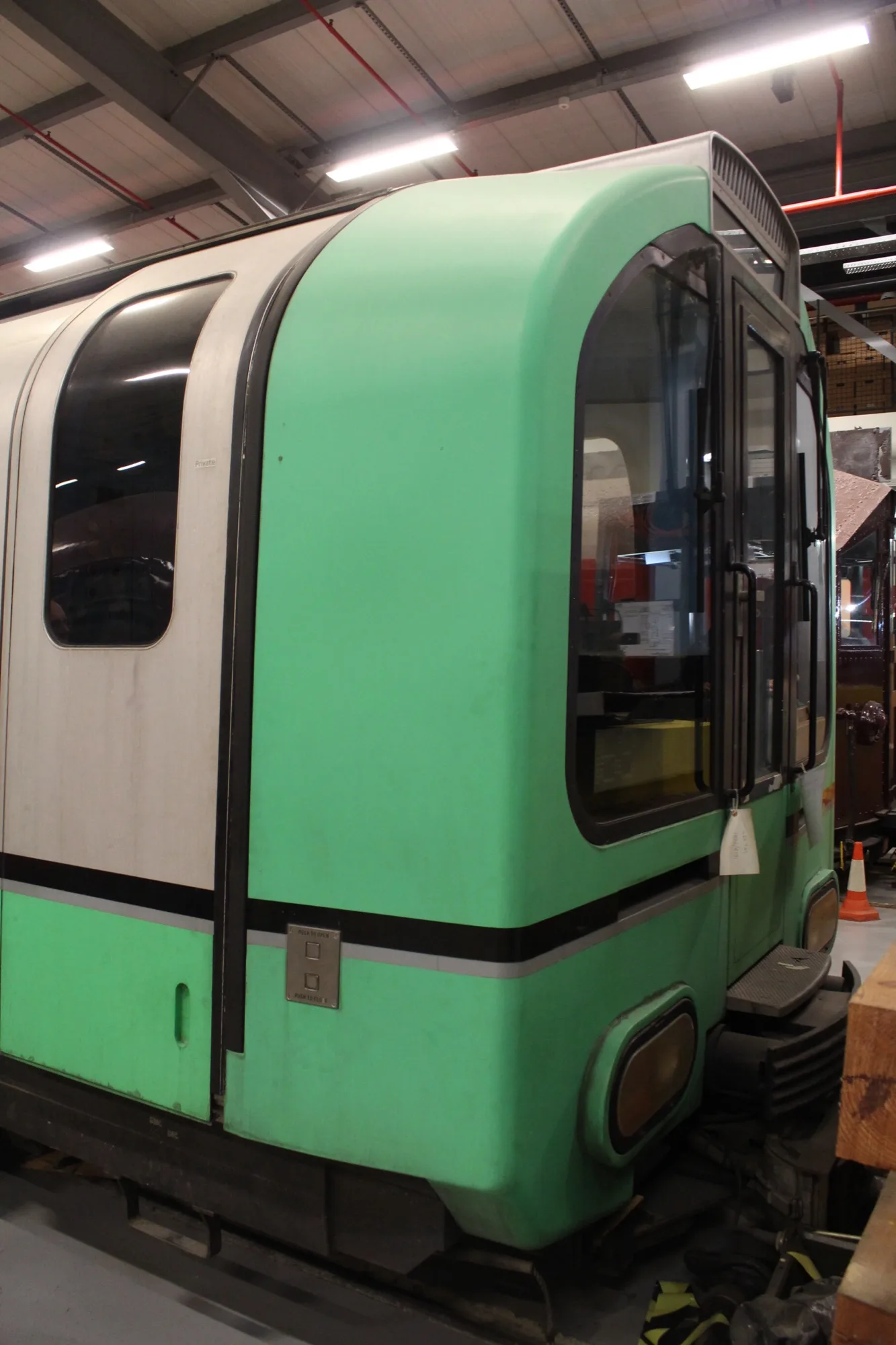
A photo of a prototype train for the Central Line, now on display at the London Transport Museum Depot in Acton

The Central Line of the London Underground is not having a good time at the moment. We experienced this first hand on our recent trip to London. As the Young V&A is close to Bethnal Green tube station, when we visited we tried to use the Central Line to head back into central London.

We gave up after two trains stopped where it was literally impossible to fit on. Every carriage was crush-loaded, and this was mid-afternoon on a Saturday – not exactly rush hour.

The issue is with the trains that run on the Central Line. These are 1992 Stock, which, as the name suggests, date from 1992 and were built by the newly-privatised BREL. Specifically, it’s the traction motors on these trains, which are failing at a faster than expected rate. Without a working motor, the trains can’t move, and so they have to be taken out of service. Consequently, there are fewer trains available for service, and so passengers are being crammed into less frequent services.

Transport for London have short, medium and long-term solutions to this issue:

Short term

In the short term, there are fewer trains in the timetable. With around a third of the fleet out of service, the timetable has been cut to reduce short-term cancellations. It’s something we’ve seen elsewhere in the country – Transpennine Express cut several trains to improve reliability.

Medium term

In the medium term, there is the Central Line Improvement Programme (CLIP). This is a major refurbishment of the trains, which includes replacing the troublesome motors as well as installing CCTV and accessibility improvements. For example, trains will now have wheelchair accessible spaces, and there are new screens with visual announcements of the next stop – standard on other lines, but new to the Central Line.

As an aside, I can’t help but feel that CLIP is a boring name when Central Line Improvement to Train Operation and Reliability Investment Scheme was right there. Even if the acronym does spell CLITORIS.

The CLIP started before the reliability issues came to ahead, and the first refurbished train was in service in December. But it’ll be a while before work on the full fleet of 77 trains is completed.

Long term

Ultimately, these are 30 year old trains, and eventually they will need replacing. They’re not the oldest on the network – that ‘honour’ goes to the Bakerloo Line, with trains that are over 50 years old. Slightly newer, but only just, are those on the Piccadilly Line, which are being replaced with 2024 stock to support an increase in service. Right now, there’s only funding available for new trains for the Piccadilly Line, but TfL’s long term aim is that the same trains will run on the Central, Bakerloo and Waterloo & City Lines too. Whilst the first units are being assembled in Germany and Austria, most will be built by Siemens in a brand new factory in Goole, East Yorkshire.

Where I live in the north of England, a big deal was made out of the replacement of 1980s era Pacer trains which were no longer fit for purpose. And whilst there’s a feeling in the north that London gets more than its fair share of UK public transport spending, the oldest tube trains are 10 years older than the oldest Northern Rail trains. Ordering a completely new fleet for all the London Underground lines that need it will result ensure skilled manufacturing jobs remain in Yorkshire for at least the next decade.

Seatfrog – how to get a cheap first class upgrade

A screenshot of the Seatfrog app on iOS

Tomorrow, Christine, our three-year-old and I are off to London (actually for the second time this week, but that’s another story). We’re going by train, and, thanks to Seatfrog, we’ll be travelling in first class, at a relatively low additional cost, having already saved some money with railcards and advance booking.

Seat auction

In the UK, Seatfrog is available on LNER services on the East Coast Main Line. You buy your standard class tickets online, as normal, and then put your booking reference into Seatfrog. The day before departure, Seatfrog holds an auction; enter your bid, and if you win, your updated tickets appear in the app.

We bid £10 per ticket for our journey, and this won (the minimum bid was £5). However, there may be a higher reserve on some services – for our return, the reserve was £9. Upgrading to first class gets you a wider, reclining seat, the majority of which are leather upholstered on LNER services. Plus, free Wi-Fi, regular offers of tea and coffee, and, for journeys over an hour, a complementary meal. This is easily worth £10 a head and means we won’t need to buy extra food for our journey.

Of course, there’s no guarantee that you’ll win, and there’s no point bidding too high as you can buy an upgrade outright for £35 per ticket. At least if you’re outbid, no money is taken.

I suppose it’s a good way of filling vacant first class seats. I could also see this being useful for people travelling on business, who can only claim standard class travel on expenses. Seatfrog would allow you to trade up to first class from your own pocket if you’re happy to pay a bit extra yourself.

For now, Seatfrog is only available on LNER services, however, it’s run by an independent company and so it’s possible that other travel companies could adopt it – potentially airlines as well as train operators,

So, tomorrow we’ll be smugly sat in first class, knowing that we paid well under the odds for our tickets,

Step-free access on London Underground

Bakerloo at Waterloo

I’ve talked briefly about our recent trip to London. It was our second trip with our toddler, but last time I drove us all down. This time, we went via train, and we brought a pushchair.

Our toddler now has two pushchairs. There’s the big Bugaboo Chameleon, which we’ve used since birth, and a lighter folding pushchair. The latter fits in our car boot more easily and can be stowed away in luggage racks, but it’s not so good on rough ground and doesn’t have a rain cover. So we still use the Bugaboo now and again, if it’s wet or we’re going somewhere off the beaten track. But for London, we took the lighter pushchair.

On the whole we coped well. The only station where we had major problems was Kew Bridge, a South West Trains station near where we were staying. Although it’s a simple two platform station with a footbridge, there’s no step-free access, and a very wide gap between the train and the platform edge.

We coped okay with the Underground. King’s Cross St Pancras has lifts serving all of its platforms, following a comprehensive rebuild of the station to tie in with the new Eurostar station. This is a major improvement over 2004, when I travelled to London with a friend in a wheelchair. It took two of us to balance the chair on the main escalator. Fortunately we were heading for Olympia, and both Earl’s Court and Kensington (Olympia) stations had lifts even back then.

This time, we were heading for Waterloo, to take a train to Kew Bridge (as mentioned before). Though not the most direct route, we were able to take the Victoria Line to Green Park. Lifts were installed at Green Park in 2012, ahead of the Olympic and Paralympic Games. Changing at Green Park took quite a long time, with some long walks between the platforms. Had we been able to use the escalators, I expect this would’ve been quicker.

Then, onward to Waterloo on the Jubilee Line. When the Jubilee Line was extended in the late 1990s, all of the new stations had step-free access from the beginning. Unfortunately, at stations like Waterloo, this didn’t include existing lines, so although it’s possible to get from the Jubilee Line to the street and mainline station without steps, you can’t change to the Northern, Bakerloo or Waterloo & City lines.

Step-free Tube guide

Transport for London (TfL) publishes quite a good step-free Tube guide. Whereas the basic tube map only shows stations with step-free access from the street to the platform or train, the guide goes further. For example, there is step-free interchange between the Bakerloo and Victoria lines at Oxford Circus, but no lifts to the exit. Others, like Cannon Street, have step-free access in one direction only. A map is provided and it greys out stations and lines that are not accessible. The whole of the Bakerloo Line south of Oxford Circus is missing, for example, as is the whole of the Waterloo & City Line.

It also tells you how wide the gap between the train and platform is at those stations which are accessible, and there are some detailed notes. For example, changing trains at Kew Gardens requires a 600 metre walk on nearby streets.

It’s perhaps also worth mentioning that the entire Docklands Light Railway, and Croydon Tramlink are step-free, should you find yourself in East or South London.

Future improvements

TfL is rebuilding a number of Tube stations, and these should all gain step-free access. Farringdon and Blackfriars recently became accessible as part of the Thameslink Programme, and Crossrail… sorry, “The Elizabeth Line”, will see many other stations gain lifts. These include Ealing Broadway, Paddington, Bond Street, Tottenham Court Road, Moorgate, Liverpool Street and Whitechapel.

Additionally, TfL are rebuilding Victoria and Bank stations, with plans for Camden Town. Again, these should all become step-free when the work is complete. Frustratingly, the recent rebuild of Shepherd’s Bush tube station on the Central Line, to tie in with the opening of the Westfield shopping centre, did not include the addition of lifts, apparently due to costs.

Low Moor railway station

Low Moor Station

Last summer, Kirkstall Forge became Yorkshire’s newest railway station, and I went to have a look on a free afternoon. But it’s now lost the crown to another new Yorkshire station: Low Moor. And today I popped over to have a look.

Re-opening

Low Moor is technically a re-opening of a station that was closed in the 1960s, following the Beeching report. It used to be a junction station, with a branch line heading down the Spen Valley through Cleckheaton and Heckmondwyke. That branch line was closed, and is now the Spen Valley Greenway, a segregated footpath that I’ve walked a few times (but curiously never blogged about). Low Moor station has an exit onto the Greenway, improving access to it.

For a couple of years in the 1990s, the land once occupied by the old Low Moor station was used for Transperience, a public transport museum. I wrote about it a few years ago despite having never been; it closed due to a lack of visitors, and therefore money.

The new Low Moor station has been quite a long time coming; plans have existed for some time. Its construction has also taken far longer than planned. The local area was a major coalfield, and, during work to build a lift shaft, an uncapped mining shaft was found that didn’t exist on any plans. The station should have therefore opened in 2016, but, hey, better late than never.

The start of construction was also held up due to the need to get a standards derogation for the curved platforms. Modern stations have dead straight platforms, to minimise the gap between trains and the platform edge. Low Moor station is on a curve, and so there are a number of ‘Mind the Gap’ warnings around.

Low Moor Station

The new Low Moor station

So what did I find when I visited? Well, it’s very similar to most new stations that have opened of late. As you’d expect, it is (almost) fully wheelchair accessible; the only exception being the steps down to the Greenway. A ramp for cycles has been provided (but was fenced off) – this seems like a curious omission. Lifts provide access to the two platforms, which surprised me slightly. The station is unstaffed, so if the lifts break down, there’s no assistance for wheelchair users. I’m guessing large ramps would have added to the cost; the station already cost over £10million to build.

As mentioned, Low Moor station is unstaffed, so there’s no ticket office. There is a machine by the car park, however, which has around 100 spaces. When I visited today, there were around 20 cars parked up. Which isn’t a lot, but the station has been open less than a fortnight, and there are almost no road signs to it. I expect that, in time, it’ll be signposted from the nearby M62 as a park-and-ride facility for those travelling into Leeds and Bradford.

Low Moor Station

Services

Which brings me to the train services. There aren’t many of them.

After spending a lot of money on a new station, you might expect there to be a regular train service. But the majority of train services on the Calder Valley line whizz through Low Moor station without stopping. There’s a basic hourly service in each direction: one northbound to Bradford and thence onto Leeds, and one southbound to Halifax and Huddersfield. There’s no direct service to Manchester Victoria.

Grand Central, the open access operator which runs trains between Bradford and London King’s Cross, stop most of their trains at Low Moor, so there is a link to the capital. But these trains only run four times a day in each direction.

It’s a shame that Low Moor hasn’t got a great service, especially considering the money spent. Improvements should, however, come with time. The Calder Valley line is undergoing a multi-million pound upgrade this year, which should see more and faster trains. At present, only 4 trains per hour can use the line in each direction; the upgrade will add a fifth path and hopefully more. This should mean that more trains can stop at Low Moor without existing services having to slow down.

The poor service frequency was part of the reason why I made my visit to Low Moor by car, rather than by train. I’m hoping that getting there by train will be easier in the not too distant future.

There’s a few more photos on Flickr here, and I uploaded a 360° photo to Google Maps Street View here.