Last month, we had a nice, quiet Sunday afternoon strolling around Cromwell Bottom nature reserve. We’ve been a few times as it’s not far from us, and indeed it was one of the few places we could get out to during lockdown. However, it appears that this is the first time I have blogged about it.
History of Cromwell Bottom
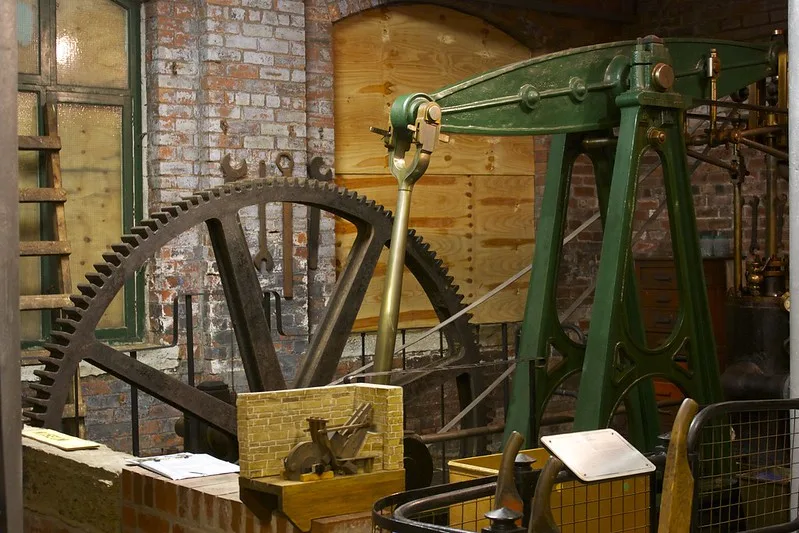
There’s not much history online, but what is now the nature reserve was originally a quarry. Later, fly ash from Elland power station was dumped here, and then more recently it was used as a landfill site. In 2000, it was allowed to return to nature.
It’s a comparatively isolated site, being as it is squeezed in between the River Calder, the Calder and Hebble Navigation, and the lower section of the Calder Valley railway. As such, it has lent itself well to becoming a nature reserve, and is easily accessed from the canal towpath.

Different habitats
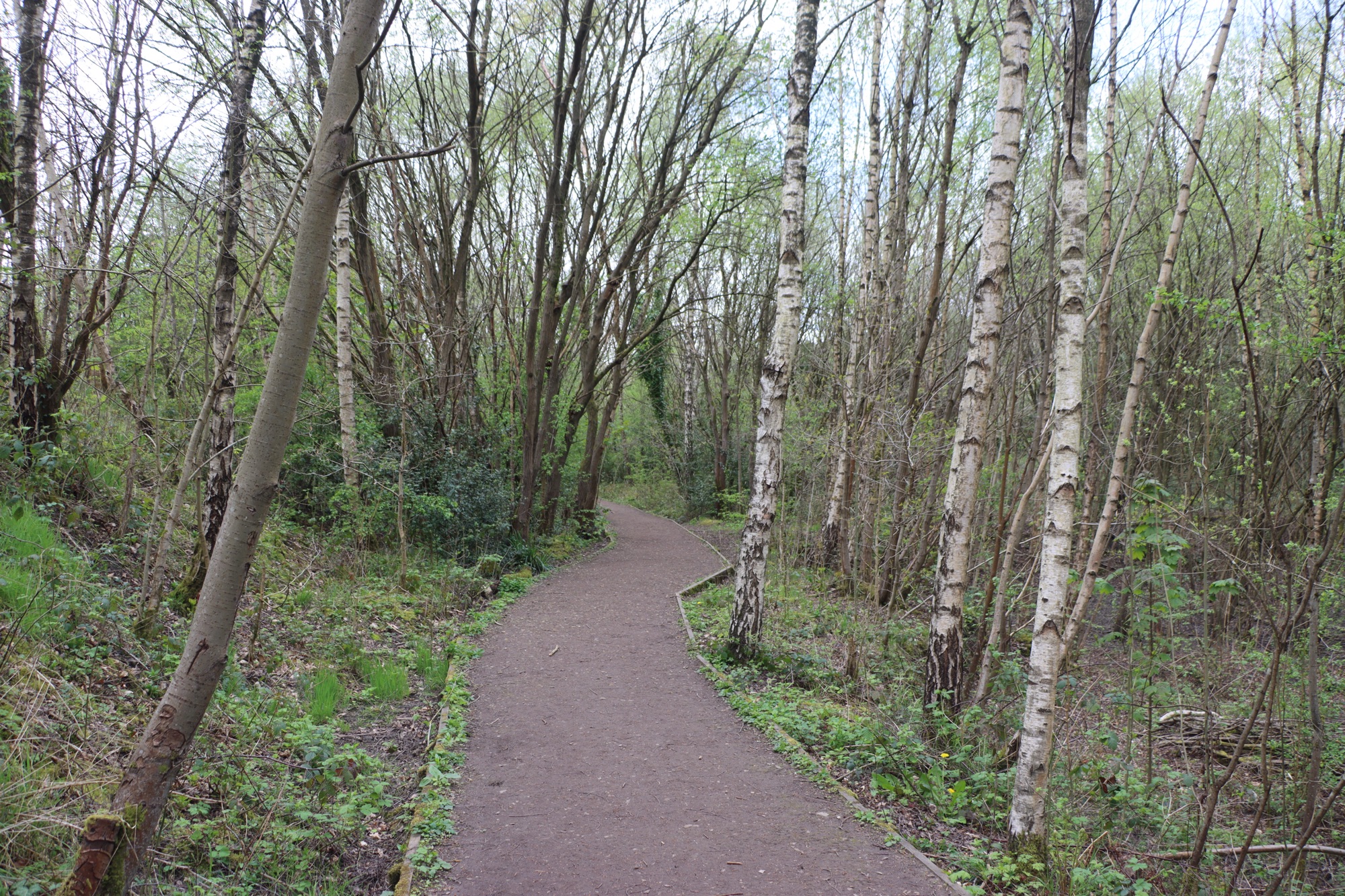
Different parts of Cromwell Bottom offer different habitats. There’s a large wooded area, mostly full of silver birch trees, but there’s also a meadow and some marshy wetland areas. As such, it’s possible to see quite a wide variety of wildlife.
Whilst Calderdale Council, the local authority, own and manage the nature reserve, there is an active volunteer organisation called Cromwell Bottom Wildlife Group. In particular, they look after an area of bird feeders, with a bird hide. We stopped there for around 20 minutes, and saw a number of different bird species. The largest was a hen pheasant, but we also saw chaffinches, robins, blue tits, coal tits, great tits and pigeons. On a previous visit, I also saw a nuthatch, and we heard a buzzard, confirmed by Merlin Bird ID.
Out on the river, I saw a heron and a goosander, the latter of which I don’t think I’ve previously seen before.
The Wildlife Group also publish several leaflets, with suggested walking routes around the site. You can download these as PDFs.
Accessibility
Most of the paths around the site are step-free, but there are some steep slopes. They are not paved and the ground can be uneven in places. There are gates on some of the paths which require a radar key to open for wheelchair access.
The Cromwell Bottom Wildlife Group runs a visitor centre, at the western end of the site just off the canal, and this includes disabled toilets. However, it’s operated by volunteers, and is only open on Tuesdays, Thursdays and Sundays between 10am and 4pm. The nearest Changing Places toilet is in Tesco in Brighouse.
Limited parking is available near the visitor centre. It’s on rough ground and often fills up. Buses stop on the main road – the E4 bus runs hourly between Elland and Brighouse on weekdays and every two hours on Saturdays. There’s no Sunday service, so if you need to get there by bus and may need the toilet, visit on a Tuesday or a Thursday.
If you’re reading this in 2029, then Elland railway station may be the closest, but as construction hasn’t started yet, Brighouse railway station is the closest. It’s then a sedate 45 minute walk along the canal towpath.