Unblogged June

May’s update was short, as I was mostly recovering, whereas this month I have been able to do a little more, including returning to my standard blogging pattern of every other day. Still, here’s a few things that didn’t result in a blog post of their own:

Tom Scott’s creator advice

Tom Scott got asked by Wired Magazine to answer questions from content creators, and it’s well worth watching (video embedded above and linked here). In particular, I agree with his suggestion of always having a ‘buffer’ – i.e. content that is ready to go live and scheduled. Tom notes that, at one point, he had several months of videos ready – until lockdown happened in 2020. That reduced his ‘buffer’ down to a few weeks.

I almost always write posts in advance – indeed, I’m writing this specific section a couple of weeks in advance, although I expect I’ll be adding the sections below later. That meant that I still had a few posts go live when I was in hospital last month, and meant that there was only a relatively brief break in my regular blogging schedule. Normally I have a buffer of at least three posts, but if I know I have some busy weekends coming up, I may write posts up to three weeks in advance.

Incidentally, one of my friends went to university with Tom, and I’ve met him before – we both went to the launch event for a new gallery at the National Science & Media Museum in Bradford in 2012. He’s back releasing weekly YouTube videos again, and he now does a weekly newsletter on Mondays. A particular highlight is his visit to Cragside, which we visited ourselves in 2024.

Car insurance renewal

Well this ended up being a right old rigmarole this year. My renewal quote came out at 67% more expensive than last year, at over £700. And, unfortunately, I found it difficult to find any other quotes that were meaningfully cheaper with the same or better cover. Ultimately, we ended up remaining with our existing insurer but with some slight tweaks to the policy, including a higher excess, to bring the quote down a bit.

I assume the reason for the higher prices was because our car is electric, which insurers still seem wary of. The various reminder emails from the comparison web sites I used last year, for our previous diesel car, were quite a bit lower. Still, our electric car passed its MOT this month with no work needed, and it’s proving to be much cheaper to run. And in any case, it’ll only be Christine driving it this year, although I remain the car’s registered keeper.

Thankful for air conditioning

It got rather warm last week. Whilst we were outside of the amber and (rare) red extreme heat warnings, I’m glad that we bought our portable air conditioning unit last year. Unsurprisingly, my review has also been one of the most popular blog posts on here in recent weeks, picking up quite a few hits from search engines.

As that model isn’t in stock in Amazon, it hasn’t resulted in me getting lots of commission payments, which is a shame. Though it’s a noisy unit, getting our bedroom cooled down before we go to sleep at night has made a big difference to our sleep quality.

More films on Letterboxd

When I wrote about Letterboxd earlier this month, I had managed to tick off 378 films. That’s now up to the pleasing number of 444.

Some of those are films that I have watched this month, but most are because I’ve remembered watching a film or found it whilst searching through old emails or tweets. Even more pleasingly, 187 of those films are in my diary, meaning that I’ve recorded the date when I’ve watched it too. So far, 24 of those 187 films are from this year.

I’m sure there are yet more films that I’ve watched but forgotten about, but I’ve logged the vast majority.

Car insurance renewal preparation

Cheese on Toast van

I’m about six weeks away from my car insurance policy expiring. Presently, I’m with Diamond (part of Admiral Insurance), and haven’t yet had their renewal quote. But I’m already shopping around to see if I can get it cheaper elsewhere.

I wrote a blog post last year detailing what I’d done to slim my quote down. This ultimately saved me around £200 on this year’s cover. And for three months I had a small ‘black box’ device in my car which monitored my driving. The good news is that I drove sufficiently well to get a ‘safe driving discount’ on my renewal, when it comes.

I’ve not claimed this year, so I should have one year’s no claims bonus. And I’m not a brand new driver any more. Hopefully, the combination of these factors will mean that I can simply renew my car insurance with Diamond to get the best deal, but I’m keeping my options open.

I did a quick price comparison on Confused.com, to see what other insurers could offer. Admiral Insurance itself came top at under £550, which is around £150 cheaper than Diamond was last year. There were a few others under £600, although the quotes will expire before my renewal date. Still, it’s good to get an idea of what’s out there.

I also got a car insurance quote from LV=, after receiving an email from my trade union with an ‘exclusive discount’. Their quote was almost £2000, which, for a car that is worth less than £4000, is ridiculous. Especially when another firm can offer similar cover for around a quarter of the price.

Whilst it’s a pain to have to research new car insurance policies each year, you usually have to be a new customer to get the best deal. Insurance companies presumably make most of their money from those who auto-renew every year, and don’t shop around. It is time consuming getting new quotes, but it can be worth it.

Adventures with a black box

A photo of the 'black box' in my car which is monitoring how I drive

There’s currently a small, circular black box in my car.

It’s a piece of electrical equipment that my car insurance company (Diamond, part of Admiral Insurance) sent to me, that connects to the 12-volt cigarette lighter port on the console. I’m to keep it plugged in while I drive for the next three months, and then return it.

The device will record how I drive, presumably using accelerometers, to make an assessment as to how risky of a driver I am. If I drive safely, breaking slowly and softly and not accelerating hard, and avoid driving too much at night, then I should get around 20% knocked off my insurance premiums when I come to renew in the autumn. And as I’ve been a fully qualified driver for less than a year, a 20% discount equates to quite a big saving – about £150 based on this year’s premium.

The black box was sent to me free of charge, and, provided I return it on time, it won’t have cost me anything. The only risk is that if my insurance company thinks I’m a careless driver, that my premiums could go up instead (only around 80% of customers experience a reduction in premiums). But I think I’m a reasonably good driver – I tend to value fuel economy over speed – and I only brake hard if I have to.

For young drivers, so-called ‘telematics’ insurance policies are increasingly popular as they’re sometimes the only way that teenagers can afford to drive. InsureTheBox is one such firm – their black box is professionally fitted (presumably taking data from the car’s ODB2 port), but comes with additional benefits. A driver who was left unconscious following an accident was saved because his insurance company notified the emergency services.

For now, I’m just using this little black box for three months. It comes with a USB port, which is handy as I had to unplug my existing car USB adaptor to be able to use it. Also, it’s currently stuck to my car using gaffer tape as the provided sticky pads did not want to stick to the bumpy plastic panels of my Nissan. It fell off literally seconds after I took the photo above.

My car insurance renewal is in September so we’ll see what effect this has nearer the time.

How to: get cheaper car insurance

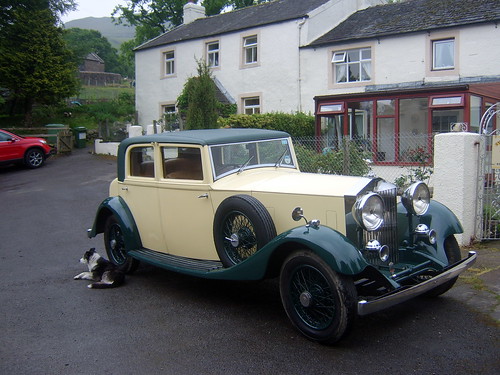
Alas, the car I've bought insurance for is not this Rolls Royce

Having bought a car at the weekend, I also needed to arrange car insurance. The law in Britain now requires all cars that are used on public roads to have a valid insurance policy; if you don’t, then you must park the car off-road and submit a SORN. If your car is found on a public road, parked or moving, then you can be fined. So I needed to have a policy in place before I would be able to drive the car away.

Like many things, buying car insurance can be simple and quick, but if you’re prepared to put some effort in, you can bring your premiums down significantly. I can wholeheartedly recommend the advice on MoneySavingExpert.com which gives some tips on how to reduce your premiums by tweaking the information you provide. I would advise you to read the whole article, but here are the things I tried that worked for me.

1. Trying multiple price comparison web sites

It’s hard to avoid the various price comparison web sites that advertise nowadays. Whether it’s the one with the meerkats, talking robots or annoying opera singer, these sites are well-advertised. They work by taking your details, and obtaining quotes from a range of insurers on your behalf, which are then ranked to show you the cheapest. The sites make their money from the referral fees that insurers pay when you take up a policy. Considering how much these sites advertise, they must make a lot of money from these referral fees.

It’s worth trying multiple sites, as different sites work with different insurers. I got different results from each. You can also usually get cashback if you click through to a price comparison web site from a cashback site like Quidco (referral link) or Topcashback (referral link). I got about £2 from them, just for getting a quote.

2. Go direct to insurance companies

Once I’d found the cheapest insurer – and the three comparison sites I tried all gave the same company – I also tried to get a cheaper quote by visiting their site directly. Again, going via a cashback site may net you cashback as well. Remember those referral fees? Cashback sites pay those to you.

It’s also worth checking Aviva and Direct Line, who do not advertise their policies on price comparison web sites. As it happens, both gave me unaffordable quotes that were nearly double the cheapest that I could find, but, worth a try.

3. Tweak your job description

I have a rather unique job title of ‘Student Recruitment and Data Officer’, which isn’t on the selection lists that insurers ask for. Originally I put it through as ‘Recruitment Consultant’ working in state education, but I found changing it to ‘Administrative Officer’ in the university sector lowered my premiums significantly (by about 20% in my case). As long as the title still accurately reflects your job role, you should be fine.

4. Add another driver

As Christine hasn’t passed her test yet, it was going to just be me on the car’s insurance policy. However, we found that adding another family member to the policy, as a secondary driver, reduced my quote by another 10%. To be effective, this must be someone that would realistically be likely to drive the car, and who has a good driving record with no penalty points or recent insurance claims. Adding an irresponsible or inexperienced second driver may increase premiums, but it’s worth trying.

5. Include some business use

If you think adding another driver is a bizarre way to reduce your premiums, here’s one that seemed even weirder. I will need to drive for work from time to time (I reckoned no more than 1000 miles per year) and so I included this in the policy. This means that I won’t need to arrange a hire car, so my employer also saves money too. After getting quotes with this included, I tried taking it out and stating that the car would only be for ‘leisure’ use (no commuting and no work-related activities). That actually pushed the premiums up by about 10%, so I put it back in.

Plus the things that I didn’t try

I didn’t try everything. I could have got an even cheaper policy if I had opted in to a ‘black box’ insurance policy. This involves the fitting of a recording device to your car that monitors your location and how you drive – and if you drive safely, you’ll save money. InsureTheBox is one of the better known firms that offers this (a friend works for them), but it’s available from a variety of insurers.

Sometimes, opting for third-party insurance can be cheaper, but it covers less than fully comprehensive insurance which could leave you out of pocket in the event of an accident. And, again bizarrely, sometimes comprehensive cover is cheaper than third-party because of risk factors.

And if you have another type of policy with an insurance firm (say home or travel insurance), some insurers may give you a discount if you take out more than one policy from the same firm. Our home insurance was arranged via a broker when we got our mortgage so I wasn’t able to approach them for a car insurance quote on this occasion.

In the end

As it happened, the cheapest quote I got was via Confused.com, for Diamond insurance – a company that historically only covered female drivers. Both are owned by Admiral Group, incidentally. Overall, the policy ended up being about £200/year cheaper than when I started, which isn’t bad for a couple of hours spent entering information into various web sites. Insurance for new drivers is always expensive and I’m hoping that, should I continue to drive like Captain Slow, my premiums should come down in future years.

Creative Commons License
Except where otherwise noted, the content on this site is licensed under a Creative Commons Attribution-ShareAlike 4.0 International License.