
Changing Places Toilet Awareness Day

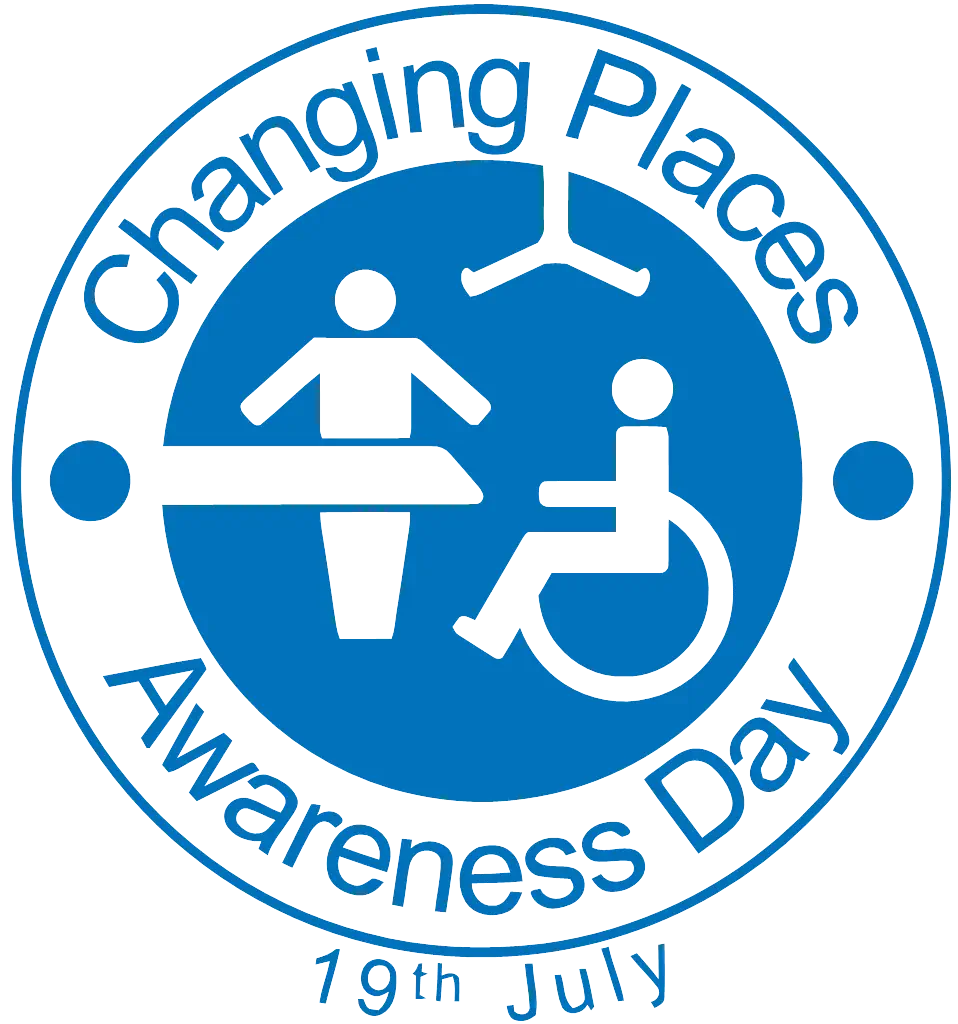
The logo for Changing Places Awareness Day on the 19th July

Today is Changing Places Toilet Awareness Day – an annual event to raise awareness of Changing Places Toilets which offer enhanced facilities for people with profound disabilities.

Those of you who read my days out posts will note that I usually include the availability of a Changing Places toilet in the accessibility section. Whilst I have had issues with my arms in recent months, I’ve been fortunate that I don’t need the extra support that a Changing Places toilet offers. However, I have friends and colleagues for whom such toilets are vitally important.

What makes a Changing Places toilet?

Changing Places toilets are a step up from what I suppose you could call a ‘standard’ disabled toilet. They’re usually larger, to accommodate a wheelchair and two carers, and include an adult-sized changing table and a hoist. They allow adults who are unable to get themselves out of a wheelchair themselves to use a toilet, and allow carers to change incontinence pads on a clean, flat surface.

It’s estimated that 250,000 people in the UK would benefit from the enhanced facilities that a Changing Places toilet offers. Without them, it’s very difficult for these people to attend school, college or university, work, or just have a nice day out.

How many Changing Places toilets are there?

The number of Changing Places toilets has grown quite quickly in recent years, and there are now over 2500 registered on this map. Where I live in Sowerby Bridge, there are two, with a further two in Halifax. There are four in Bradford city centre, and my workplace has one. Most big shopping centres now have them, as do many larger museums.

Registration is voluntary, and so there may be places that have such facilities that are not on the national map. It’s also worth noting that the map includes some toilets which don’t meet current standards – they may not offer the full range of enhanced facilities, but still offer more than a standard disabled toilet. You can follow the links to each venue’s page to find out exactly what’s available at each toilet, and there are usually photos as well.

Changing Places toilets are an important part of enabling disabled people to live their lives outside their homes, and be able to go to the toilet with the same dignity as able-bodied people. They allow disabled people to be more included and achieve equal access to opportunities. I think they’re really important, and whilst not every single public space needs to have one, having them available will make life so much easier for disabled people. I’m therefore happy to champion those places that provide them.

Giving an honorary degree to Rosie Jones

A photo of (from left to right) me, Dr Jo Buckberry, Dr Emma Brown and Rosie Jones

I don’t often talk about my day job on here, but one of the things universities like to do is award honorary degrees to various celebrities, sportspeople and community champions, alongside our regular graduates. And on Wednesday this week, I had the honour of being a VIP guest at one of our graduation ceremonies where we awarded Rosie Jones with an Honorary Doctorate of the University (HonDUniv).

The photo above, taken after the ceremony, is of me, my colleagues Dr Jo Buckberry and Dr Emma Brown, and Rosie. I’m one of the co-chairs of the LGBTQ+ staff network at work, whilst Jo co-chairs the Disabled staff network and Emma co-chairs the Neurodivergent staff network. We all co-signed Rosie’s nomination for an honorary degree, alongside the chair of the Women’s staff network, way back in 2024, so it’s taken a while to become a reality. But I also think it speaks volumes that four staff networks all jointly nominated Rosie for the award.

A photo of Rosie Jones receiving her honorary degree from Anita Rani at the University of Bradford.

Polymath

Rosie is something of a polymath. She’s probably best known as a stand-up comedian, and appeared on Series 18 of Taskmaster, but she’s also a writer, podcaster, actress, and more recently started The Rosie Jones Foundation, which supports people who, like Rosie, have cerebral palsy. It’s a testament to Rosie’s strength and resilience that she has achieved so much, and I feel she’s a great role model for people with visible disabilities like cerebral palsy.

Her speech at the graduation ceremony was great; I often volunteer at the ceremonies and I don’t think we’ve had an honorary graduate drop an f-bomb like she did. To be fair, for those used to Rosie’s comedy, I would have been disappointed if she hadn’t swore. Also, we did give an honorary degree to Brian Blessed, but this was in the years before our ceremonies were recorded so I don’t know if he swore.

Her degree was conferred by our chancellor, Anita Rani, who is also known for several things including presenting Countryfile and Woman’s Hour, and as a former Strictly Come Dancing contestant. Her books are both great if you get a chance to read them. On the same day, we also conferred an Honorary Doctor of Health degree to former footballer and pundit Chris Kamara.

It was also great to chat to Rosie’s parents; Rosie hails from Bridlington, where my paternal grandparents lived for many years. I used to visit there a lot when I was younger. Rosie herself is absolutely lovely.

They say to never meet your heroes, but Rosie is one of mine and she’s fab. We need more disabled, queer, northern women in public life and Rosie is a trailblazer in this regard.

Creative Commons License
Except where otherwise noted, the content on this site is licensed under a Creative Commons Attribution-ShareAlike 4.0 International License.