Recycling your food waste

If you live in England, then from the 31st March 2026, your local authority will need to collect your food waste every week.

Now, you might be reading this and thinking ‘hang on, my local authority already collects my food waste every week’! And many do, including our local authority, Calderdale Council. Indeed, we’ve been able to recycle our cooked and uncooked food waste every week since we moved into our current house ten years ago.

But many don’t at present – City of York Council currently tell you to consider home composting. Which, to be fair, my parents have been doing for years. But this is limited to uncooked food waste, such as banana skins, eggshells and vegetable peelings. Better than nothing, and it means my parents have a good supply of compost, but all their cooked food waste just goes to landfill with their general waste.

The problem with food waste in landfill

Food waste in landfill is especially bad. When food rots in anaerobic environment (like a landfill site), it can be broken down by bacteria into Methane. Methane, as well as being the main component of the gas that we use for central heating boilers, is a greenhouse gas. If you think back to GCSE Science, you may know that Methane’s chemical symbol is CH4, which is four hydrogen atoms bonded to a carbon atom, so Methane contributes to carbon emissions. There was a landfill site not far from my grandparents’ house in East Yorkshire, and at night, you could see blue flames where the Methane released from the rubbish was being burnt off.

It’s also worth noting that local authorities have to pay landfill tax, which gets passed onto council tax payers. The less waste goes to landfill, the less landfill tax is paid, so local authorities also have a financial incentive to encourage recycling.

How food waste recycling works

Once your local authority rolls out food waste recycling, you’ll typically get three things:

  1. A large, kerbside food waste caddy
  2. A smaller kitchen food waste caddy
  3. A supply of food waste bags, to go in the kitchen caddy

You can then put all your food in the waste bag in your kitchen caddy. When the caddy is full, seal up the waste bag, and put it in your kerbside caddy. Then, leave the kerbside caddy out for emptying on your assigned recycling collection day. Finally, feel smug that you’re reducing your carbon footprint.

What happens to food waste when it’s recycled

I mentioned home composting earlier, and I’m sure my parents will carry on composting their uncooked food waste as they’re both keen gardeners. But from next April, or earlier, they should be able to have their cooked food waste recycled as well, and this will also be composted – just not by them at home.

Instead, the food waste typically goes into a big, industrial composting unit, to make compost on a commercial scale. Usually this involves heating the waste to around 70°C to speed up the process.

I mentioned Methane and how it’s the main component of the gas we use for cooking and heating. Some food waste may be converted to Methane gas deliberately, but in a controlled way that allows that gas to be collected as bio-gas. That can then be used like mains gas is, or burnt to generate electricity. I’m not a big fan of this, as it’s still a carbon-based fuel, but at least it’s being done in a controlled and sustainable way.

Getting all of England on board with food waste recycling will hopefully reduce the amount of waste going to landfill overall, reduce our carbon emissions, and provide sustainable sources of compost and bio-gas. It’s going to require cash-strapped local authorities to invest in recycling schemes, but the benefits to the environment are clear.

Cooking with a slow cooker

A photo of our Instant Pot, which we use as a slow cooker. In front of it are several slow cooker cookbooks

Typically every other week, we have a slow-cooked meal at home. Along with sous vide cooking, which I wrote about last month, slow cooking a form of low temperature cooking where the food isn’t heated as much, but cooked for longer.

We use our Instant Pot as a slow cooker. During my blogging hiatus, I wrote on Medium why a multi-cooker is a good slow cooker. The gist of it being that you can use its timer features both to delay the start, and reduce the cooking temperature at the end to keep the food warm. However, the Instant Pot’s sauté mode is also helpful, if you need to pre-fry ingredients before starting the slow cooker timer. It’s not perfect, and there are some things that you need to bear in mind when using an Instant Pot as a slow cooker, as the temperature modes are not always comparable.

We used to have a dedicated slow cooker, but it was basic, and took up space that we needed for the more capable Instant Pot. The most basic models have one heat setting and turn on as soon as they’re plugged in, but many include multiple temperature settings and timers now.

Benefits of using a slow cooker

To me, there are several benefits of using a slow cooker over cooking meals using ‘traditional’ high heat methods.

The first of these is cost. Generally, it will cost less to run a slow cooker, even for several hours, than a hob or an oven for a shorter period. This is especially true for us, as we have solar panels – a slow cooker lets us do the majority of cooking during daylight hours with our free solar energy. In the winter, it’s dark when we get home after work and, even with a home battery, the amount of energy needed to run an oven means that we have to pay to use grid energy. I suspect that the cost of living crisis is one reason why slow cooking has become more popular in recent years.

Many slow cooker recipes simply require you to put the ingredients in the slow cooker, and leave it. They’re therefore quick to prepare, with no need to stir or keep an eye on a pan. You can put the ingredients in and turn the slow cooker on before leaving for work, and come home to a delicious meal that doesn’t require any work. If I’m working at home, I tend to put slow cooker meals on during my lunch break. Friends of mine who have issues with chronic fatigue find slow cooker recipes really beneficial, as it means they have something to eat at the end of the day which doesn’t require preparation, even when they’ve run out of spoons.

As with other low temperature cooking methods like sous vide, slow cooking is great for tenderising tougher cuts of meat like brisket. Coincidentally, these tend to be the cheaper cuts, and so you can save money this way too.

Not just soups and casseroles

There’s a perception that you can only use slow cookers for liquid-based meals like soups, stews, curries and casseroles. That’s not actually the case, and you can cook a wide variety of meals if you layer the ingredients correctly. In some cases, you essentially steam-cook ingredients that sit on top of others. Some recipes allow you to add rice, noodles or pasta shortly before the end, so that you can cook an entire meal in one pot.

That being said, one thing you are not going to get from using a slow cooker is anything crispy. That crispiness comes about thanks to the Maillard reaction, which usually requires cooking temperatures of at least 115°C. Even on their highest settings, slow cookers do not get as high as that. As such, some recipes call for ingredients like meat to be flash fried before or after slow cooking.

Slow cooker cookbooks

Last summer, I wrote about our go-to cookbooks, which included Nathan Anthony’s Bored of Lunch book (sponsored link). He has also written a follow-up – Bored of Lunch – Even Easier (sponsored link) which I’ve included in the photo above. We don’t use this as often as the first book, but there’s a nice recipe for Butter Chicken in there which uses yoghurt rather than cream. We also picked up his latest book, 6 Ingredient Slow Cooker (sponsored link), last weekend. It looks good but we’ve not attempted any of the recipes in there yet.

The first slow cooker book we bought was Slow Cooker Heaven by Lorna Brash (sponsored link) which is published by The National Trust. There are some good recipes in there, but they’re quite involved – some of them require a lot of preparation prior to turning the slow cooker on, or ask you to make your own spice mixes from scratch.

More recently we’ve picked up Poppy Cooks – The Actually Delicious Slow Cooker cookbook (sponsored link) by Poppy O’Toole. Poppy is apparently the ‘potato queen of Tiktok’, and used to be a professional chef before ending up out of work due to the Covid lockdown in 2020. Her recipes are generally also quite simple, and a little more authentic. We’ve cooked quite a few recipes from this book recently – Honey Garlic Chicken Thighs probably being my favourite.

For us, slow cooking tends to work best if I’m either working at home, or if Christine is working on a weekend. In the latter case, she can be held up and may not finish until 7pm, in which case it’s great coming home knowing that dinner can be ready and on the table within a few minutes, and with little effort.

Sous vide cooking in an Instant Pot

An Instant Pot Duo Plus set to sous vide mode with 29 hours and 49 minutes left to run

If you have one of the higher tier models of Instant Pot, then you may well have a ‘sous vide’ button on it. We’ve used sous vide cooking a few times with our Instant Pot Duo Plus to make tasty meals, as it’s relatively easy to do.

Sous vide is French for ‘under vacuum’. Essentially, to cook something using the sous vide method, you put it in a vacuum-sealed bag, and then put it in a heated water bath (also known as a bain marie) inside your Instant Pot. Depending on the recipe, this can be quite quick, or take many hours. In the photo example, we were cooking some beef brisket for 30 hours.

There’s some instructions for how to set your Instant Pot to sous vide here. As well as setting the cooking time, you also need to set the temperature, using the buttons or dial on the front of your Instant Pot. Once it’s going, we use a glass lid (sponsored link) that we bought separately rather than the pressure cooker lid, so that you can see inside.

Sous vide without an Instant Pot

The sous vide cooking technique has been around since 1974, when it was pioneered by a French chef (hence the name). But the need to keep the water at a constant temperature means that it’s a difficult technique for home cooks to adopt without specialist equipment. You need something that forms a feedback loop between a temperature gauge, and the heat source. Of course, you could probably have a thermometer inside the bain marie and constantly adjust the heat yourself, but this isn’t feasible for recipes that take a long time. Thankfully, many models of Instant Pot will provide this feedback loop as part of their sous vide feature, so you can set and leave it.

If you don’t have an Instant Pot, or you have a more basic model without a sous vide mode, Amazon will sell you a sous vide wand (sponsored link) for around £50 that you can pop in your bain marie. The wand will provide the heat and measure the temperature. More advanced models can be configured with a smartphone app – a friend has such a model. It lets you set how well-cooked you want a piece of steak, for example, and sets the time and temperature accordingly.

Vacuum sealing

The other aspect of sous vide cooking is that you should vacuum seal your food, before it goes in the bain marie. We bought our vacuum sealer from the middle aisle of Lidl, of all places – in fact, it was a Lidl in France, and so we have to use a UK plug adaptor with it. Again, if you need a vacuum sealer, Amazon will sell you one for around £23 (sponsored link), and expect to pay £11-£15 for two rolls of bags.

If you don’t want to buy one, then you may get away with just a regular plastic food bag with as much air squeezed out of it as possible.

What we’ve cooked using sous vide

I’m mentioned that we’ve cooked beef brisket using the sous vide technique, and indeed we’ve done so more than once. Brisket contains a lot of connective tissue, and so you need to use slower cooking methods to allow this tissue to break down. Sous vide is perfect for this, and after 30 hours, you’ll end up with a very meaty piece of meat.

We’ve also done duck confit this way, which then went into a cassoulet. Again, this was a long and slow recipe, taking around 12 hours with the cooking temperature set to 75° C.

It’s worth noting that, whilst you can cook steak using the sous vide method, you won’t get any browning on the outside. If this is something you want, then you’ll still need to flash fry the meat at a higher heat after it’s come out of the bain marie.

In summary, sous vide cooking, whilst requiring some forward planning and investing in the correct equipment, is also relatively easy. You can prepare some really tasty food ahead of time, and have it cook slowly at a regulated temperature. Plus, because the food is vacuum sealed, it’s a less messy way of cooking too. We don’t do it very often, but the few times we have done it have always been worth it.

The Sad Bastard Cookbook

The cover of the Sad Bastard Cookbook

According to a bit of pseudoscience commissioned twenty years ago by a now defunct satellite holiday channel, today is ‘Blue Monday‘ and therefore the most depressing day of the year. It’s also depressing this year specifically for another reason. With this in mind, today’s blog post is about the Sad Bastard Cookbook, which has recipes for when you need to eat but don’t have the spoons to cook something.

If you want to buy the Sad Bastard Cookbook as an actual, physical paperback, here’s the link to buy it on Amazon (sponsored link). But you don’t need to pay for it – there’s an official free PDF download.

Low effort recipes

The whole idea of the Sad Bastard Cookbook is that the recipes require minimal effort, and generally use ingredients that don’t go out of date at short notice. As an example, the first three sections focus on instant noodles (ramen), starting with simply boiling water for the ramen and then eating them. Many recipes also have a ‘bottom-tier’, ‘mid-tier’ and ‘God-tier’, depending on how you’re feeling and what extra ingredients you have. One of these is ‘kinda like Pad Thai’, which uses rice noodles, peanut butter and sweet chilli sauce, and “tastes kinda like you’d imagine Pad Thai sauce would taste if you’ve never had Pad Thai before”.

Other recipes include ‘pasta in a rice cooker’ and ‘can of soup’.

Core ingredients

Here’s the bit of the book that is probably most useful – the ‘Core ingredients to keep in your kitchen’ section. There are lots of good suggestions for basic and long-life ingredients to buy, and keep on hand for times when you don’t feel like cooking but need to eat something. Even if you’re the sort of person who can usually cook something delicious, no matter how you’re feeling, it’s a really useful list of what to have on hand. I wish that past me had this for times when I’ve lived on my own, as it would’ve given me some fallback ideas for meals.

Like I said, the book is available as a free PDF – even if your mental health is fine, I strongly recommend reading it. You’ll pick up some useful hints for times when you’re late home and tired, or realise that you’re hungry at 10pm on a Sunday when the shops are all shut.

Is Five Guys sustainable in the UK in the long term?

A photo of the Bradford branch of Five Guys, before it was open.

Last week, I ended up at a Five Guys Burgers & Fries again. Whilst I wouldn’t describe myself as a Five Guys regular, I’ve eaten at several of their restaurants over the years. And usually it’s because I’m hungry and it happens to be the least-worst option that’s available.

Ten years ago, there were almost no Five Guys restaurants around in the UK (the first restaurant in London opened in 2013). Now, there are 174 restaurants in the UK, of which 48 are in London. Leeds has four – indeed, what prompted this blog post was that I was eating in the new Five Guys location on the top floor of the Trinity Leeds shopping centre, and it’s a literal stone’s throw away from their existing Duncan Street restaurant. I mean it – you could stand on the roof of one, and throw a stone to the other – they’re that close to each other.

My concern is that it’s growing rapidly, and that the owners and/or franchisees are following an overly-rigid operating model. I’m going to cite two case studies as evidence.

Patisserie Valerie

Firstly, let’s look at another chain restaurant that grew rapidly before suddenly contracting: Patisserie Valerie. Founded in the 1920s, it had eight shops in 2006 and 192 a little over ten years later. It turned out that, underneath that massive growth, was (alleged) financial fraud, and its auditors were fined over £2m for not spotting the errors in the company’s accounts. Now, Patisserie Valerie is back down to 10 shops, with none in the North of England; I walked past the one in Leeds which seems to have closed recently, judging by the Christmas decorations that were still in the window. However, its cakes are now available to buy at larger Sainsbury’s supermarkets.

Now, I’m in no way alleging fraudulent accounting practices at Five Guys, but its growth in the UK followed a similar pattern to Patisserie Valerie. Has Five Guys grown too fast, too quickly?

Five Guys in Bradford

There is (at least) one place where Five Guys opened, and then closed a restaurant in the UK: Bradford. And I want to use it as a case study because I think it’s a good example of where Five Guys didn’t adjust their offering to suit a local market.

Around about one third of Bradford’s population is Muslim. Muslims, in the main, don’t drink alcohol, and will only eat halal meat. Other chains, like KFC, Nando’s and Subway, are conscious of this, and so you’ll often find outlets from these chains will serve halal meat in their restaurants in places like Bradford. Five Guys didn’t.

Five Guys also serves alcohol. Well, a small selection of lager. Like I said, I wouldn’t consider myself a regular customer of Five Guys but I have never seen anyone buy lager from there. Some muslims will not enter an establishment that serves alcohol, so again, you’re alienating a significant portion of your customer base to sell a product that, anecdotally, not many people buy anyway.

It’s also worth noting that Bradford is not a particularly well-off area, and Five Guys is expensive compared to, say, McDonalds. A similar meal at Five Guys typically costs three times more than at McDonalds. I accept that the quality at Five Guys is much better, and the ingredients are fresher, but every time I have been I’ve always felt like I’ve been fleeced.

If you’re wondering, the outlet where Five Guys used to be in Bradford is now a branch of Metro Bank. Also, ironically, it used to be opposite a Patisserie Valerie, which itself is now a Pret a Manger.

Nuts about

Besides the two case studies, there’s also Five Guys’ attitude to nuts. According to this meta analysis, about 4% of people in Europe report having some kind of nut allergy – so, one in every 25 people. Five Guys cooks all of its fries in peanut oil, and used to have open bags of peanuts in its restaurants. Now, whilst there will be some variation in the severity of peoples’ nut allergies, for some, they literally cannot be in the same room as nuts.

I’m sure that the decision to use peanut oil is related to the fries tasting better that way. But that decision has to be balanced against alienating well over an estimated 2 million Brits who self-report having a nut allergy (assuming the 4% prevalence).

Every Five Guys is basically the same

With the exception of the Five Guys in York city centre, which is in an old building on Low Petergate, every other Five Guys is basically the same. There’s no variation on decor, and the menu is the same everywhere too. Now that’s probably good for consistency, but it’s also, well, boring.

Indeed, I mention the Five Guys in York because we went there on Boxing Day in 2023. Inside, however, you would not know it was Boxing Day, because there was no attempt to make it feel like Christmas. Pretty much every other restaurant will have got out their Christmas decorations, and maybe even added some special items to their menu for a limited time. Not Five Guys. It’s the same menu all year round. And it’s a very limited menu – basically just burgers and hotdogs. Now, I’ve seen enough episodes of Gordon Ramsey’s Kitchen Nightmares to know that having a limited menu can be an advantage (doing a few things well), but could they expand it a bit?

Sure, you can have different toppings on your burger each time, or a different flavour milkshake. And there’s the Coke Freestyle machines, which provide one of the few ways of getting Mezzo Mix in the UK. But there’s only so many times you can read a scanned copy of the Nantucket Business Monthly April 2009’s review of their Five Guys outlet on the wall.

What I think Five Guys needs to do

So, to summarise:

  • Five Guys needs to give individual store managers or franchisees some freedom to adapt the offering for local markets – e.g. halal meat or not serving alcohol.
  • Add a few more items to the menu. Maybe offer chicken as well as beef?
  • Offer limited edition items related to events like Christmas.
  • Are the magazine articles on the walls really necessary now? Many of them are regional US magazines for places some Brits may have never even heard of, and it seems kind-of desperate. Consider taking these down, or limiting them to British magazines.
  • Consider their pricing, and whether they need to lower prices in areas where the local population has lower disposable incomes.
  • Consider whether they can reduce their use of nuts in their restaurants.

Overall, Five Guys feels like the sort of place where a very rigid concept has happened to have done well, and so it’s being recreated without any regard for local variations. And, in the long term, I just don’t think it’s sustainable.

Have you ever been to a Greggs Outlet?

A photo of the Gregg's Outlet on Great Horton Road, opposite the university in Bradford

Greggs, the UK bakery chain, is basically everywhere nowadays. What started out as one shop in the north east in the 1950s has grown to approximately 2500 stores across almost all of the UK. Most towns and cities have at least one; whilst Sowerby Bridge doesn’t have one, nearby Halifax has three. Even the New York Times wrote a gushing article about them earlier this year.

What’s less well known about are the smaller number of Greggs Outlets. These sell excess stock from other Greggs stores at a discount. And there’s one opposite the university where I work.

The Greggs Outlet in Bradford wasn’t always an outlet. Pre-pandemic, it was a regular Greggs, selling the full standard range including the vegan sausage rolls that seemed to boil Piers Morgan’s piss. But when shops could open again, it received new red branding and had the indoor seating area closed.

Inside, you can buy most of the things that you can normally buy in a regular Greggs, but not everything; it depends what has been left over elsewhere. Nor will it be quite so fresh; the sandwiches will have been made the previous day, for example. You also can’t get things like bacon sandwiches, although usually coffee is available to take away.

But it is much cheaper – typically everything is half price. Baguette sandwiches are around £1.60 each, and sweet treats are almost always under £1. Great for students on tight budgets at the university and nearby college, but also for those on low incomes.

Indeed, the reason why you may not have come across a Greggs Outlet is that they’re strategically located in areas of social deprivation. This includes some in its home territory around Newcastle, but also Bradford, Birmingham, Glasgow, Liverpool, Cardiff, Leicester, Leeds, Preston, Sheffield, Oldham, and some in London. Greggs is planning to have 50 outlets open by the end of next year, representing about 2% of its estate. Food that remains unsold then gets passed to charities, and Greggs claims to have distributed over 1000 tonnes of food in 2023.

Whilst I can afford to go to a regular Greggs, I appreciate having an outlet in easy reach. And it’s a good way of avoiding food waste. Schemes like Too Good To Go are great for smaller businesses to offload excess stock, but for larger chains like Greggs, making cheaper food available all day for those less likely to be able to afford it is welcome.

Our go-to cookbooks

A photo of the four cookbooks mentioned in this blog post

Cooking at home is one of my wife’s passions, although it’s something I enjoy too. Over the years, we’ve amassed a selection of cookbooks, but there are four that we use the most at present. So, partly as a way of sharing nice recipes, and partly as a cynical way of getting Amazon affiliate commission, here are our four go-to cookbooks.

All the links to Amazon below pay me a small amount of commission should you choose to buy these books from there. However, we often borrow cookbooks from our local libraries. I’ve also added links where some of these recipes are available online.

A photo of the cover of the India Express cookbook by Rukmini Iyer

India Express by Rukmini Iyer

Of the four cookbooks mentioned today, India Express by Rukmini Iyer is our newest. We found it first in our local library, and then bought a copy as there were so many recipes that we wanted to try. All the recipes are vegan, vegetarian or pescatarian, and are generally quite quick – almost all can be done in an hour and many less.

Our favourite recipe so far is Spiced Roasted Paneer with Tomatoes and Peppers (available at this link). Paneer is an Indian soft cheese that you can usually get at larger supermarkets – our local Sainsbury’s stocks it in the chilled world food section. The recipe is basically a traybake – preheat the oven, put the ingredients in a roasting tin, and cook for 30 minutes. We’ve also enjoyed the South Indian-Style Black Pepper & Fennel Prawns recipe and had this a couple of times.

A photo of the cover of 'Bored of Lunch: The Healthy Slow Cooker Book' by Nathan Anthony

Bored of Lunch by Nathan Anthony

Nathan Anthony’s Bored of Lunch: The Healthy Slow Cooker Book, is apparently the biggest selling slow cooker cookbook in UK publishing history. I can see why – there’s some really good recipes, and the majority just require you to throw all the ingredients together and leave the slow cooker to do its thing. Other slow cooker cookbooks add on significant extra preparation, and undermine much of the ease and time saving that a slow cooker offers.

We typically have a slow cooker meal once a fortnight, using the slow cook mode on our Instant Pot. Almost all of the recipes come from this book, and the most recent we had was the Chicken and Peanut Curry, made from peanut butter and coconut milk. We also like the Thai Basil Beef and Gin-Infused Spiced Beef, and I was really impressed with the Garlic Parmesan Chicken with Potatoes which involves layering the ingredients to get a full meal in one pot. We also have the follow-up, Even Easier, but use the first book more.

A photo of the cover of the Persiana Everyday cook book by Sabrina Ghayour

Persiana Everyday by Sabrina Ghayour

We’re both big fans of Sabrina Ghayour’s Persiana cookbook, but we use the follow-up Persiana Everyday more often. I would recommend both if you like Middle Eastern cookery or food with a lot of flavour. We’ve recently tried the Sage Butter, Feta & Black Pepper Pasta, and our favourites are the Baked Halloumi and Za’atar, Paprika & Garlic Chicken.

There’s also some good side-dish recipes, especially for making flavoured rice.

A photo of the cover of Nigella Express by Nigella Lawson

Nigella Express by Nigella Lawson

Christine had this book when I met her, and though it was published 17 years ago, it still gets plenty of use. We have several of Nigella’s cookbooks, but Nigella Express is the one we use the most.

We recently had Mirin-Glazed Salmon for the first time, and Chicken Schnitzel with Bacon and White Wine is a favourite of ours. No Churn Pomegranate Ice Cream is a great base for lots of ice cream flavours that can be made without a dedicated ice cream maker.

Honourable mentions

We don’t own it, but we’ve cooked several good recipes from Donal Skehan’s Super Food in Minutes – we particularly like his Red Lentil Daal which we have with paratha. Most of the recipes in this book come with lots of vegetables.

If you have an Instant Pot, or another brand of pressure cooker, then Modern Pressure Cooking by Catherine Phipps is a worthwhile purchase.

Dishonourable mentions

My wife has gotten rid of several of her cookbooks recently, having not really used them. Jamie Oliver’s 15 and 30 Minute Meals both went – I’m sure you could cook the meals in 30 minutes with a full team of staff but they seemed to take us far longer. We also picked up the first two River Café cookbooks at a charity shop, and they’ll probably end up back there soon too. The Grains as Mains book seemed like a good idea, but we were underwhelmed – some are really basic recipes that just happen to have some extra wholegrains sprinkled on.

Baking our own bread

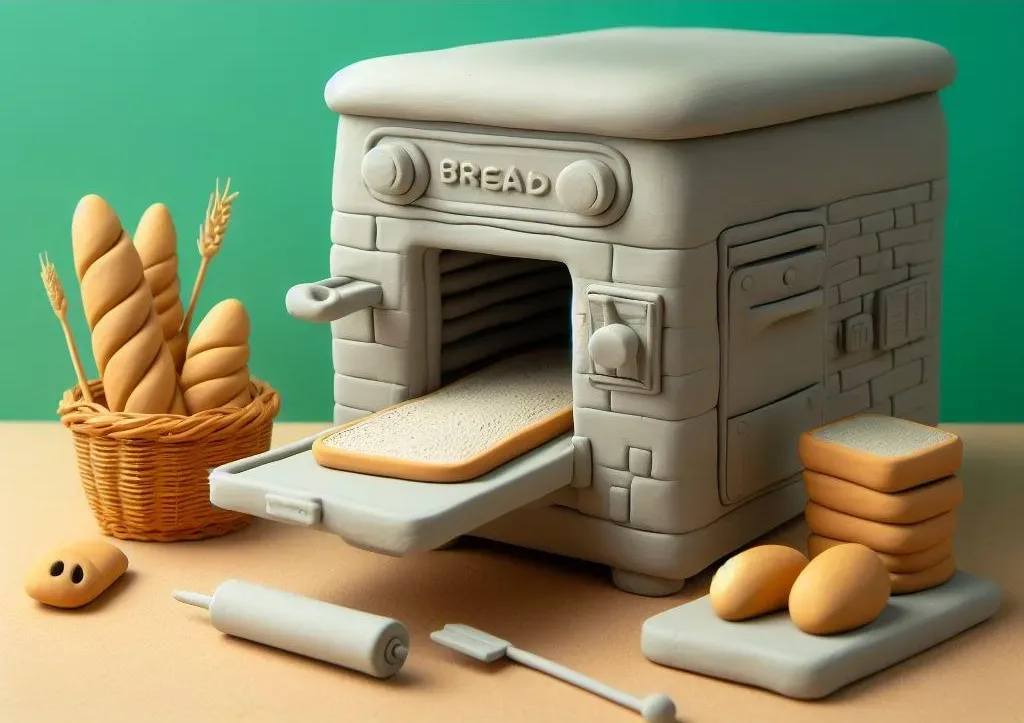
An AI generated image of a bread machine made out of clay

For the past year or so, we’ve had a Panasonic bread machine that we’ve used to bake our own bread. We eat bread most weekdays – usually, I have home-made sandwiches for lunch, and Christine makes her own sandwiches at least a few days every week. Whilst we weren’t quite so far down our ultra processed food avoidance journey when we bought the machine, baking our own bread seemed like a good way to stay healthy.

We’ve used the bread machine 2-3 times every week since then. Most of the time, we use it for basic loaves. These just contain contain yeast, flour, butter, sugar, salt and water, or olive oil instead of the butter and sugar. But I’m also partial to a couple of slices of toasted fruit loaf when I start work, and so we use the bread machine for this too. It’s the basic recipe but with raisins added (the machine has a hopper to add ingredients) and a tablespoon each of ground sweet cinnamon (cassia bark) and mixed spice in with the dough mix.

What I like most about the bread machine is that you can ‘set it and forget it’. Most recipes just require you to add the ingredients to the mixing bowl, close the lid, and then it’ll do its thing. When the timer goes, you should have a freshly baked loaf waiting for you. The proving, mixing and baking is all done for you by the machine automatically. You can set a time delay as well, so that you can add the ingredients on an evening and wake up to a loaf the following morning. Most bread recipes take around four hours, but you can bake a ‘rapid’ loaf in about two hours if you double the yeast.

Fancy bread

The bread machine manual comes with plenty of recipes to try, and the internet isn’t short of suggestions either.

If we have time, we’ll make a multi-seeded loaf, which adds sesame and poppy seeds to the dough at the start, and then pumpkin, sunflower and linseeds in the hopper. Sometimes we also make a milk loaf, where you swap out the water for milk.

More recently, I’ve tried a tomato loaf. For this, you swap about half of the water for tomato juice and add some chopped up sun-dried tomatoes. However, you have to add the tomatoes to the dough manually and so it’s not a ‘set it and forget it’ recipe, even if the bread does taste really nice.

The machine also good for proving pizza dough. Indeed, the machine has several dough-only modes where you can take the dough out and cook it in a conventional oven. You can also use it to make cakes, but we’ve not tried that yet.

In future, I may try making soda bread (here’s a sample recipe that I found), which is common in Ireland and swaps the yeast for baking soda and uses buttermilk. I’d also like to try making Guinness bread, again continuing with the Irish theme.

Things to bear in mind

We have had a few mishaps though. Previously, I’ve forgotten to put in the little paddle in the bread pan which mixes the dough. This resulted in a pile of mixture that’s baked on top and raw at the bottom. On more than one occasion, I’ve forgotten to add any water, and ended up with some nice-smelling sand. And one time, the dough rose too quickly during baking and then collapsed, resulting in a dense, inverted loaf.

It’s also worth bearing in mind that home-made bread does go stale more quickly than shop-bought bread. After about three days, any leftover bread is usually only suitable for toast. Of course, you can freeze bread to keep it fresh.

Christine bought the bread maker and so I’m not sure how much it cost, but similar models seem to sell for £180-£200 on Amazon (sponsored link). It’s therefore quite the investment, although you may find that the ingredients are cheaper than buying a good loaf from a shop. Also, the ingredients keep well, so you can buy in bulk. For baking, the bread machine uses less energy than a conventional oven, as it’s heating a smaller space.

I really like having access to freshly-baked bread, and it tastes so much nicer than shop-bought loaves.

What ChatGPT thinks about Omar’s

On Monday, I wrote about Omar’s Balti House in Bradford. But before publishing it, I also asked ChatGPT the following:

Write a 300 word blog post about Omar’s Balti House in Bradford, West Yorkshire

So, here’s what it came up with:

Nestled in the heart of Bradford, West Yorkshire, Omar’s Balti House stands as a culinary gem, offering a delightful journey through the rich tapestry of flavors that define Balti cuisine. This renowned restaurant has earned its stripes as a go-to destination for locals and visitors alike, seeking an authentic taste of Pakistani and Kashmiri culinary traditions.

As you step into Omar’s Balti House, the warm ambiance immediately envelops you, setting the stage for a memorable dining experience. The restaurant’s commitment to authenticity is evident not only in its decor but, more importantly, in the carefully crafted menu. From aromatic biryanis to sizzling kebabs, each dish showcases the expertise of the chefs in delivering a true taste of the region.

One standout feature of Omar’s Balti House is its namesake dish—the Balti. Served in a distinctive, wok-like bowl, the Balti is a symphony of flavors, combining tender meats or vegetables with a medley of spices. The result is a harmonious blend that captures the essence of Pakistani and Kashmiri cuisine. Whether you’re a spice enthusiast or prefer milder flavors, Omar’s caters to all taste preferences, ensuring a culinary journey that suits every palate.

The commitment to quality extends beyond the kitchen, with Omar’s Balti House sourcing the finest local ingredients to create dishes that are not only delicious but also reflective of the restaurant’s dedication to supporting the community. The menu evolves with the seasons, ensuring that patrons can savor the freshest produce while enjoying a diverse range of dishes.

In addition to its culinary prowess, Omar’s Balti House prides itself on providing exceptional service. The attentive staff adds a personal touch to the dining experience, making guests feel not only welcome but also part of the extended Omar’s family.

For those seeking a taste of authenticity in Bradford, West Yorkshire, Omar’s Balti House emerges as a must-visit destination. With its rich tapestry of flavors, warm ambiance, and commitment to quality, this restaurant stands as a testament to the vibrant culinary heritage of Pakistan and Kashmir.

I have an interest in AI, and especially large language models like ChatGPT and their impact on my industry, higher education. We are seeing students using AI tools to write assessments, and even their personal statements for their university applications. And I think the above text is a good example of how AI is at the uncanny valley stage – it looks okay on first glance, but a more detailed critique highlights its flaws.

Firstly, I wouldn’t describe this as a ‘blog post’, even though this is what I asked ChatGPT to write. It reads more like a puff piece that you would read in some marketing to promote a town or city as a place to live or invest in.

It talks quite a bit about the balti dishes that the food is served on, although that could be because I mentioned ‘balti’ in the writing prompt. A major issue with AI is that they’re not always able to explain why they’ve done something. But it doesn’t mention the enormous naan breads anywhere – which, arguably, is what Omar’s is best known for.

And there are some things it has plain made up. The menu does not ‘evolve with the seasons’. Indeed, the menu doesn’t really evolve at all; whilst it has been reprinted a few times and the prices have gone up over the years, many of the dishes that are on there were ones that were available 20+ years ago. Also, I’m not sure about the ‘local ingredients’ either.

This all feeds into my concerns about the thousands of web pages currently filling up our search engines with AI-written content. How much of it has actually been proof-read, and is accurate?

In education, AI generated content is an issue for two reasons. One, it’s cheating, in the same way that plagiarism and essay mills are – it’s just that you’re using something written by a computer rather than another person. But there’s a quality issue too. I specialise in doctoral level admissions, and much of what current AI language models generate just isn’t at that level. You tend to get vague lists of things with few references (and sometimes these are made up), and if you ask it for a longer essay then it’ll probably start repeating itself. I’m sure if I’d asked for, say, 600 words on Omar’s balti house, it would have run out of unique things to say and just repeat the same statements in another way.

Most universities are now very much aware of both the opportunities and the threats that such AI models present; Turnitin, used by many universities, can now indicate whether an assignment has been written using AI as well as detecting plagiarism. There are simpler tools available online, such as AI Detector, where you can copy and paste a short piece of text. Indeed, when I put ChatGPT’s text above in there, it said that there was a ‘relatively high’ chance that it was written by AI.

I’m sure these language models will improve over time, and will overcome their current shortcomings. At which point, we may struggle to work out what has been written by a human and what was hallucinated by a computer. We’re certainly not there yet, and I don’t know how long it’ll take to get there, or whether it’ll be like driverless cars which seem to be perpetually ten years away. I hope this blog post serves as an explanation of why I won’t be farming out my blog post writing to AI any time soon.

Omar’s Balti House in Bradford

A photo the outside of Omar's Balti House in Bradford

I’m sure I must have written about Omar’s Balti House on Great Horton Road in Bradford at least once before, although I don’t think I’ve ever written a whole blog post about it. We went there last week with a group of friends, which is an excuse to write about it.

Bradford is not short of curry houses and has repeatedly won the title of ‘Curry Capital of Britain’ over the years. And whilst Omar’s may not have the renown of other curry houses like Mumtaz, or the likes of Aagrah and Akbars which have become chains, it’s one that is held with affection amongst people who have lived in Bradford. Indeed, I’d argue that it’s a rite of passage for students who study in Bradford. I first visited early on in my first year at university, and have been back many, many times since.

Omar’s is known for serving its meals in the same metal balti dishes that they’re cooked in, and for it’s enormous naan breads. No really, they’re claimed to be the largest in Yorkshire and typically measure almost a metre across. Indeed, eating one of these naans on your own, with a balti dish, is a food challenge – and the record is currently 35 minutes having been last set in 2019. Before that, the record had stood for over a decade.

Massive naans aside, the food at Omar’s is good, and despite being a small restaurant they do cater for large groups. They also serve some western food, which is good when you have an eight-year-old who hates even the mildest spicy food.