Ultra Processed Food

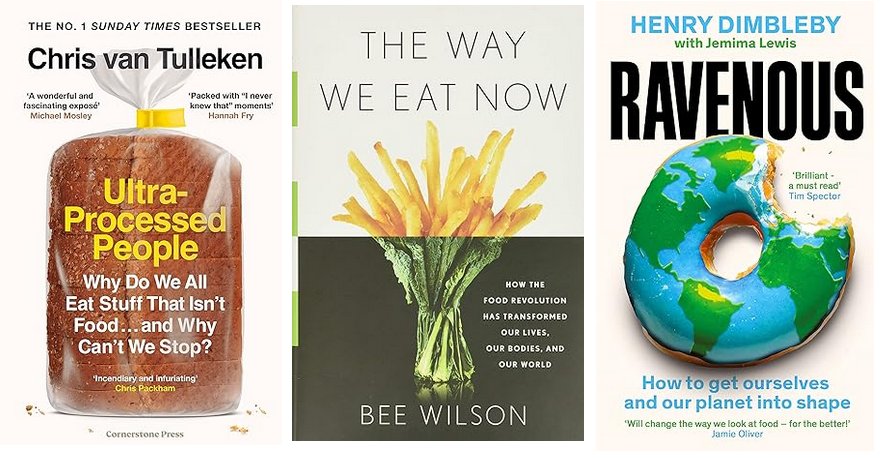
Cover images of the books about ultra-processed food mentioned in the article

Something that I’ve become more concerned about in our household is our consumption of so-called ‘ultra-processed food’. My wife has had a few health issues over the past 18 months, including an elevated risk of developing type two diabetes which has seen her cut her sugar intake. But this coincided with the publishing of several books related to ultra-processed food, and has seen us made some changes to reduce our exposure to them.

The books

Before I go into much detail, here are the books I’m talking about:

  1. Ultra-Processed People by Dr Chris van Tulleken
  2. The Way We Eat Now by Dr Bee Wilson
  3. Ravenous by Henry Dimbleby

Note: these are sponsored links, but feel free to purchase these books from your local independent tax-paying bookshop, or borrow them from a library.

If you only read one of these, read Chris van Tulleken’s Ultra-Processed People. Chris is probably better known as ‘Dr Chris’ from the CBBC show Operation Ouch, which he presents with his twin brother Dr Xand (and later Dr Ronx). He’s a triple-threat: a GP who is also a research scientist and a TV presenter, and it shows. He’s able to digest some academic research into an easily readable format, which isn’t surprising when you consider that this is what he does for his patients and his TV audience. But it also means that there’s academic rigour behind this book.

Dr Xand pops up quite a bit in this book; Chris and Xand are identical twins but have different physiques. Chris puts this down to Xand’s time in the USA, where he was exposed to higher amounts of so-called ‘ultra-processed food’, and so he’s ended up higher on the BMI scale than his brother (although Chris acknowledges that BMI is discredited). When they both contracted Covid-19 in 2020, Xand was more seriously ill than Chris.

Over the course of the book, we discover that there’s increasing evidence that ultra-processed food is linked to obesity, and how the food industry tries to downplay it.

How do we define ultra-processed food?

Chris acknowledges that it can be hard to define what ultra-processed food is. The best model that we have is the Nova classification, developed by Prof Carlos Augusto Monteiro at the University of Sao Paulo in Brazil. Essentially, this splits food into 4 groups:

  • Nova 1 – wholefoods, like fruit, vegetables, nuts etc that can be eaten with little to no processing
  • Nova 2 – culinaries, like vinegar, oils, butter and salt that require some processing
  • Nova 3 – processed food. This is basically anything that’s been cooked, so home-made bread would fall under here. Foods from the Nova 1 and 2 categories are combined to create the foods in the Nova 3 category.
  • Nova 4 – ultra-processed food, which is made from formulations of food additives that may not include any ingredients from the Nova 1 category.

Probably the easiest way to work out if something fits into the Nova 4 category is by looking at the list of ingredients. If there are one or more ingredients listed that you can’t expect to find at a typical large supermarket, then it’s probably ultra-processed food. Things like emulsifiers, artificial sweeteners, preservatives and ingredients identified only using those dreaded E numbers that my mum used to be wary of back in the 1980s.

And there’s a lot of food that fall into the Nova 4 category. Almost all breakfast cereals, and any bread that is made in a factory, are examples.

Why are ultra-processed foods so common?

Fundamentally it’s to do with cost and distribution. For example, a tin of tomatoes that contains some additional ultra-processed ingredients may be cheaper than a tin just containing tomatoes (and perhaps a small amount of acidity regulator). It’s a bit like how drug dealers cut drugs with, for example, flour, to make more money when selling their drugs on.

Distribution is also a factor. A loaf of bread that is baked in a factory may take a couple of days to reach supermarket shelves, where it also needs to be ‘fresh’ for a few days. So the manufacturers will add various preservatives and ingredients to ensure that bread remains soft.

You can bake your own bread using only yeast, flour, salt, olive oil and water. But Tesco will sell you a loaf of Hovis white bread that also contains ‘Soya Flour, Preservative: E282, Emulsifiers: E477e, E471, E481, Rapeseed Oil, and Flour Treatment Agent: Ascorbic Acid’. These are to keep the bread soft and extend its shelf life, as a homemade loaf may start going stale after 2-3 days. This means that a shop-bought loaf may go mouldy before it goes stale.

Other common examples

Breakfast cereals brand themselves as a healthy start to the day, but often contain worryingly-high amounts of sugar. And there’s evidence that their over-use of ultra-processed ingredients interferes with the body’s ability to regulate appetite, leading to over-eating.

Ice cream is also often ultra-processed, if you buy it in a supermarket. The extra additives ensure that it can survive being stored at varying temperatures whilst in transit. It’s notable that most UK ice cream is manufactured by just two companies – Froneri (Nestlé, Cadbury’s, Kelly’s, Häagen-Dasz and Mövenpick brands) and Unilever (Walls and Ben & Jerry’s). There are many small ice cream producers, but the challenge of transporting ice cream and keeping it at the right temperature means that they have limited reach.

I’m also worried about a lot of newer ‘plant-based’ foods that are designed to have the same taste and texture as meat and dairy products. You can eat a very healthy plant-based diet, but I would argue that some ultra-processed plant-based foods would be less healthy that the meat and dairy products that they’re mimicking.

What we’re doing to cut our intake of ultra-processed food

We now bake our own bread in a bread machine. Not only do you avoid ultra-processed ingredients, but freshly-baked bread tastes so much nicer than a loaf bought in a shop. It takes a little more planning, but most of the ingredients don’t need to be kept fresh.

We also buy more premium products where we can. Rather than refined vegetable oils, we buy cold-pressed oil for frying, and I’ve mentioned chopped tomatoes above. Of course, these products cost more, and it’s something that both Chris and Henry mention in their books. It should come as no surprise that there’s a link between obesity and poverty, if people on low incomes cannot afford good food.

And we’ve had to give up Pringles. Chris devotes practically a whole chapter to them, and how they trick the brain into wanting more.

You can download the Open Food Facts app to help decipher food labels. It includes a barcode scanner, and will warn you if what you’ve scanned is ultra-processed food. The good news is that there are still plenty of convenience foods which are not ultra-processed – there’s some suggestions in this Guardian article.

Whilst I haven’t yet given up on artificially-sweetened soft drinks, we reckon that we’ve cut our sugar intake and our exposure to artificial additives. In many cases, we don’t know the long-term health effects of these additives, although we do know that some people struggle to lose weight despite eating a supposedly ‘healthy’ diet and exercising regularly.

Mystery meal

Homemade burger

Christine and I had our first experience as mystery diners recently.

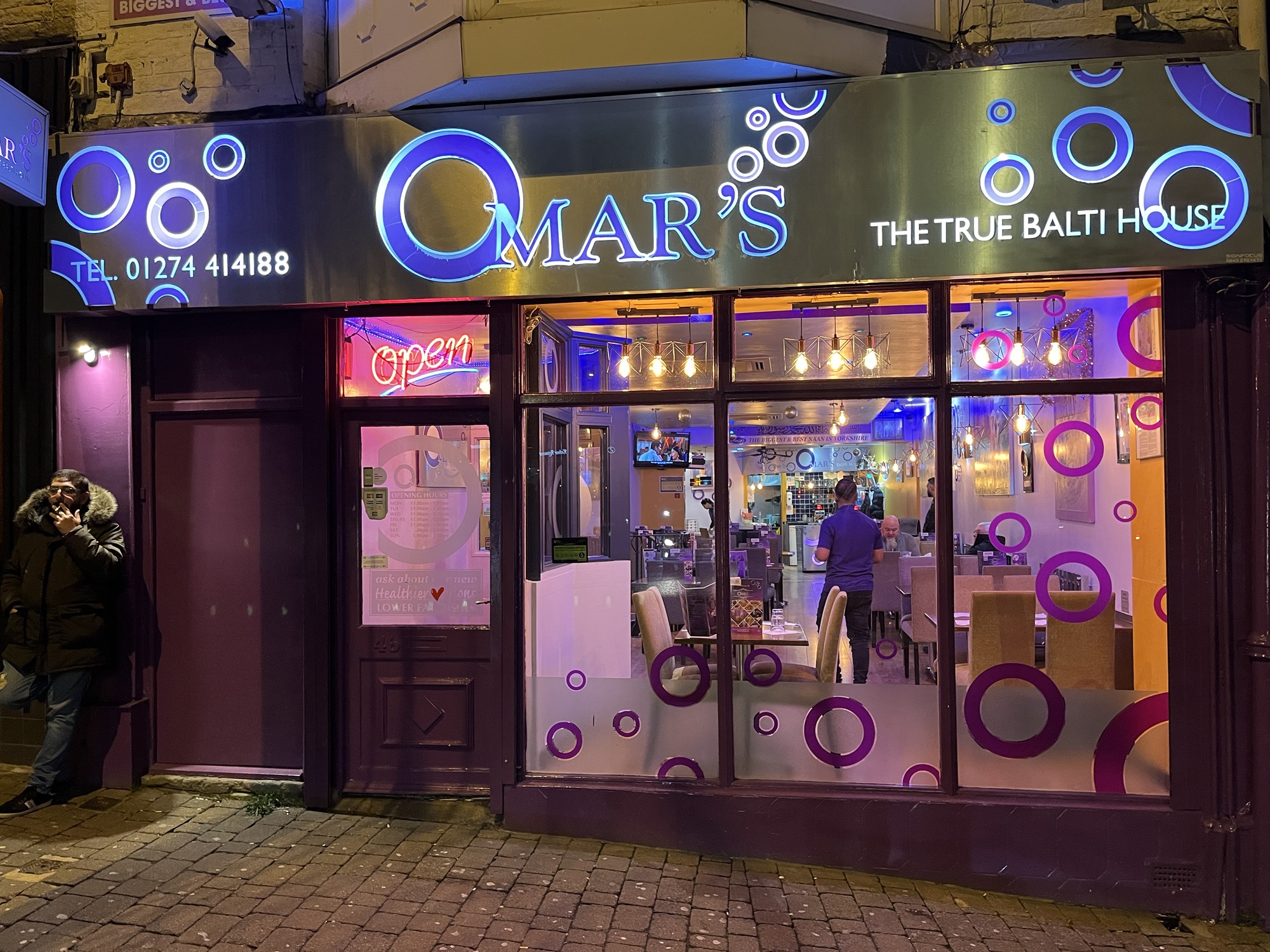
Ages ago, I signed up for the Mystery Dining Company, an intermediary that arranges mystery shopper visits for various restaurants in the UK. Whilst I got regular emails about available visits, none of the establishments interested me – they were mainly pubs that I wouldn’t consider visiting. Finally, an urgent visit for a restaurant that we actually like came up, and so I booked us in. I can’t tell you which restaurant it was, but it was a large multi-national chain.

As part of the task, we had to book a table online, but also call the restaurant using a call recording service (Record Your Call in this case) and upload the recording. There was a questionnaire to complete which had several questions that related specifically to aspects of the experience that the restaurant aims to offer at its locations, so it wasn’t a case of simply reviewing the food and the service. Fortunately, the restaurant and the staff did well on the whole, although I did have to put a few negative comments in places.

Obviously the major benefit of being a mystery shopper is that you get reimbursed for the meal, so effectively it was free. There are limits as to how much you can claim in total though, and you’re usually restricted to no more than one alcoholic drink each. To be reimbursed, you upload copies of your receipts; I learned that after submitting mine that I should have uploaded both the food and card receipts so that I could claim back the tips.

We’d happily do it again, although sadly visits are a bit few and far between in the Halifax and Bradford areas at the moment.

The Mystery Dining Company is just one such company that arranges visits; another is Market Force Information, and you can find out more about them in this blog post from Money Saving Expert. They offer a small additional fee on top of the reimbursement but it’s only a few pounds.

If you’re literate, enjoy eating out and are flexible enough to go to places at short notice, then I’d recommend signing up as a mystery shopper. You effectively get free meals out of it, and you’re helping the restaurant companies improve their customer experience.

Adventures in lactose intolerance

LactoFree Milk and Cheese

It appears that I am lactose intolerant.

Lactose intolerance is when your body can’t produce enough lactase, which is an enzyme that breaks down lactose into simpler, more absorbable sugars. Lactose is found in cows milk, and therefore cream, butter, ice cream, yoghurt and anything else containing milk.

Lactose intolerance is not an allergy; this means most sufferers can consume small amounts of products containing lactose without problems, and even when they do consume large amounts it usually isn’t a medical emergency like with nuts. But it can lead to some unpleasant symptoms.

I’ve always had problems with consuming large quantities of milk, and when I was a toddler I could only have goats milk, as regular cows milk didn’t agree with me. As I grew older it didn’t seem to be too much of a problem, but over the past few years, the symptoms of lactose intolerance have become more noticeable. I’ve frequently been quite bloated after meals, and unsavoury things would make their way out of my rear end at regular intervals.

And then we went to Paris for our honeymoon. Whilst we were there, my symptoms were much milder, and I eventually deduced why. On a morning, rather than having cereal with milk, I was having croissants instead.

A few weeks after we returned (and after having seen my symptoms return), I switched to LactoFree milk. This is regular cows milk which has been treated to remove the lactose, but keep everything else. I also cut out yoghurts from my lunch (although only after buying a large multipack). Since then, I haven’t had any of the earlier problems.

This should be a happy ending, but unfortunately it isn’t. Because so many things have milk or dairy products in them. I am now beginning to understand how hard it is to be a vegan (even though I still eat meat). The LactoFree milk is okay – it tastes like regular cows milk and doesn’t cost much more, although it is imported from Denmark. LactoFree cheese is, however, disappointing – rubbery, and largely flavourless, reminding me of the ‘cheese’ I used to get as part of my school dinners in the early 1990s. There are other products in the range but these aren’t stocked in my local small town supermarket, sadly.

Some sufferers of lactose intolerance can manage to have yoghurt – this is because yoghurt is a fermented dairy product, and so the lactose is already partly broken down. Sadly, as mentioned before, this isn’t the case with me, and so I now have to eat soya-based equivalents. Similarly, some people can have goat or sheep milk based products, others can’t.

On the odd occasion when I drink coffee, I have to ask for soya milk. I don’t particularly like soya milk as I find it very sweet when compared to cows milk, but it’s better than feeling awful later on. Sadly Starbucks charge an extra 35p for soya milk in their drinks; I’m not sure about Costa Coffee or Caffè Nero and whether they charge extra too.

If you’re reading this and think that you too may have lactose intolerance, then by all means try cutting out diary products from your diet, but please also make an appointment to see your GP to discuss it. Don’t self-diagnose; your GP may refer you to have a blood or breath test to confirm. Mine didn’t, but this was because I’d already cut back on dairy products and we agreed that it probably wasn’t necessary. However, some of the symptoms of lactose intolerance appear to be the same as some more serious diseases such as bowel cancer, so it’s really important that you see your GP just in case. It also means that, if you are lactose intolerant, then it’s on your medical record. Some drugs contain small amounts of lactose in them, for example. And if your symptoms are serious, then your GP may need to refer you to a dietician who can devise a suitable diet for you to eat.

There isn’t a cure for lactose intolerance. As well as avoiding dairy, it is possible to take lactase substitutes, which essentially act like lactase to break down lactose in your stomach. You add them to your food before eating. They’re available from some health food shops, and on prescription in some circumstances.

Making a Mess in the Kitchen

Food

Christine, the amazing woman that I’m planning to marry sometime in the near future, also happens to be a very good cook, and luckily for you, she’s decided to start a recipe blog called Making a Mess in the Kitchen. I’m hosting it, and it sits in its separate installation of WordPress (I had considered enabling Network mode on WordPress, since I now have 3 WordPress installs on here, but decided it was too much effort).

There’s a few recipes, and some other general cookery-ness, on there now, and I’m sure she’ll continue adding to it as she continues to experiment new things. I’ll just keep on washing up after her.