Our 2018 summer holiday in the Loire

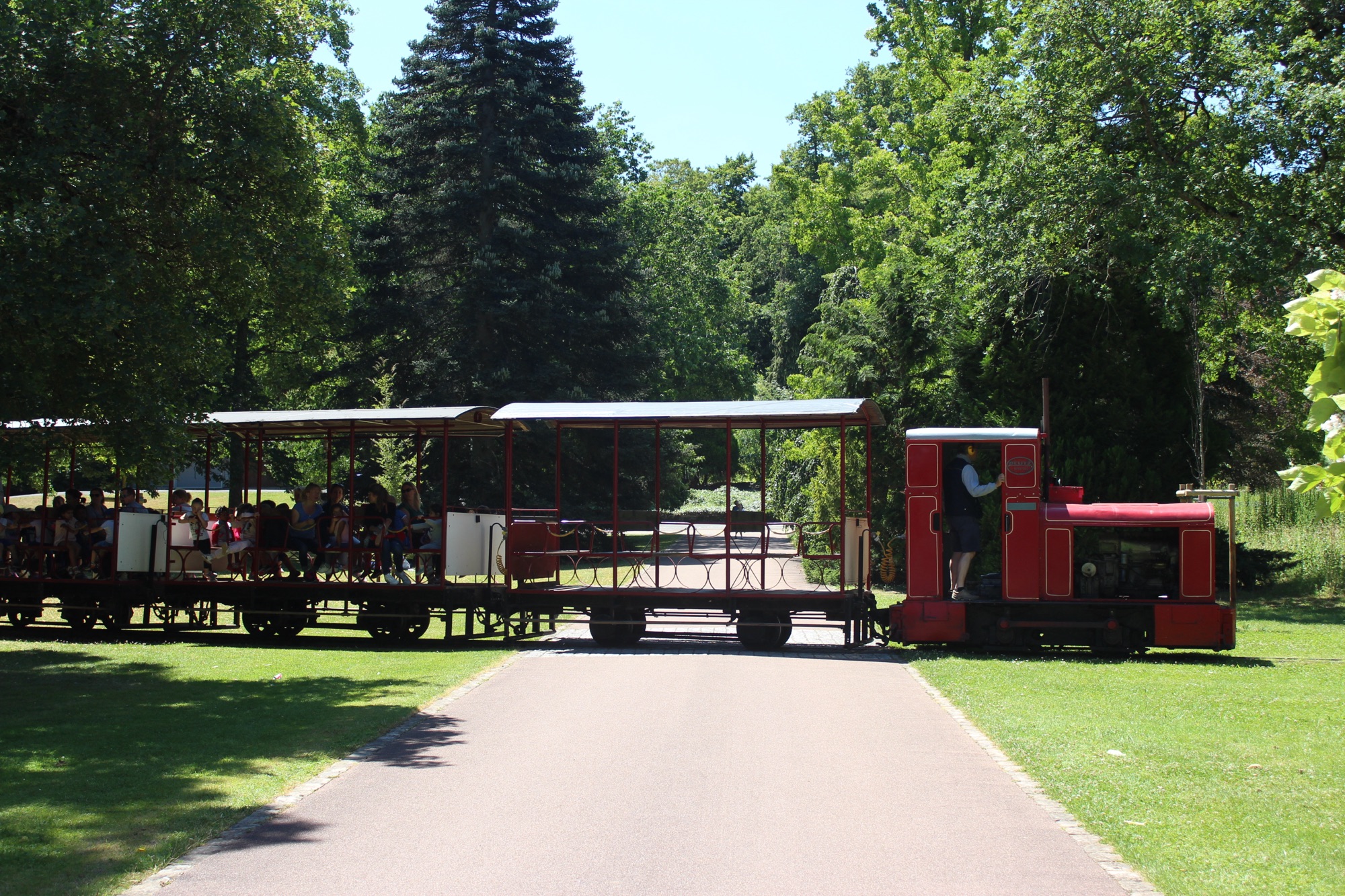
A small train plodding around the Parc Floral de la Source

Last summer, I blogged about previous un-blogged holidays in 2019, 2021, 2022 and 2023. As I’m away on this year’s holiday at present, I’m going to write about our 2018 holiday. Although our holiday fell before my blogging hiatus, it only got a brief mention at the time.

This particular holiday was our nine-year-old’s first trip outside England, although as it was seven years ago they were two at the time, as that’s how maths works. Nominally, our holiday was in the Loire valley in France – yes, the same place as 2023 – but we fitted some other places in too.

A photo of the outside of the Cadbury's Factory in Bourneville, West Midlands

Cadbury World

I suppose our holiday ‘started’ in the West Midlands, at Cadbury World. This was one of several places that we called at on our journey down. I’d been before with Hari – her family is from Worcestershire – but this was the first time we’d been as a family.

Cadbury World is adjacent to the Cadbury’s factory in Bourneville, a model village built by Cadbury’s for its workers that now forms a suburb of Birmingham. It tells the story about Cadbury’s – the history of the company and how chocolate is made. So whilst it’s a museum, it’s also very much a tourist attraction, with indoor rides and a chance to watch professionals make chocolate. During my earlier visit in the 2000s, you were able to see some of the actual Cadbury production lines in the factory, but I don’t remember seeing them on this visit.

It’s not quite a full day out, which suited us as we’d arrived there having set off from home – it was over two hours’ drive, and we had further to go afterwards. The attraction is run by Merlin (the Alton Towers and Sealife Centre people) so whilst it can be quite pricey, there are various discounts available if you can book in advance.

We stayed overnight near Oxford, where we met up with my parents and had a meal for Father’s Day.

A photo of a tall sailing ship called HMS Warrior at Portsmouth Historic Dockyard

Portsmouth Historic Dockyard

As per usual, we entered France by ferry from Portsmouth. Having driven down from Oxford in plenty of time, we spent the afternoon visit the Portsmouth Historic Dockyard, home to a museum and various boats such as HMS Warrior (pictured) and HMS Victory. The museum is huge, and is actually split across three sites with a shuttle boat between them. We were only there for the afternoon, and so we only saw about half of the museum. It’s also home to the wreck of the Mary Rose – again, we didn’t have time to see it.

We did, however, have a late evening stroll around Gunwharf Quays in Portsmouth.

Our ferry was the overnight Portsmouth to Ouistreham (for Caen) service. In subsequent years, we’ve taken the longer Portsmouth to St Malo service, which leaves earlier and arrives later, giving you a better night’s sleep. The Caen ferry leaves Portsmouth at 11pm UK time, and arrives at 7:30am French time (6:30am UK time). I wouldn’t recommend it, especially if you then have to drive once you’ve arrived.

Photo of the Chateau de Blois

Blois

We called briefly in Blois on the way to our campsite to have some lunch. It’s a city with a large, well-preserved château in the centre – bits of the château date as early as the 13th Century, but it was substantially complete by the 17th Century. We had a quick look around, but didn’t go in.

A photo of Chateau de Chambord, a massive French castle.

Château de Chambord

One thing the Loire is not short of is châteaux, and Chambord is the chonkiest. It’s an absolute unit.

It was built in the 16th Century as a hunting lodge, and so as you would expect, the surrounding parkland is huge. Following the French Revolution in the 18th Century, it was abandoned with its furnishings removed. During the Second World War, it was used to store works of art normally displayed in the Louvre in Paris, and later on the 20th Century it was restored and opened to the public.

Inside, many of the rooms remain unfurnished. Most notable is a double spiral staircase.

Zoo Parc de Beauval

As mentioned, we stayed in the same area in 2023 and made a return visit to this zoo, so I won’t go into much detail here. It’s a fantastic zoo and arguably one of the best in the world.

A photo of Château de Chenonceau which spans the River Cher in France

Château de Chenonceau

Chenonceau is the château that is also a bridge, spanning the River Cher (which then flows into the Loire further downstream). You can indeed hire a rowing boat to go under the château, should you wish – we didn’t. And whilst it spans both sides of the river, you can’t exit on the other side.

Most of the château dates from the 16th Century. In the 20th Century, the château had roles in both World Wars – in the first, it was used a hospital, and for a time during the second, it was a way to smuggle people out of occupied France. It was then occupied by the Nazis, leading to the Allies bombing it in 1944. Thankfully, it was restored in the 1950s and remains one of the most popular Loire châteaux for visitors.

A photo of the Parc Floral de la Source near Orleans

Parc Floral de la Source

This was somewhere that we hadn’t originally planned to visit ahead of time, but decided to visit on a whim. And it was lovely.

It’s a huge garden, with several different themed areas. Indeed, it’s big enough for there to be a little train that runs around the park – we saw it running (and it’s the header image of this post) but it was only open to a pre-booked school group. As well as a wide variety of plants and trees, there are animals too – some birds, a butterfly house, and some farm animals. I think we spent most of the day here, before we hit Auchan in nearby Orleans – Christine’s first time in giant a French hypermarket.

A photo of Le Mont-Saint-Michel, an island accessed by a causeway

Le Mont-Saint-Michel

On the way back now, and we called off at Le Mont-Saint-Michel. It’s a small island, accessed via a causeway from the mainland, and it’s very photogenic. I’ve been before, and on a previous visit you could park your car on the causeway and then walk up. Nowadays, you park on the mainland, and a double-ended shuttle bus takes you across the causeway.

As well as the abbey at the top, there are lots of little windy streets selling everything a tourist could want. Indeed, it’s a UNESCO World Heritage Site, and the most-visited bit of France outside of Paris.

The bandstand at Matlock

Matlock

Back across the channel now, and we called in at Matlock in Derbyshire for a couple of hours on the way home. It’s a picturesque inland spa town on the edge of the Peak District, and we had a wander around the town and the park. Nearby is the Heights of Abraham – we didn’t go, but it’s on my long list of places to visit in future.

Our 2022 summer holiday in Brittany

A photo of Carnac beach on the coast of Brittany

I’m away on holiday at the moment, so this week’s posts are about previous un-blogged holidays from 2019, 2021, 2022 and 2023. Yesterday was our 2021 holiday to Kent and East Sussex, and today it’s our 2022 holiday to Brittany.

By the summer of 2022, almost all Covid restrictions were gone and so we ventured outside of England for the first time in three years. We returned to our usual holiday format of a couple of weeks in France, staying in a Eurocamp static caravan, and this time, we went to Brittany in Northern France.

I’ve been to Brittany a few times, but it was the first time for our then six-year-old and my wife Christine. We stayed near Carnac on the Atlantic coast, which is well-known for the Carnac Stones – around 3000 standing stones across the area.

Here’s where we visited:

A photo of St Malo in Brittany

St Malo

The easiest way to get to Brittany from England is by ferry, and so we took the overnight Portsmouth-St Malo ferry with Brittany Ferries. As (for once) we didn’t have a long drive on arrival in France, we spent the first morning in St Malo, having a wander around the town and harbour. The town is fortified, and inside the town walls there’s a Micro Zoo, with lots of small animals. It’s a nice little place, if not especially interesting, and was enough to pass the morning before heading onwards to Carnac.

A photo of the town of Pont Aven

Pont Aven

Pont Aven is a scenic little town in Brittany that’s home to lots of artist studios. We took advantage of the all day kid’s club at the campsite to have a grown-ups only day here. It’s a nice place to wander around – it’s in a steep-sided valley with a river running through it.

A zookeeper at Parc de Branféré holding a parrot

Parc de Branféré

We always seem to end up at a zoo on our holidays, and this year it was Parc de Branféré. Make sure you stick around for the bird show, as they bring out all of the hand-reared birds pretty much all at once. It was fantastic being able to get so close to the animals – many are not locked away in enclosures, but free to roam around. It’s definitely one of my top five zoos that I’ve visited.

A photo of the outside of the Insectaraium de Lizio

Insectarium de Lizio

Another zoo of sorts, but this time focussed mostly on insects. As well as many preserved examples in frames, there were a number of live insects here, as well as a bee colony and an outdoor butterfly garden. It was certainly enough to fill a morning, even if it’s not a very big place. And you probably need to like insects to really enjoy it.

A photo of one of the buildings at the Museum of the Junkyard Poet

Museum of the Junkyard Poet

Also in Lizio (which in reality is a rather small village) is the Museum of the Junkyard Poet, which we found whilst browsing TripAdvisor. It’s a fabulously whimsical place in the Brittany countryside, with buildings and contraptions made out of discarded materials. It’s very, very French, but fun to explore with lots of hidden things. Oh, and there were loads of frogs all over the place.

A metal sculpture of a fish at Quiberon

Quiberon

Quiberon is a town on the end of a peninsula that pokes out into the Atlantic Ocean. It’s a port for ferries to a few islands in Quiberon Bay, the largest being Belle-ÃŽle-en-Mer (which literally translates as, um, ‘pretty island in the sea’). There’s nice sandy beaches and it’s a seaside resort, sort-of like Blackpool but sunnier and French.

Our 2023 summer holiday in the Loire

A photo of a model of Chateau de Chambord, one of the Loire castles

I’m away on holiday at the moment, so this week’s posts are about previous un-blogged holidays from 2019, 2021, 2022 and 2023. Yesterday was our 2022 holiday to Brittany, and today it’s our 2023 holiday to the Loire Valley in France.

Though I did go into some detail about our 2023 holiday in my 2023 review, here’s a bit more about what we did and where we went. Our holiday followed its usual format – an overnight ferry from Portsmouth to St Malo, and then we drove down to stay in a static caravan at a campsite. This year we stayed near St Catherine de Fierbois, to the south of the Loire valley and between Tours and Poitiers.

Here’s what we got up to:

A miniature model of Chateau de Chambord at the Parc des Mini-Chateaux

Parc des Mini-Châteaux

One thing the Loire Valley is known for are its many castles, or ‘châteaux’ in French. We limited ourselves to three this year, but we got to see miniature models of almost all of them at the Parc des Mini Châteaux. Here, there are models of Chambord, Chenonceau and many others that we had previously been to in person. It’s a fun way of seeing lots of places without having to travel to them all in person, and probably better for kids too.

A photo of Château du Clos Lucé

Château du Clos Lucé

The first real château that we visited was Château du Clos Lucé, in which Leonardo da Vinci spent some time. Consequently it’s a museum containing recreations of some of his inventions, and a print of that painting. What we enjoyed more were the gardens, which also contained several of da Vinci’s inventions, but on a much larger scale. Some, like an Archimedes screw, were interactive, and exploring the gardens was fun.

Three giant pandas at Zooparc de Beauval

Zooparc de Beauval

Zooparc Beauval is probably my favourite zoo that I’ve ever been to. We went there for the first time in 2018, and made a return visit last year. Since then, it’s expanded, and as was already too much to see in one day before, we focussed on the new bits and then our favourite bits from last time.

Its star attraction is probably the giant pandas, and we were lucky enough to see them. Unlike those that went to Edinburgh Zoo, those at Beauval have had more success at breeding and so there were four pandas there when we went. There had been a cub that we saw in 2018, but I believe it’s moved elsewhere to carry on the breeding programme.

The other thing that you should make time to see is Les Maitres des Airs, which is a fantastic daily bird flying show. Though there were fewer birds taking part compared to 2018, it’s still a great spectacle. Get there early to get a good view.

Other animals that I haven’t seen much elsewhere include hippos, dugongs and white tigers.

A spiny fish in the Aquarium de Touraine

Grand Aquarium de Touraine

We bought a joint ticket for both the Grand Aquarium de Touraine and the Parc des Mini-Châteaux, so when a wet day rolled around we had something to do. It’s interesting enough to spend half a day at; a particular highlight for our (then) seven-year-old was being able to draw a fish and have it scanned by a camera, to then appear in a virtual aquarium on a projector screen with others creations.

A photo of Château d’Ussé

Château d’Ussé

The second Loire château that we visited was Château d’Ussé, which allegedly was the inspiration for the story of Sleeping Beauty. This is something that the owners have capitalised on, and so as well as being able to go inside some of the interior of the château, there’s also a walk around the top floor where the rooms have been decorated to tell the story. There’s also some nice gardens to walk around, but part of the building is off limits as its owners still live there.

A photo of Château du Riveau

Château du Riveau

One château that wasn’t at the Parc des Mini-Châteaux was Château du Riveau, as it hasn’t been open to the public for very long. Again, its owners live here and so only a few rooms inside are open.

The gardens are really good – and we got a discount for being RHS members. There’s lots of sculptures, and a few pet birds around, and it’s very whimsically French. The whimsy continues inside – there’s lots of taxidermy on the walls wearing glasses or mounted backwards. We really enjoyed our visit here and it stands out compared to the other châteaux of the Loire. You can see the rest of my photos on Flickr.

Futuroscope

Futuroscope

Futuroscope is a theme park based around film. It opened in the 1980s, and I went twice with my parents in the 1990s. This time I introduced it to my wife and our (then) seven-year-old, and it was a lot of fun.

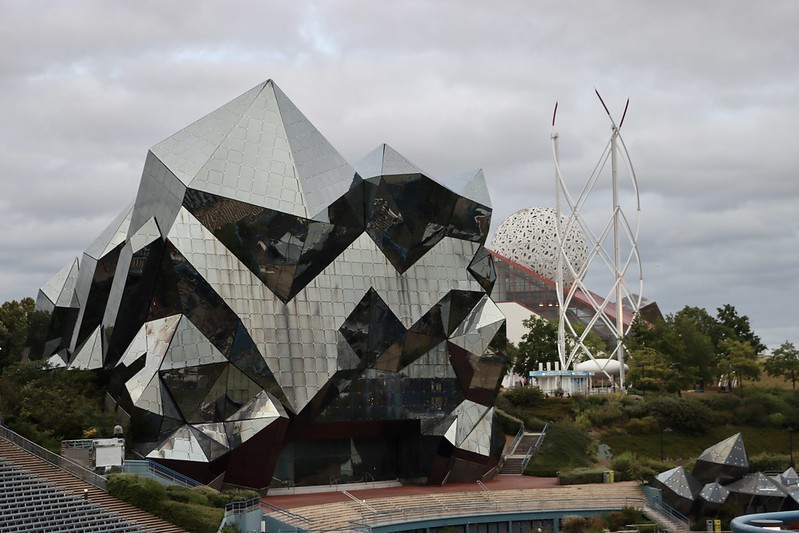
Each of the pavilions is a different kind of cinema. Some have massive Imax screens, others are in 3D or the seats move with the film. In some, you may find yourself sprayed with water or blasted with air. The architecture is also futuristic, in a way that (for the most part) still feels modern even after over 30 years.

And yes, it’s very French. The food is much better than your average British theme park, and there’s some really whimsical evening entertainment. We would have liked to have stayed around for the evening sound and light show, but being July it was quite late at night. Again, there’s more photos on Flickr since I actually got around to uploading them.

Our 2019 summer holiday in the Dordogne

A photo of a ferry leaving Ouistraham port on our way home from our Dordogne holiday

I’m away on holiday at the moment, so this week’s posts are about previous un-blogged holidays from 2019, 2021, 2022 and 2023. Today, it’s our 2019 holiday to the Dordogne in France.

For our 2019 summer holiday in France, we went quite a bit further south, to the Dordogne region (named after the river that runs through it). As well as the overnight ferry from Portsmouth to St Malo, we stopped off at a hotel in Poitiers and so it took the equivalent of three full days of driving to reach our campsite near Bergerac. We took our own car, but we had to abandon it after (what I presume) was a failed wheel bearing saw me skid off the road into a ditch, so the second half of the holiday was in an a hire car.

As this holiday was five years ago, in June 2019, my memories are not the best, which is why there’s not a lot of detail here. It’s thanks to checkins on Swarm and my own photos that I can recall what we did.

Here’s where we visited:

A photo of Beynac in the Dordogne

Beynac-et-Cazenac

Benyac overlooks the Dordogne river where it cuts through a deep gorge, and the village is built into the side of the steep valley. It’s a pretty little place with narrow, twisting streets and craft shops.

A photo of Château de Castelnaud. It is a castle on top of a hill in the Dordogne in France

Château de Castelnaud

Castelnaud is quite a good castle. It sits high up, in a commanding position over the surrounding valleys, and the courtyard is full of catapults, trebuchets and over siege engines that might have been used during the various wars that it has experienced over the centuries. I remember that we treated our (then) three-year-old to a wooden sword and shield from the gift shop.

Gouffre de Proumeyssac, and underground cave complex

Gouffre de Proumeyssac

Known as the ‘crystal cathedral’, Gouffre de Proumeyssac is a huge underground cave full of stalagmites and stalactites. Clever use of lighting makes it a fascinating experience. Whilst nowadays there’s a wheelchair-accessible main entrance, you can also opt to be lowered into the cave in a basket, as the original explorers would have done at the beginning of the last century.

A photo of a fountain ans some traditional French buildings at Le Bournat

Le Bournat

Le Bournat is an open-air living museum – a bit like Beamish or the Black Country Living Museum. The aim is to recreate how people lived in the Dordogne region in the past, with farms and small industry to look at. Whilst I would argue that it’s not as realistic as its British counterparts, it’s very pretty and makes for a nice day out. Like many of the places we went to in 2019, I seem to remember visiting when I was much younger and it seems to have expanded significantly since then.

A view of the village square in Eymet

Eymet

Eymet (pronounced ‘ay-may’) is an example of a Bastide, or fortified town. This means that there are walls around the town centre, and buildings such as the church are fortified. There’s also quite a large British diaspora here, with British ex-pats making up around a quarter of the population. Like many small French towns, its communal wash house has been preserved.

A photo of Château des Milandes in the Dordogne

Château des Milandes

Our second château of the holiday was the Château des Milandes. It was home to the American singer Josephine Baker, and so it has a number of her more famous (and infamous) outfits and tells her story. There are some nice gardens outside, along with an aviary which is home to a number of birds of prey. If you time your visit right, then you can watch a bird of prey show. I visited here with my parents when I was younger and had the interesting experience of having a harris hawk land on my head, which my dad took a photo of.

A photo of a Coypu at Aquarium du Perigord Noir

Aquarium du Perigord Noir

We usually end up at an aquarium whilst on holiday, as it’s a way to spend a wet day, and so we went to the Aquarium du Perigord Noir. Besides the many fish – mostly freshwater, as it’s a long way inland – they are a breeding centre for caimans, and have some coypu (also known as Nutria or Chilean beavers).

On the way back, we stopped off at a hotel in Le Mans, and also at Warwick Castle once back in England.

European motorway toll tag

An AI-generated image of a car passing through a motorway toll plaza

Today’s the first of a couple of blog posts about things that I’ve done to make our holidays a little easier. This blog post is about Emovis Tag, who sell a small electronic tag to pay for motorway toll plazas in France, Spain and Portugal.

Normally, we go to France on our summer holiday, and take our car with us. Unlike British motorways (with one exception), French motorways are usually privately owned and financed, and so most charge a toll for use. Since 2018, we’ve used a tag from Emovis Tag, which lets you drive through motorway toll plazas without having to stop and pay. Instead, your motorway toll charges are accumulated, and then taken from your UK bank account by direct debit each month.

A photo of a Liber-T tag in the windscreen of my car

For France, you get a standard ‘Liber-T’ tag, and there’s a separate tag that works for motorways in Spain and Portugal. That means that if you’re driving through France and either Spain, Portugal or both, you’ll need two tags. Emovis Tag will send you your tag(s) by post, and you fit them to the dotted area of your windscreen.

Then, once you’re in France, and come across a motorway toll plaza, you ensure that you’re in a lane with the ‘Liber-T’ icon (a lower-case ‘t’) and drive through at a walking pace. The tag should beep loudly at you, and the barrier in front should open to let you through. There’s usually no need to come to a complete stop.

Some motorway toll plazas have longer lanes where you can approach at 30 km/h (about 20mph) and so you don’t have to slow down as much.

Advantages

The key advantage of having one of these tags is that you don’t need to come to a complete stop, either to collect a ticket or pay a motorway toll charge. Whilst this may only save a few seconds, it adds up if you have a long journey.

It also overcomes an issue with British right-hand drive cars; most machines and booths at the motorway toll plazas are designed for left-hand drive vehicles. If you don’t have a front-seat passenger in the car, or they’re like my wife and have a tendency to sleep in cars, then you don’t need to reach over to pay. There’s also no risk of losing the paper ticket given to you when you join the motorway, so you won’t be overcharged if you do lose it. And you don’t have to worry about not having the correct change or having a foreign currency card declined.

Disadvantages

However, a key point to note is that this isn’t in any way cheaper. You have to pay for the tag, and there are annual and monthly account fees to pay (although the monthly fees are capped). There is a deposit for the tag which you can get back if you return it, which is worth considering if you don’t go abroad at least once a year. We’re staying in Britain for our holiday this year, and probably next year too, so I’m debating whether it’s worth returning the tag.

Therefore, you are paying more for an easier experience whilst on holiday. I think it’s worth it, but it’s up to you.

Something else to bear in mind is that, whilst the majority of French motorways have tolls, not all of them do. If you’re visiting Brittany and Normandy, then the main A84 autoroute is free throughout. On our 2022 France holiday, we didn’t encounter any toll-charging roads.

If you do decide to go ahead, you can sign up using this link to get a €5 credit on your account.

It’s been a while, again

As usual, I didn’t intend to leave it two months between blog posts, but life got in the way again.

The main reason for my absence is that we actually went on a proper holiday for the first time since our two-year-old was born. We accompanied my parents for 10 days in France, including a visit to Mont St-Michel, pictured above. This was at the back end of June, and I still have over 100 photos to sort. As well as Mont St-Michel, we visited the chateaux at Chenonceau and Chambord, Zooparc Beauval and the Jardin de la Source near Orleans.

This week I’ve been at home with our two-year-old whilst the childminder is on holiday. We’ve been to The Deep in Hull, Stockeld Park and a repeat visit to Ponderosa (which has improved significantly since our last visit). Right now, they’re asleep, so I have a rare chance to write a quick blog post.

After a long break, we’re finally moving forward with the house renovations again. I did some tiling for the first time in the downstairs toilet, which is now (mostly) painted and just needs flooring before it’s essentially finished. The next big project is our two-year-old’s room, which we’re hoping to get finished by the time they turn three in December.

On the technology front, I’ve replaced my iPhone (in addition to the new iPad in May). I had been planning to wait until the autumn, but the battery in my old iPhone showed signs that it was about to fail. I’ve upgraded to a Product(RED) iPhone 8, which is lovely and fast when compared to my iPhone 5S.

I’m hoping that I’ll have time to write at more length about what I’ve been up to; I have around 30 bullet points in my ‘blog post ideas’ note in Evernote.

Paris cultural observations

Eiffel Tower through the trees from Montmatre

We’re back from our Parisian honeymoon. We had a great time and I have over 200 photos to sort and upload to Flickr at some point.

Whilst I could write a detailed review of everything we did whilst in Paris, instead I’ll just cover the things that I found interesting and different. A mixture of advice and observations, if you will.

General observations about Paris and France

  • Unlike in the UK, where the green man means it’s usually safe to cross, in France it ‘may’ be safe to cross as traffic may still turn whilst you are crossing.
  • VE Day is a public holiday each year, on the 8th of May.
  • A service charge is included in all restaurant bills, so tipping isn’t strictly necessary. Rounding to the nearest €5 or €10 is considered polite for good service though.
  • Raisin swirl pastries are known as ‘Escargots aux raisins’, literally ‘snails of raisins’.
  • Around the Sacré-CÅ“ur in Montmatre (but elsewhere as well) you may see the ‘String Men’, who have pieces of string in their hands. It’s a scam and you should walk away and ignore them. They are very persistent though.
  • Unlicensed street vendors are very prevalent in the tourist areas of Paris, and like the string men can be very persistent. Don’t buy from them.
  • Wifi hotspots called ‘Free Wifi’ aren’t free. ‘Free’ is a French ISP – you need to look for ‘Wifi Gratuit’ for hotspots that do not cost money to use.
  • Chartier is well worth visiting – it’s a late 19th-century dining hall that serves very good and very cheap (by Paris standards) food. We walked straight in on a Tuesday night but the queues can be 100 people deep at other times.
  • You now have to pay to get onto the roundabout where the Arc de Triomphe is.
  • The Moulin Rouge is not as interesting as it’s depiction in the Baz Luhrmann film. It’s also surrounded by sex clubs, adult shops, and the actually quite interesting Musée de l’Érotisme.
  • The original model for the Statue of Liberty is in a corner of the Jardin de Luxembourg. It’s a lot smaller than the one in New York.

The Louvre

  • It’s closed on Tuesdays.
  • The audio guides use Nintendo DS handheld consoles.
  • But rather than hiring an audio guide, you can download a smartphone app and use your own phone instead, if you prefer. There’s no wifi on-site though, so best to do it before you set off.
  • If it’s raining, rather than queue outside to get in, you’re better off going into the Carousel de Louvre shopping centre which is under the Arc de Triomphe de Carousel. It’s also connected to the Palais Royale – Musée de Louvre Métro station, so you can get from the Métro to the Louvre without needing to go outside.
  • Good luck with getting a good photo of the Mona Lisa – it’s a small painting and we had at least 100 other people jostling to get a picture. It’s pretty much in its own room now.
  • The museum was recently closed for a day after staff went on strike over pickpockets. As such, be careful with your valuables. Also, the French don’t have a separate word for ‘pickpocket’ so they just use the English word.

The Musée d’Orsay

  • It used to be a railway station. There’s still an RER station underneath but the nearest Métro station is about 200 metres away.
  • Photography is prohibited everywhere inside. I did see quite a few people taking pictures regardless, and there are loads of pictures on Foursquare, but I did also see one person being told off for taking photos. Interesting related article on the subject.
  • Many of the audio guides are iPod Touch devices, albeit ones that have been inserted inside a cheap, tacky-looking plastic case which covers the home button.
  • The café on the top floor is good and is located behind one of the two huge clocks. It is pricey but the mille-feuile is to die for.
  • There are a small number of Vincent Van Gogh paintings on level 2. ‘Exploding TARDIS‘ sadly isn’t one of them.
Rennes Métro Station

Paris Metro

  • There are very few escalators and lifts at stations. You’ll be going up and down stairs most of the time.
  • The Navigo card is the Parisian equivalent of London’s Oyster Card, but it isn’t promoted to tourists. We decided to stick with buying a ‘carnet’ of 10 tickets at a time, which is slightly cheaper than buying them individually.
  • Mobile phone coverage is available at most stations and even on the trains, although frequently it’s only 2G and not 3G.
  • Some lines, like 1 and 14, have modern, fully-automated trains, and platform edge doors like on London’s Jubilee Line, but some lines have trains that date from the 1960s and require you to turn a handle to open the doors. And on many of the older trains, the doors unlock a couple of seconds before the train has come to a halt, so it’s possible to alight from a moving train.
  • Line 6 of the Metro runs on an elevated section down the middle of a wide street to the west of Paris, near the Eiffel Tower. I gather this happens on the New York Subway from time to time as well.
  • Generally the ticket barriers only scan your ticket to enter the Metro, not to leave.
  • The RER is a bit like Thameslink (and Crossrail when that opens in London), in that it’s actually a full rail service that happens to pass through the centre of Paris. Some of the trains are double-deckers. Ticketing is fully-integrated with the Metro.
  • Some Metro trains run on rubber tyres, rather than metal wheels. It gives a smoother ride.

Back from France

Although I’ve been back in Britain since Monday, I haven’t yet said publicly that I’m back, so…
I’m back.

There you go.

France was fantastic – we had really good weather for most of the holiday and went to lots of cool places. I’ll write in more detail soon although I’ve managed to return from holiday during a very busy time at work so it’ll probably be at least the weekend before I upload anything. I also have around 300 photos to sort through and upload to Flickr.

Those of you who don’t follow me on Twitter can read what I’ve posted while away as a brief overview of what happened on my travels.

Holiday write-up: Part II

Four more days in the life of me while on holiday. I’ll write more as I have time, but at least now the first week is done.

Monday 30th June

A photo of Le Grau de Roi

Le Grau du Roi

The plan for today was to visit Aigues-Mortes in the Carmague (about an hour and a half driving from where we were staying) and then have a look at le Grande Motte which was just down the road. But on the way we passed this coastal town called Le Grau du Roi, and thought we’d take a look.

It’s not particularly big and isn’t exactly a world heritage site, but it does have an old lighthouse and is full of seafood restaurants – as you’d expect for a major fishing port. There’s a few old buildings, and a swing bridge in the centre of the town over the canal. If anything, it’s a bit like Sète, albeit less posh.

A photo of the exterior of Aiges-Mortes

Aigues-Mortes

We probably spent about an hour there before heading on to Aigues-Mortes itself. We’d been here 12 years ago (when I was a mere 7 years old), and indeed, I have a near identical photo to the one shown that I took way back then in one of my older holiday photo albums.

Since we spent quite a bit of time in Le Grau du Roi, by the time we’d got here it was heading towards lunchtime, so most of the shops were closing for lunch. Down here, it gets very hot in the early afternoon sun, so most shops close at around 1pm and remain shut until 4pm, though typically they are open later into the evening than in Britain, where everything shuts at 5pm.

Fortunately, the ramparts, which stretch around the entire old town, were open all day, so we could pass the time strolling along these. They give great views of the town and the surrounding area, which is largely flat since it’s in the delta of the Rhône river. The big white piles are of salt – the seawater is pumped into salt pans and drained, and the area is one of the largest sea salt producers in Europe, apparently. Camargue rice, which is my favourite type, also originates from this area.

A photo of the inside of the walls at Aigues-Mortes

So, back to the ramparts (walls, if you must). When we last visited, they were free, but large areas were closed off so you couldn’t walk on them. Now, although you have to pay to get onto them, they form a complete circuit around the town, spanning for 1.63 metres, which is only a few metres longer than a mile. Lifts and ramps have also been added in some parts to allow disabled access – something that I couldn’t see happening in York, although admittedly the way the walls were constructed means that one section is accessible to those in wheelchairs.

After wandering around the walls and climbing up the towers, we strolled along the largely empty streets (the only places that were open were the bars and restaurants) before returning to the car and having lunch. Fortunately, the large amount of flat land around the edge of the town means there is plenty of room for car parks.

le Grande-Motte

Our intention was to visit this town, which is very much like Cap d’Agde in that it’s a seaside resort that was built in the 60s. Apparently a lot of thought was put into the design of the town, so that it didn’t end up like some of the Spanish Costas. Except that one thing they didn’t plan very well was signs for car parking.

We headed for the town centre, to find no spaces. And, as we headed out, the signs weren’t very well positioned, and we ended up going into a suburb of the town, effectively getting lost. And after it took 15 minutes to get back on the right road, we gave up. Of course, as we left the town we spotted a huge sign saying where all the car parks were, but of course it looked completely different to all of the other signs so we didn’t notice it.

Still, the town was twinned with Hornsea, a coastal town in East Yorkshire that I used to visit often with my grandparents when I was younger.

A building in Pezenas

Pézenas

Since it was mid-afternoon when we gave up on le Grande-Motte, we quickly raided the guide book for other places to visit. Pézenas came up – after all, it was only a slight detour from the route home, and it was recommended, so we gave it a try.

Most of the buildings date from the 17th century, and there’s a nice church there, along with a few pretty squares. My parents were more interested in the architecture, dragging me around various old buildings that had the odd carving on them. Not really my kind of thing, but they seemed to find it interesting.

Tuesday 1st July

A photo of the black granite church at Agde

Agde

Now would be a good time to explain about the Commne of Agde. The Commune consists of four localities: Agde (also known as La Cité d’Agde), Le Cap d’Agde, Le Grau d’Agde and La Tammarisière. They’re basically four towns/villages located near each other, run by the same council, which is good because the tourist office can encourage those visiting the Cap into visiting the other places.

Agde itself is considerably older than the Cap. Whereas the latter was built in the 60s, the main town has been around for over 2500 years, making it older than many places in the UK (even York is only 1932 years old, founded in AD71). That said, much of the town is considerably newer.

Photo of a sculpture in Agde

Most of the buildings are made out of local stone, which is basalt. The nearby Mont St-Loup, which overshadows the commune, is an extinct volcano, so the rock is all volcanic, hence the dark colour of most buildings. In fact, the cathedral looks like it’s been made out of glorified breeze-blocks, although it did have some nice stained glass windows to make up for it.

Like Sète, Agde has jousting competitions, and in fact during the time we were there the local jousting association was celebrating its 100th anniversary. The boats they used were out on the River H�rault, which is where the area gets its name.

A photo of le Grau d'Agde

Le Grau d’Agde

Another Grau, just down the road from Agde itself (‘grau’ indecently means the mouth of a river, or something like that). It’s similar to Le Grau du Roi in that it is also a fishing village, although it has more of a tourist trade. We hit the town during the market just before lunchtime, which was a mistake because seeing all the food out made me very hungry indeed. The town is also home to a number of very nice restaurants, with seating built out over the river.

To the other side of the river is La Tamarissière, a smaller village that is also part of the commune and linked by a ferry (the nearest bridge is further inland). It’s quite pretty but we didn’t get around to visiting it.

Wednesday 2nd July

A photo of the outer wall of Carcassone

Carcassonne

Last time I went to Carcassonne was in 1996, at the age of 12, so I still remember this place quite well. Like Aigues-Mortes, it is a walled city, although Carcassonne is much older. It is up on a hill-top, and very well preserved (dating back to Medieval times), and is a tourist magnet.

So, as you’d expect, even outside full season it was quite busy, not helped by the fact that the streets were very narrow and twisted. It was also full of shops selling tacky souvenirs like plastic swords, but also had many restaurants, which were actually surprisingly cheap. But then that’s probably the result of competition.

There is a castle in the very centre but there was a queue to get in, and I seem to remember we went there last time anyway, so we gave it a miss. Still, it was very nice to visit the place again. I’d love to show you more photos but I’m a little lacking on disk space.

Thursday 3rd July

Today we visited the thing that gave Le Cap d’Agde its name – The Cap. It’s outcrop of hard volcanic rock that stretches out into the sea, and the town has since been built around it. The town’s war memorial is built here, for example. Not hugely interesting but it did give us a chance to explore this end of the town.

Holiday write-up: Part I

This is the first of several posts about what I did on my holidays, initially covering the first four days, with photos. Future posts will have the rest of write-up.

Thursday 26th June

Photo of a fountain in Reims

Reims

Reims (pronounced ‘remm’ but most English people say ‘reams’) was the first of our two overnight stops on the way down to the south coast. Having overestimated the delays on the roads (despite heavy traffic on the M11 and A14), we turned up at the motel at 4pm, giving us a whole 3 hours before dinner was served at the restaurant. Instead of vegetating in the hotel room, we went into the centre of the city, since it’s been a while since we last visited, apparently (I have no recollection of ever visiting it, but there you go).

Photo of the cathedral in Reims

Reims is regarded as being the capital of the Champagne region of France, home to that expensive fizzy alcoholic drink of the same name, so obviously there were a few champagne shops around. However the prices were about the same as we’d pay in England (and probably more than the Calais hypermarkets and wine warehouses would charge) so we passed on the opportunity to stock up. The city itself is nice, with many of the streets in the centre having been pedestrianised partially or entirely, so you don’t spend the whole time dodging traffic. The main square is quite pretty, and includes a fountain and a statue, along with shops and bars, most of which had tables out on the street as is customary in France (and increasingly over here too). It’s here that we stopped for a biere pression (beer from the tap) to recharge our batteries.

Reims is also home to a cathedral and various large department stores, which I had a brief dabble in, however I didn’t buy anything.

Friday 27th June

A photo of a giant steel chicken at le Poulet de Bresse service station in France

Touron and Tain l’Hermitage

Having left the motel in Reims, we headed down the motorways towards Valence, calling off at the amusingly named le Poulet de Bresse service area on the way – literally translated it means ‘the chicken of Bresse’ and this fact was reinforced by a large steel sculpture of a hen overlooking the picnic area. Bresse, by the way, referred to the nearby town of Bourg-en-Bresse.

Photo of Tournon and the bridge across the river Rhône

After lunch, we pulled off the motorway (having sneakily avoided Lyon on a new motorway that had only been open 6 days), we arrived at Tain l’Hermitage and its sister twon Touron. These two towns are located either side of the river Rhône, one of the widest in Europe and one of only a few to end in a delta. Tain l’Hermitage is the smaller of the two, and is home to the Crozes Hermitage wine variety. Stocking up with 6 bottles of the stuff from the Cave Cooperative is the main reason for stopping here, but Touron is a nice town to spend a short amount of time in. There is a wooden footbridge linking the two towns, and Touron has a castle and a few older timber framed buildings. Again, we made use of the bar facilities, before heading south to Valence for our second overnight stop.

Saturday 28th June

A photo of the town of Sète in France

Sète

We ended up at Sète after visiting probably the largest hypermarket I’ve ever seen in Avignon. We didn’t intend to go to Sète today but we got fed up of the slow-moving traffic on the motorway around Montpellier and pulled off onto the older coast road, which happens to pass through the town.

Sète can be best described as the French equivalent of Scarborough, a rather jolly British seaside town just up the road from my home town of York. Except Sète has nicer weather and a canal running through it, and it has water jousting.

A photo of some water jousting at Sète

Now, anyone who has seen films about Camelot, or has been to the British theme park with the same name (I haven’t), will know that jousting is usually two knights in armour on horseback with long poles and shields, and the aim is to ‘poke’ the other knight off his horse as the two approach each other. Now apply the same principle, but remove the armour, change the horse into a boat and slow the whole process down somewhat, and you have water jousting. And being a Saturday afternoon during the early part of the tourist season, the locals were out doing it. It’s quite fun to watch, particularly when one of the jousters falls off in a ridiculous way, or, as sometimes happens, they both lose. The activity is obviously part of the town’s heritage as there’s even a prominent statue up in the middle of the town heralding the sport.

While this occupied most of our time here, we did have a brief wander around the rest of the town, which is mostly home to posh holiday flats and seafood restaurants. And some very large seaward pleasure boats.

A photo of the sea view from our apartment window in Cap d'Agde

Cap d’Agde

And, finally, we had arrived. It took us some time to actually find the apartment block that we were booked into as, in the typical French tradition, the signs for it disappeared just as we started to get close. Well, okay, they didn’t disappear but were positioned such that you only saw them once you’d turned to go in the wrong direction. But, anyway, we arrived.

Photo of the Mail de Rochelongue

The ‘residence’, as it is known, was called Les Rivages de Rochelongue (Rochelongue being the ‘suburb’ of Cap d’Agde that we were staying in), and to be honest, we’d have been hard-pressed to find a better place. The photo I’ve included here is the actual view from our balcony, which is certainly a par with the view we got when we were in Barbados three years ago. As you can tell, the beach is within staggering distance and the pool is even closer. There’s also a good variety of shops, bars and restaurants literally next door in the Mail de Rochelongue, which is the main street in the area. It also has a most superb ice cream stall, with something like 90 different flavours on offer, including a very nice lavender flavour which I’d never seen anywhere before.

Sunday 29th June

Not wishing to exert ourselves too much after such a long drive down, we spent the morning exploring the town and the afternoon slouched out on the beach.