
Apple AirPods Pro as hearing aids

Screenshot from Apple showing the AirPods Pro hearing aid features

I don’t tend to follow Apple’s new product announcements very closely anymore, but yesterday’s announcement that Apple AirPods Pro 2 will be able to act as medical-grade hearing aids interested me.

I’ve been a hearing aid user for almost two years. My hearing aids are really basic, standard issue NHS over-the-ear models. They work, and are loaded with an audio profile that amplifies the frequencies where I need the most assistance, but they’re basic. There’s no Bluetooth, and I have to take them out to use a headset. They don’t even have rechargeable batteries – my local NHS hospital has to send me packs of little button batteries every few months.

Hearing aid costs

Whilst I get them free on the NHS, were I to lose one, I would need to pay £75 for a replacement (so £150 for a pair). And that’s pretty cheap as far as hearing aids go. For context, basic hearing aids from Specsavers start at £499 a pair if bought privately. Top-of-the-range hearing aids cost closer to £3000 a pair. I guess the high prices are partly to do with the cost of being certified as medical devices and limited number of customers.

With this in mind, the £230 cost of a pair of rechargeable AirPods Pro 2 is fantastic value for money for hearing aids. Especially as they will work well with an iPhone and support Bluetooth – which is something that would otherwise cost four times as much. And, it’s a lot more accessible – it took me several months following my hearing test to get a referral via my GP to audiology, whereas these will be available to buy on the high street without any gatekeepers.

Replacing regular hearing aids

Before we get too excited, Apple’s press release notes that the hearing aid functionality will be for mild to moderate hearing loss only. That includes me at the moderate end of the hearing loss spectrum, but for people with significant or profound hearing loss, regular hearing aids will still be necessary. There will be a ‘hearing test’ feature included in iOS 18 to tune the hearing aid functionality of the AirPods Pro. However, I doubt it’ll be as accurate as an audiogram that has been produced by a qualified audiologist in a sound-proof room using professional equipment.

I also think that others will find it confusing if you’re talking to them whilst wearing AirPods. Most hearing aids are designed to be relatively discreet – the visible bits of mine are clear plastic with the electronics hidden behind my ear. Whereas it’s pretty obvious that someone is wearing AirPods.

But on the whole, I think this is a massive game changer for people with hearing loss. Having hearing aids so easily and cheaply available could help so many people. I might have to consider getting myself a pair.
Sign language on trains

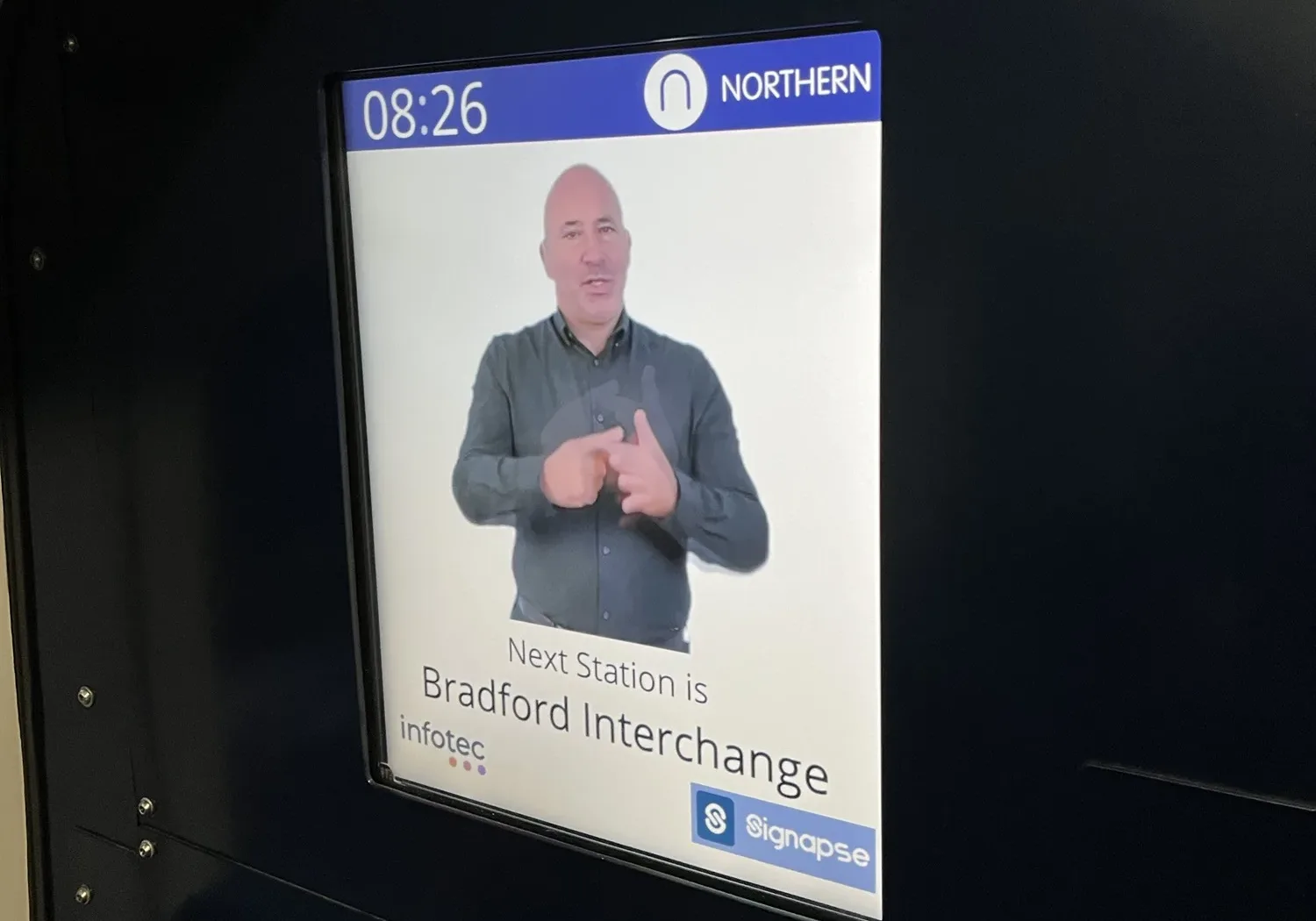
A photo of a screen in a train announcing the next stop is Bradford Interchange, with a video of the announcement in British Sign Language.

Northern Rail has started playing videos with announcements in British Sign Language on some of its trains. It’s a trial at present, and I happened to see one last week.

This is in addition to the existing text-based and audio announcements, and is designed to increase the accessibility of the railways for people with disabilities. Elsewhere in the north, Transpennine Express is rolling out BSL screens at stations.

When I shared this photo on Facebook, it got the usual likes and hearts from friends. But, predictably, there were some comments on the lines of ‘can’t they just read?’. And, recently, over at X/Twitter, its overly impulsive edgelord owner recently asked the same question in a tweet.

I too would have probably asked the same question until recently. However, over Christmas, I read Samantha Baines’ brilliant book ‘Living with Hearing Loss and Deafness’ (sponsored link). Baines’ book helpfully explains that British Sign Language is, well, a language – and it’s distinct from English. Furthermore, some deaf people who have always been deaf will have BSL as their first language and English as their second. If you ever go abroad, to France for example, and have to constantly translate signs into English, it can get tiring after a while. Now imagine that your first language is sign language, and you have to translate written English into the signs that you have learned, all the time.

So that’s why making BSL more widespread in Britain is important. Indeed, it is now a legally-recognised language in England, Wales and Scotland. That means BSL has the same status as British English, Welsh and Scots Gaelic.

As someone who wears hearing aids, learning British Sign Language is something that I plan to do in time. This is because my hearing could continue to deteriorate to the point where hearing aids can’t compensate. Being able to understand BSL may still allow me to communicate with some people should that happen. So whilst these BSL announcements won’t necessarily help me, they will hopefully make trains more accessible for BSL users.

I wear hearing aids now

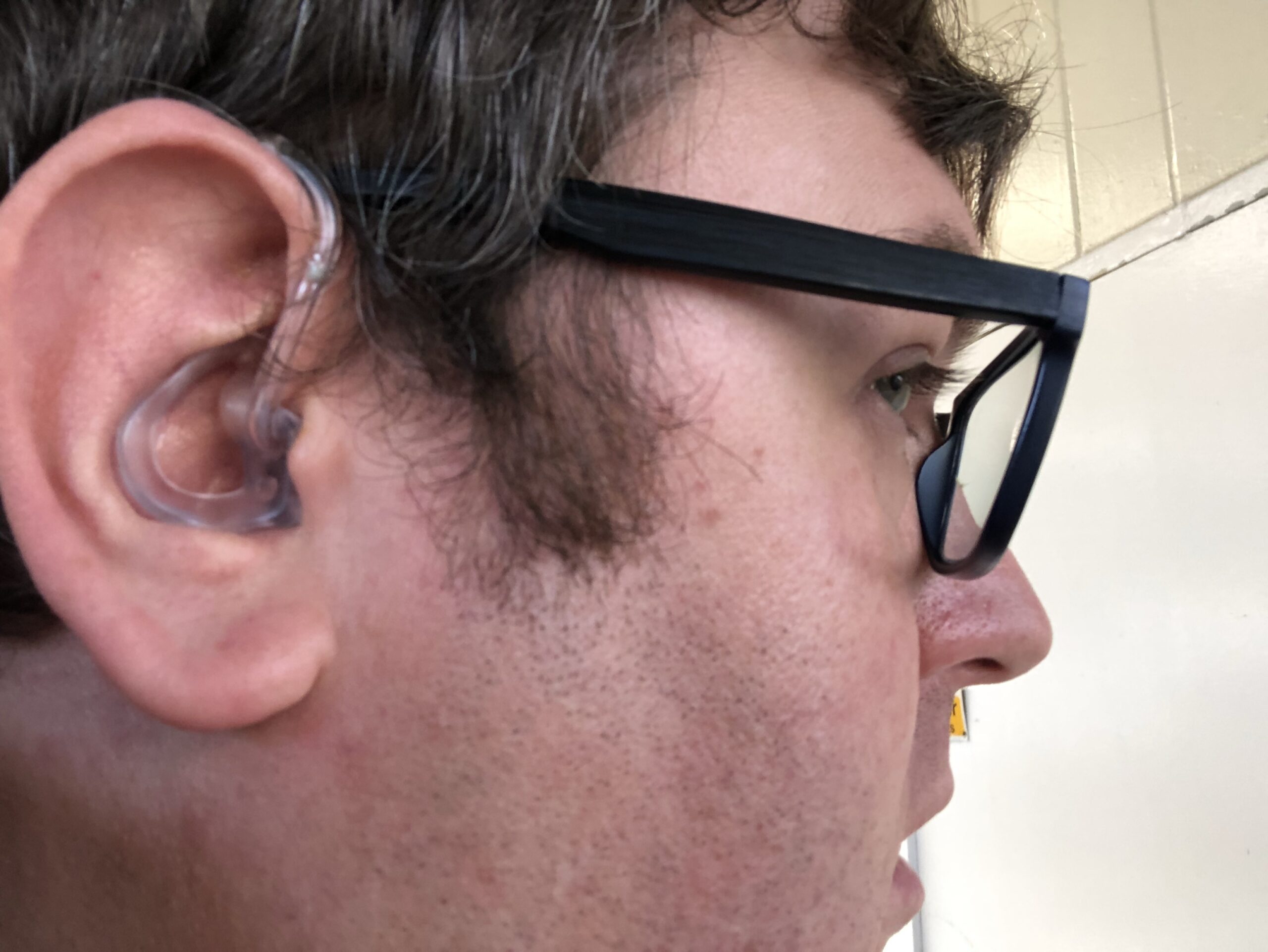
A photo of the side of my face, showing one of my hearing aids

Last month, I wrote about how I started wearing glasses in the summer of 2021. And, as if there was any further indication that I’m getting older, I wear hearing aids now too.

I’ve been aware that my hearing has been getting worse for some time, and a hearing test four years ago suggested that I may need an intervention. At the time, my GP wasn’t too concerned, and then the Covid-19 pandemic happened which meant that any work interactions were through a pair of headphones anyway.

But as we started returning to the office, it was clear that my hearing was still an issue. Another hearing test confirmed this, and so another GP referral. This took several months to sort out, and finally in early autumn 2022 I had a follow up appointment with audiology and ENT at one of our local hospitals. I was given the option of having surgery, or hearing aids.

Surgery may have made a greater difference, but I was concerned about the recovery times and how likely this would make a difference in the short term. So, I opted to have hearing aids, and I had them fitted in October 2022.

My hearing aids

The hearing aids I have are very basic, NHS standard issue behind-the-ear models, manufactured by Oticon. This means that the electronics are in a small metal container which sits behind your ear, and then a plastic tube connects to a moulded earpiece that sits in your outer ear. The earpieces are moulded specially for each ear, so that they’re comfortable enough to wear all day.

As they are very basic hearing aids, there’s no Bluetooth support, so I need to take them out to listen out to music. Whilst Bluetooth hearing loop devices exist, they’re expensive (as they’re classed as medical devices) and the sound quality apparently isn’t great. In terms of controls, I can adjust the volume on the hearing aids, and switch them in and out of hearing loop mode, but that’s all. You turn them off by opening the battery compartment. They take small button batteries which aren’t rechargeable, but each battery typically lasts 10-14 days.

What a difference

The hearing aids made a massive difference from day one. My wife no longer has to shout at me to get my attention, and I can hear colleagues across our large open plan office at work. In the car, I can have the stereo at a much lower volume too. The only downsides are:

  • having to take them out to listen to Bluetooth ear buds
  • they can be a little uncomfortable with my glasses after a while, as these sit on my ears as well

Having in-ear hearing aids with Bluetooth would mitigate these issues, but I would have to buy them privately. And they can cost a fortune – a colleague of my wife spent several thousand pounds on hers. Meanwhile, mine are free on the NHS, and even the replacement batteries are free. Maybe if I come into a large amount of money in future, I’ll consider some buying some more advanced hearing aids privately.

Whilst with the audiologist at one of my check-ups, I noticed a poster about the link between hearing loss and dementia. We don’t fully understand why people with hearing loss are more likely to develop dementia, but one theory is that such people ‘tune out’ if they can’t hear. I’m hoping that using my hearing aids and having regular hearing checks will reduce my risk of developing dementia in later life.

If you can’t remember the last time that you had a hearing test, I recommend getting one. Most branches of Specsavers now offer audiology services as well as optics, and they can do a GP referral if they have concerns.