
Separating the art from the artist

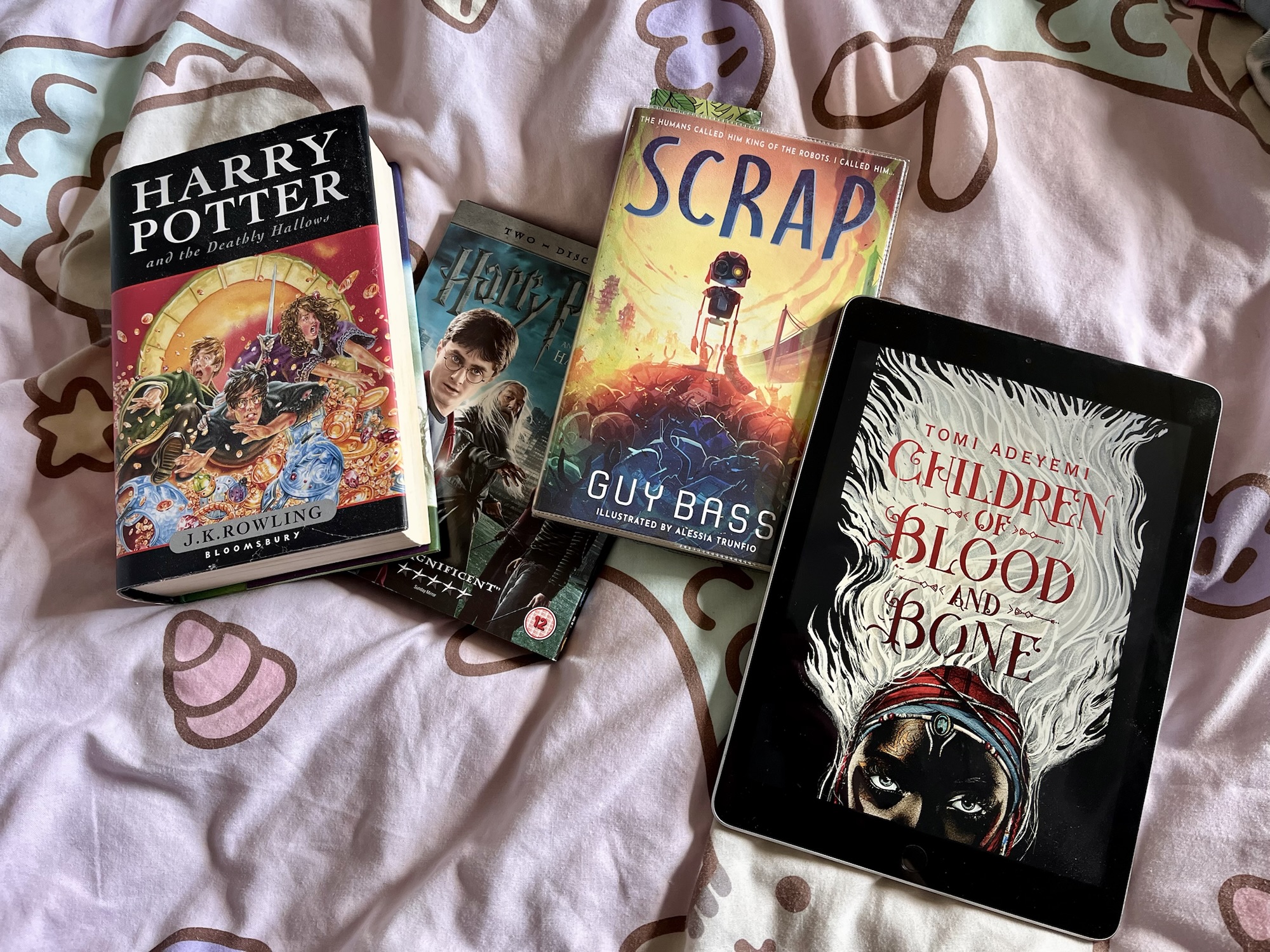
A photo featuring a Harry Potter book and DVD, and the books Scrap by Guy Bass and Children of Blood and Bone by Tomi Adeyemi

I suppose a lengthier title of this would be: “how to consume Harry Potter content without its transphobic author benefitting financially”. Because this is what I’ve been grappling with of late. This blog post therefore comes with a trigger warning about transphobia.

As regular readers of this blog will know, I am the father of a nine-year-old, albeit a nine-year-old with additional needs and who struggles with reading. We have had the odd conversation around Harry Potter, but so far there has been no desire to read the books, watch the films or engage in the fandom. This, of course, could change.

We have had some discussions with our nine-year-old around JK Rowling’s transphobic views, and why they’re bad. It helps that we can contextualise the situation, as one of our close friends is trans. But if all of their friends suddenly decide that they’re into Harry Potter, then we might need to handle this sensitively.

Whilst JK Rowling’s transphobia has been public knowledge for some time, the recent Supreme Court case around the definition of ‘woman’ was financially supported by her. In other words, if you’re spending money on Harry Potter books, films and merchandise, then you’re supporting transphobia. What I’m attempting to do is outline ways that you can do so without your money going to transphobic causes.

The books and the films

It just so happens that Christine already owns all of the books, and I have many of the DVDs of the films, so if our nine-year-old wants to consume them then they’re already there. If you have a child who wants to engage with the books and the films, but don’t already own them, then the best thing to do is buy them second-hand. That could be from a charity shop – even better if it’s for an LGBTQ+ positive charity – or on a site like eBay. Just make sure that you’re definitely buying a used copy.

In the UK at least, authors are recompensed when you borrow their books from the library. And whilst that’s generally a really good thing, it’s not helpful this situation. You also don’t want to be streaming the films on Netflix either.

When it comes to problematic authors from the past, the situation is a little different. For example, HP Lovecraft held views that we would now consider to be racist. However, he is dead, and therefore he can’t actively fund legal action against marginalised groups. And, his oldest work is now out of copyright anyway, so you can download some of his work from Project Gutenberg for free. This is also an argument about why you should boycott Tesla, and not other car companies like Volkswagen who may have supported fascism in the past, but not now. At least, as far as I’m aware.

The new Harry Potter TV series

Just don’t watch it. Indeed, if enough people don’t watch it, they won’t make any more, and it may indicate how toxic the Harry Potter brand is becoming.

Merchandise

Again, buy second-hand if you must. Also, there’s no shortage of unofficial ‘teenage wizard’ merchandise and fancy dress outfits that you could consider. Maybe avoid the dubious tax-avoiding ones that have cropped up all over London though.

But also, consider having the difficult conversation with your kids about the nature of Harry Potter and its writers’ views. Parenting is hard, and trying to go against peer pressure and your child’s desire to fit in can be harder still.

Alternatives

You could steer your child towards other books, films and TV series that are less problematic. We recently read Lee Bacon’s ‘The Last Human’ (sponsored link) which is a really good book and aimed at a similar age group. Others have said good things about Tomi Adeyemi’s ‘Children of Blood and Bone’ (sponsored link), which is the first in a three-part series. I have the Kindle edition of the first book, but I haven’t read it myself yet. Both of these books have film adaptations in the works. Currently, we’re reading SCRAP by Guy Bass (sponsored link) which is also very good, and there are the ‘junior’ Discworld books by Terry Pratchett as well.

I’m hosting a webinar for LGBT+ History Month

A photo of the official LGBT+ History Month 2025 badge.

It’s February, which means that it’s LGBT+ History Month in the UK. LGBT+ History Month started in 2005, so this year is its 20th anniversary year, and the theme for this year is ‘activism and social change’.

In 2021, when we were back in lockdown, I hosted and co-hosted a couple of webinars through work. One was about Section 28, the legislation in force during my years at school which banned the ‘promotion’ of homosexuality in schools. The second was a panel discussion with two other colleagues about what it is to be bisexual and some debunking some common myths about bisexuality.

This year, I’m hosting another webinar, with the rather long title of ‘From Ace to Zir – the A-Z of LGBTQ+‘. Over the space of an hour, I’ll be delivering a glossary of LGBTQ+ terms, including what they mean, and when to use them (or not use them if they’re now considered slurs). Starting with A, and terms like asexual, I’ll be going though each letter of the alphabet to help LGBTQ+ and their allies to understand the various terminology used. Many of these words are relatively new, and so I’m hoping it’s useful. I’ve also tried to include as many of the various pride flags as I can.

The webinar is free to attend – here’s the Eventbrite link to register. We’re also hosting several other webinars this month:

  • The fight for liberation – How it all started, about the Stonewall riots.
  • Queer South Asians – Looking back and forward, about South Asians with queer identities, especially in Bradford, and hosted by my colleague Usman
  • Stonewall postal action network documentary screening with Austin Allen, a screening of a short documentary and a discussion with Austin Allen, who ran a postal LGBT action network from his home in Queensbury, near Bradford.

There are also other events taking place across the wider Bradford district during February – details are available here.

Whilst Pride Month takes place in July, LGBT+ History Month is also important and different. Pride is, depending on your view, a protest and/or a celebration for LGBTQ+ people and allies. Whereas LGBT+ History Month has a more educational focus, looking at LGBT+ people in history and the key events that have pushed LGBT+ rights forwards (and sometimes backwards). As I work for a university, LGBT+ History Month is closer to our mission, and also happens during term time. Pride, alas, takes place when our undergraduate students are on their summer break.

By the way, if you want to buy the pin badge shown in the image above, here’s the link.

It’s Bi Visibility Day, and I’m coming out

Today is Bi Visibility Day – an annual event where bisexual people can show that they exist. People, like me.

I’ve decided to use today to come out publicly. I guess I’ve always been bisexual, and especially during the hormone-charged teenage years, but it has taken me until this year to accept my feelings towards other men as valid. It’s a long time to repress an aspect of your personality, and I wish I had come to accept who I am years ago.

I came out to Christine a few months ago. She has been completely supportive, and I remain 100% committed to her. It hasn’t changed anything about our relationship, other than that we spend more time commenting on men that we’re attracted to. We have somewhat different tastes, although we both think that Justin Trudeau is dreamy.

Bisexuality is a spectrum, and, on the whole, I’m more often attracted to women. But I’m no longer trying to repress my feelings when I see an attractive man. I also realise that, as someone who is in a committed different-sex relationship, I have a ‘passing privilege’ that other bisexual people do not have.

So, Happy Bi Visibility Day. If you haven’t already, take the time to listen to your Bi friends, family or work colleagues, and see what you can do to combat biphobia.

Marriage

Penguin wedding cake toppers

On Saturday, Christine and I went to the wedding of a couple of friends we’ve known for a few years. Co-incidentally, Saturday was the first day that same-sex couples could legally marry in England and Wales.

A bill to change the law was passed last year, and on the 13th of this month, same-sex couples who had married overseas had their marriages automatically recognised as such here. At the same time unmarried couples were able to give notice and the first same-sex marriages happened just after midnight on the 29th March.

The wedding we went to was a mixed-sex marriage, but a marriage all the same. The only thing that was slightly different was that the registrar stated that a marriage was between ‘two people’ and not ‘a man and a woman’, as it was before and when Christine and I got married last year.

I’m really pleased that any two people who love each other and want to spend the rest of their lives with each other can now marry, regardless of their sexual orientation or genitalia. Though Britain has had a compromise of ‘civil partnerships’ since 2005 – offering the same legal status as marriage – it’s good to see that every couple can now be treated equally.

Well, mostly. Whilst same-sex couples should have no problems obtaining a civil marriage, religious marriages are only offered to same-sex couples by a small handful of religious groups – namely the Quakers and the Unitarians. Same-sex marriages are not yet available in Scotland, although the relevant legislation has been passed so it is only a matter of time before this changes. Northern Ireland, however, refuses to allow or recognise same-sex marriages. There are some other issues too.

And there are still changes to happen in wider society. Though a majority of people in the UK support same-sex marriages, around 20% of people would turn down an invitation to a same-sex wedding. But the tide of opinion is going in the right direction and, on the whole, I feel that British society is more accepting of LGBT people now than it has been for any time in history.