Splitting and renaming the Underground

An extract of the London Underground map showing the Northern Line around Camden Town

This is the second of two blog posts about the new London tube map, which saw the six lines that make up the London Overground gain their own identities. The previous blog post was about the ambiguous nature of the Waterloo & City Line’s step-free access. Meanwhile, today, I’m wondering whether some lines that make up London Underground could be given their own identities, like the Overground.

Some lines on the London Underground are simple through routes, with no branches – namely, the Jubilee, Victoria and Bakerloo Lines. For others, it gets a bit more complicated, and so this is a discussion of splitting some lines up, and giving them their own identity. None of these ideas are new – they’ve been talked about for years and exist in some official Transport for London plans – but it’s an opportunity to think of some names for them.

A history of splitting Underground lines

If you look at one of Harry Beck‘s tube maps from the 1930s, broadly speaking, you’ll be able to compare it easily to a modern day tube map – certainly when looking inside the Circle Line. The Victoria, Jubilee and Elizabeth Lines aren’t there, but otherwise, not a lot has changed in 90-odd years.

What you will notice, however, is the Metropolitan Line has lots more branches than it does now. Over time, however, the Metropolitan Line has been split up; firstly, the branch to Stanmore became a branch of the Bakerloo line, and is now part of the modern-day Jubilee Line. Then, in 1990, the line from Hammersmith to Barking was given its own identity as the Hammersmith & City Line, and the isolated East London branch became the East London Line. Incidentally, the East London Line is now part of London Overground, and recently gained its new identity as the Windrush Line.

I mention this because branches of tube lines have been given their own identities before, and so there is precedent for doing this.

The Wimbleware Line

Oh where is the Wimbleware? It’s a colloquial name for a service on the District Line, where trains run from Wimbledon in the south, to Edgware Road in the north. Wimbleware is a portmanteau of Wimbledon and Edgware, a bit like how the Bakerloo Line is a portmanteau of Baker Street and Waterloo, and indeed a contraction of its old name, the Baker Street and Waterloo Railway.

Operationally, the Wimbleware has always been somewhat separate from the rest of the District Line. Whilst nowadays, all District Line services operate using S Stock trains, it used to be that Wimbleware services used a different type of rolling stock to the rest of the line. Most District Line services used D78 stock (some of which is enjoying a new life as Class 230 and Class 484 trains on the main line), whilst Wimbleware services used C stock trains, more commonly found on the Circle Line.

Taking the Wimbleware out of the District Line, and giving it a distinct identity, would significantly simplify how the District Line appears. Right now, you essentially have two eastern branches, to Edgware Road and Upminster, and four branches to the west – to Ealing Broadway, Richmond, Wimbledon, and very occasionally Kensington (Olympia). The Wimbleware would just operate Wimbledon to Edgware services, leaving one eastern branch and essentially just two western branches.

But what will we call it?

I doubt we’ll see the name ‘Wimbleware’ on any tube maps in the future. It’s a nice colloquial name, but we also know that several lines of the London Overground had colloquial names that weren’t used. The Overground line from Gospel Oak to Barking was known as ‘The Goblin’, but its new official name is the Suffragette Line, and the Watford DC Line between Watford Junction and Euston has become the Lioness Line.

My suggestion would be the ‘Carnival Line‘ as it passes through Notting Hill, home of the annual Notting Hill Carnival. As with the new names of the Overground lines, like the aforementioned Windrush line, it highlights and celebrates London’s diverse culture, as well as giving a really obvious suggestion of which line to take if travelling to the carnival.

Alternatively, if permission could be obtained from the estate of Elizabeth Beresford, how about the Womble Line? It would celebrate the famous fictitious residents of Wimbledon Common, who look after the environment by reusing people’s rubbish.

Splitting the Northern Line

Another line that’s rather confusing is the Northern Line, which has two branches which pass through central London, meet up again between Euston and Camden Town, and then separate again. Now, Transport for London has long planned to split the line in two, but the aforementioned Camden Town station is the sticking point.

What is now the Northern Line was formed from two separate railways. The ‘Bank branch’ was the world’s first successful deep tube line, and was known as the City and South London Railway, first opening in 1890. Meanwhile, the ‘Charing Cross branch’ was formed from the Charing Cross, Euston and Hampstead Railway between 1907 and 1914. Whilst both reached Euston station, they were completely separate until the 1920s. They collectively became known as the Northern Line in the 1930s, as part of the ambitious Northern Heights plan to take over some suburban rail lines in North London. Alas, only some of the Northern Heights plan ever came to fruition.

Splitting the Northern Line into separate branches has some key advantages. Currently, with trains from both the Bank and Charing Cross branches serving both the Edgware and High Barnet branches, there’s a limit on capacity. At peak times, there are 24 trains per hour on the Northern Line – which is still pretty frequent, especially by the standards of trains that I’m used to up here in the north of England. But having two fully separate lines could allow much more frequent trains – potentially as many as 36 per hour. That would be a 50% capacity increase and make each branch of the Northern Line equal to the Victoria Line in terms of service frequency.

The Camden Town problem

I mentioned that Camden Town tube station would be a sticking point. Along with nearby Euston, and Kennington in the south, it would be one of three stations where passengers would need to change from one branch to the other. Remember, the plan would be to completely separate each branch, so trains heading north from Charing Cross would only go to Edgware, and trains heading north from Bank would only go to High Barnet or Mill Hill East. At the moment, you can get a direct Northern Line train from Charing Cross to High Barnet, if you’re prepared to wait long enough – about 10 of the 24 trains per hour make this journey at peak times. Should the split be implemented, you would have to change at either Euston or Camden Town, but with the benefit of much more frequent trains.

So why is Camden Town a problem? Well, it’s just not big enough for a huge increase in passengers changing trains. Indeed, it’s just not big enough full stop; on Sunday afternoons, the station is typically exit-only (meaning you can’t enter the station from the street) to manage crowds. Transport for London plans to build an additional entrance, and add extra passenger tunnels and more escalators. The plans also include providing lift access, making it completely step free; at present, there’s step-free interchange between the two Northern Line branches, but it’s not possible to enter or exit the station without using steps or an escalator.

The plans to rebuild Camden Town have existed for years, but funding hasn’t been forthcoming.

Also, simply rebuilding Camden Town station will not, in itself, be enough. To operate a more frequent service, London Underground will also need extra trains. There were plans to order additional trains for both the Northern and Jubilee Lines, which operate similar trains built around the same time by the same manufacturer (Alstom). However, the business case was hard to justify at the time. Perhaps new trains could be ordered just for the Jubilee Line, and then the old Jubilee Line trains would operate on the Northern Line?

But what do we call it?

If the split does occur, it would be interesting to see if both new lines get a new name, or whether one remains the Northern Line. And if so, which one? I would argue that the Morden to High Barnet/Mill Hill East line (Bank branch) would be the best to rename, as Morden is actually the most southerly tube station on the network. It seems a bit strange that the most southerly tube station is on the Northern Line.

It could honour the original builders of the line and be called the Southern and City Line. The original train company was the City and South London Railway, but I’ve re-ordered the name to match the other two ‘and City’ lines – the Hammersmith and City, and the Waterloo and City Lines. That might get a little confusing with the Southern railway company, although with rail franchises now being brought back in house, that might not be such an issue.

I also note that one suggested name for the line back in the 1920s was the ‘Tootancamden Line‘, as it passed through both Tooting and Camden but also sounded a but like Tutankhamun. However, whilst there are several Egyptian mummies in the British Museum, Tutankhamun isn’t one of them, and the British Museum is closer to Goodge Street on the Charing Cross branch of the Northern Line. Also, I don’t think we need another reminder of Britain’s colonial past.

Another suggestion could be the Market Line, as the line passes via both Borough and Camden Markets, and the London’s financial centre. That being said, the closest tube station to the London Stock Exchange is St Paul’s on the Central Line. Although to be fair, the newly-named Mildmay Line is not the closest Overground line to the Mildmay Hospital.

Now, I’m not a Londoner – I generally only have the opportunity to visit London once a year – so I’m sure locals could think of some much better names. I quite like the new names for the Overground Lines, and they celebrate ordinary, modern, diverse Londoners. Which is nice since the three most recent new lines, the Victoria, Jubilee and Elizabeth, have all been about royalty. I’d hope that Transport for London would carry on with interesting new names for any newly-split Underground lines.

Is the Waterloo & City Line Step Free? It’s Complicated

An excerpt of the Step Free Tube Map showing the Waterloo & City Line

A couple of weeks ago, a new Tube Map was published, to coincide with the new names for the London Overground lines. Besides the fact that north-east London is no longer a sea of orange but several different colours, another thing stood out to me. According to the Tube Map, there’s no step-free access on the Waterloo & City Line:

An excerpt of the Standard Tube Map showing the Waterloo & City Line

Stations that are step-free have a pictogram of a person in a wheelchair. But the platforms for the Waterloo & City Line show a regular empty circle at both of its stations, indicating no step-free access. So, surely the answer to the question of whether the Waterloo & City Line is step-free is ‘no’?

What does the step-free map say?

Actually, the answer is more complicated than that. Certainly, the Waterloo & City Line wasn’t step free in the past, as I noted in a previous blog post from 2017. But work at both Waterloo and Bank stations has resulted in the installation of lifts, meaning that the line is actually step free.

Transport for London publish a separate step-free Tube map, which offers more detail than the standard one. For example, there are letters (A, B and C) showing how big the gap between the train and the platform edge is (mind the gap), or the letters R and M if a ramp or mini-ramp can be used to help to bridge the gap. And here’s how the Waterloo & City Line appears:

An excerpt of the Step Free Tube Map showing the Waterloo & City Line

Note that there’s an ‘R’ at both ends, and, unlike the nearby Bakerloo line which is shaded out as being completely inaccessible, the Waterloo & City Line is in its usual colour. So, we can conclude, the Waterloo & City Line does offer step-free access. With the help of staff with a ramp.

So, why do the two Tube Maps contradict each other?

Complicated interchange

Well, I did say it was complicated. The step-free tube map also includes exclamation marks next to some station names. These indicate that there’s additional information to read about how accessible each station is. For Waterloo, it only covers the Jubilee Line; all the information about the Waterloo & City Line is on the Bank listing:

Lifts to the Waterloo & City line are available Mondays – Fridays, via the entrance on Walbrook. Step-free exit at Waterloo is via the National Rail lift (usually available Monday to Saturday 0430 – 0105, Sunday 0530 – 0105). Please check before you travel. Step-free interchange between the Waterloo & City line and the Northern line and DLR requires a 290m journey via street and lifts.

It’s that last sentence that’s worth paying the most attention to. Bank, along with nearby Monument station, is a massive interchange and the second largest on the London Underground after King’s Cross St Pancras. It’s also just had a massive upgrade, adding step-free access to the Northern Line for the first time, and step-free interchange with the Docklands Light Railway (DLR). However, there isn’t a direct step-free interchange between the Northern Line and DLR, and the Waterloo & City Line.

Say, you arrive at Bank on the DLR and can’t use steps or escalators. To get to Waterloo, you need to exit the station via the Cannon Street entrance, walk/roll along Cannon Street itself, turn right up Walbrook and re-enter Bank station underneath the Bloomberg building.

Similarly, the interchange at Waterloo, from the Jubilee Line to the Waterloo & City Line, would require you to go up to street level and through Waterloo mainline station.

So yes, the Waterloo & City Line is step-free, and is indeed the only London Underground line to be entirely step free, by virtue of having just two stations. But it doesn’t offer step-free access in a way that is useful to interchanging passengers. I suppose if you arrive on a mainline train in Waterloo, and your destination is Bank, then it’s fine. But say you arrived on a mainline train at Liverpool Street and needed to get to Waterloo, there are better options that changing at Bank (in this case, Elizabeth Line to Bond Street and then Jubilee Line to Waterloo). And that’s why the standard Tube Map doesn’t show it as step-free.

Quirks of the Waterloo & City Line history

The Waterloo & City Line has always been an oddity. It only became an official London Underground line in 1994, and was previously operated by British Rail. Indeed, its trains originally carried the old Network SouthEast livery, rather than the standard tube livery. When British Rail was privatised, it was seen as an anomaly and so given to London Underground, rather than parcelled up with the other services to Waterloo that become South West Trains (now South Western Railway). As far as I am aware, it’s never operated on Sundays, as it mostly serves commuters, and since the pandemic, there has been no Saturday service either.

It was only the second deep tube line to be built in London, after the City & South London Railway (now the Northern Line). It was built by the London & South Western Railway (LSWR) to provide a link from its major terminus at Waterloo, under the River Thames and into the City of London. At the time, many rival railway companies had stations in the city, and this was the LSWR’s way of competing without needing to buy lots of land, demolish buildings and build new bridges. It’s also the only tube line to be entirely underground, including the depot at Waterloo station (the Victoria Line’s depot is above ground), and it’s completely isolated from all other railway lines. When trains require heavy maintenance, they have to be lifted out of the depot by crane and taken by road.

Since it opened in 1898, the Waterloo & City Line has remained a simple, two station shuttle. Over the years, there have been many enhancement ideas banded around. These have included adding additional platforms to serve Blackfriars station, or trying to somehow join it on to the DLR at Bank to allow through journeys to Waterloo.

Election day

An AI generated image of a ballot box overflowing with election ballots in the countryside

Today is election day for much of the UK. It’s not a general election, as much as I would like it to be; that will be sometime between mid-June and mid-January. But here in Sowerby Bridge, we have two elections taking place:

As I am a card-carrying member of the Labour Party, I’ll be voting for them in both elections. It’s likely that Labour will win both too. Our local authority, Calderdale Council, is already a Labour-controlled council, as are the four other local authorities that make up West Yorkshire. And Tracy Brabin, the incumbent mayor, will almost certainly be re-elected. Although very little local polling has taken place, Labour are polling significantly ahead of all other parties nationally.

If you are voting today, remember that you need to take some photo ID with you. This will be my second election where photo ID has been required, but may be your first. Even though the actual rate of electoral fraud was almost completely insignificant before voter ID rules were introduced.

New mayoralties

Over in York, my parents will be able to vote for an elected mayor of York and North Yorkshire for the first time. This will be a more interesting contest, as York tends to lean towards Labour and the Liberal Democrats, whereas the wider (and more rural) county of North Yorkshire leans Conservative. If David Skaith wins the mayoralty for Labour, it will mean that the Conservatives really are in trouble when they finally call a General Election.

There will also be mayoral elections for the first time in the North East and East Midlands, and the Conservative mayors of Tees Valley and the West Midlands will be hoping to be re-elected. Again, should these mayoralties fall to Labour, it’s a sign that the Conservative party are a spent electoral force.

London mayoral election

And there’s the London mayoral election, where Sadiq Khan will be looking to become the first modern mayor to be elected for a third time. The ULEZ seems to be the key issue here; it was a key part of Khan’s manifesto and most of his rivals want to scrap or curtail it. The exception seems to be Count Binface, who instead wants to expand free parking to electric vehicle users between Vine Street and the Strand. Except for those who drive a Tesla.

We’ll get most of the local council elections tomorrow, with the mayoral election results coming in over the weekend. It certainly promises to be an interesting few days in British politics.

How do you solve a problem like the Central Line?

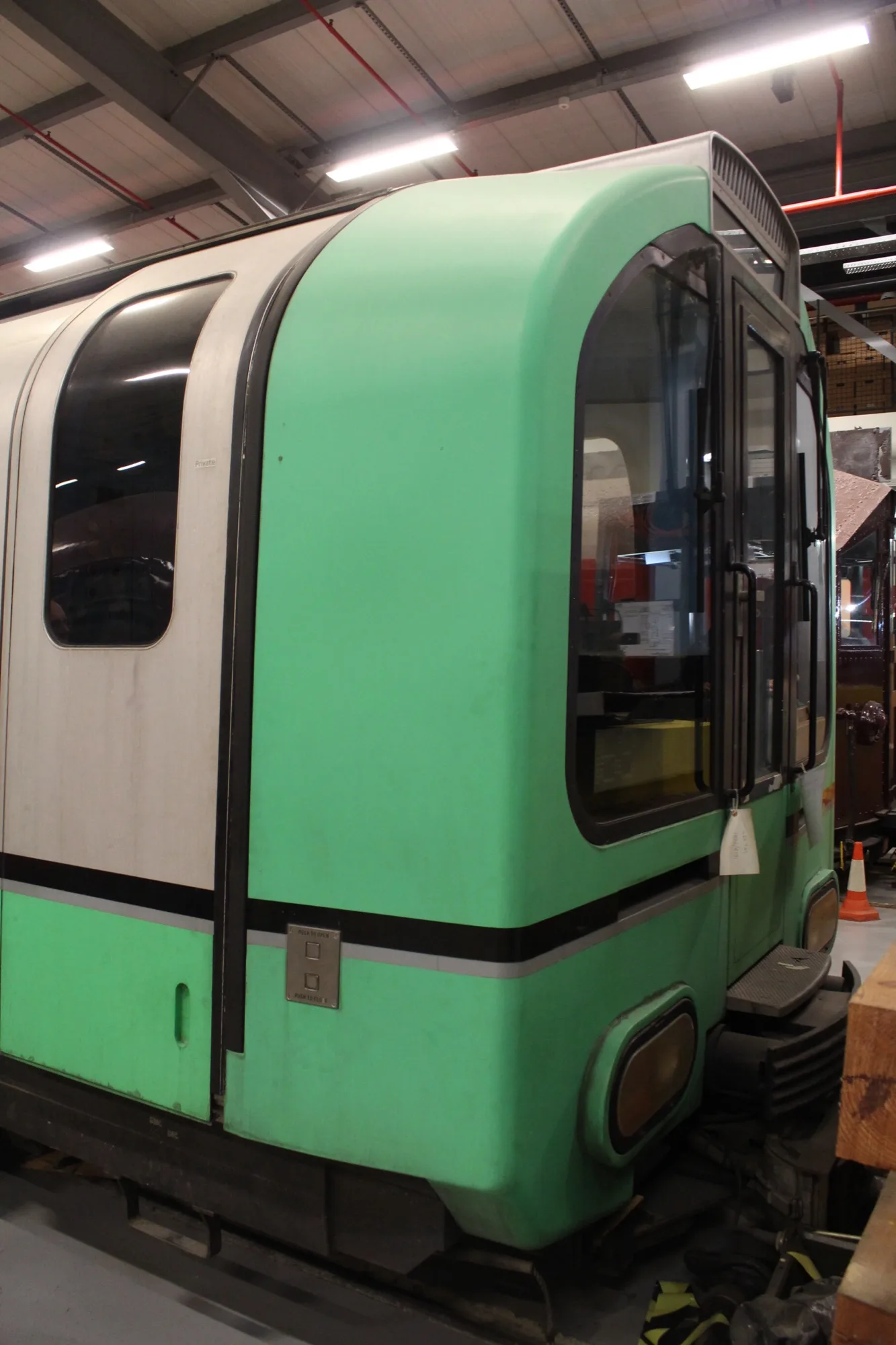
A photo of a prototype train for the Central Line, now on display at the London Transport Museum Depot in Acton

The Central Line of the London Underground is not having a good time at the moment. We experienced this first hand on our recent trip to London. As the Young V&A is close to Bethnal Green tube station, when we visited we tried to use the Central Line to head back into central London.

We gave up after two trains stopped where it was literally impossible to fit on. Every carriage was crush-loaded, and this was mid-afternoon on a Saturday – not exactly rush hour.

The issue is with the trains that run on the Central Line. These are 1992 Stock, which, as the name suggests, date from 1992 and were built by the newly-privatised BREL. Specifically, it’s the traction motors on these trains, which are failing at a faster than expected rate. Without a working motor, the trains can’t move, and so they have to be taken out of service. Consequently, there are fewer trains available for service, and so passengers are being crammed into less frequent services.

Transport for London have short, medium and long-term solutions to this issue:

Short term

In the short term, there are fewer trains in the timetable. With around a third of the fleet out of service, the timetable has been cut to reduce short-term cancellations. It’s something we’ve seen elsewhere in the country – Transpennine Express cut several trains to improve reliability.

Medium term

In the medium term, there is the Central Line Improvement Programme (CLIP). This is a major refurbishment of the trains, which includes replacing the troublesome motors as well as installing CCTV and accessibility improvements. For example, trains will now have wheelchair accessible spaces, and there are new screens with visual announcements of the next stop – standard on other lines, but new to the Central Line.

As an aside, I can’t help but feel that CLIP is a boring name when Central Line Improvement to Train Operation and Reliability Investment Scheme was right there. Even if the acronym does spell CLITORIS.

The CLIP started before the reliability issues came to ahead, and the first refurbished train was in service in December. But it’ll be a while before work on the full fleet of 77 trains is completed.

Long term

Ultimately, these are 30 year old trains, and eventually they will need replacing. They’re not the oldest on the network – that ‘honour’ goes to the Bakerloo Line, with trains that are over 50 years old. Slightly newer, but only just, are those on the Piccadilly Line, which are being replaced with 2024 stock to support an increase in service. Right now, there’s only funding available for new trains for the Piccadilly Line, but TfL’s long term aim is that the same trains will run on the Central, Bakerloo and Waterloo & City Lines too. Whilst the first units are being assembled in Germany and Austria, most will be built by Siemens in a brand new factory in Goole, East Yorkshire.

Where I live in the north of England, a big deal was made out of the replacement of 1980s era Pacer trains which were no longer fit for purpose. And whilst there’s a feeling in the north that London gets more than its fair share of UK public transport spending, the oldest tube trains are 10 years older than the oldest Northern Rail trains. Ordering a completely new fleet for all the London Underground lines that need it will result ensure skilled manufacturing jobs remain in Yorkshire for at least the next decade.

The Cartoon Museum

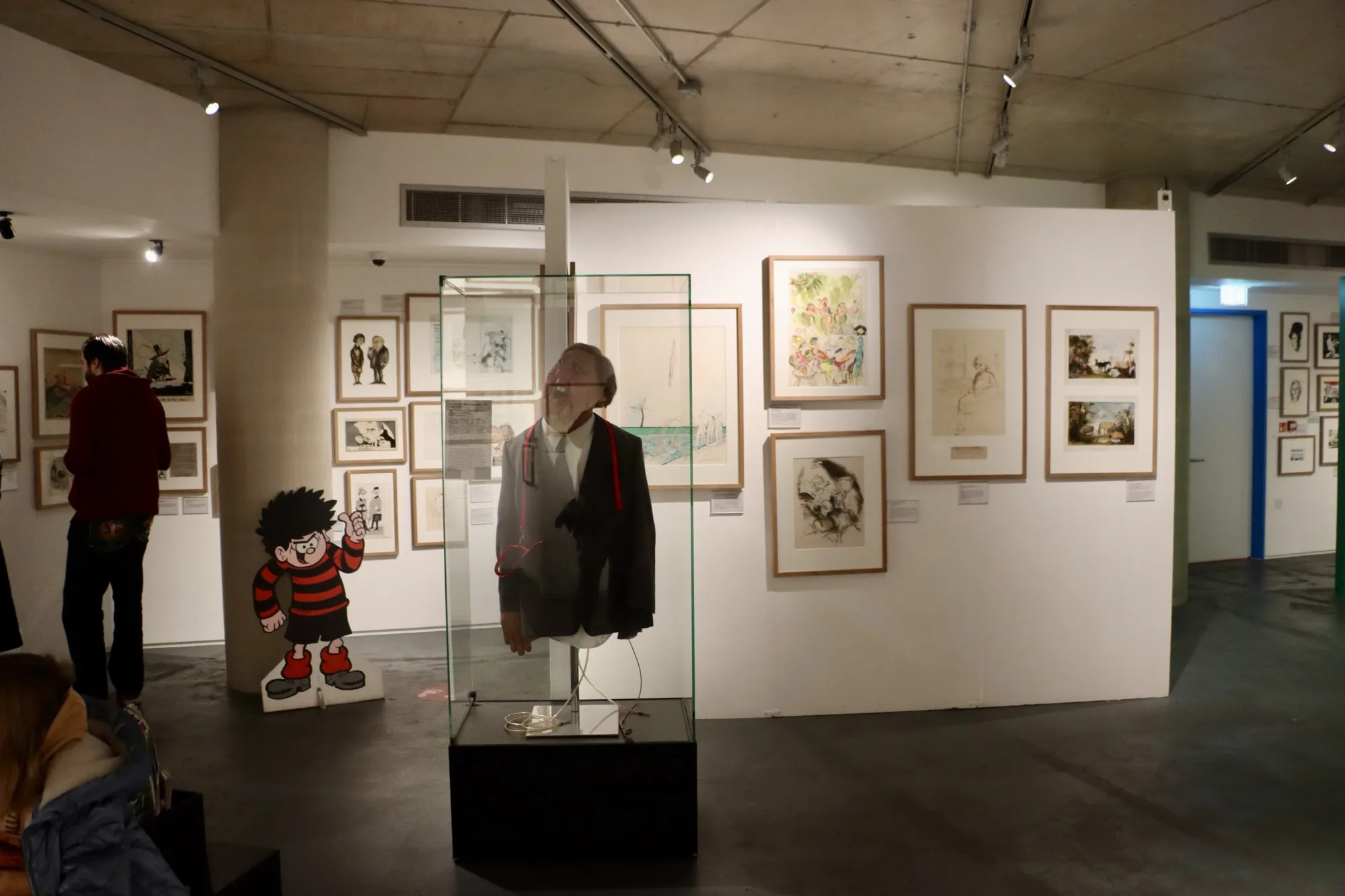
Inside the Cartoon Museum in London.

This is the fourth in the series of blog posts about places we went to in London – you can also read about the Bank of England Museum, the Cute exhibition at Somerset House, and the Young V&A.

On our last day in London, we went to the Cartoon Museum in Soho. It’s a relatively new museum, opening initially in 2006 and in its current location in 2019. It’s also quite small – allow a maximum of two hours – but with plenty to see. The walls are packed with illustrations going back a couple of hundred years, right up to now – the newest being Ben Jennings’ cartoon of Queen Elizabeth II taking the Elizabeth Line into the light when her death was announced in September 2022. It is mostly lots of pictures on walls, but there is a Spitting Image puppet on display as well.

At the moment, there’s a Wallace & Gromit exhibition, marking 30 years since the release of The Wrong Trousers. There’s several models on show, as well as some behind the scenes photos and some of the equipment used to film it. You can also see the actual Oscar that Nick Park won, although no photos are permitted of this. The exhibition is on until the 16th April.

A smaller exhibition shows the work of Oluwasegun Babatunde, a Nigerian comic artist who created a team of superheros based in Sub-Saharan Africa during the Covid-19 pandemic. This is on until the end of this month.

There’s also an activity room where you can create your own comic strips, and of course the ubiquitous shop.

Accessibility

The nearest tube stations to the Cartoon Museum are Oxford Circus and Tottenham Court Road. The museum is located in a basement, down a set of stairs, and sadly the lift has been broken since 2022. A recent crowdfunder to fit a new lift didn’t quite reach its goal but hopefully this will be fixed soon. Ear defenders and sensory backpacks are available to borrow once inside.

Young V&A

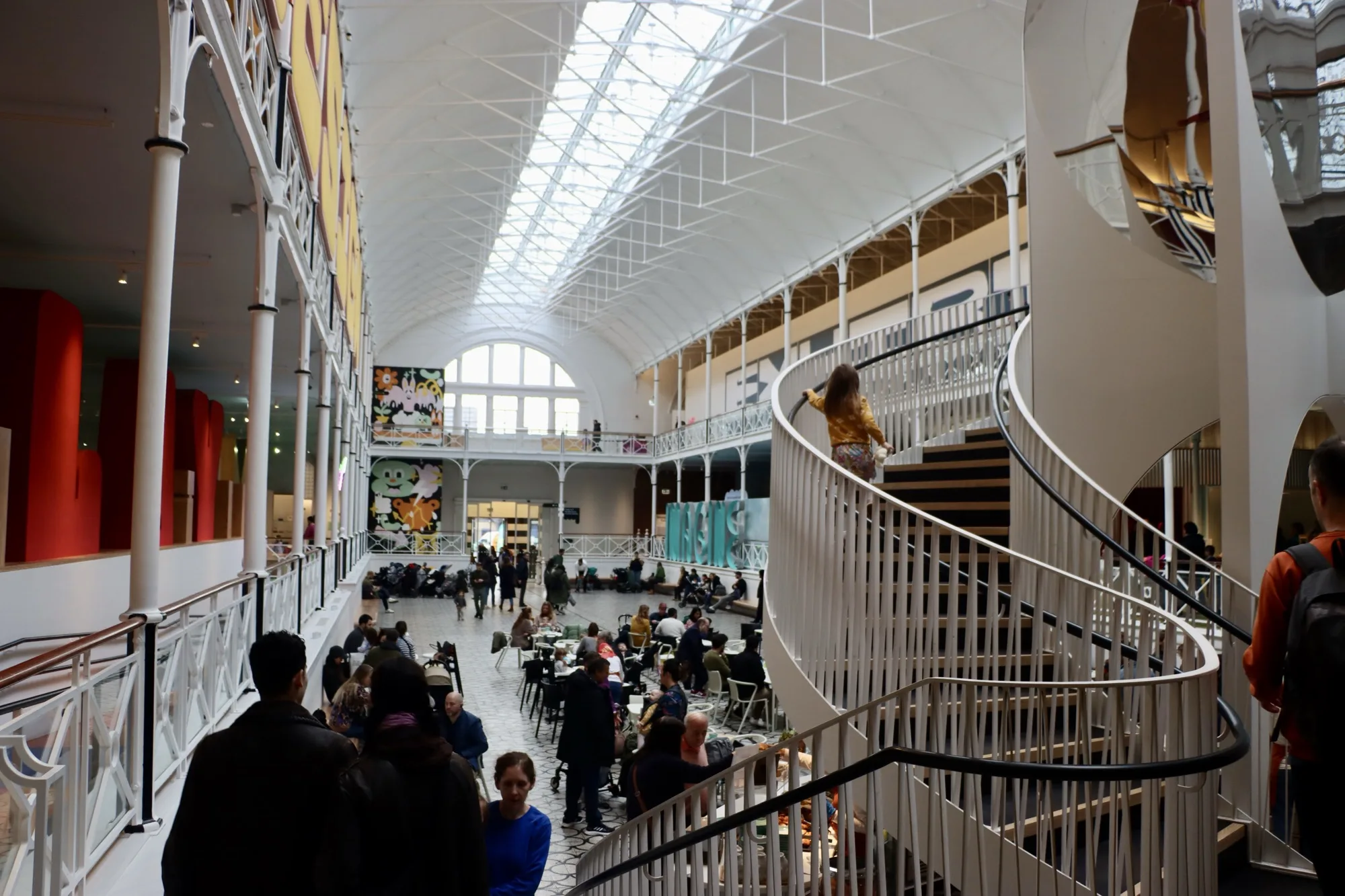
A photo of the interior of the Young V&A.

This is the third in the series of blog posts about places we went to in London – you can also read about the Bank of England Museum and the Cute exhibition at Somerset House.

The Young V&A is the new name for the V&A Museum of Childhood. It’s still in the same place, outside central London in Bethnal Green, but the new name reflects a complete refurbishment. We last went in 2017, and it’s changed massively since then. Before, it was very much a museum, with lots of objects in big glass cases and not much to interact with. Now, whilst there are still some objects to look at, it’s a much more interactive space, and somewhere to bring young children to play. Indeed, our eight-year-old was probably one of the older kids there. Dropping the ‘museum’ from the title therefore makes sense.

The gallery spaces have been split into themes – Play, Imagine and Design. Play arguably caters for the youngest children, although there’s a big screen with a playable Minecraft version of the museum (thankfully it resets regularly to discourage hogging). Imagine includes the dollhouse collection from before, and design looks at how products are designed. There’s a particular focus on recycling waste into useful furniture.

Japan: Myths to Manga

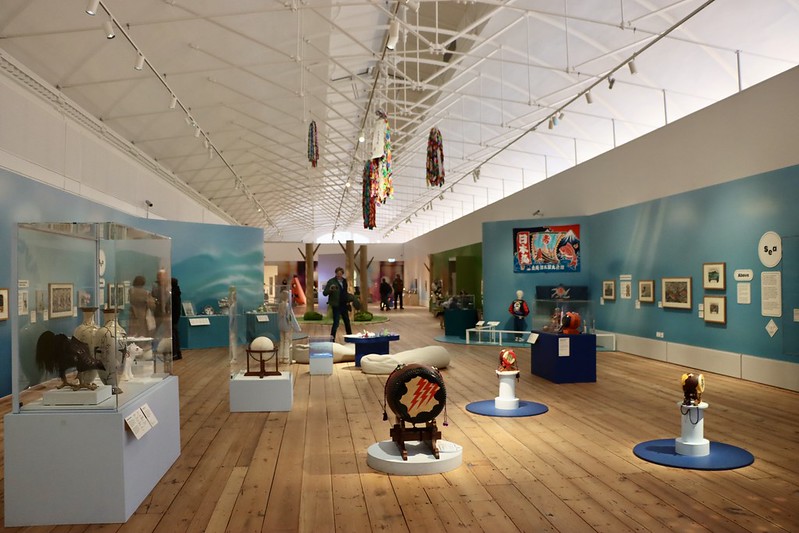
Japan: Myths and Manga

Then there’s an exhibition space, and the opening exhibition is called Japan: Myths to Manga. Whilst the main museum is free to enter, you have to pay to access the exhibition space, and tickets are limited. We made the mistake of not booking in advance, so when we were ready to visit the exhibition on a Saturday afternoon, no more tickets were left. So, we ended up booking tickets for the Sunday and came back the following day.

Personally, I concur with Ianvisits and found the exhibition a little under-whelming, but my wife and child seemed much more engaged. The exhibition is rather sparse, and I would have expected to see more objects there. However, I’m not in the target market for this and we did spend over an hour in the exhibition. There’s several clips from Studio Ghibli films to watch and plenty of Pokemon; but it was also good to read about the traditional Japanese stories and myths which inspired these works.

Accessibility

Because our hotel was located between Aldgate and Whitechapel, we caught the bus to the Young V&A, but it’s also a short walk from Bethnal Green tube station which is on the Central Line. It’s also not too far from Cambridge Heath station on the London Overground, on what will soon be known as the Weaver Line. Around the corner is the new permanent home of the Vagina Museum, although we didn’t have chance to visit this time around.

As you would expect from a recently-renovated museum, there is step free access everywhere, and there’s a dedicated quiet space in the Reading Room. Which we found quite welcome; although the renovation has been extensive, it’s a listed building and so there are limits. Any building popular with children is bound to be noisy, and the open space in the middle is quite echo-y.

Cute at Somerset House

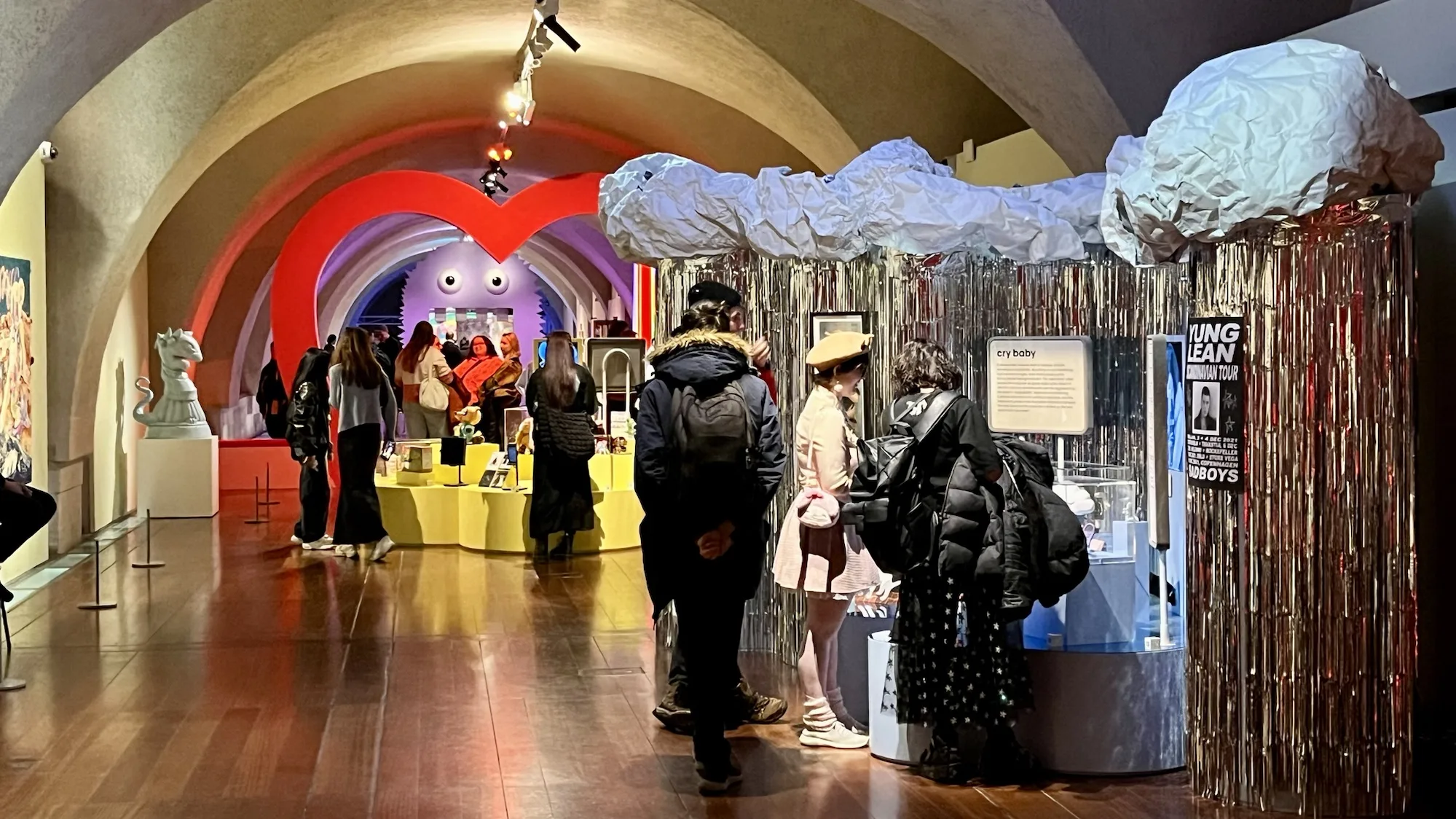
The Cute exhibition at Somerset House in London.

After we spent the morning at the Bank of England Museum, the second place we visited on our trip to London was Somerset House for their Cute exhibition.

Like previous exhibitions at Somerset House, Cute includes some new commissioned art and existing pieces, as well as donated memorabilia. Back in 2021, we went to an exhibition about the Beano, and this filled the same space in the South Wing. It’s an exploration of cute things and its impact on society, including kawaii.

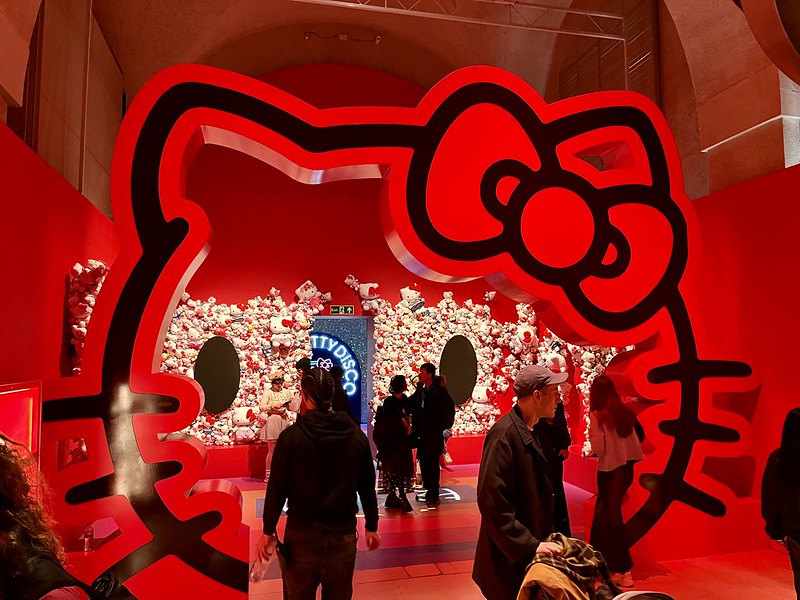
Hello Kitty

The exhibition also marks the 50th anniversary of Hello Kitty, and a large section of the exhibition is devoted to the memorabilia collected by one person. Including Hello Kitty Spam.

There are some interactive parts too. There’s a room with some arcade games, old and new, including some indie games like Froggy Pot.

Some of the art produced for the exhibition is AI generated, and the theme image features a kitten with a unicorn horn and seemingly seven paws. I suspect that they’ve kept this in because it shows the weird-er side of cuteness.

Pop-up cafe

Alongside the exhibition is a pop-up Hello Kitty themed café. We had to queue to get in, as it’s a small space, but the food was nice albeit very full of sugar.

The exhibition runs until the 14th April, so you’ve got about five weeks to go to see it. We went on a Friday when walk-up tickets were available, but I imagine it’ll be busier at weekends and so you may wish to consider pre-booking. You can also look at all of the objects online at cute.guide.

Accessibility

The southern entrance to Somerset House is the closest to the exhibition, and is very close to Temple tube station on the District and Circle lines. It’s also close to Waterloo Bridge. Whilst there are stairs, all are duplicated by several lifts giving access to the exhibition, which currently have furry insides. Access packs, containing large print guides, noise-cancelling headphones, magnifying glasses and a stress ball, are available to borrow from the box office.

Bank of England Museum

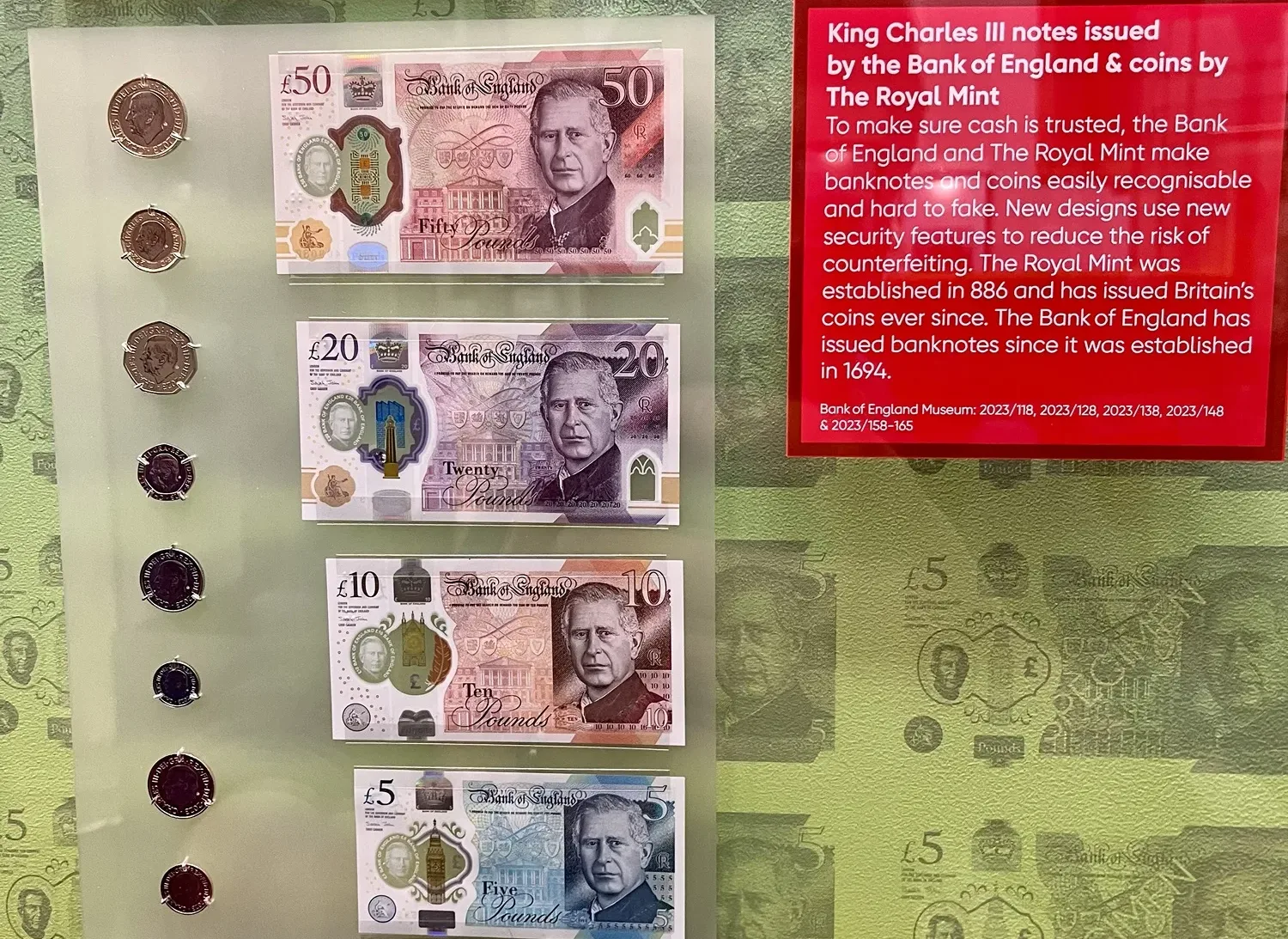
A photo of the new King Charles coins and bank notes at the Bank of England Museum in London

The first place we went to on our trip to London last weekend was the Bank of England Museum. Which is pretty much what you would expect it to be – a museum based at the Bank of England headquarters in the City of London. Access is via a side entrance, and, as you would expect, you have to go through a security scanner to get in.

This is only the second time that I have been to the Bank of England Museum. The first time was a long time ago. I can’t remember exactly when, but I was definitely still living at home, so probably 25-ish years ago. Part of the reason for this is that the museum is only open on weekdays, and we normally visit London at weekends. As we had the benefit of an extra day, we were able to visit last Friday.

It’s not a big museum – a typical visit will take 1-2 hours – but it’s free to get in. And the exhibits are regularly updated. As shown in the photo above, there are samples of the new coins and banknotes featuring King Charles III which are not yet in general circulation. I was also amused by the satirical FTX t-shirt in an exhibit about cryptocurrencies. These are in a new exhibition called The Future of Money, which opened a couple of days before we travelled and runs until next September.

Like many museums, the Bank of England Museum has also acknowledged the darker sides of its past. Recent new exhibits include copies of ledgers listing the names of slaves that came into the bank’s possession, and there’s a display about the Windrush generation. On arrival in the UK, many of those who travelled on the Empire Windrush to start new lives were denied access to traditional banks, and the museum has a series of panels on Pardner Hand to allow people to borrow or save money.

Other permanent exhibits include some examples of forged bank notes (including some introduced by the Nazis in the Second World War to de-stabilise the economy), and of course there’s plenty on the history of the bank.

If you haven’t been to the Bank of England Museum before, I’d recommend going. It’s not a full day out, but it’s free and there are some interactive elements for children.

Accessibility

Predictably, the nearest tube station is Bank, which has step-free access from the Northern and Waterloo & City Lines, and the DLR. There are steps in the museum, including at the entrance, however, security staff can escort those with mobility issues from the bank’s main entrance and ramps can be provided once inside. There isn’t a quiet room, but ear defenders are available to borrow.

Back from London

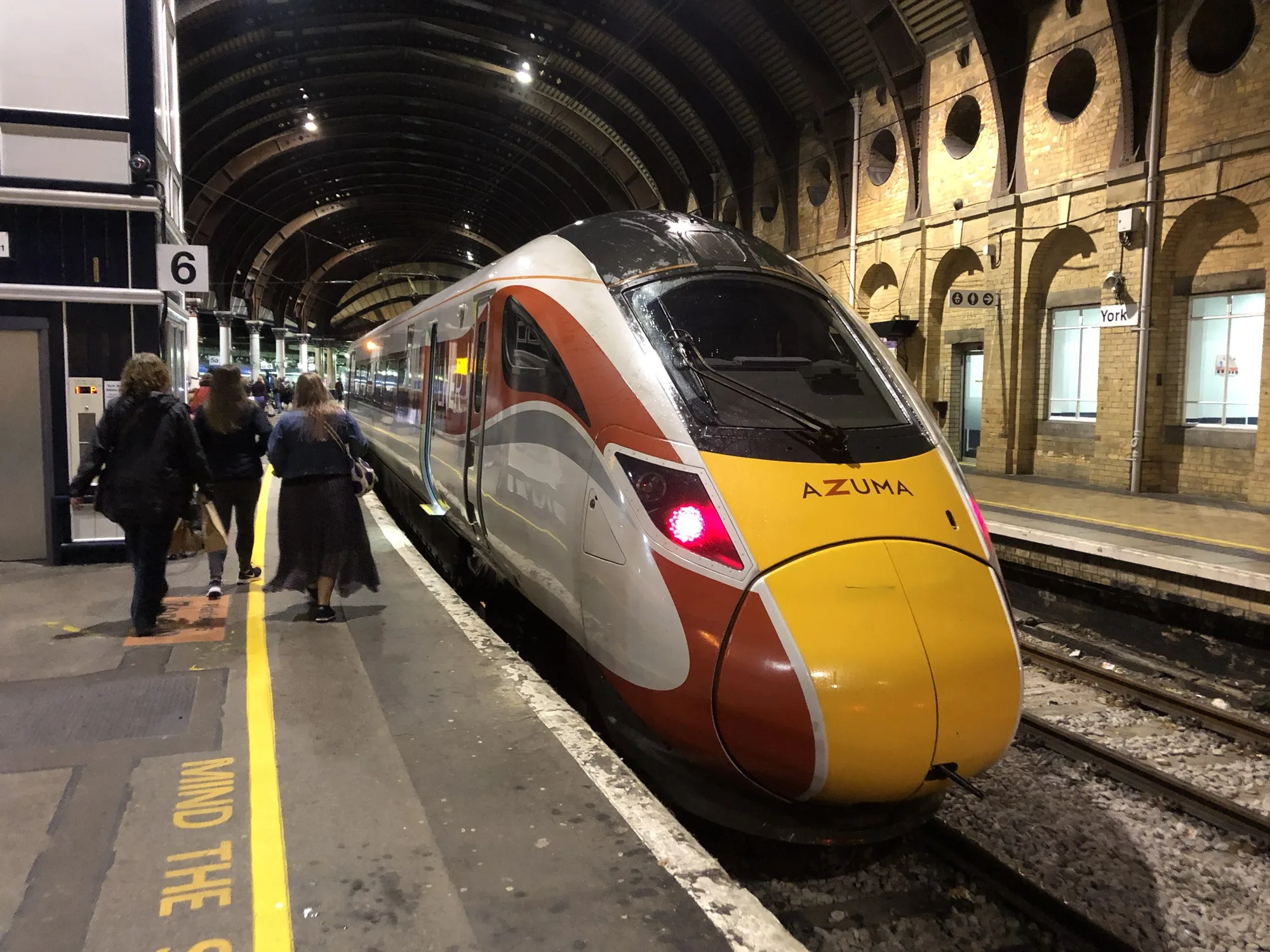
An LNER Azuma train at York station, due to depart to London King's Cross station

We’re back from our trip to London. We got there a bit later than planned, due to action short of a strike by the drivers’ union ASLEF resulting in our planned train from Leeds to London being cancelled. This wasn’t ideal, as it meant we didn’t arrive until 10pm; however, we made it, and had an enjoyable trip.

I’ll post separately about the specific places that we went to over the next week or so. We had also planned to visit the Horniman Museum, as the gallery containing its famous over-stuffed walrus closed this week for two years, but we couldn’t quite fit it in. As usual, Ianvisits was invaluable for finding out about special exhibitions and served as inspiration for a few of our visits.

We managed a couple of trips on the new Elizabeth Line; it was partially open on our last trip to London in 2022 but we didn’t need to use it then. The stations are impressive and I appreciated the greater accessibility, but I couldn’t help but feel that the trains themselves already look a little tired. It may be the use of grey interior panels; they felt a little dark and not as bright internally as other new trains elsewhere. It’s good to see it being well-used despite being opened for less than two years.

We normally manage one trip to London each year – we missed 2020 for obvious reasons, but also didn’t manage to go last year either. We may have a shorter visit later this year, but with journeys taking 3 hours each way and the costs, it’s not something that we can do on a whim.

Leaping towards London

An AI-generated image of a woman on a horse leaping through a portal that says 'February 29'

It’s the 29th February today!

Well, actually, I’m writing this on Saturday 24th. I tend to write blog posts in bulk at the weekends, and then schedule them to go live every other day over the week. In any case, I’m unlikely to have time to write much today, as this morning I’m at work and then we’re off to London tonight for a long weekend.

But as the opportunity to publish a blog post on the 29th only comes around once every four years, here you go. And I missed 2020 as I wasn’t blogging then. Had I been, I’d have probably said something about the-then looming pandemic. Ironically, I wrote this on the 29th February 2016:

Maybe something interesting will happen on this day in 2020, but you’ll have to wait another four years to find out, I’m afraid.

I suppose it’s a case of being careful what you wish for. You can also see what I wrote in 2012 (being ill), 2008 (heading to Scarborough for the weekend), and 2004 (not a lot).

I’ll write more about our trip to London once it has actually happened.

Creative Commons License
Except where otherwise noted, the content on this site is licensed under a Creative Commons Attribution-ShareAlike 4.0 International License.