Unblogged October

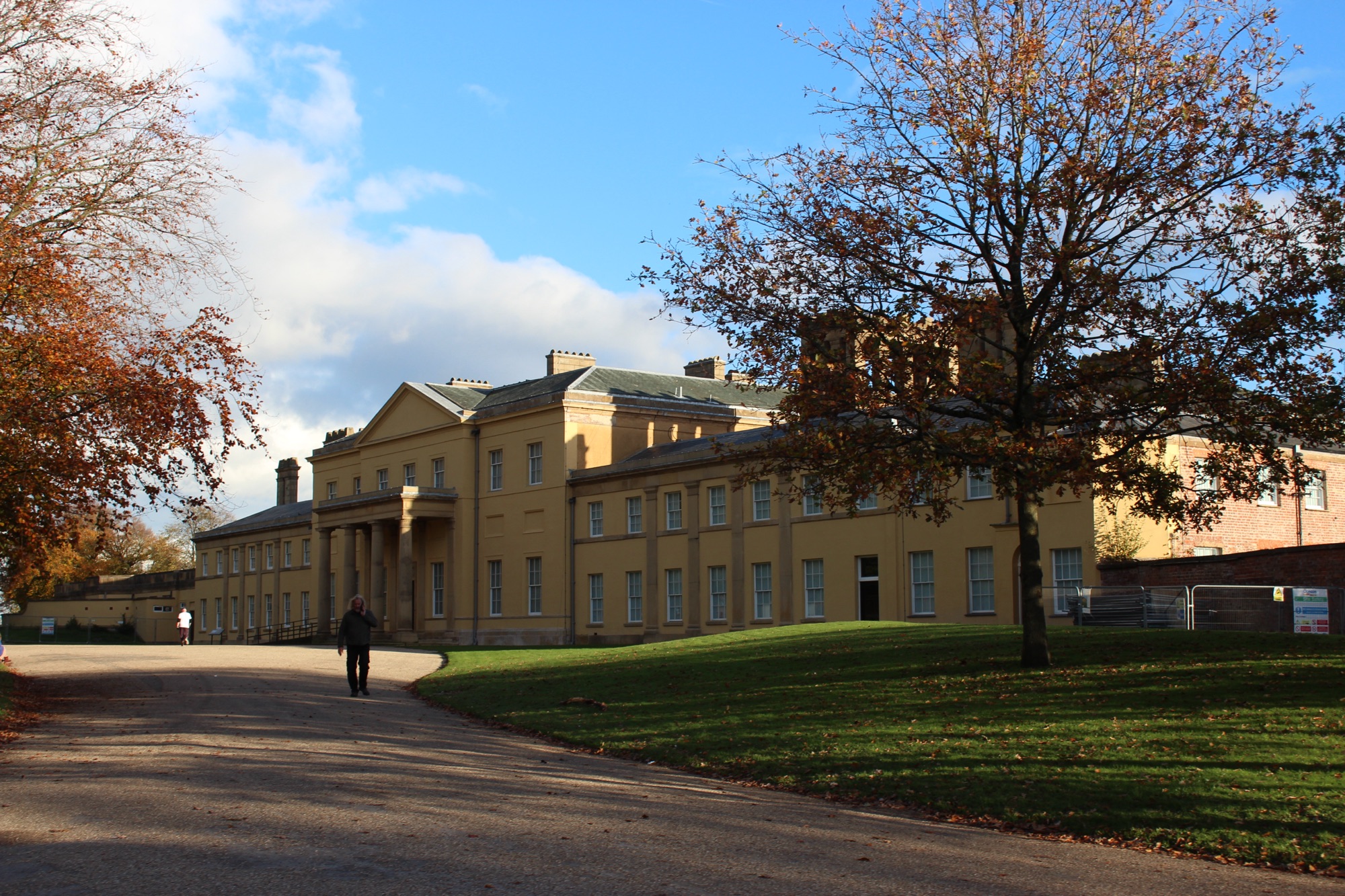
A photo of Fountains Church on Chester Street in Bradford

Last month, for the first time, I did a summary blog post of things we did in September, but that didn’t merit a whole blog post. So here’s some of the things I did this month.

Away day in a former nightclub

Every now and again, we have an ‘away day’ at work. This time, it was hosted at Fountains Church, located on Chester Street in Bradford, pictured above. I’ve been in the building before it was a church, as it used to be three separate nightclubs: Revolution (the national chain of vodka bars), Walkabout (the national chain of Australian-themed bars) and Dr Livingstone’s, a nightclub themed around Dr David Livingstone, a colonialist and explorer. I visited them all regularly back when I was a student.

It was weird seeing the building now used as a place of worship.

A blue postbox in Manchester

A blue postbox on Liverpool Road in Manchester

On the way back from seeing Brains, Bogies and You, we walked past a blue postbox on Liverpool Road in Manchester. Normally, British postboxes are painted red (or occasionally gold), so this one is unusual.

Fortunately, a plaque on the side explains all. Originally, blue postboxes were more common, as they were used for air mail post. Nowadays, air mail no longer needs to be sorted separately from domestic post, and so all but one of these have been removed. The only remaining genuine blue air mail post box is outside Windsor Castle. This one is actually just a regular post box, painted blue.

This specific post box was painted blue because it sits next to what was the Manchester Aerospace Museum. This later became the Air and Space Hall of the Museum of Science and Industry, but was permanently closed a few years ago.

Playing with an ESP development board

Back in July, I picked up an ESP development board (sponsored link) to use as a firmware flasher. I’ve been experimenting with it, to try to add Wi-Fi control to an existing non-smart device. Let’s just say that I need more soldering practice, but I’m hoping to write more about it should I succeed.

Danny Boyle in Sowerby Bridge

I didn’t spot the film crew myself, but Danny Boyle has been filming scenes for his new film Ink in Sowerby Bridge, near where we live. It’s a biographical film about the early life of Rupert Murdoch. It’ll be interesting to see if we can recognise the filming locations when the film comes out.

Much of Happy Valley was also filmed locally, as was the more recent CBBC series High Hoops, so we often see filming trucks parked up around the town.

Old posts brought back

I’ve also re-instated a number of old blog posts written in October 2015 from the Web Archive. These include Losing the Language of Love, which I quite enjoyed reading again, and several posts from a trip to London that month:

We also went to Crossness Pumping Station on that trip, but unfortunately my post about it was never indexed by the Web Archive and so it’s probably lost forever. It’s a shame – it’s a very interesting place. It’s not often that a sewage pumping station would be Grade I listed, and it’s only open on selected days of the year.

Castlefield Viaduct

A photo of the Castlefield Viaduct

In my review of local National Trust properties, I somehow missed out Castlefield Viaduct in Manchester. It’s one of the newest, having only been open for a few years, and occupies an abandoned railway viaduct that crosses the Castlefield area of Manchester.

It’s a similar concept to the High Line in New York; take an abandoned elevated piece of railway infrastructure, plant things on it and open it to the public. The Castlefield Viaduct isn’t as long – around 330 metres, rather than 2.3 kilometres – and it’s not yet open as a through route. That will come in time, with work hopefully starting as soon as this year. When complete, it will open up a segregated walking route from the Manchester Central exhibition centre (still often known by its former name of G-Mex) towards Cornbrook.

History

The viaduct was built in 1892, by the same firm that built the Blackpool Tower. Trains would use the viaduct to access Manchester Central station (as was) and the Great Northern Warehouse. It was closed in 1969, after becoming surplus to requirements, and has stood empty ever since. A second viaduct runs parallel; this is still in use by Metrolink trams and forms the core section of the network.

Inside Castlefield Viaduct

About a third of the viaduct is open now, and it’s being managed by the National Trust. The first section has been largely left untouched – a hard path has been laid, but the original ballast has been left behind to show the wild plants that have grown there. The second section is a series of small gardens, each managed by a different local community group. These vary – one has various native Manchester trees whilst another incorporates a pond. Finally, there’s an indoor bit, where you can find out more about the extension plans. The back wall of this is glass, so you can see the rest of the viaduct beyond.

If it weren’t for the neighbouring Metrolink viaduct alongside, this would be a quiet and tranquil place, but trams pass about every two minutes. The viaduct also crosses a railway line that is frequently used, so there are regular rumbles as trains pass.

Accessibility

The viaduct is open between 10am and 5pm every day except Mondays and Tuesdays. Though it’s managed by the National Trust, entry is free even if you’re not a member. Donations are encouraged to support the next phase of work to open it as a through route.

As it was designed for trains, it’s all on one level, and you can get up to the viaduct by using the lift at the nearby Deansgate-Castlefield Metrolink stop. Accessible toilets are also provided.

Operation Ouch: Brains, Bogies and You

Our family of three appearing as skeletons at the Operation Ouch: Brains Bogeys and You exhibition

Last weekend, we made a return visit to the Science & Industry Museum in Manchester, to see the Operation Ouch: Brains, Bogies and You exhibition. This is the second consecutive Operation Ouch exhibition at the museum; last year, they had ‘Food, Poo and You’ which we visited in January. Twice in fact, as the first time I went with our (then) eight-year-old, and so we visited again a few weeks later as a family of three.

For those without kids (or grandchildren) in the 7-14 years old age range, Operation Ouch is a CBBC TV show hosted by twin doctors Dr Xand and Dr Chris, and in later series, joined by Dr Ronx who is probably one of the most visible non-binary people in UK children’s’ TV. Dr Chris is also the author of the book ‘Ultra-processed People’, which I reviewed back in 2023. As you would expect from a BBC series, Operation Ouch aims to inform, educate and entertain (the three principles on which the BBC was founded), so as well as teaching kids about science, it’s designed to be entertaining and disgusting too.

Inside Dr Xand’s head

The exhibition therefore follows a similar style. The idea is that you are shrunk down at the start, and enter a reluctant Dr Chris’ ear, where you can then enter different parts of his head to see how they work. There’s the brain, eyes, nose, ears, mouth, and a section on touch to cover all five senses. Unlike the previous exhibition, which was a linear journey through the digestive system, the layout is more free-form, with links between the sections and back to the core brain section.

Because it’s aimed at kids, the exhibition has lots of interactive elements. We particularly liked the screen which monitors your movement and displays an image of you as a skeleton. In the eyes section, there’s some optical illusions to try out, and, as someone with hearing loss, I appreciated the ears section too. Here, you could see how cochlear implants work; I don’t have one yet, but might need one in future. There’s also a demonstration of how your hearing changes over time, as you lose your ability to hear certain frequencies. Our nine-year-old could hear everything, Christine could hear two of them and I could only hear one, even when using the telecoil through my hearing aids.

In all, we spent about an hour in the exhibition, but could have spent longer.

Elsewhere in the museum

Having only visited last year, we mainly just came to see the exhibition. In recent years, there hasn’t been much of the museum available to see; of the five buildings that used to make up the museum, only one (the New Warehouse) has been open. The Air and Space Hall permanently closed in 2021; this was across the road from the rest of the museum and is now in use as a co-working space. The 1830s buildings, consisting of a warehouse and the original Manchester Liverpool Road railway station, are also closed for refurbishment, and due to re-open in 2030 for their 200th anniversary.

The good news is that The Power Hall has re-opened, as of Friday last week. We’ll plan to visit next year, when the next exhibition is on.

Accessibility

The Science and Industry Museum as a whole is pretty good for accessibility, and this extends to the Operation Ouch exhibition. All video content has subtitles and BSL interpretation, and any audio content that you can listen to includes a telecoil system for hearing aid users. The exhibition is all on one level.

Whilst the museum as a whole is free to enter (donations welcome), the Operation Ouch exhibition is a paid-for addon. Essential carers can get a free ticket when purchased with a regular-priced ticket.

The only on-site parking is for Blue Badge holders. There are various smaller pay-and-display car parks nearby, if you don’t mind parking under an unlit railway arch. Alternatively, there’s a multi-storey NCP car park at the Great Northern Warehouse, which is expensive but probably safer and more secure. This is a short walk away.

The nearest railway station and tram stop is Deansgate-Castlefield, which is reachable from literally every other Metrolink stop. There’s a lift down to street level at the tram stop, and then it’s only a short walk to the museum.

Unblogged September

A depiction of the Cheshire cat on the roof of Trinity Leeds

Considering that I still haven’t written about everything we did in July and August (there’s one more blog post to follow on Thursday), then surely there’s lots more to come from what we did in September. Right?

Well, we did do quite a few things this month, but not all of them merited blogging about on their own. Diamond Geezer normally writes a summary of unblogged things each month (here’s his from August) and whilst I won’t be writing a day-by-day summary, here are some of the things we did:

Trips to Manchester

I went to Manchester twice this month. The first was for a birthday meal for Christine, and also a shopping trip. We naturally went to Afflecks, which is an indoor market focussed on alternative lifestyles and has many small businesses selling clothes, jewellery and music. It’s in an old department store which closed in the 1970s after being taken over by Debenhams (who already had a larger store nearby). It’s operated in its current format since 1982, and is a very quirky place.

My second trip was for work, attending a training session about international qualifications delivered by UK ENIC. That was held at the University of Manchester.

Trip to Leeds

We also had a shopping trip to Leeds, which also doubled up as a second birthday meal for Christine, this time with my parents. This was at Bibi’s Italianissimo, which is a huge art deco restaurant near the station. Bibi’s has been in Leeds for years and retains a reasonably good reputation for food and hospitality – especially for families.

We also went into the Corn Exchange, which is similar in some respects to Afflecks in Manchester as it’s also home to many smaller shops – a couple of which are also in Afflecks. Architecturally, the Corn Exchange is far more interesting, being as it is circular with a huge glass domed roof over the central atrium inside. It’s unsurprisingly Grade I listed.

Back to school

Our nine-year-old is back at school, and started year five – their penultimate year at primary school. Next year, we’ll need to start looking at secondary schools.

Getting cold

This time of year is when we see how long we can hold out before turning the heating on. Which turned out to be Tuesday 16th September, after a run of cold days. It warmed up again afterwards, and so the thermostat didn’t come on until it turned cold again last weekend. Normally, the heating stays on until early May.

Speaking of heating, I’ve had major issues with my Nest thermostat recently with it refusing to work with either the Google Home app or Home Assistant. Ultimately, I had to completely remove it from both, and then re-add it, to get it working again. Which is a faff because the Nest integration in Home Assistant is one of the most difficult to set up, and it’s actually gotten worse since last time as you now have to create a Pub/Sub topic too. I’m pleased that it’s working again, but you can tell Google are phasing out their Nest thermostats in Europe. It will certainly get replaced with a different system, as and when we’re ready to replace our gas boiler with a heat pump.

The Cat That Slept for a Thousand Years

A photo of The Cat That Slept for a Thousand Years

Whilst I’m not quite done writing about our holiday in Wales, I’m going to squeeze this blog post in here because it’s about a special exhibition which closes a week on Sunday: The Cat That Slept for a Thousand Years at the Manchester Museum.

Fundamentally, it’s just a giant inflatable cat – there’s (someone else’s) small child in my photo above for scale. It’s illuminated, and its tail and ears twitch every now and again. The room it’s in has low lighting, and soothing background music. And yes, you’re welcome to touch the giant cat. It’s like a huge sensory room.

In addition to this, there are some feline objects from the museum’s collection alongside, and before you enter the space with the cat, there’s a fictional short film about how the cat was ‘found’ by scientists in the Antarctic.

It’s a bit of fun, and I imagine younger kids, and those with additional needs who respond well to soothing sensory environments, will love it. The exhibition, like the rest of the museum, is free, but donations are welcome and you do need to book a timed ticket to manage crowds. It wouldn’t be much of a sensory space if everyone piled in there all at once.

The rest of the Manchester Museum

If Swarm is correct, then this was our seventh visit to the Manchester Museum – and yet, as far as I’m aware, I’ve never blogged about any of our six previous visits. Which is a shame, as it’s one of our favourite museums, and a worthy winner of this year’s European Museum of the Year prize.

Like Jodrell Bank, it’s part of the University of Manchester, and has been open since 1867. More recently, it re-opened in February 2023, after an 18 month closure. This saw the opening of a new exhibition space (where the giant cat currently is) and several additional permanent galleries. It’s also actively involved in repatriations of some of the artefacts in its collections to the communities and societies where they belong. Whilst we were there, visitors were encouraged to contribute to a consultation about the display of an Egyptian mummy, and whether it’s still appropriate to display human remains in this way nowadays.

Our favourite bit is the Vivarium, which is the only part of the museum with live animals – namely frogs and lizards. The live collections originate from the university’s zoology department, and the museum is involved in breeding programmes for rare species of frogs. There’s more in the Manchester Frog Blog.

Accessibility

Though housed in a late 19th Century building, the Manchester Museum has, as mentioned, had a number of refurbishments in recent years, and it tries hard to be as accessible as possible. Though it’s on multiple floors, there are lifts and stairs can be avoided. Wheelchairs are available to hire.

It’s a short walk from Manchester Oxford Road station, along, appropriately enough, Oxford Road. It is, however, some way away from the nearest tram stop (St Peters Square) but there are plenty of buses that pass right outside the entrance. For car parking, the University of Manchester’s Car Park D is a short walk – it’s a multi-storey with almost 1000 spaces, including 8 for electric vehicle charging (both medium 7 kW Type 2 chargers and some rapid chargers).

As mentioned above, entry to the Manchester Museum is free, but donations are welcome.

Recent travel miscellany

Disembarking a Jet2 aeroplane at Athens Airport

This is the fifth and final blog post about my trip to Athens – bearing in mind that my trip was only for three and a half days. This is where I want to write about everything else that happened whilst not in Athens – i.e. the journey there and back. Here are the links to part one, part two, part three and part four.

Ibis Budget hotel at Manchester Airport

As I mentioned last Monday, my flight was a 6:30am departure from Manchester on a Sunday morning. With this in mind, I booked myself a room in the Ibis Budget hotel at the airport, and then got a train over on the Saturday night.

Now, if you’re staying in a hotel with the word ‘budget’ in its name, you need to manage your expectations. The rooms are small – there’s space for a double bed, but no bedside tables. There’s a small and narrow desk, a blind instead of curtains, and quite a thin mattress. But as I only needed the room for about seven hours, it was fine. There was free Wi-Fi, and most importantly it was in very easy walking distance of Terminal 2, where I needed to be for my flight. I didn’t want to stay somewhere that required a shuttle bus transfer which may or may not turn up at stupid o’clock in the morning. And the room was significantly cheaper than almost all other hotels at the airport.

A photo of the inside of Terminal 2 at Manchester Airport

Manchester Airport at 5am on a Sunday

Speaking of an early start, you would not know that it was only 5am on a Sunday once you were through security and in to the duty free bit before the gates. It was like the Trafford Centre on a Saturday afternoon – all the shops were open, all the lights were on, and it was heaving. There was a lack of seating, although Terminal 2 is being renovated at present which may explain the lack of capacity.

Judging by the airlines and destinations, it was mostly package holiday flights taking advantage of off-peak slots.

Flying with Jet2

Indeed, my flight to Athens was with Jet2. Jet2’s selling point is that they’re a budget airline, but they’re not as stingy as some of their rivals *cough* Ryanair *cough*. You’re allowed one standard cabin bag, and one small bag as standard, although you can pay extra to ‘guarantee’ space for your cabin bag in the overhead locker. My carry-on case was quite a bit smaller than the maximum permitted size and so I didn’t bother, and indeed had no issues with space. As with my trip to Dublin, I only took carry-on luggage with me.

If you want a meal on the flight, you have to pre-order it when checking in online. It is, of course, extortionately expensive for what it is, but the food was fine and rather welcome considering my early start. If you don’t pre-order food, the cabin crew may be able to offer any food that is left over after the pre-orders have been given out.

On more than one occasion, staff wished me a good holiday. I didn’t have the heart to tell them I was travelling for work.

Flying with KLM

My flights back were with KLM, the Dutch flag carrier, and so this meant a connection at Amsterdam. I honestly expected more from KLM – after all, Jet2 is a budget airline and so I didn’t expect any niceties like in-flight entertainment or Wi-Fi. But I didn’t have those with KLM either, and both planes were also a bit shabbier and care-warn than Jet2’s plane. They were all variants of Boeing 737 planes, if you’re interested.

KLM did include a ‘snack’ on each flight though. From Athens to Amsterdam, we were all offered a Beemster cheese sandwich with a honey and mustard dressing, which was actually quite nice, and a small piece of cake. Drinks were also offered. Meanwhile, for the much shorter flight from Amsterdam to Manchester, we just got a packet of Mini Cheddars and a more limited range of drinks.

My flight back to Manchester also appeared to be a late aircraft swap. When I checked in at the gate, I was given a new boarding pass with a different seat number, having been moved from row 29 to row 22. Indeed, there was no row 29 on this plane. Amsterdam Schiphol Airport is KLM’s hub, and so they must’ve decided to swap the planes as the flight was under-booked.

A photo of a direction sign at Amsterdam Schiphol Airport

Amsterdam Schiphol Airport

After Dubai, Schiphol is the second busiest airport that I’ve been to. My brief layover there on Tuesday is, to date, the only time I have been in the Netherlands, and I don’t think it really counts as I spent my entire time ‘airside’. Unlike other big airports, Schiphol has just one massive terminal, arranged in a horseshoe shape. Thankfully, my arrival and departure gates were relatively close to each other and so I didn’t have to walk too far. Like in Athens, there were lots of food and shopping brands familiar to Brits. Although, unlike 5am in Manchester, by the time I got to Amsterdam at close to 9pm local time, many of the places to eat were closed. I ended up spending €10 on a WHSmith meal deal for some sustenance.

Getting home

I think some colleagues at the summit were a little concerned that my journey home to Sowerby Bridge consisted of two flights and then three trains. As it was, both flights were only delayed very slightly, and all my trains were on time – a relief as I had to change at both Manchester Oxford Road and Victoria, and the connections were both around five minutes. Not only that, but my train from Victoria to Sowerby Bridge was the last train of the night, so I was very relieved to make that connection.

Recent days out

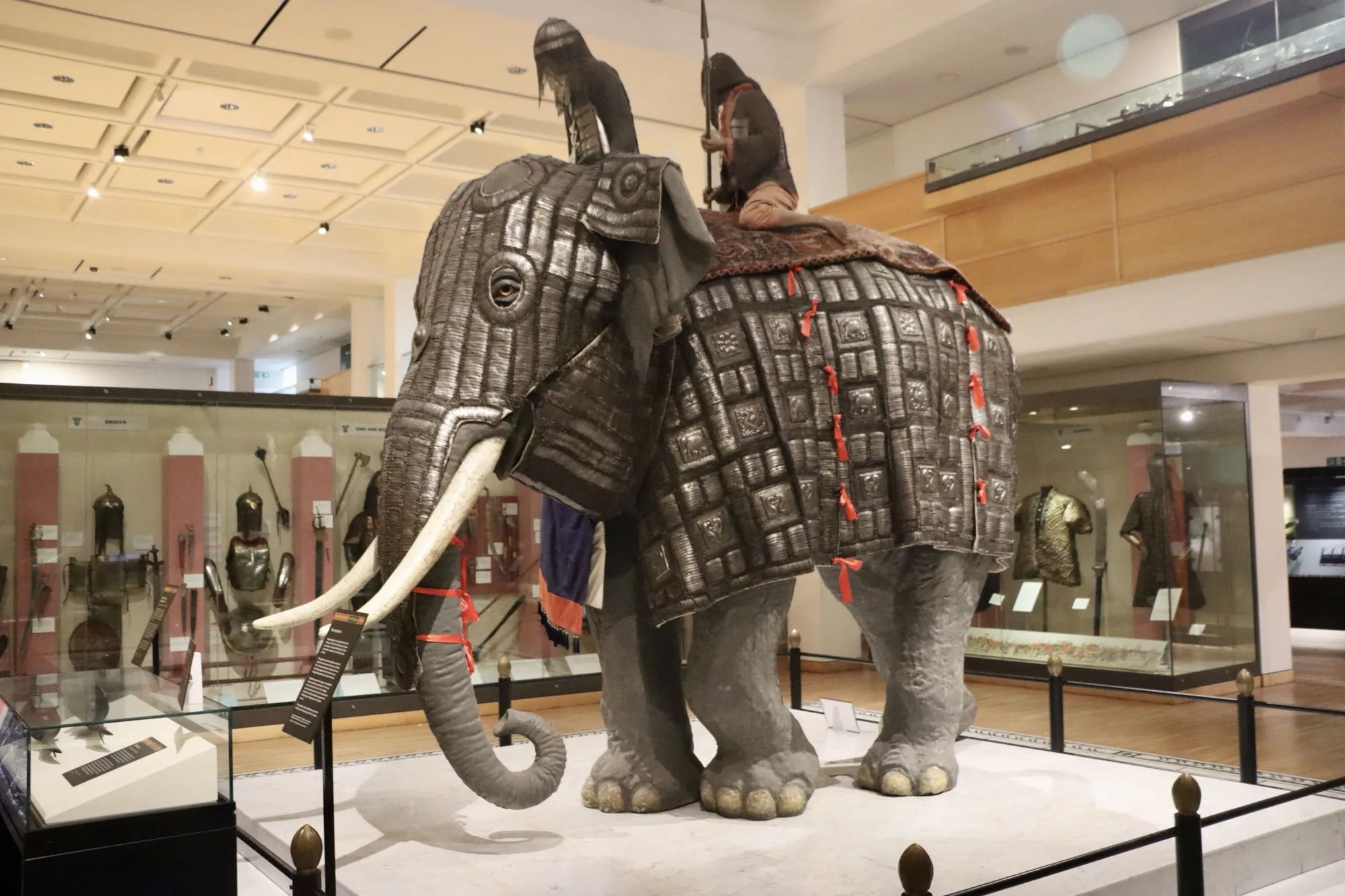
A model of an armoured elephant at the Royal Armouries museum in Leeds

Although it’s currently the bleak midwinter – and I mean bleak, with sub-zero (Celsius) temperatures last week and Storm Isha this week – we have managed a few days out. Some of these were in the first week of the year, as our eight-year-old didn’t go back to the school until the following week.

Here’s where we’ve been:

Manchester Science & Industry Museum

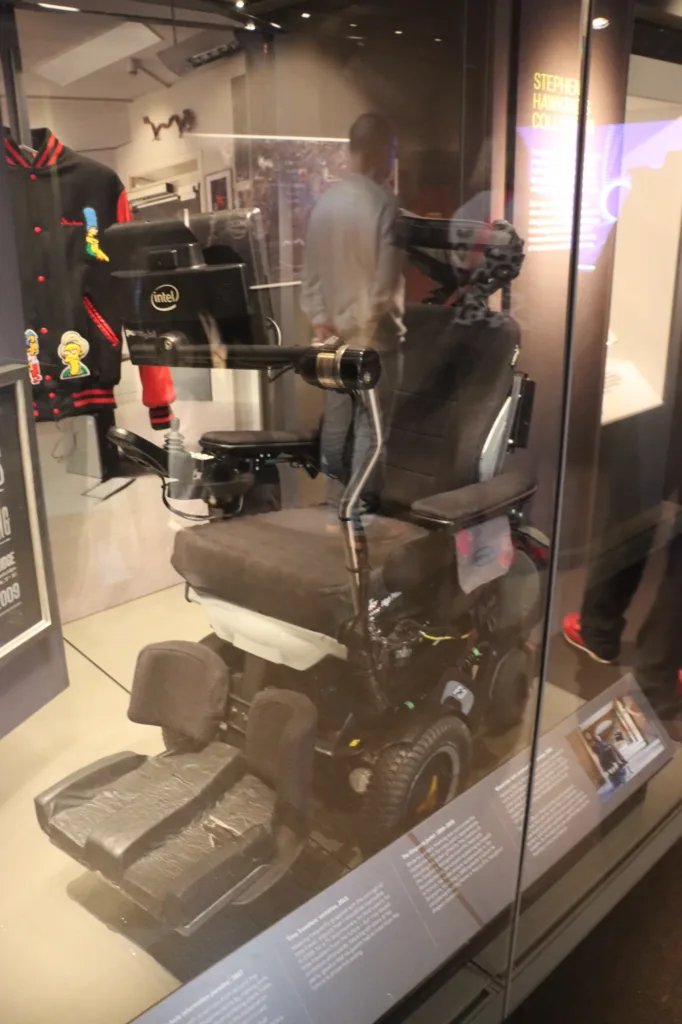
A photo of Stephen Hawking's wheelchair, currently on display at the Science and Industry Museum in Manchester

The Science and Industry Museum in Manchester is somewhere that we typically end up at least once a year. This time was mainly for the Food, Poo and You exhibition, which features content from the presenters of Operation Ouch (including Dr Chris, writer of Ultra-Processed People). It didn’t take much convincing our eight-year-old to go to an exhibition about poo, and it’s well presented. Just be aware that, whilst the rest of the museum is free, this is a paid-for exhibition and you’re advised to pre-book. My wife happened to be working that day and so I expect we’ll be going back before it finishes in June, after which it’ll probably go to the Science Museum in London.

Also there at the moment is Prof Stephen Hawking’s wheelchair. I was naturally more excited about this than our eight-year-old was.

What isn’t at the museum at the moment is, well, about three quarters of the museum. It’s just what’s available in the ‘New Warehouse’; a huge restoration programme means that the other buildings are closed. The Power Hall should be open again next year if all goes well.

Eureka

A photo of the Eureka National Childrens Museum in Halifax

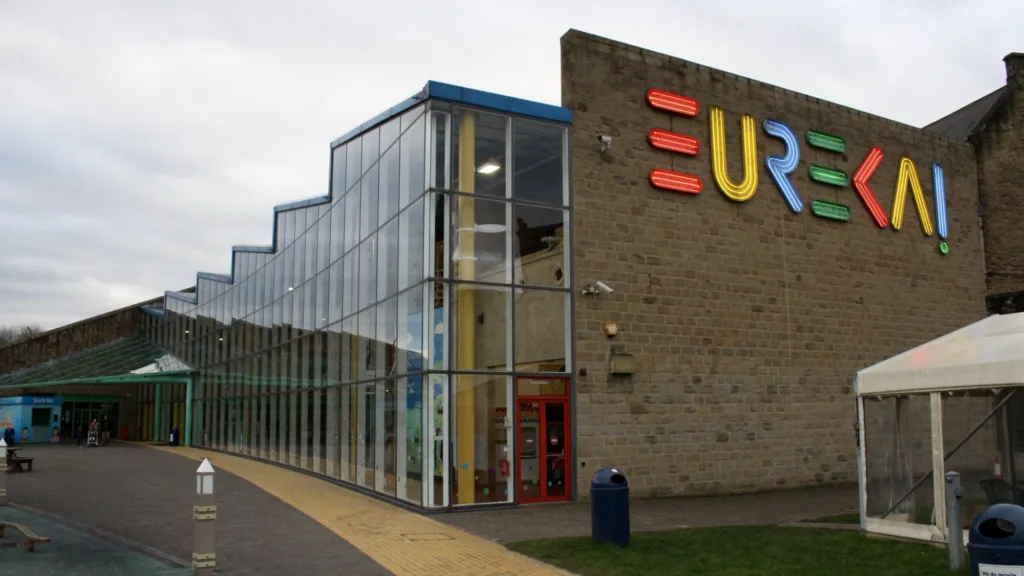
Considering how often I pass Eureka, and the fact that we have a young child, it’s perhaps surprising that it’s been almost seven years since my last visit. And like that time, it was partly due to some Tesco Clubcard vouchers expiring. The museum hasn’t changed much in that time; the main difference was that the car garage is now a community area with a bus and a smaller electric car exhibit.

It’s still a good museum for half a day, and at eight years old our child isn’t too old for it. There’s a new Eureka, focussing more on science for slightly older kids, in Wirral which we need to visit at some point.

Royal Armouries, Leeds

A disarmed AK-47 rifle that has been covered in sprinkles and Love Hearts sweets

The last time we went to the Royal Armouries was for Thought Bubble, back in 2016. Museums about war and armour aren’t really my thing, but our eight-year-old had read a library book about them recently and so it was an opportunity to see some of those things in real life.

The Reloaded exhibition is interesting, as it looked at guns as gifts and objects of desire. There were also a couple of commissioned art pieces, such as an AK-47 covered with sprinkles and Love Hearts. It’s always fun to see the elephant armour too.

We have a few more busy weekends coming up, so I doubt we’ll be going anywhere else for a few weeks.

Manchester Airport Runway Visitor Park

Etihad airplane

Planespotters can be viewed in several ways. I think most people would bracket them with trainspotters and busspotters – eccentric, but harmless.

Greece, not so much – in 2001, a group of planespotters were arrested for spying. Ultimately, they were acquitted.

Manchester Airport, however, saw planespotting as a way of making money. So the airport’s Runway Visitor Park isn’t just a handy viewpoint for the runway – it’s a fully-fledged visitor attraction. We called on the way back from Quarry Bank Mill; I’d seen it signposted and figured it would be a good opportunity to snap a few shots of planes.

As you’d expect, there are three raised platforms to watch the planes from, one of which has a ramp. But there’s so much more; plenty of picnic tables, a café and bar, and a children’s funfair is open on summer weekends. Plus, there are several disused aircraft that you can book tours to see, including Concorde, and a shop that sells plenty of model planes.

AVRO RJX

One of the aircraft, an AVRO RJX (I’m not a plane geek, so this means nothing to me) is open all of the time; it’s a small aircraft that was used briefly for testing and only flew for a couple of years before being retired. The others are by guided tour only; I was only dropping in for a quick visit and so I didn’t book on for one this time. I’d definitely like to take a look around Concorde some time, as I never got to go on one when they were in service.

The park is surprisingly close to one of the taxiways, so it’s perfect for photography. A handful of people with big lens cameras were there, but I think most people had come to spend a sunny afternoon there. The food from the café looked rather expensive and uninspiring, but, as long as it’s a nice day, there’s nothing stopping you from bringing your own food and eating it outside. Just don’t feed the birds.

Entry to the site is free, although it costs money to park. It’s £5 for two hours, £10 for 2-4 hours, and £12 all day, making it relatively cheap for a car full of people. It’s served by a local bus service, and if you arrive by bus, on foot or by bike, there’s no parking charge. Be aware that on sunny days, like last Sunday, the car park may be full. And, being so close to Manchester Airport, security is high as you would expect – there lots of CCTV cameras everywhere.

I commend Manchester Airport for having such a good place to watch planes. I’d like to say our toddler enjoyed it too, but they were actually asleep the whole time. I expect we’ll be back – they’ll enjoy the funfair, and I might get the chance to look inside one of the bigger planes.

Making Victoria Posh

Manchester Victoria Concourse

Manchester Victoria station has had a rather large makeover. It’s not the dark, dreary place that it once was, and now sports a new roof that lets in far more light. And not before time, too.

One of the worst

Back in 2009, Victoria was named as one of the worst railway stations in Britain. The roof over platforms 1 and 2 and the Metrolink platforms was in a poor state of repair, following damage sustained in the 1996 IRA bomb attack that was never fixed. It leaked, and was partially covered in tarpaulins which made the station seem dark. To prevent fare evasion, ticket inspectors had erected temporary barriers around the platforms with confusing one way systems. Platforms 3-6 were now underneath the Manchester Arena, and were poorly-lit with a confusing layout for the footbridge.

It wasn’t a very inviting station to spend any time in, especially at night.

Management

To understand why the situation at Victoria got so bad, it may be worth looking at the management of the station over the years.

When the railways were privatised in the 1990s, the running of most smaller and medium sized stations was taken over by the largest train operating company (TOC) that called there. Control of major stations was passed to Railtrack, and then Network Rail when Railtrack went bust in 2002. Many of these major stations underwent major regeneration work, which usually involved massive expansion of retail space to bring in more rental income.

Manchester Piccadilly is the biggest station in Manchester and so Railtrack managed it, but management of Victoria has always been with a train operating company: since 2004, this has been Northern Rail. Northern Rail’s franchise was let on a ‘no growth’ basis and so very little investment has been made in either trains or infrastructure, despite Victoria being a major hub for Northern Rail.

Manchester Victoria

Capacity

Victoria was once a much bigger station than Piccadilly, with 17 platforms at its peak. But in the early 1990s, the decision was made to re-route most trans-pennine services away from Victoria to Piccadilly, which is on the West Coast Main Line. Previously, passengers travelling from, say, Leeds to Stoke would have to take a short shuttle service between Stalybridge and Stockport – now they could simply make one change at Manchester Piccadilly. This shuttle still runs, albeit only once a week.

Victoria was subsequently downsized to 6 rail platforms, and 2 platforms for the then new Manchester Metrolink tram system. The now disused platforms on the north side of the station were demolished and the land sold off to build the Manchester Arena which sits above part of the station.

At the time, re-routing services to Piccadilly made sense, as the railways were in a period of managed decline. But following privatisation, passenger numbers have rocketed to record levels, and now capacity at Piccadilly is becoming an issue. Those trans-pennine services have to cross the paths of mainline trains from London on flat junctions, which limits the number of trains that can depart and arrive from Piccadilly station. And of Piccadilly’s 14 platforms, 12 of them are bay, or terminating platforms. Any train that needs to pass through Manchester has to use the two through platforms, numbered 13 and 14, which are now full to capacity. Work is planned to add an additional two through platforms, but in the meantime there can’t be any additional services that cross Manchester city centre via Piccadilly.

1st Class Refreshment Room

The Northern Hub

The Northern Hub project is a Network Rail initiative to improve rail capacity in the north of England, and it’s focussed on Manchester. Part of this will involve a new section of track, called the Ordsall Chord, which will allow trains to leave Victoria going west, and then loop around to Piccadilly. At the moment, most trains that call at Victoria terminate there, even though 4 of its 6 rail platforms are through platforms, which is a poor use of capacity. Upgrades at stations such as Rochdale and Stalybridge will allow trains that currently terminate at Victoria to continue, in turn allowing more trains to stop there. Last year, a new direct Liverpool to Newcastle service started calling at Victoria, and this is likely to be the first of several new long-distance services that will call at Victoria, rather than Piccadilly.

Making Victoria Posh

Eventually, money was found to refurbish Victoria and bring it up to the same sort of standard of other major stations. The old roof is gone, and has been replaced with a new ETFE roof. New flooring has been lain on the concourse, automatic ticket barriers have been installed, and a new footbridge has been erected to improve access to the Manchester Arena. New shop units have been opened and the existing ones refurbished – the old first class refreshment room is now a Starbucks, but retains its original tiled interior.

Meanwhile the Metrolink platforms have also been rebuilt, and expanded from two to four, albeit with only three tracks. Some trams will call at both platforms B and C – they’re lettered to avoid confusion with the rail platforms.

Together, these projects have been branded as ‘Making Victoria Posh’ a pun presumably inspired by Victoria “Posh Spice” Beckham.

A separate project has seen the lines coming into Victoria from the west electrified for the first time. This means that electric trains can run from Victoria to Liverpool Lime Street – these services started earlier this year. Eventually electrification will extended eastwards towards Stalybridge.

The works still aren’t quite complete – there’s a little bit left to do, and only a couple of the retail units are occupied (both of which are coffee shops). But the station already looks so much better than before. No longer will it be an embarrassment to the city.

Combining travel discounts

57309 and 56312

Tomorrow we’re off to the Trafford Centre to buy a washing machine. You may wonder why we’re travelling all the way to the far side of Manchester for something that we could buy more easily locally. As it happens, we have loads of John Lewis gift vouchers left over from our wedding, plus some more from completing online surveys from Valued Opinions and Ipsos i-Say, so in all it’ll work out cheaper. And we’ll be making a day of it.

Because we don’t drive, we’ll be taking public transport – a train to Manchester, and then a bus, as the trams haven’t made it that far yet. In all, this would normally cost around £30 – £21 for return train tickets and around £8-10 for the bus tickets. But, by combining discounts, we got the lot for £12. Here’s how:

Two Together Railcard

Because Christine and I travel together by train a lot, we have a Two Together railcard, which means we get a third off almost all train fares provided we buy the tickets at the same time and travel together. It costs £30 a year, although there are plenty of discount codes bringing it down to £27, and you can exchange Tesco Clubcard vouchers for one as well.

It’s one of the newer railcards, having been launched last year, and we’re on our second card. We got our money’s worth on one journey alone, when we went to Nottingham, and use it regularly.

Advance purchase tickets

Northern Rail, who operate the trains between us and Manchester, have only recently introduced discounted advanced purchase tickets on some routes. If bought before 6pm the previous day, you can get a significant discount on the cost of tickets versus buying them on the day. By buying advanced purchase tickets with our railcard, we got the price of our train travel down from £21 to £8 – not bad.

Plusbus

Plusbus is a not particularly well-known add-on for train tickets, that allows you to purchase discounted bus travel at your destination. You buy it as part as of the same transaction as your train tickets, and it essentially gives you unlimited bus travel at your destination for one day, on participating routes and operators.

I’ll be honest – this weekend will be the first time we’ll be using it, and I’m still not 100% convinced that it will be accepted on the buses that run between Manchester city centre and the Trafford Centre. But, it only cost an additional £2 per ticket, thanks to a special offer that is only running this month, so if it doesn’t then we’re only out of pocket by £4.

Additional discounts

We bought the tickets online at First Transpennine Express, even though we won’t actually be travelling with them at all. I chose them for three reasons:

  1. They offer Nectar points at a rate of 2 points for every pound spent on train travel, so I earned 16 points for the £8 spent on the train tickets. I can then use these points for money off cinema tickets or shopping, for example.
  2. They offer cashback via Quidco (referral link) – it’s only 1%, but that effectively saves a further 12p off the cost.
  3. There are no additional booking, card or postage fees – you just pay for travel.

Disadvantages

The only downside to choosing an advanced purchase ticket is that it restricts us to travelling on certain trains. If we miss these trains, or want to vary our travel plans, then the tickets will no longer be valid and we’d need to buy new ones, probably at full price. Buying on the day costs more, but at least the tickets are fully flexible.

Normally one advantage of buying an advanced purchase ticket is that you also get a confirmed seat reservation as well. Northern Rail don’t offer seat reservations (despite running some long distance services) so the only real advantage of buying tickets in advance is the lower cost. Other operators do include seat reservations, so you could have two passengers: one who paid, say, £12 and got a guaranteed seat, and another who paid £80 on the day and who may have to stand.

And finally, before you ask – we’ll be having the washing machine delivered. I don’t think we’d get it home on public transport.