The Current Account Switch Guarantee

A screenshot of the home page of the Current Account Switch Guarantee web site.

Until this year, I had never changed my bank account. I was still using the same account, with the same bank, that I opened when I was 18, shortly before starting university. But with the account no longer meeting my needs, and incentives to open a new account, I switched back in May, as mentioned last week.

Most UK banks are signed up to the Current Account Switch Guarantee, and this means that the switching process should be relatively painless. It’ll take about a week, during which your new account will be opened, everything moved across, and your old account is closed. You only have to interact with your ‘new’ bank – they take ownership of the process and will handle the closure of your old account for you.

What gets transferred

As part of the switch, the following will get moved across to your new account:

  • Any money in your account. You may also be able to switch if your account is overdrawn, but check your new bank’s terms and conditions.
  • All Direct Debit payments.
  • All Standing Orders.

Plus, any payments made into your old account will be automatically redirected to your new account. Payees should be notified of this and payroll systems may be able to update to your new bank account details automatically. When I logged into my employer’s payroll system to check my details, my new bank account number and sort code were already there.

What doesn’t get transferred

Basically, anything paid for using recurring card payments, or Open Banking, won’t get automatically transferred. When your old current account is closed, your old debit card will be deactivated and so any payments using this will fail. So any subscriptions that use recurring card payments will need to be amended to use your new card details.

Similarly, if you make payments using Open Banking (for example, to app-based savings accounts like Chip (referral link) or Zopa), these will need re-authorising using your new account.

Incentives for switching

Banks often offer incentives for switching your account – I got a low three figure sum as a reward for switching my account. MoneySavingExpert tracks the current deals on offer – £175 seems to be the going rate, but such incentives come and go. Also, I was able to get a little bit more by initiating the switch using Quidco (referral link), which gave me around £10 cashback in addition to the switching incentive.

Just be aware that whilst almost all banks are signed up to the Current Account Switch Guarantee, not all of them are. If they aren’t, then you may have to manually switch over your payments, which is a major disincentive to switch.

Ethical investing

A screenshot from the Nutmeg app, showing where my ethical investment ISA is invested

In last week’s blog post about investing in Stocks & Shares ISAs, I mentioned that all my investment accounts are so-called ‘ethical investments’. This generally means that my money is not invested in companies which develop weapons, produce oil and gas, produce cigarettes or alcohol or are involved in gambling.

This should mean that your money isn’t being used to prop up companies that are actively making the world worse. But should is the key word here, and what an Exchange-traded fund (ETF) manager considers ethical may not match my ethics.

My Nutmeg LISA is invested in a number of ETFs, which are in turn invested in companies and bonds. However, it does offer a list of the top 10 companies that your ETFs are invested in. I’ve included the list of mine in the screenshot; although this was taken last week, the data is correct as of the 29th February so I’m guessing it’s not updated often.

Microsoft, nVidia and Tesla

Almost 3% of my money is invested in Microsoft. Okay, so they’re not an oil and gas company and don’t make weapons, but they’re investing heavily in AI. AI needs a lot of energy and their investment in AI means they’re polluting more now than in 2020. Similarly, nVidia is doing well because its chips are optimised for AI.

Tesla is third, and, urgh. Sure, they’re making electric cars which are quieter than petrol or diesel and produce no tailpipe emissions, but its boss is a human bin fire who is opposed to worker unionisation.

Coca-Cola and PepsiCo are in there too, both of which are best known for manufacturing sugary drinks.

Whilst I still think ethical investing is the right thing to do, I am concerned that they’re a form of ‘green-washing’. Just because a company isn’t actively destroying nature or ruining people’s lives, it doesn’t make them ‘ethical’. I’m sure there are funds out there which focus on companies which are actively doing good in the world – maybe one that only invest in B Corps, for example. Maybe I need to spend more time looking into alternatives.

Investing in Stocks & Shares ISAs

Back in 2021, when Britain was under its third major Covid-19 lockdown, I opened some Stocks and Shares ISA accounts:

  • A standard Stocks & Shares ISA with Wealthify (backed by Aviva)
  • A Lifetime Stocks & Shares ISA with Nutmeg (backed by JP Morgan Chase)
  • A Junior Stocks & Shares ISA, also with Nutmeg

A Stocks & Shares ISA is a type of investment account, which means that the money that you put into the account is invested in company shares, government bonds, and other investments. An ISA (Individual Savings Account) just means that you don’t pay income tax on any returns, but you’re also limited to how much you can pay in.

I decided to dip my toes in investing because, at the time, the Bank of England base rate was historically low, meaning that most regular saving accounts paid minimal interest. Meanwhile, investment accounts seem to offer much better returns, and I had inherited money from my grandfather which wasn’t earning much interest.

A warning about investing

Putting money in investments, rather than cash savings account, always comes with a warning, and for good reason. The value of any money that you invest can go down as well as up, and you can lose all of your money. You should never invest money that you cannot afford to lose.

Both the accounts I opened are covered by the Financial Services Compensation Scheme (FSCS), which means that your money is safe if the provider goes bust. But this doesn’t protect you from investment losses.

None of what I write here should be considered financial advice, and investing may not be right for you.

Lifetime ISA

One of the accounts I have with Nutmeg is a Lifetime ISA. You can only open such an account if you live in the UK and are aged 18-39 (inclusive), and can only pay into the account between the ages of 18-49. There are also strict limits on when you can withdraw the money; you’ll pay a 25% penalty on any withdrawals unless:

  • You are buying a house for the first time and want to use the money for a deposit
  • You are aged over 60
  • You are terminally ill with less than 12 months to live

However, the government will top up any contributions paid in before you turn 50 by 25%. So my initial investment of £500 was topped up to £625, and you earn interest on the whole amount.

We already own a house, so I’m using it as an additional retirement fund, alongside my state and employer pensions.

Junior ISA

I also set up a small Junior ISA for our eight-year-old, which I manage for them. Most of the money in there is from cash gifts from birthdays. Once our child reaches 16, they’ll be able to take over the account management, and can withdraw the money at age 18.

Investment performance

The accounts have varied in their performance. Both Nutmeg accounts have had a positive return; 10% in the case of my Lifetime ISA (and that’s on top of the 25% government contribution). However, there have been times where the value of my investments has been less than my contributions – the start of the war in Ukraine, for example. It’s only really been in the last 6 months that I have had a consistently positive return, and there’s been a wobble in recent weeks.

The Junior ISA, opened later, has a lower positive return of around 6%.

My Wealthify ISA hasn’t performed so well. Overall, it’s worth less than my contributions. Some of that money comes from a sign-up bonus, which means that I am still ahead overall. However, since interest rates have gone up, this money may have performed better in a good cash savings account instead.

It’s also worth noting that a small amount will be deducted from the value of your investments as a ‘management fee’, to cover the costs involved of buying and selling your investments.

Appetite for risk

Both Nutmeg and Wealthify include questionnaires when you open the accounts. These ask you about your appetite for risk, and how you intend to use the money. They will then suggest an investment style – lower risk, but lower potential returns, or high risk, with higher potential returns but a greater chance that you’ll lose money.

Both my Nutmeg accounts are at the highest risk setting. This is because the money is there for the long term – I can’t access my Lifetime ISA penalty-free for another 20 years. My Wealthify ISA, which I can access more easily, is at a middle-of-the-road risk level that they call ‘Confident’.

All of these ISAs are ‘ethical’, which means that the money shouldn’t be invested in companies who work in the oil and gas industries, arms manufacturing or tobacco.

Referral links

If you want to try Wealthify or Nutmeg yourselves, here are my referral links:

But please, don’t take excessive risks. Cash savings accounts offer much better interest rates than they did three years ago, and as long as the provider is part of the FSCS, you don’t risk losing your money. I suggest that you only consider investing for the long term, and for money that you can afford to lose if things go wrong.

Bank of England Museum

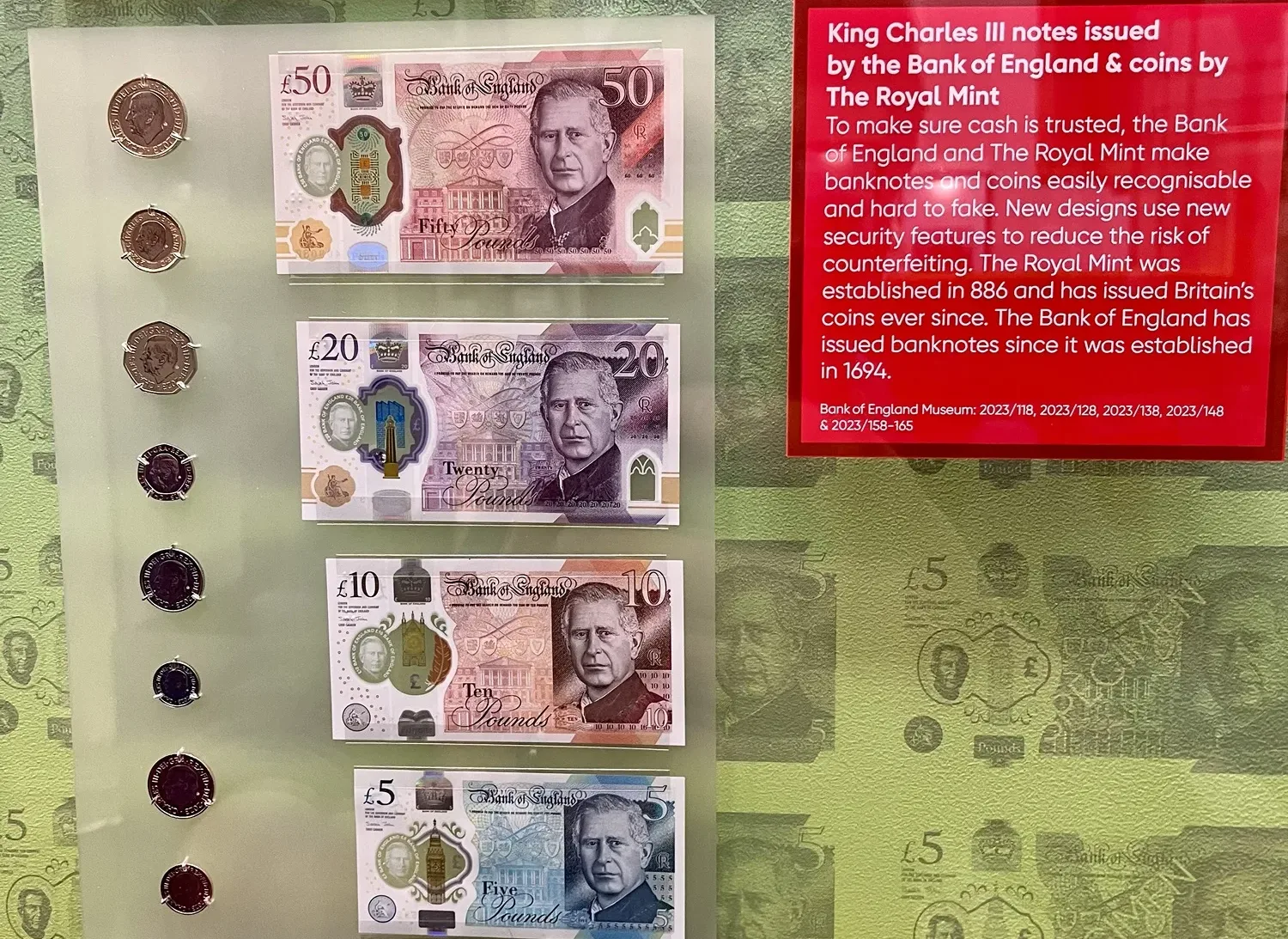
A photo of the new King Charles coins and bank notes at the Bank of England Museum in London

The first place we went to on our trip to London last weekend was the Bank of England Museum. Which is pretty much what you would expect it to be – a museum based at the Bank of England headquarters in the City of London. Access is via a side entrance, and, as you would expect, you have to go through a security scanner to get in.

This is only the second time that I have been to the Bank of England Museum. The first time was a long time ago. I can’t remember exactly when, but I was definitely still living at home, so probably 25-ish years ago. Part of the reason for this is that the museum is only open on weekdays, and we normally visit London at weekends. As we had the benefit of an extra day, we were able to visit last Friday.

It’s not a big museum – a typical visit will take 1-2 hours – but it’s free to get in. And the exhibits are regularly updated. As shown in the photo above, there are samples of the new coins and banknotes featuring King Charles III which are not yet in general circulation. I was also amused by the satirical FTX t-shirt in an exhibit about cryptocurrencies. These are in a new exhibition called The Future of Money, which opened a couple of days before we travelled and runs until next September.

Like many museums, the Bank of England Museum has also acknowledged the darker sides of its past. Recent new exhibits include copies of ledgers listing the names of slaves that came into the bank’s possession, and there’s a display about the Windrush generation. On arrival in the UK, many of those who travelled on the Empire Windrush to start new lives were denied access to traditional banks, and the museum has a series of panels on Pardner Hand to allow people to borrow or save money.

Other permanent exhibits include some examples of forged bank notes (including some introduced by the Nazis in the Second World War to de-stabilise the economy), and of course there’s plenty on the history of the bank.

If you haven’t been to the Bank of England Museum before, I’d recommend going. It’s not a full day out, but it’s free and there are some interactive elements for children.

Accessibility

Predictably, the nearest tube station is Bank, which has step-free access from the Northern and Waterloo & City Lines, and the DLR. There are steps in the museum, including at the entrance, however, security staff can escort those with mobility issues from the bank’s main entrance and ramps can be provided once inside. There isn’t a quiet room, but ear defenders are available to borrow.

How to do London without spending too much money

South Bank

Though Christine and I are not badly off financially, we’re still in a situation where we really want to save money where possible, and this includes holidays. Despite this, we went to London a few weeks ago for a long weekend, which is probably one of the most expensive cities in the world. But it doesn’t have to cost the earth and I’m going to go through some of the things we did, or could have done, to keep costs down.

1. Don’t stay in a hotel in Central London

As a general rule, the closer you are to central London, the more expensive your hotel will be. Go a little further afield and you will find some good value hotels, many of which are close to Tube stations. And you’ll probably find that the money saved by going for a cheaper hotel further out of London is more than the cost of travelling into central London on the Tube. The only disadvantage is the extra travelling time to get out there, so it’s harder to drop by your hotel room on an evening before going out, for example.

2. Consider a budget hotel

Whilst it’s nice to stay in hotel that offers everything, sometimes all you need is a bed for the night. I’ve stayed in a couple of good budget hotels – Holiday Inn Express at Royal Docks and Premier Inn at Collier’s Wood – both of which were very good value. if you don’t mind sharing a room, a hostel may be even cheaper.

3. Skip hotel meals

Budget hotels often unbundle meals from the price – this makes the headline price of the room cheaper, but means you may be paying as much as £8 per person, per day for breakfast. If you don’t need an all you can eat breakfast every day, skip it – you’ll be able to get something cheaper from a supermarket or a café. You can even save time by eating it on the Tube on your way in to London, if you’re staying in the suburbs.

4. Get an Oyster card

If you’re following my advice and staying outside central London, you’re likely to be using public transport a lot. An Oyster card will not only save you money, but will also mean you won’t need to have change for bus or Tube fares. Fares are as much as 50% cheaper with an Oyster card than without, and fares are capped at the price of a one-day travelcard, so if you do lots of journeys you won’t end up paying a fortune. Say you’re staying in a hotel near a Tube station in zone 3,and travel in and around central London a lot on one day during off-peak hours – you will not pay more than £7.30 that day, regardless of how may tube journeys you do in zones 1-3. Because it’s a top-up card, you just need to top it up at a machine each time the balance gets low (and they take cards). You can pick them up from major Tube stations for around £5, which includes £2 of credit, or order them online; unused credit doesn’t expire and you can register the card online to protect your balance in case the card is lost. It’s accepted on all Tube trains, plus all buses and mainline rail services within London zones 1-9.

5. Don’t go to restaurants on main streets

Restaurants in more prestigious locations will be more expensive. Go a little off the beaten track and you can find some nice places that don’t cost too much. TripAdvisor is your friend here, as are local guidebooks or recommendations. If necessary, stick with a chain restaurant that you know, like Pizza Hut or Nando’s – it’s your call whether you want something cheap and familiar or want to push the boat out a bit.

6. Look for special deals and vouchers

I often mention Money Saving Expert and there’s a good reason for it – the site is huge and is full of really good, impartial advice about saving money in all aspects of life, and this includes going out and holidays. You may find that some attractions will offer you two tickets for the price of one, simply by printing a voucher off their web site, or a restaurant will allow your kids to eat free, and Money Saving Expert gathers many of these in its Deals section. Also, have a look at sites like Groupon, Living Social and Keynoir for deals in London, which may include cheap accommodation, reduced price restaurant meals or cheaper entry into attractions, although be aware that they usually ask you to pay up front for a voucher so make sure you use it so you don’t waste money.

7. Visit free attractions

London is home to quite a few national collections like the Natural History Museum and the Science Museum, which are both free, enough to fill a full day and great for people of all ages, including kids. But there are also plenty of other free attractions and once again Money Saving Expert has a list of some of them. Of course, if you don’t want to spend any money you can just walk around and see the sights, eschewing the sometimes expensive open top sightseeing buses.

8. Consider buying a London Pass

If you’re spending a few days in London, and want to visit a number of attractions that charge for entry, you may wish to consider buying a London Pass. The price varies depending on how long you want it for, starting at £44 per person for a one day pass to £95 per person for a 6 day pass, which at £15.83 per day isn’t too expensive. Again, you’re paying up front, so unless you’re sure you’ll visit enough attractions for it to be worth it, don’t get it.

9. Book in advance

This applies not just to your travel and accommodation – some attractions offer a discount if you book ahead. Usually it’s only a modest 10%, but everything helps. If you’re going to London by train, remember that the cheapest tickets tend to be released around 3 months in advance, so order them at least 2 months in advance to get the best deal. Avoid sites like thetrainline, who charge a booking fee, and go directly to one of the train operators – it doesn’t necessarily have to be the one you are travelling with. See my Buying rail tickets guide for more details. Similarly some budget hotels have room sales with some very cheap rooms available if you’re quick enough to blag them.

10. Use the bus, or walk

The Tube is popular with visitors to London as it’s easy to follow, with each line having its own name and colour, and Tube stations are plentiful and located in useful places. But it’s not the only way to get around. London also has plenty of buses, and with an Oyster card, a single bus fare is only £1.30; and, like with Tube fares, they’re capped at £4 per day – this compares favourably with the Tube where a single fare in zone 1 is £1.90 with Oyster, rising to £2.90 if you’re travelling from zones 1-3. Also, because buses are above ground, they’re sometimes quicker than the Tube as you don’t need to spend as long as 5 minutes walking from the street to the platform, and they stop at more places. Use TfL’s Journey Planner to work out if there’s a bus you can catch. Alternatively, it may be quicker to walk, and there’s a handy map showing where walking between Tube stations would be quicker than actually taking the Tube (although the map is from five years ago so is a little out of date – it doesn’t include the Overground).

If you want more information, as well as the aforementioned web sites have a look at Money Saving London and London for Free for some ideas for free or cheap things to do.

Money to burn

Yay! I finally have a bank account!

This time, I went with my mum to the bank from which my parents have several accounts. And, despite having to wait a few minutes until one of their staff was available, the process was quick and easy – I was approved instantly.

So, I now have an account with £50 sat in it, and my chequebook and other stuff on its way – I don’t get a debit card until I cash in a further £50. I’ve also sent off the form for my student loan, now that I have the bank details, so hopefully I’ll have nearly £3000 in there shortly.

While in town, I also picked up both CD1 and CD2 of “Alone” by Lasgo, which is better than “Something” in my opinion. It comes with a good selection of remixes, too 🙂

Back home, and I’m doing an experiment. After falling in from pressure from others, Mozilla is now my default browser, replacing IE6. And actually, I kinda like it. Okay, so its Java support isn’t so good (I’ve actually turned off Java… I can always load IE if necessary), and some pages won’t display properly (those which use over-complicated, non-standard compliant DHTML or that block any Netscape browser). But it’s quick and stable, and doesn’t impact the system as much as IE does (I have a lot more free memory than usual).

It’s now only 3 days until my results come out… help me…