The Cat That Slept for a Thousand Years

A photo of The Cat That Slept for a Thousand Years

Whilst I’m not quite done writing about our holiday in Wales, I’m going to squeeze this blog post in here because it’s about a special exhibition which closes a week on Sunday: The Cat That Slept for a Thousand Years at the Manchester Museum.

Fundamentally, it’s just a giant inflatable cat – there’s (someone else’s) small child in my photo above for scale. It’s illuminated, and its tail and ears twitch every now and again. The room it’s in has low lighting, and soothing background music. And yes, you’re welcome to touch the giant cat. It’s like a huge sensory room.

In addition to this, there are some feline objects from the museum’s collection alongside, and before you enter the space with the cat, there’s a fictional short film about how the cat was ‘found’ by scientists in the Antarctic.

It’s a bit of fun, and I imagine younger kids, and those with additional needs who respond well to soothing sensory environments, will love it. The exhibition, like the rest of the museum, is free, but donations are welcome and you do need to book a timed ticket to manage crowds. It wouldn’t be much of a sensory space if everyone piled in there all at once.

The rest of the Manchester Museum

If Swarm is correct, then this was our seventh visit to the Manchester Museum – and yet, as far as I’m aware, I’ve never blogged about any of our six previous visits. Which is a shame, as it’s one of our favourite museums, and a worthy winner of this year’s European Museum of the Year prize.

Like Jodrell Bank, it’s part of the University of Manchester, and has been open since 1867. More recently, it re-opened in February 2023, after an 18 month closure. This saw the opening of a new exhibition space (where the giant cat currently is) and several additional permanent galleries. It’s also actively involved in repatriations of some of the artefacts in its collections to the communities and societies where they belong. Whilst we were there, visitors were encouraged to contribute to a consultation about the display of an Egyptian mummy, and whether it’s still appropriate to display human remains in this way nowadays.

Our favourite bit is the Vivarium, which is the only part of the museum with live animals – namely frogs and lizards. The live collections originate from the university’s zoology department, and the museum is involved in breeding programmes for rare species of frogs. There’s more in the Manchester Frog Blog.

Accessibility

Though housed in a late 19th Century building, the Manchester Museum has, as mentioned, had a number of refurbishments in recent years, and it tries hard to be as accessible as possible. Though it’s on multiple floors, there are lifts and stairs can be avoided. Wheelchairs are available to hire.

It’s a short walk from Manchester Oxford Road station, along, appropriately enough, Oxford Road. It is, however, some way away from the nearest tram stop (St Peters Square) but there are plenty of buses that pass right outside the entrance. For car parking, the University of Manchester’s Car Park D is a short walk – it’s a multi-storey with almost 1000 spaces, including 8 for electric vehicle charging (both medium 7 kW Type 2 chargers and some rapid chargers).

As mentioned above, entry to the Manchester Museum is free, but donations are welcome.

National Emergency Services Museum

A photo of some old fire engines at the National Emergency Services Museum in Sheffield

The weekend before Easter, we went to the National Emergency Services Museum in Sheffield. It’s a place we’ve been past a few times and so it’s been on our to-do list for a while, but this was our first visit.

The museum is housed in what was originally rare example of a combined police, ambulance and fire station, which opened in 1900. Over time, the various services outgrew the building and by the time it closed in 1965 only the police remained. The museum first opened in the year of my birth, 1984, originally just as fire service museum. It became a fire and police museum in 1991, and adopted its current name of the National Emergency Services Museum in 2015 following an extensive refurbishment.

Whilst the building is rather small, there’s a lot packed in there. It’s spread over three floors, with a yard at the back that houses a full-sized lifeboat and an Embrace ambulance. Inside, there are a number of police vehicles, ambulances and firefighting equipment, and you can also go inside some of the old police cells. Upstairs, there are galleries about the role of the emergency services on the front lines during the First World War, and a history of fire services in the UK.

Steamers and Scallywags

The principal reason that we went when we did was the Steamers and Scallywags event. Many of the staff were dressed up in Steampunk outfits, and there were market stalls in the stables. Upstairs, in the event space, you could try your hand at tea duelling, and there were regular performances from various Steampunk-adjacent acts over the weekend. We specifically went to see Madam Misfit, who we’ve seen before. This was our nine-year-old’s first time seeing her and she put on a great family-inclusive performance.

Elsewhere, there were animal handling sessions where Christine and our nine-year-old got to handle various snakes. I feel like there may be a pet snake in our future.

Commitments in the morning meant that we could only spend an afternoon at the National Emergency Services Museum, and as we prioritised the Steampunk activities, we didn’t get to see all of the rest of the museum. Thankfully, it’s one of those museums where your tickets can become an annual pass at no extra charge, and so we’ll be back soon.

Accessibility

The National Emergency Services Museum is located in Sheffield city centre, and so it’s quite easy to get to by public transport. Car parking is also available nearby – we parked at the NCP car park on Solly Street which is just around the corner.

Being a 125 year old building, accessibility isn’t perfect and there are some uneven surfaces on the ground floor. This is also reflected by a discounted entry fee for wheelchair users. However, there is a lift and most of the doorways are nice and wide to fit wheelchairs through. There is a disabled toilet on site. A sensory map and sensory backpacks are available.

NHS staff (like Christine) and people who work in the emergency services get discounted admission. The museum is normally open Wednesday to Sunday each week, and on Bank Holiday Mondays.

Abbey House Museum

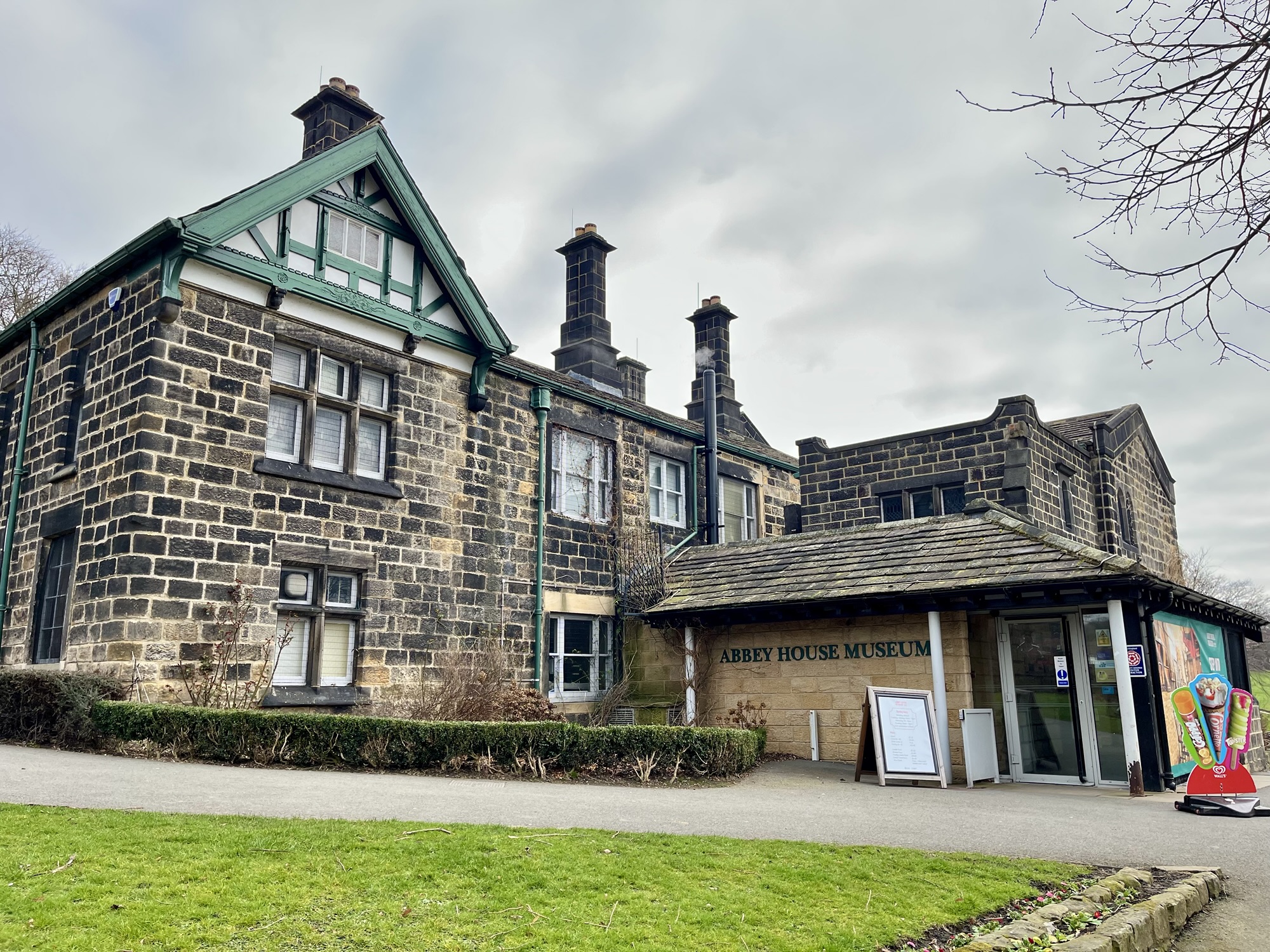
A photo of the outside of the Abbey House Museum.

Last weekend, I took our nine-year-old to the Abbey House Museum in Kirkstall, near Leeds. We’ve been a couple of times before, and it’s a nice little museum to visit for half a day. It’s also recently been reprieved from closure, but in the long term it needs more people visiting it to be viable.

The Abbey House Museum is essentially in three parts. The first is a recreated Leeds street scene, with various shops and houses that have been saved and transplanted into the museum. There’s a pub, a pharmacist, a general store, and many others. It’s a bit like Kirkgate in the York Castle Museum, but on a smaller scale. It’s designed to show how ordinary, working class Loiners would have lived in the past.

Exhibitions

Next, you go upstairs to an exhibition space. Previous exhibitions that we’ve seen have included one about various common household objects from the past now considered dangerous, back in 2019. Older Lego bricks contained various heavy metals like cadmium, there were sore throat pastilles containing potassium chlorate which can spontaneously combust, and there were plenty of things with asbestos in them. The last time we went, which was in 2021, the exhibition was about the Leeds music scene and various bands and venues.

This year’s exhibition is called ‘Story Time‘, and is all about children’s stories. Expect to see lots of books and toys, both old and new.

In the next room are various entertainment machines, which can tell your fortune or show an animated diorama. They require one or two old pennies, which can be obtained from an exchange machine that takes modern day British currency. Each 1d coin costs 10p and so have a pound coin spare if you want to try every machine.

The final space is the childhood collection. There’s a collection of dollhouses and toys, spread across several rooms.

The street scene at the Abbey House Museum

History of the Abbey House Museum

The Abbey House Museum gets its name from Kirkstall Abbey, across the road, and it used to be the gatehouse. Parts of the building date back to the year 1152, and after Henry VIII dissolved the monasteries (yes, him again!) it was repurposed as a farmhouse. It became a museum in 1927, and so hopefully it’ll be able to celebrate its 100th anniversary now that it has been saved from closure.

Expect to be able to spend half a day at the museum – we combined our visit with a trip to Tropical World, but you could pop across the road to the abbey itself as well, if you want to make a day of it.

Accessibility

Access at the Abbey House Museum is pretty good. The street scene does have some uneven floors and narrow doorways, but there is a lift. A Changing Places toilet is also available, and there is a Max Card discount as well. There used to be a café in the museum but this is now only open as a picnic room for school visitors – instead, the Abbey has a café and there’s a pub nearby.

Free parking is available (at the time of writing, though note that Leeds City Council has recently introduced modest parking charges at many of its sites), and it’s on major bus routes from Leeds city centre. If you’re arriving by train, it’s roughly equidistant from both Headingley and Kirkstall Forge stations – both of which are about a mile’s walk.

Magna Science Adventure Centre

A photo of the outside of Magna Science Adventure Centre

What if I told you that Rotherham was home to one of Britain’s best science museums? Well, it is, in the form of the Magna Science Adventure Centre. I feel like it’s somewhere that I would’ve written about before, but can’t find a previous blog post about it. We’ve been a few times – I went with my parents when it first opened, and I’ve taken our little one several times, including last weekend.

History of Magna

Magna was one of a number of visitor attractions funded by the Millennium Commission, to mark the turn of the Millennium. It opened in 2001, with high expectations – further down the Don Valley, the Earth Centre in Conisbrough had opened in 1999 and was already struggling to meet its visitor targets. The Earth Centre ultimately closed in 2004 – a shame, as I’d enjoyed my visit there and felt it was perhaps ahead of its time.

Anyway, the good news is the Magna was more popular, and is still open today. Indeed, it had something of a refit in 2022, so if you’ve been before, there are some new things to see. Magna essentially fills two roles: a history of the area and, in particular, steelworking; and as a more general science museum.

Magna is housed in the former Templeborough Steelworks, or ‘Steelo’s’ as it was known colloquially. This steelworks used electric arc furnaces to recycle scrap steel – relatively new technology at the time, and allowed a significantly higher throughput than coal-powered furnaces. It did require a lot of electricity, however – a staff member commented that, if it was still running today, the steelworks annual electricity bill would be around £100million.

Templeborough Steelworks was massive – housed in a building around 1/3 mile (530 metres) long. Most of the building is still there now – it’s not quite as long as it once was, but it’s still massive. The site closed as a steelworks in 1993, with much of the massive industrial equipment remaining behind in situ, and it wasn’t long before it re-opened as Magna.

A photo of some sparks flying during The Big Melt at Magna.

Four pavilions

The main ‘sciencey’ bit of the museum is split into four ‘pavilions’ – air, fire, water and earth. The Air pavilion is in what looks like a blimp, suspended from the ceiling; fire is at the main level of the museum, water is on the ground floor and earth is underground. Almost everything is hand’s on, in the way that the best museums for kids are these days, so there’s lots of things to press, push and twist. In the Fire pavilion, there’s a demonstration of a fire tornado approximately every 10 minutes, and at weekends there’s also a forge demonstration where you can see how a piece of steel can be melted and shaped.

The water pavilion teaches the water cycle, and lets visitors compare different ways of moving water upwards. Down in the earth pavilion, you can control a digger and learn about quarrying and archaeology, and up in the air pavilion, you can see how wind energy and vacuums work.

The other major indoor attraction is The Big Melt, which runs on the hour four times a day. It’s a big light and sound show, which simulates how the electric arc furnace would have worked in its heyday.

Outside, there is a huge adventure playground, and in summer, there’s Aqua-Tek, which is a small waterpark. Obviously, this being February, it was shut.

Our nine-year-old pretty much demanded a return trip to Magna, hence our visit, and it’s one of their favourite places to visit. I agree.

Accessibility

Having been opened in 2001, mobility access to Magna is pretty good – there are lifts between the different floors and no stairs to manage. That being said, there are some uneven floors in the Earth pavilion in places.

If you experience sensory issues, it may be worth brining ear defenders. Some parts, like The Big Melt, are very loud. Also, on a practical note, it’s worth bringing a change of clothes and some swimming gear for kids, as they will get wet in the Water pavilion and/or Aqua-Tek.

Tickets are cheaper if booked online, and automatically become an annual pass for free repeat visits.

There is a car park on site, but be aware that Magna also has a huge events space, and so the car park may be full at weekends. When we went, there was a junior boxing competition, and this weekend it’s the Camra Great British Winter Beer Festival, so you may need to park some way from the entrance if you’re driving. It’s not far off the M1 junction for the Meadowhall Shopping Centre.

If you want to get there by public transport, then you can catch the X3 bus from Sheffield, Meadowhall or Rotherham, and it drops you outside the back entrance to Magna. In the near future, you’ll also be able to get to Magna by tram, as the Supertram Tram-Train service from Sheffield to Rotherham passes by the site.

Jorvik Viking Centre

A screenshot of the home page of the Jorvik Viking Centre web site

Last week, we took our nine-year-old for their first visit to the Jorvik Viking Centre in York. Now I grew up in York, and so have been many times over the years, but the last time Christine and I went was in 2012.

Jorvik is undoubtedly one of York’s best known tourist attractions, having opened celebrated its 40th anniversary last year. However, I’m writing about it now because, until the 23rd February, Jorvik is dressed up for winter.

Recreation of Jorvik ride

The main part of Jorvik sees visitors sitting in carriages that move around a recreation of York, or ‘Jorvik’ as it was known in the time of the Vikings. The carriages seat six, and feature a commentary in multiple languages. This part takes around 15 minutes, and the carriages rotate to highlight different parts of the recreated city. The buildings are laid out roughly as they were found when the site was excavated in the 1970s.

Before you go on the ride, there’s a glass floor to walk over which has a recreation of that 1970s archaeological dig. Previously, the site had been a factory for Cravens Confectionery, a now defunct sweet and chocolate manufacturer (alongside Rowntrees, now part of Nestlé, and Terry’s, now part of Mondelez). Local planning rules in York mean that an archaeological dig must take place whenever foundations are to be dug, and this large site resulted in a five year excavation that unveiled many artefacts of York’s past. Indeed, once the ride has finished, you can view some of the finds that were excavated, and find out more about how the Vikings settled in York.

As mentioned, Jorvik has been dressed up for winter, so at present there’s snow on all the recreated buildings and on the ground. If you’ve been to Jorvik recently, maybe give it another visit as it looks very different at present. I didn’t take any photos on my visit this time unfortunately.

Accessibility

Jorvik is accessed down some stairs, although there is a lift. If you’re a wheelchair user, you’ll need to book in advance by phone (not online), as only one of the carriages has been adapted for a wheelchair and the staff will need to give you a specific timeslot. However, all the carriages offer a hearing loop for hearing aid users, and subtitles for the commentary. Famously, Jorvik recreates the smells of Viking York and this is worth being prepared for if you’re sensitive to unusual scents. There’s an extensive accessibility page on Jorvik’s web site, detailing what you can expect and how they can help you.

The days of there being massive queues for Jorvik snaking around the Coppergate Shopping Centre are mostly gone, as you now need to pre-book. You should do this online if you can; you can book on your phone on arrival, but be prepared to have to come back later. We turned up without pre-booking and had to return after 45 minutes. However, the following day, there were signs up saying that all time slots were booked up and no more bookings were being taken that day.

A Max card discount is available.

Bolling Hall Museum, Bradford

A photo of the outside of the Bolling Hall Museum in Bradford. It's a stone-built stately home.

Last month, we met up with a couple of friends to go to the Bolling Hall Museum in Bradford. Now, long time readers of this blog will know that I lived in Bradford between 2002 and 2010, and still work there, so surely I must have been here loads of times.

Nope. This was the first time I’ve been.

Bolling Hall is an old stately home that has been altered many times over the years. Parts of it date back to the 14th century, and in the early 20th century it was passed to what would eventually become Bradford Council, who run it as one of their museums. As various parts of the building date from different times, there is a variety of architectural styles on show.

Bolling Hall overlooks Bowling Park, to the south of the city centre, and is in what is now mostly the residential area of West Bowling.

A photo of a piano that belonged to Frederick Delius

Inside, the rooms have been mostly laid out as they would have been in Georgian times, including the kitchen and several bedrooms. There’s also a small exhibition about Bolling Hall’s role in the English Civil War; its owners at the time supported the Royalists, whereas the wider Bradford area backed the Parliamentarians.

As with most council-run museums, Bolling Hall is home to various objects in Bradford Council’s collection. This includes the first piano owned by Bradford-born composer Frederick Delius.

It’s not a big museum, and we spent about an hour there. Whilst there are gardens outside, these were mostly roped off when we went.

Amusingly, it was me who created its listing on Foursquare, thirteen years ago, so it was nice to be able to finally check in there.

Accessibility

Being a very old building that has been altered several times, accessibility is not great. If you’re unable to manage stairs, then you can use an accessible entrance to see some of the ground floor rooms, but there isn’t a lift and the upstairs rooms are on different levels.

Bolling Hall Museum is closed on Mondays and Tuesdays. Entry is free. Parking is available on site, and it’s well-signposted. It’s served by bus 635 from Bradford city centre.

The Museum of Liverpool

A photo of the outside of the Museum of Liverpool

So, after we caught the Ferry across the Mersey, we had a couple of hours in Liverpool before we needed to head back. And seeing as the Museum of Liverpool is right by the Gerry Marsden Ferry Terminal, we decided to pop in.

All three of us have been before, back in Summer 2016, and if you’re good at maths then you’ll be able to work out how old our eight-year-old was then. So whilst it wasn’t technically their first visit, it might as well have been.

Like the name of the museum suggests, it tells the history of Liverpool, starting at pre-historic times and up to the present day. Some of the exhibits may only be of interest to locals, where these focus on specific areas of Liverpool, but for the most part there’s something for those who only know Liverpool for The Beatles and football.

Railways

Of particular interest to me is the story of the Liverpool Overhead Railway, which used to snake its way past Liverpool’s dockyards along the waterfront. Built in 1893, it suffered extensive damage during the second world war and was demolished in the 1950s. But it was the world’s first elevated railway, one of the first electric railways at a time when steam engines ruled, and one of the first to use modern colour-light railway signalling. In the museum, the one surviving wooden railway carriage is available to look at, on a recreation of the metal structure that carried the railway.

A photo of the steam engine Lion inside the Museum of Liverpool

This carriage isn’t the only rail vehicle inside the museum, and a large part of the ground floor is home to the steam engine Lion. It was built in 1838 for the then relatively new Liverpool and Manchester Railway, which was the world’s first intercity railway, to haul freight.

Whilst entry to the museum is free, some special exhibitions charge. The current exhibition is the Holly Johnson story – Holly Johnson probably being best known as the lead singer of Frankie Goes To Hollywood. Which would have interested me but probably not our eight-year-old.

Accessibility

As mentioned, entry is free apart from some exhibitions. It’s closed on Mondays, unless it’s school holidays, but open every other day of the week.

Being a new-ish museum, Changing Places and gender-neutral toilets are available, and there are lifts to all floors. Sunday mornings are dedicated quiet times in the museum.

James Street station on Merseyrail is the closest and is around a 5 minute walk away; the main Liverpool Lime Street station is about 20 minutes walk. It’s also close to the ferry terminal, so if you’re driving, you could do what we do and park there, and then catch the ferry.

Visiting the ‘other’ Eureka in Wirral

A photo of the entrance to Eureka Science + Discovery in Wirral

Since 1992, Halifax has been home to Eureka, the National Children’s Museum. But in 2022, a ‘new’ Eureka opened in Wirral, just across the River Mersey from Liverpool, and I took our eight-year-old to visit a couple of weeks ago.

As we live near Halifax, we’ve taken our eight-year-old to Eureka a few times over the years, so we wanted to see what the new museum was like.

Eureka Science + Discovery

The ‘new’ Eureka is branded ‘Eureka Science + Discovery’, and is aimed at slightly older children. The original Eureka was groundbreaking at the time of its opening by being very hands on, when most other contemporary museums locked their exhibits away inside glass cabinets with ‘do not touch’ signs everywhere. Eureka Science + Discovery carries on with the same ethos, and there’s lots of things to touch and interact with. But there’s also more to read, in line with its older target age group of 7-14 year-olds.

Downstairs, you can learn about the body, and there’s an auditorium at the back. Upstairs there are two zones – one focussing on nature, and the other about science, especially in the home. Through a separate entrance is The Burrow, which is a play area for the under-7s and is included in the ticket, and of course there’s a shop and a café – again the café has a separate entrance and is open to the public.

We spent a full morning at the museum. Older kids may get more out of it, if they take the time to read the displays, but allow 2-3 hours for a visit.

A photo of the inside of Eureka Science + Discovery. There is a very large blue cat.

Accessibility

Eureka Science + Discovery is based in the Seacombe ferry terminal in Wirral, and so you can catch a ferry across the Mersey to Liverpool and back. It’s a bit of a walk from the nearest Merseyrail station at Hamilton Square, but there are buses. There’s also a pay-and-display car park, although if you are driving and aren’t using Google Maps or the like, make sure you follow signs for the Seacombe ferry terminal. Although Eureka has been open a little while now, there aren’t any ‘brown signs’ yet for directions.

Being a brand new museum, accessibility is top-notch, with lifts and a changing places toilet. Extra support is also available for those with sensory issues.

Pre-booking of tickets is required, but then they’re valid as an annual pass. Whilst it’s not yet listed on the Max Card web site, if you have a Max Card, then one adult and one child get in absolutely free at present. Tesco Clubcard vouchers are also accepted but can’t be redeemed for an annual pass.

A return trip to the National Coal Mining Museum

A photo of Caphouse Colliery at the National Coal Mining Museum for England.

Last weekend, I took our eight-year-old to the National Coal Mining Museum for England. It was our second visit, the first being in 2017 which I wrote about at the time. Our eight-year-old was only one then, and so we couldn’t go down the old mineshaft, but this time we could.

This is now the third mine that we’ve been down in as many months; last month, we went to the one in Beamish, and in May we went to the one in the Black Country Living Museum. Caphouse Colliery, the mine at the National Coal Mining Museum, is different as it’s primarily a deep mine, and so the tour enters and exits using a lift in a 140 metre deep mine shaft. There is a drift entrance to the mine as well, but it’s mainly there for emergency evacuations now and isn’t part of the tour.

Mining ceased at Caphouse in the 1980s and it became a museum shortly after. So, whereas Beamish and the BCLM are set in the early twentieth century, here the mine tour covers the full history from the early 1800s right up to the more mechanised latter times. Though coal is no longer mined here, the mine is still regulated as an active coal mine and all battery powered devices have to be surrendered before the tour – hearing aids being the only exception. As such, I don’t have any photos from down the mine.

Back on the surface, we had a look at the indoor exhibitions, about miners’ lives and a special exhibition marking forty years since the Miners’ Strike. Around the colliery, you can see the old steam engine that powered the lift mechanism, and the Pithead Baths, where miners would start and end their shifts with a communal shower. There was also a cage with some canaries – the literal canaries in a coalmine.

We then caught the narrow gauge paddy train which takes you to the other end of the site, where there are new stables for horses and ponies. Ponies were still used down coal mines as recently as 1994, and so when the museum opened, it served as retirement stables. Whilst the ponies there now are rescues, none of them have worked down a mine.

As it was the summer holidays, there were some additional activities on for kids. A large sandpit was outside the Hope Pit to recreate a beach; when miners eventually became eligible for a week’s paid holiday, thousands would go to various UK seaside resorts like Blackpool, Skegness and Cleethorpes.

We had a good time; in retrospect, I’m surprised it’s taken us so long to go back, as it’s only just over half an hour’s drive away.

Accessibility

The underground mine tour is mostly accessible to wheelchair users, but the no batteries rule applies. Some of the buildings aren’t accessible due to their age. There are accessible toilets but the nearest Changing Places toilet is a ten minute drive away. More information is available on the web site.

Parking is available on site; it’s normally free, but there’s a £5 charge in summer (which in turn gives free use of the paddy train). There’s an hourly bus service between Wakefield and Huddersfield which calls at the museum.

Our 2024 holiday: Beamish

A photo of the main street in the 1900s town at Beamish

This is the eighth, and final, blog post about what we did on our 2024 holiday to Northumberland. Previously, I wrote about Cragside, and today is about our visit to Beamish.

‘Wait a minute’, you may be thinking, ‘Beamish isn’t in Northumberland’. And you would be right – Beamish is in County Durham. But we called in on the way home and so I’m counting it as part of the holiday.

Beamish is an outdoor, living museum – very similar to the Black Country Living Museum that we visited back in May. It’s split into different areas, each representing a different time period, from the 1820s through to the 1950s. I’ve been a few times, and all three of us last visited in 2019 for my 35th birthday.

Beamish is huge, and it’s now just about impossible to see everything in one day. So, as we’d been before, we strategised and focussed on visiting a few key areas that we wanted to see.

The 1820s landscape at Beamish. There is a thatched-roof cottage in the foreground

1820s Landscape

This is the area set 200 years ago, around Pockerley Old Hall, a farmhouse and one of the few buildings that was in situ and not rebuilt on the site. Elements of the farm have been there since the 15th century. At the farm, there are a few horses and pigs to see, and a brand new tavern where we had lunch.

This area is also is home to a waggonway, which was a predecessor to the railways and has a replica of Puffing Billy to haul visitors up and down a short section of track.

A old fashioned bus parked outside the church in the pit village at Beamish

1900s pit village

Jumping forward, and there’s the pit village – a small community around a coal mine, set around the peak period of coal production in the area. You can go down the Mahogany Drift Mine, which was a real mine – if you go down a closed off mine road and keep going you’ll end up about a mile away. The village shows how people lived – there’s a school, church and several miners’ cottages.

Two houses and a police station in the 1950s town at Beamish

1950s town

This bit was still being built when we last visited, and is now mostly complete. In a way, this felt like the oddest bit of the museum seeing as the houses are just like those that friends used to live in. You can go into the houses, and they have been decorated as they would have been when new. There’s also a playground and a high street with a toy shop, cinema and appliances shop. You can book to have your hair done in a 1950s style, and there’s a fish and chip shop.

It’s the first time in a while that a setting in Beamish reflects a time in living memory.

A tram and a bus in the 1900s town in Beamish

1900s town

Joined onto the 1950s town is the 1900s town, one of the older sections of Beamish and probably the most well-known. It’s expanded somewhat over the years and includes many transplanted buildings, including a bank, sweet shop, pub, co-operative store and a pharmacy. It’s certainly the busiest bit of the museum and the most complete.

This was all we had time to see – the weather was starting to turn, and we had a two hour drive home ahead of us, so we missed the 1940s home farm, the 1950s farm and the fairground.

A tram at Beamish

Getting around Beamish

Beamish is a large site, and unless you’re super fit, you’ll probably want to make use of the transport options provided. One of the things Beamish is known for is its tramway, which forms a circuit of the site and connects most (but not all) of the areas. At peak times, there are three trams in operation. They’re all heritage trams, although not all from the North-East of England – one is from Oorto, although painted as if it was from South Shields.

For the areas not reachable by tram – namely the 1900s Pit Village and the 1950s Town – there are a series of heritage buses running. These are all diesel, but there’s a plan to run electrically-powered trolleybuses into the 1950s town in future.

Wheelchair users can use a replica classic bus which has had a foldaway lift added at the back. It’s an on-call service reserved for those with mobility issues.

Accessibility

Accessibility at Beamish is pretty good, considering that there are lots of old buildings – you can tell that some thought has gone in to ensuring access where possible. But that doesn’t mean that every building is accessible, although the newest areas like the 1950s town are the most accessible. Indeed, the 1950s town is home to a Changing Places facility, and many of the buildings have lifts to access upper floors where needed. There’s an extensive accessibility guide on the web site.

Tickets for Beamish are valid from one year of purchase; as mentioned, it’s more than one day out and so you can visit as many times in the subsequent 364 days without paying again. At time of writing, tickets are around £28 each for adults and £17 for children. A Max Card discount is available on tickets bought on the day. However, I would recommend buying tickets in advance as we had to queue for quite a while to purchase them on arrival.

There are regular direct buses from Newcastle, Sunderland and Chester-le-Street. Chester-le-Street is also the nearest mainline railway station, served by regular Transpennine Express and occasional LNER and CrossCountry services. The bus services seemed well-used when we went, and drop you right outside the front entrance.

Creative Commons License
Except where otherwise noted, the content on this site is licensed under a Creative Commons Attribution-ShareAlike 4.0 International License.