Our 2024 holiday: Cragside

A photo of Cragside house, looking through the trees

This is the seventh blog post about what we did on our 2024 holiday to Northumberland. Previously, I wrote about Lindisfarne, and today is about our visit to Cragside.

Cragside was built for Lord William Armstrong, who you may remember from Bamburgh Castle. Unlike Bamburgh Castle, Cragside was never a castle and it started life as a small fishing lodge. But over time, it was extended into a large stately home, and hosted many famous guests, including royalty. Also, unlike Bamburgh Castle, Cragside is no longer in the Armstrong family, and today it’s one of the National Trust’s top tier properties.

What makes Cragside interesting is its claim to be ‘the original smart home’. As you will know from my various blog posts about Home Assistant, home automation is an interest of mine. Cragside was one of the first homes to have electricity, back in the 19th century. And, due to its remote location, this was powered by hydro-electricity rather than burning coal. There’s also a water-powered lift, and an early dishwasher.

The later extensions to Cragside are the most extravagant, including a massive marble fireplace and a huge billiards room with heated seats. There’s also a ‘lab’ where you get to see demonstrations of some of Armstrong’s innovations.

Greenhouses in the gardens at Cragside

Gardens and grounds

The Cragside estate is extensive, and there’s a ‘Carriage Drive’ which is a six mile, one-way circuit that you can drive around. We did the drive to be able to access the play area to let our eight-year-old burn off some energy at the end of the day, and saw a young fox on the way.

Away from the house, across a steep gorge (which is spanned by an iron bridge), are the formal gardens. These came into National Trust ownership later than the house, and some restoration work is ongoing. The greenhouses are home to a number of tropical plants that wouldn’t otherwise grow in the Northumberland climate, and again, technology is in use here. The huge plant pots sit on metal turntables, so that the pots can be easily rotated to ensure even growing.

We spent all day at Cragside, and still didn’t get to see everything. Thankfully, overnight accommodation is available in some of the old worker’s cottages, should you choose to visit for more than one day.

Accessibility

Although Cragside house was one of the first to have a lift, it’s currently not in use, and there are some quite narrow corridors. If you’re unable to climb stairs, then you’ll only be able to see the ground floor of the house. There’s a free shuttle bus that travels between the main car park, visitor centre (in the stables), house and formal gardens.

Entry is free to National Trust members, but as it’s one of their top tier properties, the prices for non-members are comparatively high – around £25 each for adults. It’s also exempt from many of the promotions that offer discounted entry. But it’s a full day out with plenty to see.

Our 2024 holiday: Lindisfarne (Holy Island)

A photo of Lindisfarne castle on Holy Island

This is the sixth blog post about what we did on our 2024 holiday to Northumberland. Previously, I wrote about The Farne Islands, and today is about our visit to Lindisfarne.

Lindisfarne, also known as Holy Island, is an island just off the Northumberland coast, further north (and separate from) the Farne Islands, which we visited earlier in the week. Unlike the Farne Islands, Lindisfarne is inhabited all year round, and connected to the mainland by a causeway.

Lindisfarne Castle

From a distance, the standout feature is Lindisfarne Castle, on the eastern tip of the island. Now in the custody of the National Trust, this ancient castle was converted into a holiday home in the early twentieth century. The interior is laid out as it would have been around 100 years ago, and each room is full of objects of interest. There’s plenty of information on offer about the history of the building, as well as its owner and architect. You can head up to the top for great views back across the island and up the coast.

The National Trust is also responsible for Gertrude Jekyll’s Garden, which overlooks the castle. It’s an interesting example of a garden that’s designed to both look pretty, and withstand the exposed coastal conditions. The plants have been specially chosen for the hardiness and their ability to survive sandy soil and strong winds.

A view of the village of Lindisfarne with the ruins of Lindisfarne Abbey to the left.

The village

There’s a small village on the island, which is home to a few pubs, shops, cafés and a post office, should you wish to get a special postmark on your postcards home. There’s also St Aidan’s Winery, best known as the producers of Lindisfarne Mead, which is produced on the island. We may have bought a few things there to take home.

Lindisfarne is also a very religious place, and you can go to the ruins of Lindisfarne Priory, which is now looked after by English Heritage. We didn’t go; having been to the castle, had lunch and done a bit of shopping, time was slipping away and we needed to get back across the causeway.

The causeway

The causeway disappears under the sea at high tide, so it’s worth checking the safe crossing times. Thankfully, these allowed for a decent day out when we visited, but we needed to have left by 3:30pm, otherwise it would be after 10pm until we could leave the island again by road. You’ll probably find that the shops, cafés, pubs and attractions vary their opening times to match the tide times, which means that if everything is about to close, you probably need to get back to your car and get away. There are warning sides all over the island about the dangers of getting stranded, and yet it’s still approximately a monthly occurrence.

Whilst raising the causeway, or building a bridge, has long been discussed, it’s opposed by residents. I suppose being able to drive onto an island that it regularly cut off from the mainland has its charms. Although personally, I think the French had the right idea with Mont St Michel, where you park on the mainland and travel across on a shuttle bus.

Accessibility

As well as the causeway, the island is reachable by boat from Seahouses. There’s also a bus service from the mainland. The main car park on the island charges £10 for all-day parking. The village is mostly on flat ground and shouldn’t present too many issues for people with mobility issues.

However, if you do have mobility issues, maybe give the castle a miss. It’s up a steep hill with uneven cobblestones, narrow doorways and lots of steps. Entry to the castle is free for National Trust members, or £11 for adult non-members.

Our 2024 holiday: The Farne Islands

A photo of the Farne Islands.

This is the fourth blog post about what we did on our 2024 holiday to Northumberland. Previously, I wrote about The Alnwick Garden, and today is about our visit to The Farne Islands.

I’ve mentioned the Farne Islands in my previous posts about Seahouses and Bamburgh Castle. They’re a collection of 15-20 islands just off the Northumberland coast – the number of visible islands depends on the tides. People have lived on the islands in the past, but nowadays there’s no year-round human residents. They’re now looked after by the National Trust.

Whilst humans may no longer live there, plenty of birds and seals make it their home instead, and so there are plenty of boat tours from Seahouses to go and see them. We went on a two hour tour with Billy Shiels; ours was a ‘non-landing’ tour that visited several of the islands but didn’t dock at any of them. Other tours do land at one or two of the islands; if you’re a National Trust member then you can land for free but non-members have to pay a landing charge.

A photo of an Atlantic Puffin sat on a rock on the Farne Islands

Bird life on the Farne Islands

Probably the biggest draw for people visiting the Farne Islands is the opportunity to see Atlantic Puffins. They’re not there all year round – indeed, when we visited a couple of weeks ago, they were grouping up to get ready to fly out to sea. They’ll stay out at sea until the spring, so we were lucky to see them. Indeed, we probably saw thousands of them – swimming, flying, eating or just lounging around on the rocks. Puffins are one of my favourite birds – I’ve seen a few at a distance at RSPB Bempton Cliffs in East Yorkshire, but I had never been this close to them before. I managed to get lots of photos of them, and it was amazing to see them flying overhead.

Besides the puffins, we saw shags, razorbills, cormorants, oyster catchers, eider ducks, terns and kittiwakes. Indeed the kittiwakes still had some quite fluffy chicks in their nests on the rocks when we visited.

A photo of a grey seal sat on a rock, on the Farne Islands

Grey seals

As well as the birds, there were hundreds of grey seals. Many of the females were pregnant, so there will hopefully be lots of pups in the autumn. Whilst we saw plenty lounging around on the rocks, there were a few out swimming as well. At other times of the year, it’s possible to see thousands of seals on the islands.

The boat trips are not cheap – expect to pay around £25 per person for a two hour trip. But it was absolutely worth it – I keep using the word ‘amazing’ but I can’t think of any other words to describe what an experience it was. We got really lucky with the weather too – nice and sunny with not too much wind. It was definitely one of my top life experiences.

Our 2021 summer holiday in Kent and East Sussex

A photo of the beach at Camber Sands in East Sussex

I’m away on holiday at the moment, so this week’s posts are about previous un-blogged holidays from 2019, 2021, 2022 and 2023. Yesterday was our 2019 holiday to the Dordogne in France, and today, it’s our 2021 holiday to Kent and East Sussex.

In 2021, with some remaining Covid restrictions making travel a little difficult, we decided to have a domestic holiday and remain in England. We decided to stay on the south coast, at Parkdean’s Camber Sands resort in East Sussex. This wasn’t our first stay at a Parkdean resort – Sci-Fi Weekender is at Parkdean’s Vauxhall Holiday Park in Great Yarmouth – although it was the first time that my parents had stayed at such a place. My parents found it rather different to the Eurocamp sites that they’re used to in France – the static caravans are more tightly packed in and usually don’t have decking outside. But it was fine as a base to explore the area.

Here’s where we visited:

A photo of Hever Castle in Kent. It's made of stone and there's ivy covering most of the frontage.

Hever Castle

On the way down, we called in at Hever Castle, which is probably best known as being the childhood home of Anne Boleyn, the second wife of King Henry VIII and mother of Queen Elizabeth I. The castle itself isn’t that big, and we actually didn’t have time to go in to it properly, but there’s plenty to see and do in the grounds. There’s some really nice gardens, and regular jousting events at weekends, which are fun to watch. Our eight-year-old (who was five at the time) particularly liked the water maze, and there are several playgrounds too, so it’s a great place to take kids.

Unlike the other castles mentioned here later, this isn’t run by the National Trust. However, it’s possible to get discounted entry with Tesco Clubcard vouchers, Gardener’s World two-for-one cards, or membership of the RHS or Historic Houses.

A photo of a steam locomotive carrying a nameboard that says 'The Johnston Express'

The Romney, Hythe & Dymchurch Railway

Along the Kent coast is 13 ½ mile miniature railway – the Romney, Hythe & Dymchurch Railway. All the locomotives are ⅓ of the size of regular mainline trains, and it runs from Hythe in the east to Dungeness in the west. We travelled the whole line. At Dungeness, there’s a small café and a visitor centre, and you should have time for a stroll around the village of Dungeness between trains. It’s quiet scenic apart from the massive nuclear power station.

A leopard resting on a platform at Howlett's Wild Animal Park

Howletts Wild Animal Park

We used more of our Tesco Clubcard vouchers at Howletts Wild Animal Park. It’s a zoo, but doesn’t call itself one; the focus is on breeding endangered animals and allowing them large habitats to live in. Consequently it’s quite a large site, with several big cat species, elephants and gorillas. It’s one of two animal sanctuaries in Kent run by the Aspinall Foundation, whose founder, John Aspinall, had some odd ideas about animal husbandry which has seen at least two keepers die over the years. Because the focus is on animal welfare rather than visitor experience, don’t be surprised if not every animal is available to see. We saw just about everything apart from the pallas cats.

A view of a street in the town of Rye in East Sussex

Rye

The nearest town to Camber Sands is Rye, which is situated on a natural hill and has a castle at the top. It’s a pretty little town, with narrow cobblestone streets and a harbour. There’s plenty of tourist-orientated shops, and the castle is open as a museum, with good views from the top.

Bodiam Castle

My mum sold this to us as a ‘proper castle’. It has a real moat, and bridge to cross it, to enter the keep. On the inside it’s mostly open to the elements, but when we went there were plenty of activities for kids. This is a National Trust property.

A photo of Scotney Castle

Scotney Castle

We had a two castle day that day, and followed up our visit to Bodiam Castle with a trip to Scotney Castle in the afternoon. You may recognise it as a filming location for the Sandman series that was on Netflix a couple of years ago. It’s also a National Trust property – between our National Trust membership and Tesco Clubcard vouchers, we had a good value holiday.

The old part of the castle is mostly ruins, but there’s also a newer castle which we didn’t go into. There’s also plenty of grounds and a playground for the kids.

A photo of a shark at Hastings aquarium.

Hastings

Our run of nice weather petered out and so we had a wet day in the town of Hastings. Here, we visited the aquarium, the Fishermen’s Museum and the Shipwreck Museum in the Rock-a-Nore, and had a wander around the harbour and lifeboat station.

On the way home

Outside of Kent and East Sussex, we stopped over in Slough and spent an afternoon in Windsor, following by a day at Legoland Windsor, before heading home. Our eight-year-old is desperate for a return visit to Legoland.

East Riddlesden Hall

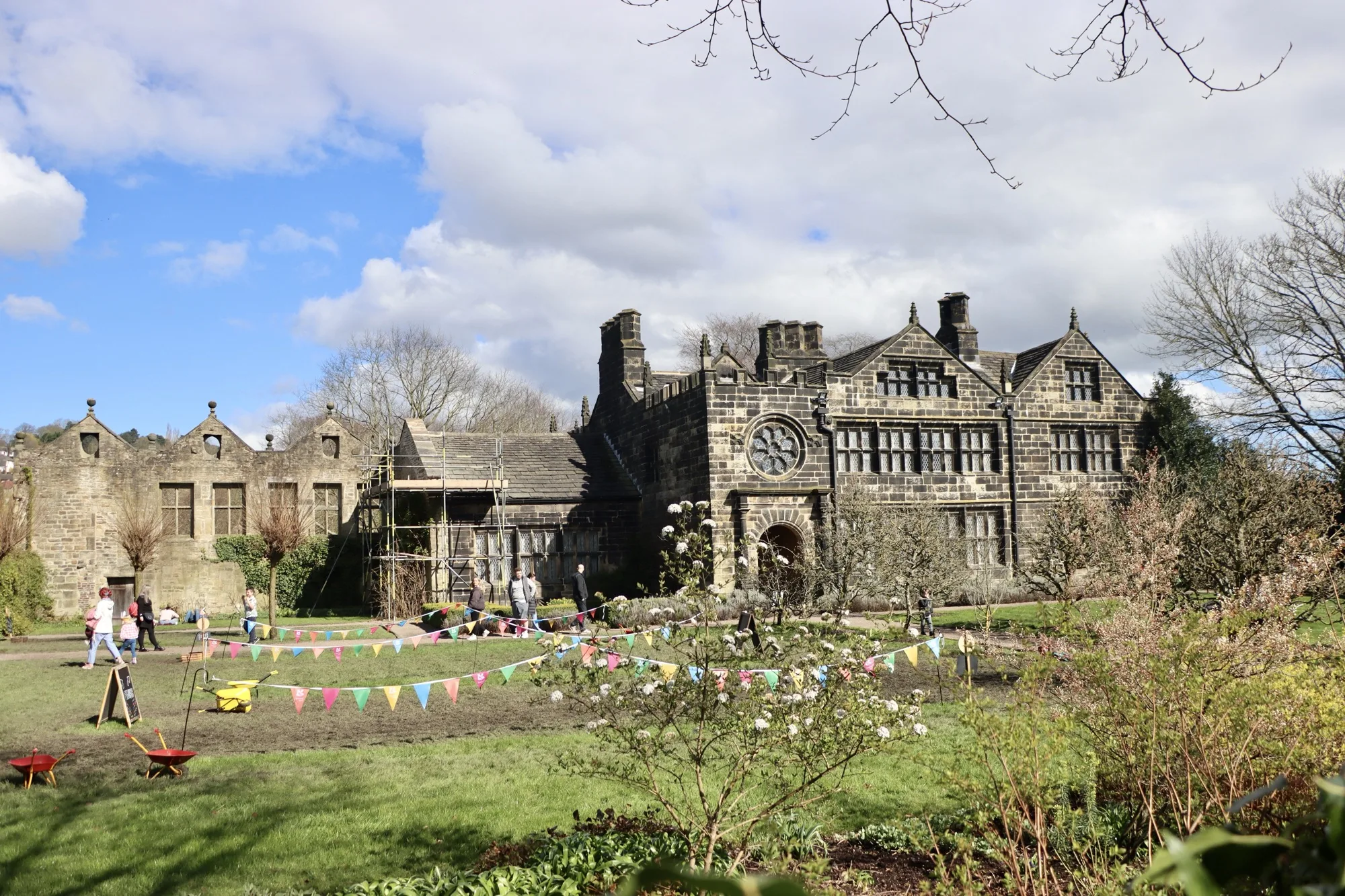
A photo of East Riddlesden Hall, a National Trust property near Keighley

On Good Friday, we went to East Riddlesden Hall, a National Trust property not too far away from us near Keighley. It wasn’t quite our original plan – we went to Cliffe Castle in the morning, but the museum was closed, and East Riddlesden Hall isn’t far away. Plus, we’re National Trust members and so we get in free.

The hall itself was mostly built in the 17th Century, although bits date from the 14th Century and there’s evidence of a dwelling from the 7th Century. I’ve been a few times as a child, and we also visited in June 2021 whilst there were still some lockdown restrictions. Now, everything’s open again, and with it being the Easter weekend, there were plenty of additional activities taking place. This included the usual National Trust Easter Egg hunt, but with plenty of extra things for kids.

When I visited in my childhood, a lot was made of how haunted the hall was. Indeed, there seemed to be a ghost in just about every room, and in the small pond outside. This seems to have been de-emphasised in recent years.

As with many National Trust properties in recent years, there’s been a renewed focus on making them more accessible to families and children. So there are now two playgrounds – one behind the shop, and another beyond the formal gardens. Indeed, compared to my childhood visits, much more of the outdoor spaces have been opened up.

The hall itself is interesting because it has changed significantly over the years. One wing of the hall was demolished in the early 20th century, with just a facade remaining. The hall is now grade-I listed, and is one of only two buildings in Keighley that have this status. As it happens, the other is West Riddlesden Hall, which is very close by but isn’t open to the public.

Accessibility

There’s limited car parking on site, and the hall is around 25 minutes walk from Keighley railway station. It’s served by the 662 bus service between Bradford, Shipley and Keighley which runs approximately every 15 minutes throughout the day (every 20 minutes on Sundays).

The outdoor areas are all wheelchair accessible and blue badge parking spaces are provided. The hall has some steps to enter, and there is no lift inside, so the upper floor is only accessible to those who can manage stairs.

Quarry Bank Mill

Quarry Bank Mill

Christine was working this weekend, and so, to keep our toddler entertained, we went to Quarry Bank, near Manchester Airport.

It’s a National Trust property, and is home to Quarry Bank Mill, a large, red-brick mill. Whilst it is still signposted as ‘Quarry Bank Mill’, the National Trust are spending a lot of money on other parts of the site as well. The mill is still the main draw – it’s big, and still has a lot of existing machinery inside. You enter at the top, and start with wooden looms and spinning wheels, before heading down to the mechanised machinery that were used in later years.

Quarry Bank Mill is also home to a very, very big water wheel. It’s still operational, but has been replaced by steam engines and electric power. Enthusiastic volunteers demonstrated the machines and explained how they work, making it feel more interactive than some industrial museums that I’ve previously visited (Leeds, Calderdale and Bradford).

A special exhibition at the top of the mill is based on Sir Tony Robinson’s book The Worst Children’s Jobs in History (sponsored link). Kids can practice shovelling (fake) horse poo, picking vegetables, sweeping chimneys and looking after babies (dolls). Our toddler loved this, and threw a bit of a tantrum when I had to extract the doll from them to move on. It’s on until the 10th September.

Quarry Bank Gardens

Gardens

Last year, the gardens at Quarry Bank were renovated and this was completed earlier this year. They’re home to some nice decorative planting, a kitchen garden and a newly-renovated glass house. You can even buy some of the produce for a donation. A new visitor centre will open later this year, improving access to the gardens.

Next year will see Quarry Bank House opened to the public for the first time, along with some mill workers houses.

We didn’t go to the Apprentice House, which is a separate guided tour. I didn’t think our toddler would enjoy it, but maybe we can go again when they’re older.

Quarry Bank Mill

Getting to Quarry Bank

Quarry Bank is near the village of Styal and is just to the south of Manchester Airport, so it’s relatively easy to get to. It took me about an hour to drive there from Sowerby Bridge, in light traffic.

As with all National Trust properties, members get in free. I’m a member, and under 5s get in free, so it didn’t cost anything for either of us to visit, but Christine isn’t. Had she come with us, it would’ve cost her £20. That being said, there’s a lot to see and do and it’s a full day out; I got there at 10:30 and left about 3pm, and didn’t do the Apprentice House. National Trust members will find it especially good value for money.

My photos from Sunday are on Flickr, as usual.

Beningbrough Hall

Beningbrough Hall

Easter Monday, despite being a bank holiday, was quite a nice day. So, we went to Beningbrough Hall, near York, with my parents in tow.

I’ve been before, as it’s not far from my parents’ house, and it’s a National Trust property. My parents have been National Trust members for years, and I also joined some time ago. Unfortunately, there aren’t many properties near us in West Yorkshire. East Riddlesden Hall is the nearest to where we live, and so I don’t get many chances to use my membership. So it was nice to be able to get some return on my membership fees. Plus, Christine has never been.

We didn’t go inside the hall itself, although I later found out that there’s a children’s playroom inside – dammit! Beningbrough Hall is a northern outpost of the National Portrait Gallery, and so there are many paintings inside.

Instead, we strolled around the gardens. They’re not the biggest, but they’re pretty and well-kept. Being Easter, there was the usual Cadbury’s Egg Hunt taking place. Our one-year-old was a bit young for this, but I think they’ll enjoy it next year.

There’s also a good outdoor playground. Again, it’s better for bigger kids, but our one-year-old enjoyed the swings. During school holidays, there are opportunities to build dens in the wood, and various other activities to keep children entertained.

As usual, there are photos on Flickr.

Brimham Rocks

Brimham Rocks

Yesterday, we took advantage of the nice weather and went to Brimham Rocks, near Harrogate. The site is owned by the National Trust and features large millstone grit rock formations that visitors are free to climb on. It’s free to visit, but those who are not members of the National Trust have to pay £6 to use the car park.

I’ve been many times over the years. My parents have been National Trust members for as long as I can remember and have taken me there several times, but I also seem to remember going with my primary school class at one point in the 1990s, when marbles were the playground craze of the time. The last time was in 2007, with the university hiking club and as part of an unwieldy-sized group of 19 mixed-ability hikers. This time was with a smaller group of 10 – myself, Christine, and 8 other former members of the hiking club and plus-ones.

Christine isn’t so confident with walking so whilst most of the group did a nine mile walk around the wider Nidderdale area, we just did a stroll around the edge of the site and took photos. Some of the rocks are really impressive, rising up to 30 metres in height, and many have been given names. The Blacksmith looks like an anvil, and the Druid’s Writing Table looks like… well, a table. There’s also The Smartie Tube which has a tunnel that small people can fit through – I’m not sure if Nestlé has authorised the use of its trademark though.

Unfortunately I was an idiot and didn’t check the settings on my camera before taking the photos, so everything was taken at 1600 ISO. Thankfully I shoot in RAW so I was able to improve the photos somewhat, but they do look like they’ve been taken on a much older camera. An inadvertent retro filter, if you will. A small selection of these images are available to view on Flickr.

I doubt this will be the last time we go to Brimham Rocks. It’s a great place to bring kids – provided that you keep them under observation, they will love being able to climb the rocks. I’m sure we’ll be back when we have children of our own. And, if we pick a day like yesterday, we’ll be in plenty of company – by the time we left in the mid-afternoon, both carparks were full.

Looks like I’ll be banned from Heathrow

BAA, the operator of Heathrow Airport (and a number of other big UK airports) wants to get a court injunction against members of 15 organisations who are running Camp for Climate Change in August. The injunction would mean that members of the 15 organisations involved in the camp cannot go into the airport, use the Heathrow Express or its platforms at Paddington station, use parts of the Piccadilly Line on London Underground, or use any of the airport access roads, including parts of the M25 and M4. There’s more from Greenpeace here, link via BoingBoing.

The thing is, these 15 organisations aren’t all loony liberal hippy organisations. Yes, the likes of Greenpeace are there, along with single-issue groups opposed to airport expansion. But you’ve also get well established organisations like The National Trust, RSPB, The Woodland Trust and the Campaign to Protect Rural England. The combined membership of these organisations is around 5 million people, and if the injunction is worded how Greenpeace say it is, then all 5 million of them will be banned from the airport. And as I’m a proud paid-up member of The National Trust, that includes me, and my parents.

Amusingly, it also includes The Queen, patron of the RSPB and CPRE, and Prince Charles, patron of the National Trust. And whole load of BAA’s own staff.

As it happens I have no real intention of being anywhere near Heathrow at that time, either as a protester or a passenger (although I know of a few friends wanting to do the former). But this injunction is so broad that’s almost amusing in a real head-against-wall way, if that makes any sense.