
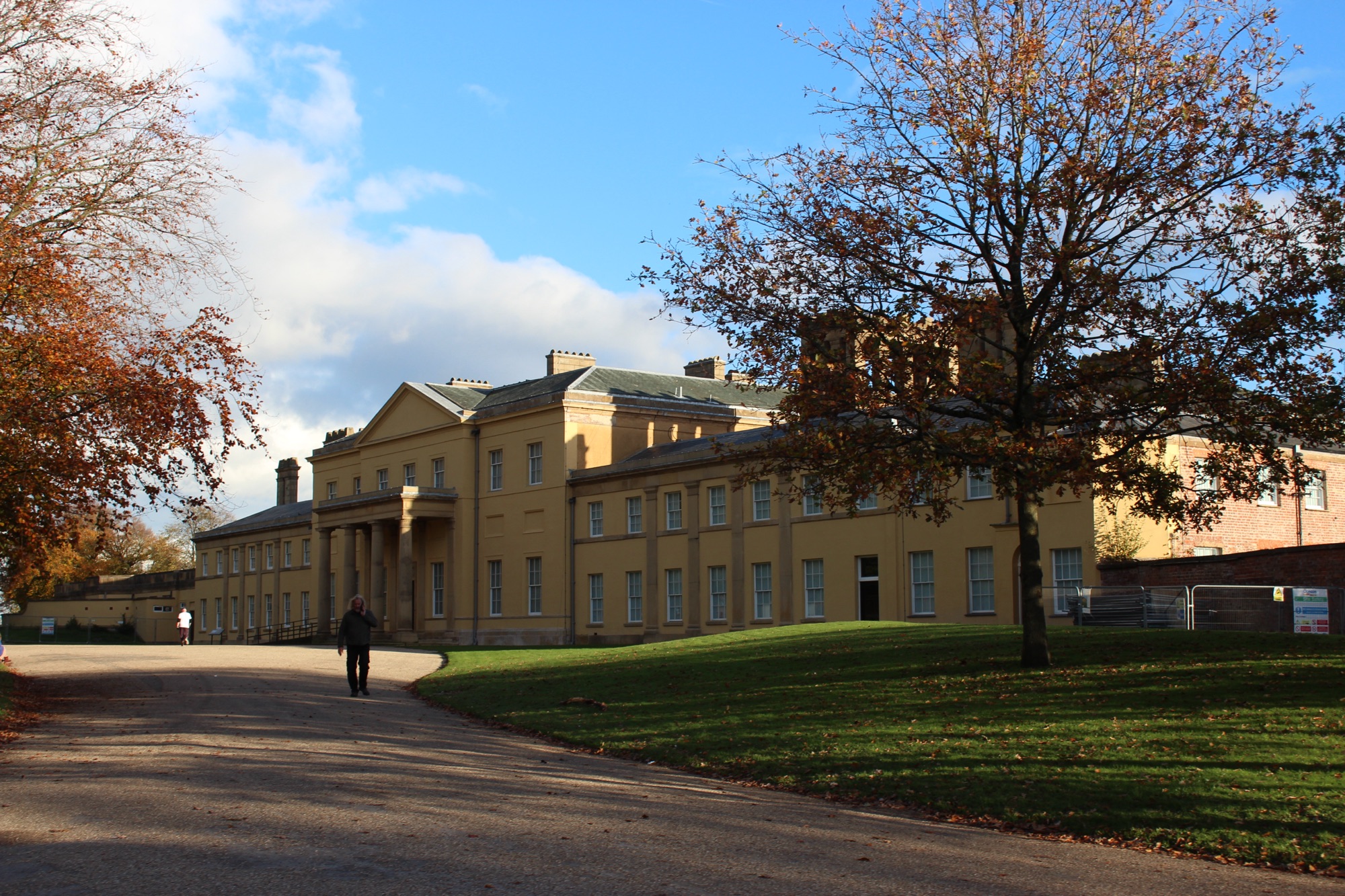
Somewhere that we go to regularly, but I have hitherto not blogged about, is Heaton Park in Manchester. It’s the largest public park in the north west of England, and, being in the north-east corner of Manchester, it’s only about half an hour’s drive from us.
To give you some idea of how big Heaton Park is, it effectively spans junctions 17, 18 and 19 of the M60 motorway. Indeed, depending on which of its multiple car parks you use, you may end up leaving the M60 at either junction 17 or 19. Its large size means that there are plenty of things to see and do inside the park.
History of Heaton Park
Heaton Park is the parklands surrounding Heaton Hall, which was built in the late 18th Century and remains to this day. Whilst originally in private hands, the park and hall transferred into public ownership in 1902, and has been open to the public ever since. The hall is Grade I listed, and is occasionally open to the public. Here’s a video of the inside.
The parklands were laid out with a lake and pleasure grounds whilst still in private ownership, and these remain today. There are a number of other listed structures and monuments across the park, including the colonnade from the original Manchester Town Hall which was re-assembled in the park when the current City Hall in Manchester city centre was built.
Playgrounds
There are two large playgrounds for kids at Heaton Park. One is by the hall, towards the northern end of the park, and has a space theme. The second is down by the lake, with a woodland theme. Both are far better than the average playground that you get in a typical municipal public park, both in terms of size, range of play equipment and that there’s a consistent theme. We mostly visit the park on weekends and they’re both always busy.
Heaton Park is also home to Zip World Manchester, a Go Ape style treetop adventure park. Whilst entry to the other playgrounds is free, this is a chargeable attraction. We’ve not done it yet.
Trams
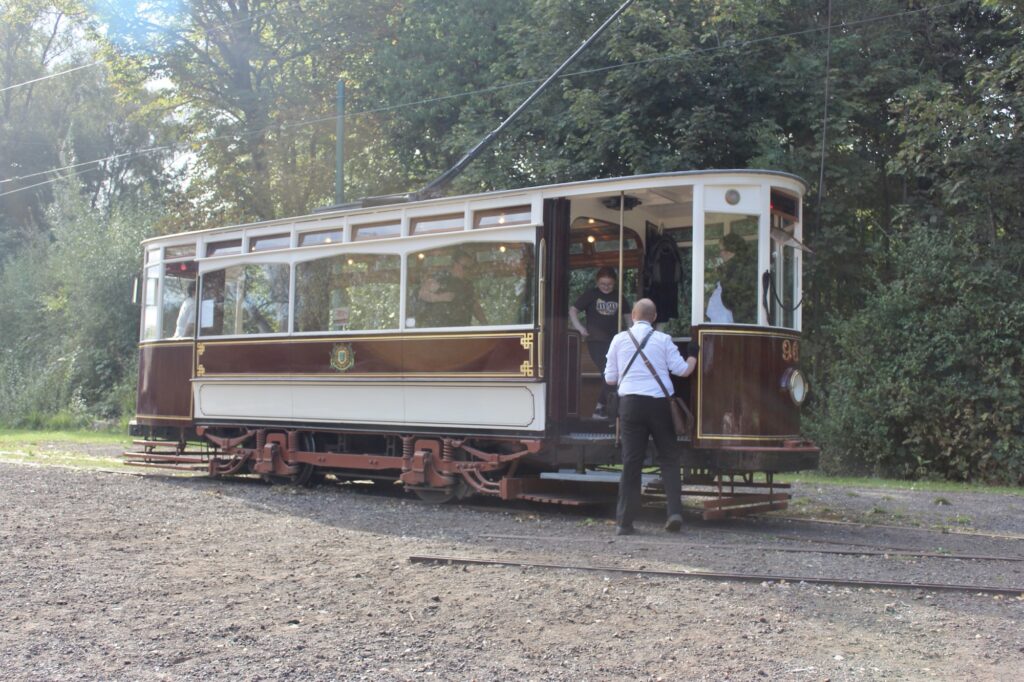
As well as having a dedicated stop on Manchester’s Metrolink tram network, there are heritage trams that run on a short tramway within the park itself. This tramway is Britain’s only dedicated heritage tramway that still runs on original tram track, as it uses a short spur built by the original Manchester Corporation Tramways that runs into the park. It’s been extended a couple of times, most recently in 2011, and now runs from the edge of the park to the boating lake, over a distance of about half a mile. There are two depots, at each end, and one of these includes a small tramway museum inside the original waiting shelter.
Tram services usually run at weekends in the summer. The heritage trams all come from the north of England – some from Manchester but others from Blackpool.
Heaton Park Animal Centre
Behind the hall’s old stables block, which is now a café and toilets, is the Heaton Park Animal Centre. This would have been the farm for the hall in its heyday, and nowadays a range of animals live there. They’re mostly farm animals – chickens, sheep, pigs and donkeys – but there are some alpacas and a tortoise there too. Like the rest of the park, entry is free although its opening hours are limited to 10-4. Whilst not as impressive as places like Cannon Hall Farm, it’s nice to pop in and see the animals.
Boating lake
There’s a large lake towards the southern tip of Heaton Park, where you can hire a boat for 25 minutes at a time. There’s a choice of boats – some are electrically powered, but you can opt for a swan-shaped pedalo or a traditional rowing boat. Prices range from around £15-30 and ideally you should book ahead.
Other attractions
Other things that we haven’t really visited ourselves include a garden centre, golf course, and crown green bowls. There’s also a series of guided walking routes around the park, and like most public parks, there’s a Parkrun at 9am every Saturday. There are also multiple places to buy food, and plenty of ice cream vans.
In the summer, Heaton Park becomes an outdoor events venue – Oasis had their homecoming gig there last year.
Overall, Heaton Park offers enough for a full, varied day out – especially in summer. And, unless you need to pay for parking, the majority of what it offers is free. This is really important, in an age where lots of family activities cost increasing amounts of money. Whilst we often visit properties operated by the National Trust and are happy to pay for our annual membership, it’s really important that everyone has access to safe leisure activities and green space.
Accessibility
If you struggle with stairs, then you should still be able to get around most of the park as there are few steps. However, it is on a hillside, and some slopes may present a challenge for some powered wheelchairs. Disabled toilets are available, and there is a Changing Places toilet at the pavilion by the lake.
There are five car parks spread around the edge of the park. The largest of these is the Lake Car Park, with 263 spaces and a much larger overflow. We tend to use the Hall Car Park, which is closer to the hall, stables and animal centre and offers 252 spaces. All car parks have disabled spaces. Parking is pay and display, or using the PayByPhone app, and typically costs up to £4 to park all day.
The Golf Car Park, which is on the eastern tip of the park, is the only one with electric car charging facilities. It offers two 7 KW AC chargers on the Be.EV network; payment appears to be by app (including Zapmap and Electroverse) or RFID card. I haven’t used this one myself – as mentioned, it’s about a half hour drive for us. If you need a rapid charger, then there are several available around the perimeter of the park, including a 150 kW charger with five bays just off Junction 17 of the M60.
As mentioned, Heaton Park is served by Manchester Metrolink, with regular services on the Bury line. The tram stop is on the western edge of the park, across a road. Trams actually pass underneath the southern tip of the park in a tunnel.