I recently got a popup message on my phone from the Canon Camera Connect app, which I use to download photos from my Canon EOS camera. It took me to this announcement, which states that, from later next year, I’ll need to sign in to my Canon ID to use the app.
This seems silly. All I use the app for is to move photos from my camera to my phone wirelessly. The camera and my phone have a persistent Bluetooth connection when both are switched on and in range, and then when photos are to be downloaded, it switches to a private peer-to-peer Wi-Fi connection. There’s no need for me to be signed in to a Canon ID to be able to use the app, as no data needs to be sent to Canon’s servers.
Canon’s stated reasons for requiring a sign in with a Canon ID are that it’ll allow better integration with their cloud services. At present, these are separate apps, but I’m assuming they want people to upload their images to their cloud service, so that they can charge a subscription. I don’t know if digital camera sales are falling, now that everyone has a pretty good camera in their smartphone, but I suppose Canon see this as an additional revenue stream.
And there’s being able to use people’s personal data, too. If people are signed in using your app, you can track what they do.
I like using Cory Doctorow‘s term ‘enshittification‘ for this, as it’s an example of requiring a user to do something that isn’t going to make their experience any better. It’s a very one-sided act on the part of Canon. I would also argue that it goes against the spirit of Principal C of the GDPR, which is to minimise the data being captured. I think even Canon would struggle to argue whether it’s necessary for people to surrender their personal data, just to use an app that works locally between their devices. Indeed, I may well draft a complaint to the Information Commissioner’s Office about this to pre-empt this change.
As for alternatives to Canon Camera Connect: the only one I could find is PhotoSync. The ability to download photos from Canon cameras (and other brands) requires the purchase of a Premium subscription, which is either a £25 one-off payment, £6 per year or 80p per month as I write this.
Have you ever wondered if there was a list of benches with public dedications on them? Well, I haven’t, but there is one and it’s called OpenBenches.
It’s similar to Open Plaques, which is crowd-sourced list of plaques on the sides of buildings commemorating notable people or events that happened. OpenBenches, meanwhile, is for people who may not have been notable, but were loved and missed by their friends and relatives after their passing.
Anyone can submit a bench, as long as you can upload a photo of it that is geotagged. With most photos being taken with phones these days, this isn’t much of an issue. Of course, the bench should have a dedication on it, and you’ll need to type out what the dedication says. Submissions can be made anonymously, or by logging in using an account on Twitter/X, Facebook, GitHub or WordPress.
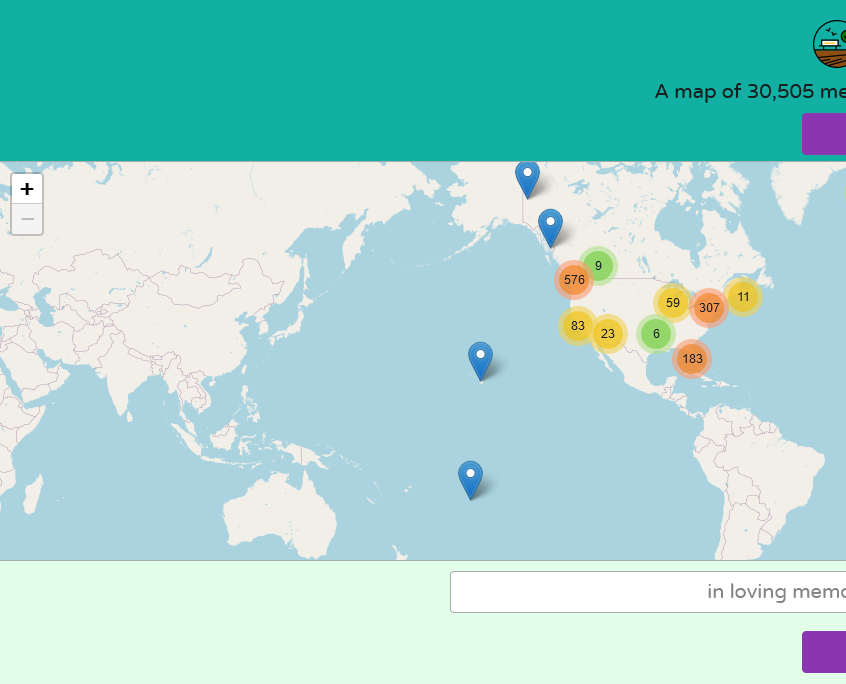
There’s now over 30,000 benches on OpenBenches, all with a location, a photo and a copy of the text of the dedication. However, over 28,000 of them are in the UK, with few elsewhere. That may be because dedicating a bench to someone is more of a British thing, or because its developers (Terence Eden and Elizabeth Eden) are British.
There aren’t any benches listed on there in my town of Sowerby Bridge yet. I think there are some eligible benches nearby, so maybe I should take the time to go and take photos of them to add them.
For the first time in a long while, I’ve uploaded photos to my Flickr photostream. These are mostly from various days out since August last year.
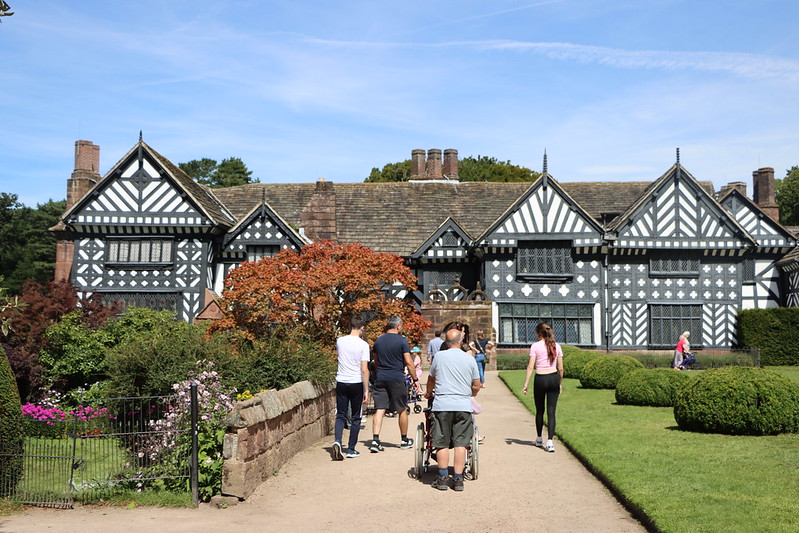
Speke Hall
Speke Hall is a National Trust property on the edge of Liverpool – indeed, it’s next to the runway of Liverpool John Lennon Airport. It’s a Tudor manor house surrounded by well-kept gardens, which include a maze, a discovery trail and play areas. It’s just over and hour’s drive for us, and this was our second visit – our first was in winter 2019. Flickr album link.
York Gate Garden
York Gate Garden is to the north of Leeds. It’s quite small but well laid-out, and you can spend over an hour exploring it. There’s also the obligatory café and gift shop. Flickr album link.
Sowerby Bridge Rushbearing
Rushbearing is an annual tradition that takes place in Sowerby Bridge every year – normally the first weekend in September. Historically, it was the delivery of rushes to the various local churches; whilst this still happens in a ceremonial capacity, the parade also calls at many local pubs, and has various Morris and traditional dancing troupes joining in each year. Other communities in the Pennines have similar rituals. Flickr album link.
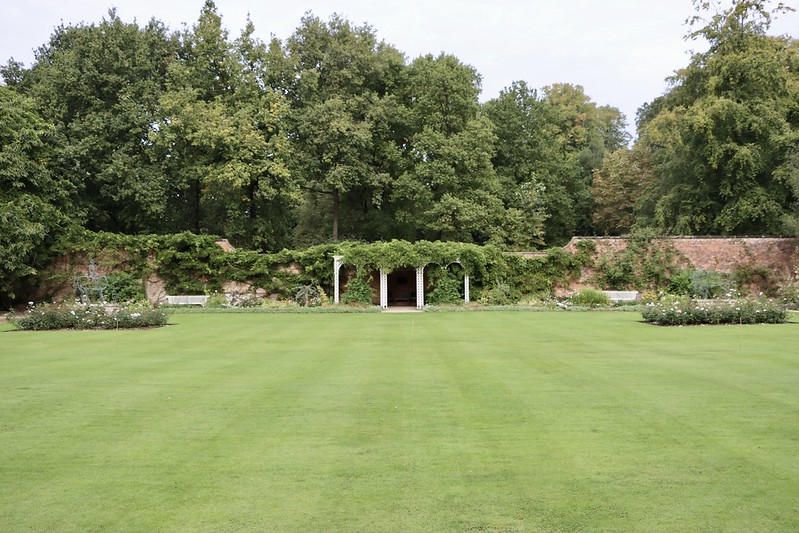
Hare Hill Garden
Hare Hill is another National Trust property – we’re members, and so we try to get our money’s worth every year. I literally have a spreadsheet tracking how much we spend against the annual cost of membership. This was one property that we hadn’t visited, that was also within driving distance for a day out – it’s in Cheshire, near Alderley Edge. There’s a walled garden, and a landscaped forest area. It’s not worth travelling for a whole day, so we also went to Nether Alderley Mill on the same day, which is nearby. Flickr album link.
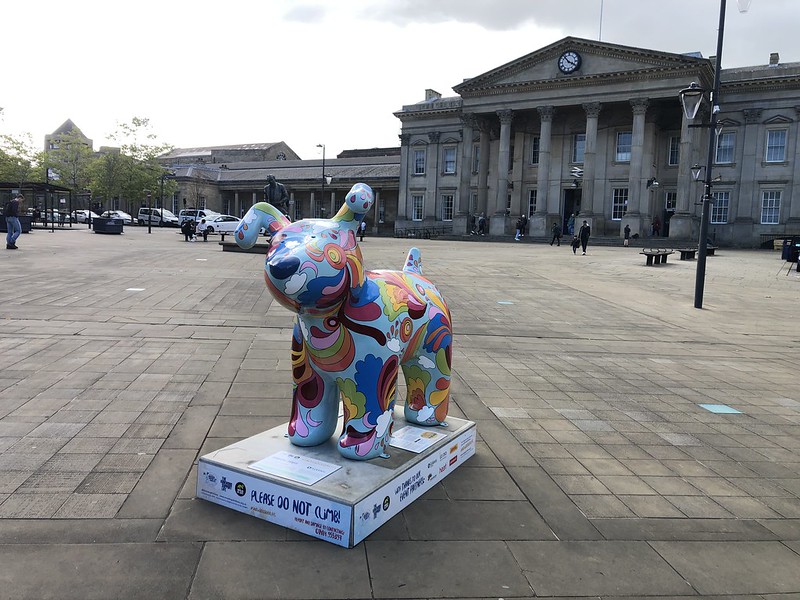
Huddersfield Snowdogs
Most towns and cities have had some kind of art trail, where they produce a series of white fibreglass models, have local artists and community groups paint them, and then place them around on a trail for visitors to follow. Birmingham had Cow Parade, Hull had Larkin with Toads, Liverpool had Superlambananas, Bristol had Gromit, and in September and October 2022, Kirklees, the metropolitan district including Huddersfield, Dewsbury, Holmfirth and Mirfield, had Snowdogs. We went to have a look at some of those around Huddersfield – here’s a link to the Flickr album showing a few of them.
Yorkshire Wildlife Park
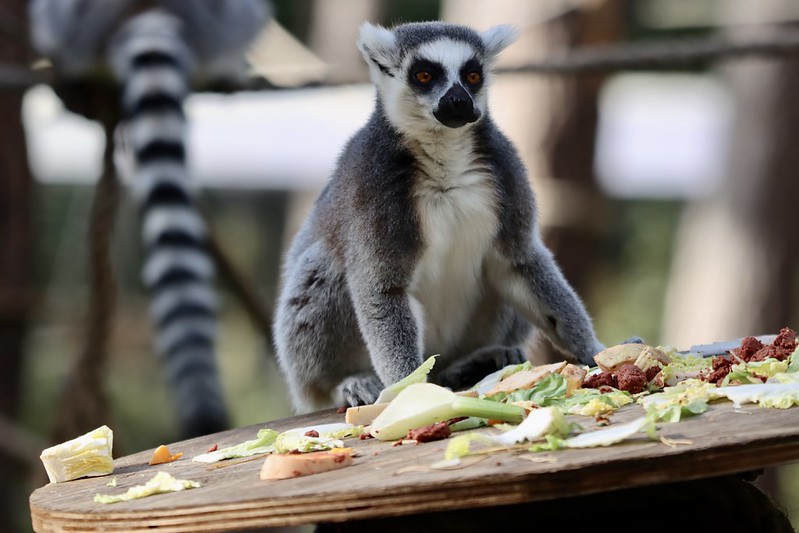
The Yorkshire Wildlife Park is the largest zoo that’s close to us, being on the east side of Doncaster, and we had day tickets gifted to us last Christmas. This was a relatively short visit, as we were with friends who also had kids. Being a newer zoo, the zoo doesn’t have a huge variety of animals but those that it does have are afforded very large enclosures, and there are very good photography opportunities. It has the UK’s largest collection of polar bears, and a large pride of lions that were re-homed from a cramped zoo in Romania. Flickr album link.
Castle Howard Christmas
Castle Howard is a stately home in North Yorkshire, and every winter they dress up their rooms for Christmas. It’s always a sparkling visual delight, and this year’s theme was the musical Into the Woods. This was our first visit – you have to book in advance, and it’s not cheap, but the tickets do include access to the rest of the site, including an excellent playground for kids. Flickr album link.
Dunham Massey
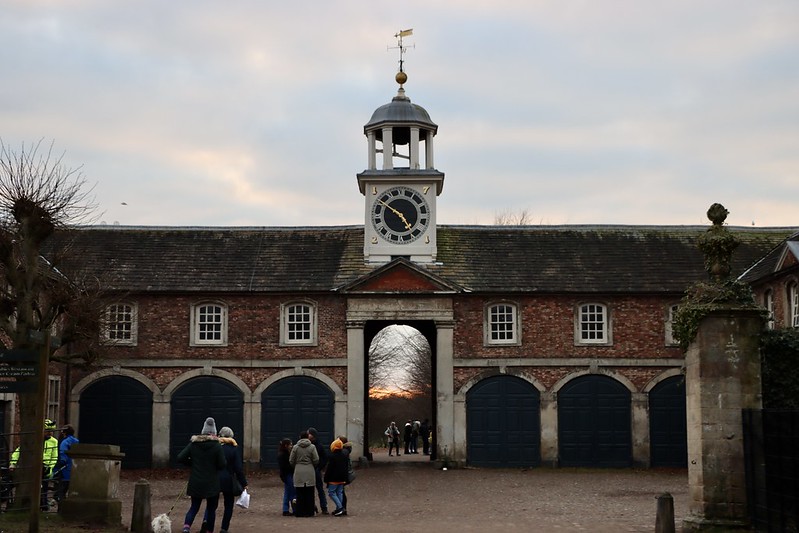
Yes, it’s another National Trust property – Dunham Massey, near Altrincham to the south west of Manchester. This was our second visit; both times we’ve been in the winter, as it has excellent winter gardens. I advise getting there early; both times we’ve arrived in the afternoon and it’s been a struggle to get parked, even in winter. I didn’t actually take any photos of the house this time, but we did find out more about it as we went on the walking tour of the grounds. It’s notable as the property was mostly vacant for the 19th century, and so unlike many other stately homes, its grounds weren’t reshaped by the likes of Capability Brown. Flickr album link.
Manchester Museum
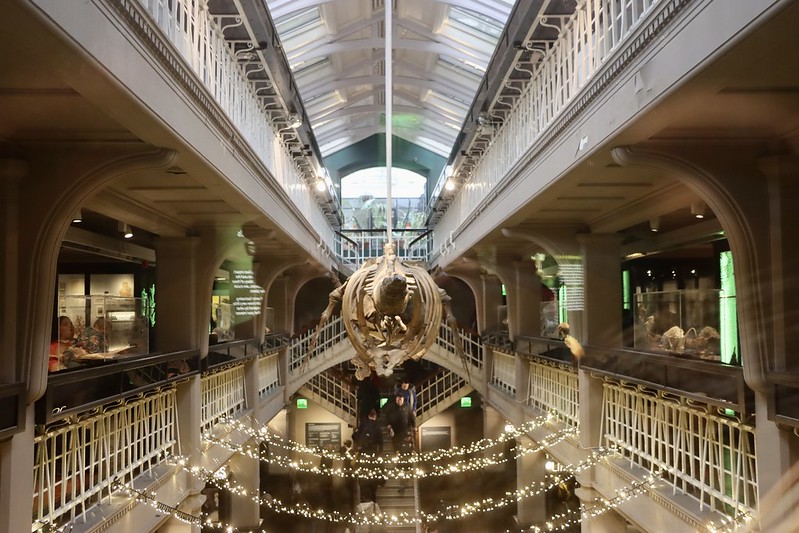
The Manchester Museum is based at the University of Manchester, and this year re-opened after a multi-year refurbishment and extension project. It’s one of our favourite museums, with a wide variety of exhibits, and very accessible for children. Our favourite part is the vivarium, which, despite it being a museum, has live exhibits – mainly frogs and lizards. Flickr album link.
Martin Mere
Over in Lancashire, we had a day out at Martin Mere, a wetland area managed by the Wildfowl and Wetland Trust. The site is in two parts; one part has a visitor centre and some captive species of birds including flamingoes (and some otters), but the remaining three quarters of the site is home to wild birds. A large, enclosed bird hide lets you see the main lake in the mere, and it’s worth popping by when the staff spread bird seed out as literally thousands of aquatic birds descend – including hooper swans, if you visit at the right time of year. When we visited, part of the site was closed off due to Avian Flu but hopefully it will be open in full now. There were also a number of Lego models of birds, but we went on the last day. Flickr album link.
Hardcastle Crags
We’re on National Trust property again, although not so far afield – Hardcastle Crags sits just north of Hebden Bridge and is our closest site. In the middle of the site is Gibson Mill, which is open as a museum, café and shop, and is completely off grid – there’s no mains electricity, gas, water or sewerage. Its drinking water is filtered from the water, and it has composting toilets. Meanwhile solar panels and a hydroelectric motor provide electricity, and a wood burning stove provides heat. As we’ve recently invested in solar panels, I was quite interested to see how they were managing; when we visited, an additional generator was behind the back of the mill and they were unable to sell hot food. Flickr album link.
Manor Heath Park
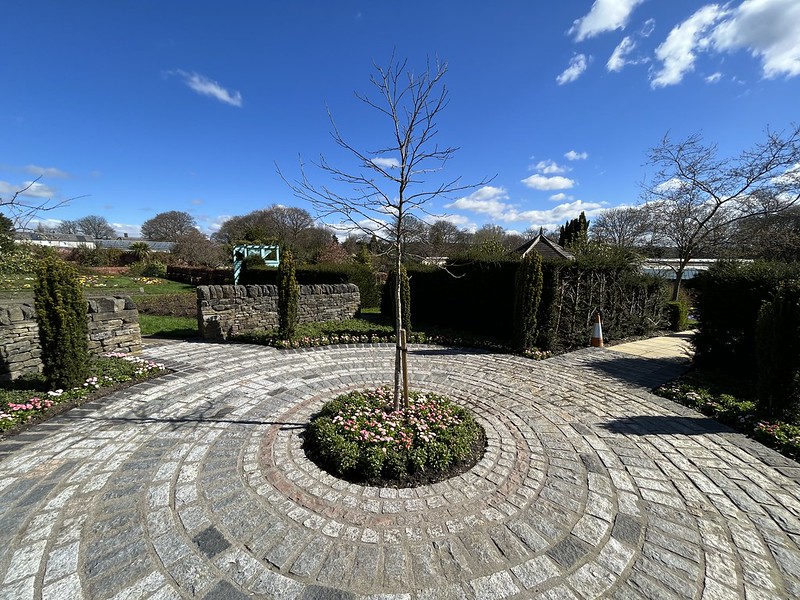
Manor Heath Park is one of Halifax’s public parks, and recently it has re-opened its walled garden and Jungle Experience, an indoor butterfly house with tropical plants. These photos were all taken on my iPhone 13 Mini, as it wasn’t a planned trip and I didn’t have my usual camera (Canon EOS 70D) with me. Flickr album link.
York Castle Museum
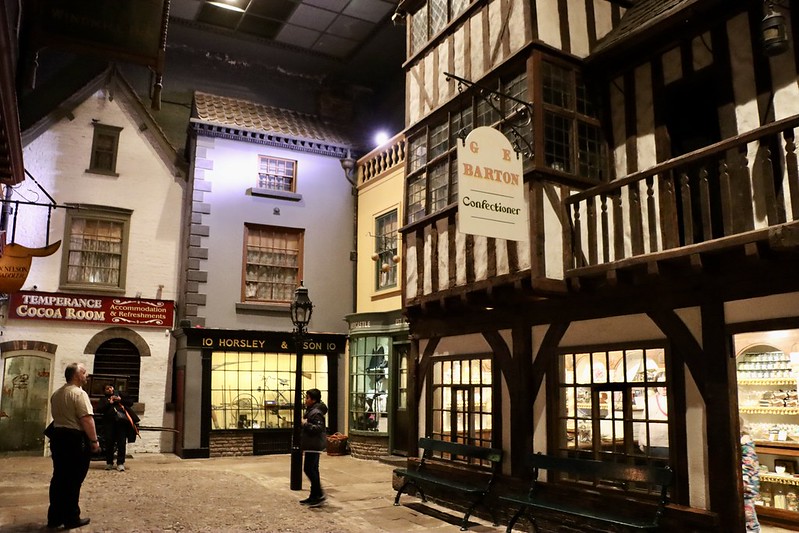
One of York’s better established museums, the Castle Museum is also one of my favourites, but I’d not visited since 2009. It includes Kirkgate, a recreated street of shops, and part of the old York jail which counted Dick Turpin as one of its more famous inmates. We whizzed around in a couple of hours thanks to a somewhat disinterested seven-year-old but you can probably spend longer. Flickr album link.
Murton Park
On the edge of York is Murton Park, which incorporates the Yorkshire Museum of Farming and the remaining stub of the Derwent Valley Light Railway. It’s a bit of mix of different things – as well as animals and lots of farm machinery, there’s a Viking village (which a re-enactment society were using) and a model Roman fort, which was being used by an American Cowboy re-enactment society. We last visited in 2018 and there’s clearly been an effort to expand the range of activities for kids, which is nice. Flickr album link.
That’s about 9 months of photos uploaded. I still need to do some tagging on a few images, but please enjoy. I am trying to use Flickr more, even though it’s not got the same community feel that it did in the early days. I understand its new owners, Smugmug, are trying their best but are up against a lot of technical debt – indeed, some parts of the site appear unchanged in the nearly 20 years that I’ve been a member.
Hello. My name is Neil, and I bought a selfie stick.
No, I haven’t lost my mind. I saw genuine instances when I would want to use one – especially when the little one arrives – and so I went onto Amazon to find a reasonably good one. Of those, the Camkix Extendable Selfie Stick(sponsored link) seemed to have the best overall reviews and wasn’t too expensive, so I bought it.
The term ‘selfie stick’ is a relatively recent invention. Technically, this is a ‘handheld telescopic universal smartphone monopod’. It comes in three parts – the handheld monopod itself, a smartphone grip, and a separate Bluetooth remote. The monopod hand-grip is available in a variety of colours – I went for green, but you can also get pink, black and other colours. On the model I bought, the grip wasn’t very well-glued to the body, but otherwise I’m reasonably happy with the build quality, considering the price.
Retracted, the selfie stick is about 30 centimetres (11 inches) but it can extend to around a metre (40 inches).
The smartphone mount allows you to clip in a smartphone. My iPhone 5 fitted comfortably, and I’m sure the larger iPhone 6 would fit too. I’m not sure about phablet-sized smartphones like the iPhone 6 Plus or Samsung Galaxy Note but theoretically anything that 8 centimetres wide or less should fit. It won’t take a tablet computer like an iPad or iPad Mini, but if you are using a tablet to take photos on a selfie stick, then you are truly a horrible person and should reconsider your life choices.
The smartphone mount is detachable, leaving a standard screw-in tripod mount on the monopod, so you should be able to use it with any regular camera. I was able to mount my Canon EOS 600D onto it, although the extra weight meant that it was hard to control it when fully extended. If you are planning to use a regular camera, remember that you’ll either need to buy a separate remote for it, or use your camera’s timer function. And unless you have a screen that flips around, you won’t be able to see the picture until you’ve taken it (the EOS 600D has a flip-out screen).
Finally, there’s the remote. Some selfie sticks come with a button on the handle, which connects to the smartphone either using an audio cable to plug into the phone’s headphone socket, or wirelessly via Bluetooth. This selfie stick has a separate Bluetooth remote. There are two buttons – the larger one is designed for Apple devices running iOS 6.0 or above, but should work on many Android phones as well. The second button is for some fussy Android phones that need a different command. Whilst iOS users can use the built-in camera app, Android users may or may not need to install a third-party camera app to use the remote.
The remote also has an on/off switch so that you don’t inadvertently take photos of the inside of your pocket. Pairing it with your phone is straightforward.
On the whole I like the selfie stick. It’s small enough to fit in my camera bag, albeit with the smartphone mount folded downwards, and both the monopod and remote have decent wriststraps. And I promise that I won’t be one of those horrible people who ends up taking people’s eyes out in the pursuit of a selfie in a busy place.
It’s taken almost four months but I’ve finally uploaded the photos I took in Chester in October last year. They were sat in iPhoto, waiting to be edited and sorted but until today I hadn’t actually got around to doing anything with them.
Note that these are just the photos taken in Chester city centre. I also took quite a lot of photos at Chester Zoo whilst we were there, but I’ve not yet processed those either. Hopefully they will be online soon, and not in another 4 months time.
A few months ago I decided to stop using Google’s Picasa for editing my photos and instead switched to Apple’s iPhoto. Doing so has been an enlightening experience and although (spoiler alert!) I prefer iPhoto, I also think it’s worth mentioning why I switched but also what Picasa has going for it.
Firstly, a bit of background – I’ve been a Picasa user for quite some time (since January 2005 apparently) and used it prior to becoming a Mac user. In the early days of Mac ownership I used CrossOver to run it, before later running the Mac OS X version of it when that finally came out. I never really touched iPhoto until this year, when I bought the latest version.
I’m therefore comparing iPhoto ’11 with Picasa 3.9.
Price
Unless you have a reasonably new Mac, you probably won’t have iPhoto ’11. If you do, then it’s free; if not, it’s a £10.49 purchase from the Mac App Store. Picasa is a free download so it wins there.
Image editing
In my opinion, iPhoto wins here as it offers many more features for making adjustments to photos. Both will offer basic features for adjusting light and colour balance, and a one-click button (‘enhance’ in iPhoto, and ‘I’m Feeling Lucky’ in Picasa – it is a Google product after all) to automate this. The one-click enhancers in both were a little hit and miss – I found iPhoto sometimes over-saturates pictures whereas Picasa makes them too bright. But iPhoto excels by also offering noise reduction and better controls for lighting pictures – I was able to fix a few of my under-exposed images much more easily in iPhoto than Picasa. On the other hand, Picasa also supports Instagram-style filters should you wish to apply those.
Speed
iPhoto is slow. Like, really slow. If you like seeing the spinning beach ball, then you’re in luck because you’ll see it a lot in iPhoto – especially when you have more than a couple of other apps open at the same time. Picasa is much faster – which seems odd, since Picasa is a cross-platform app written by Google, whereas iPhoto is native to OS X and by Apple. Apple didn’t announce any updates for iLife at WWDC earlier this week but hopefully efficiency improvements are on the cards for iPhoto ’13.
Sharing
If you want to share your photos with others, both apps will let you upload them to the internet. Picasa supports its own Picasa Web Albums service, with two-way synchronisation of photos between your computer and your Web Albums account, as well as Google+ and Blogger. iPhoto supports Facebook and Flickr, and users of OS X Mountain Lion can also share pictures on Twitter. For me, support for Facebook and Flickr is far more useful than Google’s own properties, but this depends on what you use.
Incidentally Google used to offer an Export plugin for iPhoto that would allow you to export from iPhoto to Picasa Web Albums, but this is no longer in active development and has been removed from the Picasa web site. You can still download it from MacUpdate though.
Interface
Of the two, iPhoto is naturally more Mac-like, although it does use a number of non-standard user interface conventions (in comparison to other Mac apps). Picasa feels like an app brought over from Windows – which it is – and the interface is thus less visually appealing. I also found that iPhoto presented its features in a clearer and more easily accessed way – Picasa has a habit of hiding things in menus.
Slideshows
Both apps will let you create slideshows from your images. To me, iPhoto slideshows look more professional, and allow you to easily import music from iTunes to accompany it. On the other hand, Picasa will let you export your slideshow directly to YouTube; iTunes merely saves a QuickTime file and you’ll need to either upload it manually or use Apple’s iMovie, sold separately, to get it on to YouTube.
Other bits
iPhoto will let you order prints and other printed items from within the app itself, which is a nice touch – with Picasa it’s necessary to export images first, and then use a third-party service. iPhoto also lets you browse your Flickr sets and Facebook albums from within the app itself, which includes the use of the slideshow features.
Both will let you tag people in your photos, so that you can also browse by person as well as folder or event; iPhoto uses contact information from your Address Book and Facebook, whereas Picasa uses Google Contacts and Google+. When you upload these photos to Facebook or Google+ then these people will be automatically tagged if you are friends with them or have circled them.
In my experience, Picasa doesn’t see, to get much attention from Google; version 3.9 was still the most recent version as of December 2012, having been out for 9 months; iPhoto has had several minor updates in that time such as adding support for Twitter sharing. Finally, iPhoto naturally supports full-screen mode in OS X Lion and Mountain Lion, which Picasa does not as yet.
Summary
On the whole I feel iPhoto has more to offer than Picasa, but by switching from one to the other I’ve had to sacrifice some features (and speed). Consequently I imagine that there are some people for whom Picasa will clearly be the best option – but, in my case, it isn’t.
This post was revised in December 2012 to add more information about slideshows, Twitter sharing, photo tagging and Picasa updates.
On Saturday, Christine and I went to Wakefield, to visit the Hepworth Gallery, a new art gallery and museum built to house the collections of Barbara Hepworth, along with some works by other artists and sculptors inspired by her. The gallery is located next to the River Calder and is in easy walking distance from Wakefield Kirkgate station. Despite costing £35million to build, entry is free, and you can easily spend a couple of hours here.
The architecture of the building is interesting – it’s a thick concrete shell in the 1960s brutalist style, but with a clever use of windows to let in a reasonable amount of light. Of course, the thick concrete walls mean that you probably won’t have a working mobile phone in here.
I didn’t take any pictures inside as photography isn’t allowed (being modern art, most of the works are still under copyright restrictions) but I did take plenty out and around the gallery. It’s sited in an area of Wakefield that is in need of regeneration, so hopefully this will act as a catalyst to get people and businesses into the area.
Across the road is Wakefield Bridge and the Chantry Chapel of St Mary the Virgin, a 14th century chapel on the bridge itself – one of only four in such a location and the oldest surviving example. Although it’s around 650 years old, it is still regularly used for church services. Certainly worth a look if you’re about.
Although I’ve lived in Yorkshire all my life, this is the first time I’ve been to Wakefield, bar passing through on the train, and so we went into the town to have a look around. Parts of the city centre are very run down, although work is going on to regenerate it, including the new Trinity Walk shopping plaza which, like the Hepworth Gallery, opened a few weeks ago. It ties in with a refurbished market, with a striking overall roof.
The city, which is the smallest of the three in West Yorkshire, still has some way to go before it’s looking as nice as Leeds city centre. In particular, the smallest of its two railway stations, Wakefield Kirkgate, was described by the previous secretary of state for transport Lord Adonis as probably the worst ‘medium-large’ station I have seen in Britain[source], and having seen it for myself I can see why – those buildings that are still standing are boarded up, it’s dirty, there’s no staff around, there’s paint peeling off the walls and just looks generally dilapidated. Not a nice welcome to the city. The other station, Wakefield Westgate, whilst not the most pleasant of stations, at least has some amenities and a staff presence.
It’ll be interesting to go back to Wakefield again in a couple of years, once some of the regeneration projects have progressed further. We also didn’t visit the cathedral or the Wakefield Museum, so they’re there for a future visit.
This is a camera made by the Eastman Kodak company in 1917, as part of their ‘Vest Pocket Kodak’ range. It was given to me by Christine’s grandparents. I haven’t tried taking any pictures with it yet, as it didn’t have any film in it. Apparently, the film is still available to buy from specialist retailers though.
I gather that it gets its name from the fact it could fit in one’s vest pocket, as folded up it’s quite small – about the same size as a modern compact digital camera. One such Vest Pocket Kodak model has been up Mount Everest before.
I’m not sure quite what to do with it. I will probably ask the National Media Museum if they are interested in it, since they’re in Bradford and have a large photography gallery; however, several hundred thousand of these cameras were made and so it’s possible that they aren’t interested in it; nor will it make a lot of money second hand (examples in better condition are available for about £50 on eBay from specialist camera sellers). Still, I’ve taken a few pictures of it and may be willing to give it a worthy home if approached.
I spent the new year with Christine in Blackpool and on Sunday went to Blackpool Zoo. It’s open 364 days a year (seeing as the animals there need caring for all year round) and is nice and quiet outside of the busy summer tourist season. The weather on Sunday was bright and sunny (if bitterly cold) so it made an ideal day to go, and to give credit to the zoo staff the educational talks during feeding times were still going ahead despite there being probably no more than 50 people in the park all day.
Having done the Sea Life Centre before Christmas (which has a £5 discount per adult out of tourist season), the next big Blackpool attraction on my list is the Blackpool Tower. I’m sure I’ll get chance to do that soon.