Rude Science

A photo taken during the Rude Science show at the Halifax Victoria Theatre

If you like explosions, or want to know what chemicals make up a fart, then the Rude Science live show may be right up your street. Especially if, like us, you have kids in the 6-14 age bracket.

The Rude Science show came to the Victoria Theatre in Halifax last weekend, and so we took our nine-year-old along. It was hosted as part of this year’s Halifax Comedy Festival, which runs until Sunday.

Rude Science is hosted by Stefan Gates, who has hosted and guested on a number of BBC TV shows, for both kids and adults. He’s also the author of a number of books – we picked up his Rude Science (sponsored link) and Insects: An Edible Field Guide (sponsored link) from the foyer after the show, and had them signed. Oh yes, I should mention that Stefan has a thing for ‘eating the science’ and this includes various substances used during the show.

The show is very well put together, considering that it incorporates highly flammable materials and lots of different cameras (including infrared) and smoke machines. Certainly, there were only one or two minor balloon-related technical hitches. And whilst it wasn’t quite a sell-out crowd, there were very few of the 1500 or so seats remaining empty at the Victoria in the showing that we saw.

Rude Science is well targeted at upper primary and lower secondary school aged kids, and has a good balance of being funny, engaging and educational. Our nine-year-old really enjoyed it. The show remains on tour for the rest of this week, with it being half-term – it’s in Hull tonight, Guildford on Thursday, Chelmsford on Friday and Reading on Sunday. At each venue, there’s usually a lunchtime and afternoon slot, and, with an interval, the show runs for around two hours. It’s then back on the road for February half term.

Operation Ouch: Brains, Bogies and You

Our family of three appearing as skeletons at the Operation Ouch: Brains Bogeys and You exhibition

Last weekend, we made a return visit to the Science & Industry Museum in Manchester, to see the Operation Ouch: Brains, Bogies and You exhibition. This is the second consecutive Operation Ouch exhibition at the museum; last year, they had ‘Food, Poo and You’ which we visited in January. Twice in fact, as the first time I went with our (then) eight-year-old, and so we visited again a few weeks later as a family of three.

For those without kids (or grandchildren) in the 7-14 years old age range, Operation Ouch is a CBBC TV show hosted by twin doctors Dr Xand and Dr Chris, and in later series, joined by Dr Ronx who is probably one of the most visible non-binary people in UK children’s’ TV. Dr Chris is also the author of the book ‘Ultra-processed People’, which I reviewed back in 2023. As you would expect from a BBC series, Operation Ouch aims to inform, educate and entertain (the three principles on which the BBC was founded), so as well as teaching kids about science, it’s designed to be entertaining and disgusting too.

Inside Dr Xand’s head

The exhibition therefore follows a similar style. The idea is that you are shrunk down at the start, and enter a reluctant Dr Chris’ ear, where you can then enter different parts of his head to see how they work. There’s the brain, eyes, nose, ears, mouth, and a section on touch to cover all five senses. Unlike the previous exhibition, which was a linear journey through the digestive system, the layout is more free-form, with links between the sections and back to the core brain section.

Because it’s aimed at kids, the exhibition has lots of interactive elements. We particularly liked the screen which monitors your movement and displays an image of you as a skeleton. In the eyes section, there’s some optical illusions to try out, and, as someone with hearing loss, I appreciated the ears section too. Here, you could see how cochlear implants work; I don’t have one yet, but might need one in future. There’s also a demonstration of how your hearing changes over time, as you lose your ability to hear certain frequencies. Our nine-year-old could hear everything, Christine could hear two of them and I could only hear one, even when using the telecoil through my hearing aids.

In all, we spent about an hour in the exhibition, but could have spent longer.

Elsewhere in the museum

Having only visited last year, we mainly just came to see the exhibition. In recent years, there hasn’t been much of the museum available to see; of the five buildings that used to make up the museum, only one (the New Warehouse) has been open. The Air and Space Hall permanently closed in 2021; this was across the road from the rest of the museum and is now in use as a co-working space. The 1830s buildings, consisting of a warehouse and the original Manchester Liverpool Road railway station, are also closed for refurbishment, and due to re-open in 2030 for their 200th anniversary.

The good news is that The Power Hall has re-opened, as of Friday last week. We’ll plan to visit next year, when the next exhibition is on.

Accessibility

The Science and Industry Museum as a whole is pretty good for accessibility, and this extends to the Operation Ouch exhibition. All video content has subtitles and BSL interpretation, and any audio content that you can listen to includes a telecoil system for hearing aid users. The exhibition is all on one level.

Whilst the museum as a whole is free to enter (donations welcome), the Operation Ouch exhibition is a paid-for addon. Essential carers can get a free ticket when purchased with a regular-priced ticket.

The only on-site parking is for Blue Badge holders. There are various smaller pay-and-display car parks nearby, if you don’t mind parking under an unlit railway arch. Alternatively, there’s a multi-storey NCP car park at the Great Northern Warehouse, which is expensive but probably safer and more secure. This is a short walk away.

The nearest railway station and tram stop is Deansgate-Castlefield, which is reachable from literally every other Metrolink stop. There’s a lift down to street level at the tram stop, and then it’s only a short walk to the museum.

Magna Science Adventure Centre

A photo of the outside of Magna Science Adventure Centre

What if I told you that Rotherham was home to one of Britain’s best science museums? Well, it is, in the form of the Magna Science Adventure Centre. I feel like it’s somewhere that I would’ve written about before, but can’t find a previous blog post about it. We’ve been a few times – I went with my parents when it first opened, and I’ve taken our little one several times, including last weekend.

History of Magna

Magna was one of a number of visitor attractions funded by the Millennium Commission, to mark the turn of the Millennium. It opened in 2001, with high expectations – further down the Don Valley, the Earth Centre in Conisbrough had opened in 1999 and was already struggling to meet its visitor targets. The Earth Centre ultimately closed in 2004 – a shame, as I’d enjoyed my visit there and felt it was perhaps ahead of its time.

Anyway, the good news is the Magna was more popular, and is still open today. Indeed, it had something of a refit in 2022, so if you’ve been before, there are some new things to see. Magna essentially fills two roles: a history of the area and, in particular, steelworking; and as a more general science museum.

Magna is housed in the former Templeborough Steelworks, or ‘Steelo’s’ as it was known colloquially. This steelworks used electric arc furnaces to recycle scrap steel – relatively new technology at the time, and allowed a significantly higher throughput than coal-powered furnaces. It did require a lot of electricity, however – a staff member commented that, if it was still running today, the steelworks annual electricity bill would be around £100million.

Templeborough Steelworks was massive – housed in a building around 1/3 mile (530 metres) long. Most of the building is still there now – it’s not quite as long as it once was, but it’s still massive. The site closed as a steelworks in 1993, with much of the massive industrial equipment remaining behind in situ, and it wasn’t long before it re-opened as Magna.

A photo of some sparks flying during The Big Melt at Magna.

Four pavilions

The main ‘sciencey’ bit of the museum is split into four ‘pavilions’ – air, fire, water and earth. The Air pavilion is in what looks like a blimp, suspended from the ceiling; fire is at the main level of the museum, water is on the ground floor and earth is underground. Almost everything is hand’s on, in the way that the best museums for kids are these days, so there’s lots of things to press, push and twist. In the Fire pavilion, there’s a demonstration of a fire tornado approximately every 10 minutes, and at weekends there’s also a forge demonstration where you can see how a piece of steel can be melted and shaped.

The water pavilion teaches the water cycle, and lets visitors compare different ways of moving water upwards. Down in the earth pavilion, you can control a digger and learn about quarrying and archaeology, and up in the air pavilion, you can see how wind energy and vacuums work.

The other major indoor attraction is The Big Melt, which runs on the hour four times a day. It’s a big light and sound show, which simulates how the electric arc furnace would have worked in its heyday.

Outside, there is a huge adventure playground, and in summer, there’s Aqua-Tek, which is a small waterpark. Obviously, this being February, it was shut.

Our nine-year-old pretty much demanded a return trip to Magna, hence our visit, and it’s one of their favourite places to visit. I agree.

Accessibility

Having been opened in 2001, mobility access to Magna is pretty good – there are lifts between the different floors and no stairs to manage. That being said, there are some uneven floors in the Earth pavilion in places.

If you experience sensory issues, it may be worth brining ear defenders. Some parts, like The Big Melt, are very loud. Also, on a practical note, it’s worth bringing a change of clothes and some swimming gear for kids, as they will get wet in the Water pavilion and/or Aqua-Tek.

Tickets are cheaper if booked online, and automatically become an annual pass for free repeat visits.

There is a car park on site, but be aware that Magna also has a huge events space, and so the car park may be full at weekends. When we went, there was a junior boxing competition, and this weekend it’s the Camra Great British Winter Beer Festival, so you may need to park some way from the entrance if you’re driving. It’s not far off the M1 junction for the Meadowhall Shopping Centre.

If you want to get there by public transport, then you can catch the X3 bus from Sheffield, Meadowhall or Rotherham, and it drops you outside the back entrance to Magna. In the near future, you’ll also be able to get to Magna by tram, as the Supertram Tram-Train service from Sheffield to Rotherham passes by the site.

Jodrell Bank

A photo of the Lovell Telescope at Jodrell Bank

Last June, I took our then seven-year-old to Jodrell Bank in Cheshire. Because you get an annual pass for free, we decided to make a return trip a few weeks ago, and this time we brought Christine. Christine had never visited before; before last year, I had been once with my parents in the 1990s.

The star of the show at Jodrell Bank is the Lovell Telescope, which was the largest radio telescope ever built when it was finished in 1957. It remains the third largest moveable radio telescope in the world, only beaten by telescopes in Germany and the USA. The last time we came, it was parked and was pointing directly at the sky. This time, it was in use, and we got to see it move ever so slightly a couple of times during our visit.

Interestingly, the Lovell Telescope was built without planning permission. However, it’s now a Grade I listed building, and Jodrell Bank is now a UNESCO World Heritage Site.

As Jodrell Bank is still an active research facility (it’s part of the University of Manchester), it’s a designated ‘radio quiet’ zone. This means turning all mobile devices off, or to airplane mode, throughout your visit. I even turned Bluetooth and Wifi off on my camera.

Pavilions

Besides the Lovell Telescope, there are four pavilions that visitors can go to. One focuses on the work that the telescope does now. This includes an exhibit which updates the list of known exoplanets each month, and the locations of other radio telescopes across the world. Another is a lecture theatre, used for a couple of talks each day. The third has the usual shop and café, as well as a clockwork orrery that you can wind up.

The newest pavilion is the First Light Pavilion, at the far end of the site. This was opened in 2022, and from the outside looks a bit like the Tellytubby house as it’s covered with grass. Inside, there are really thick concrete walls (radio quiet zone, remember) and an interactive exhibition about Jodrell Bank and its history. There are videos projected onto old panels that were salvaged from the Lovell Telescope during its most recent renovation.

Also in the First Light Pavilion is the ‘space dome’, an auditorium with an immersive curved screen. Some shows are included with your entry (one is narrated by Prof Brian Cox, because he’s a Manchester physicist) and others cost extra, such as We Are Stars which is narrated by Andy Serkis. We gave it a miss the second time we went, as we’d seen it before at the National Space Centre near Leicester.

It’s a good place to visit, and I think kids from the age of seven up will get a lot out of it. It’s interesting for adults too.

Accessibility

Jodrell Bank is on one level on flat ground, and so there should be no issues getting around in a wheelchair. There is an autism familiarisation guide on the web site. It’s open Tuesdays to Sundays, plus bank holidays. There’s a large car park, but the nearest major railway station is Macclesfield and it’s a 20 minute taxi journey from there. Alternatively, there’s a station at Goostrey and a 2.5 mile walk along narrow country lanes.

Recent days out

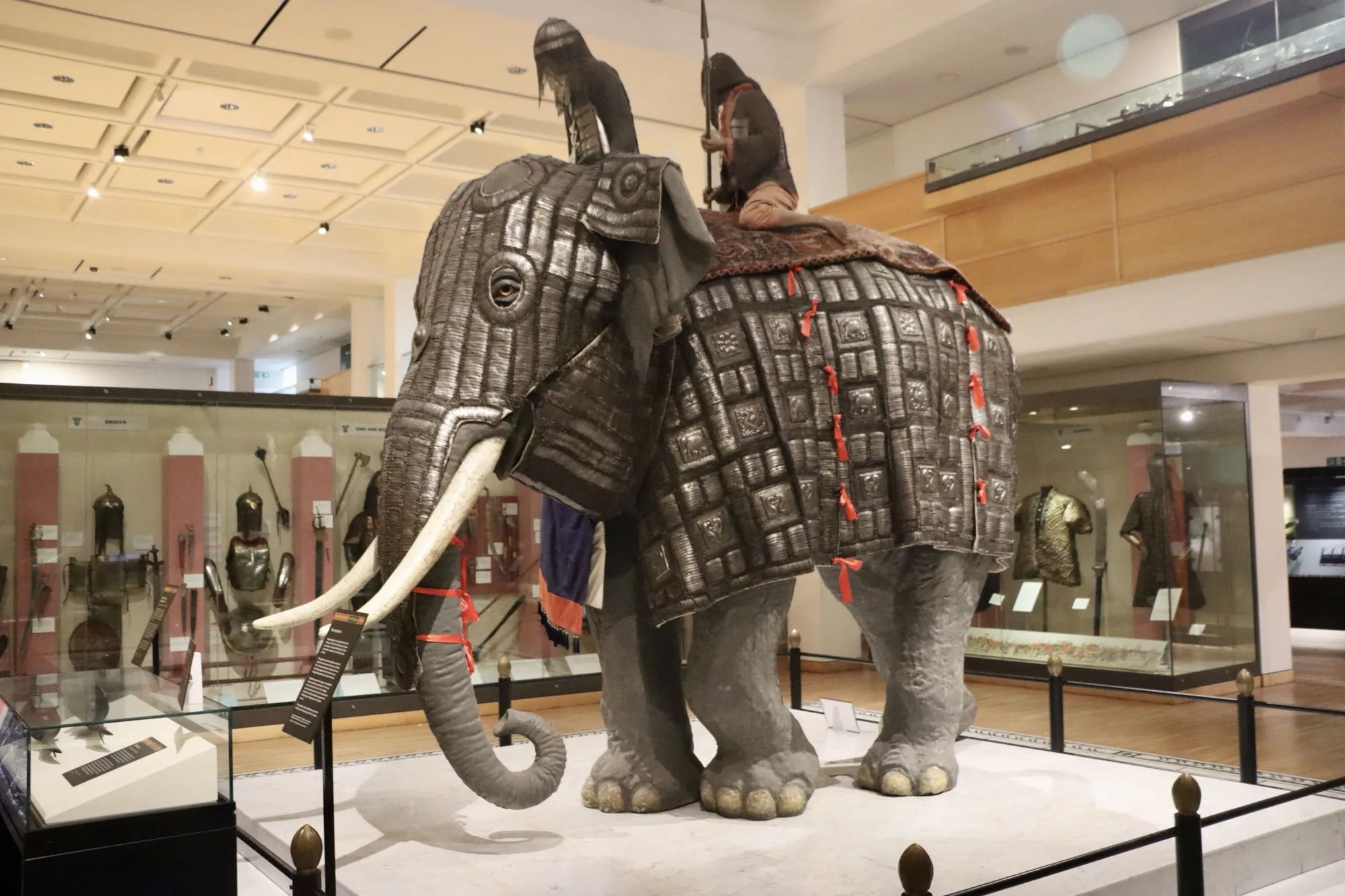
A model of an armoured elephant at the Royal Armouries museum in Leeds

Although it’s currently the bleak midwinter – and I mean bleak, with sub-zero (Celsius) temperatures last week and Storm Isha this week – we have managed a few days out. Some of these were in the first week of the year, as our eight-year-old didn’t go back to the school until the following week.

Here’s where we’ve been:

Manchester Science & Industry Museum

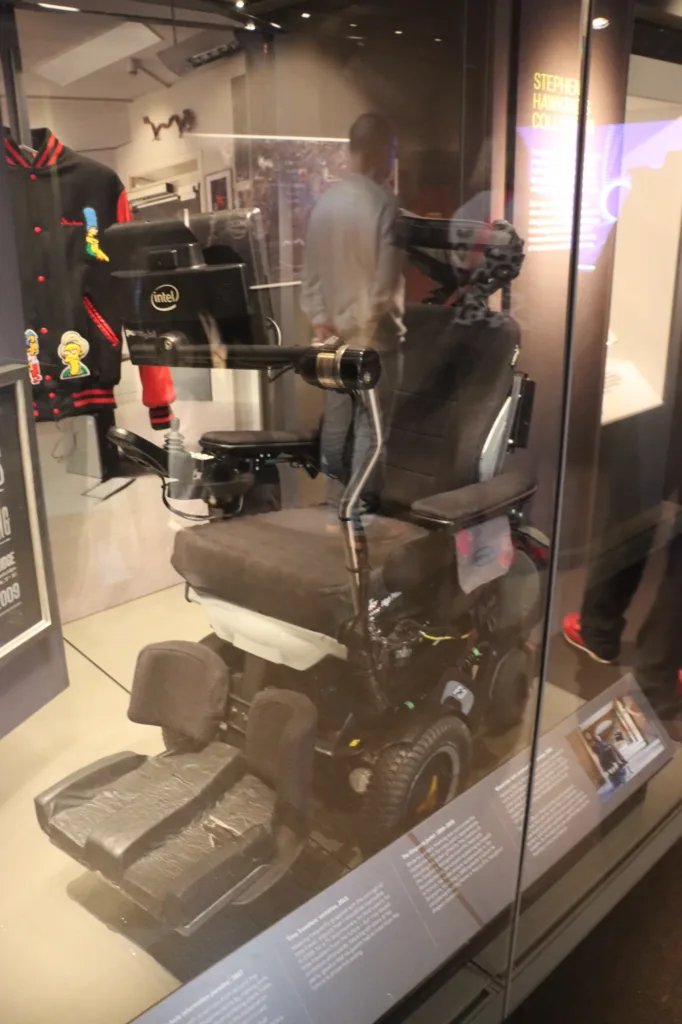
A photo of Stephen Hawking's wheelchair, currently on display at the Science and Industry Museum in Manchester

The Science and Industry Museum in Manchester is somewhere that we typically end up at least once a year. This time was mainly for the Food, Poo and You exhibition, which features content from the presenters of Operation Ouch (including Dr Chris, writer of Ultra-Processed People). It didn’t take much convincing our eight-year-old to go to an exhibition about poo, and it’s well presented. Just be aware that, whilst the rest of the museum is free, this is a paid-for exhibition and you’re advised to pre-book. My wife happened to be working that day and so I expect we’ll be going back before it finishes in June, after which it’ll probably go to the Science Museum in London.

Also there at the moment is Prof Stephen Hawking’s wheelchair. I was naturally more excited about this than our eight-year-old was.

What isn’t at the museum at the moment is, well, about three quarters of the museum. It’s just what’s available in the ‘New Warehouse’; a huge restoration programme means that the other buildings are closed. The Power Hall should be open again next year if all goes well.

Eureka

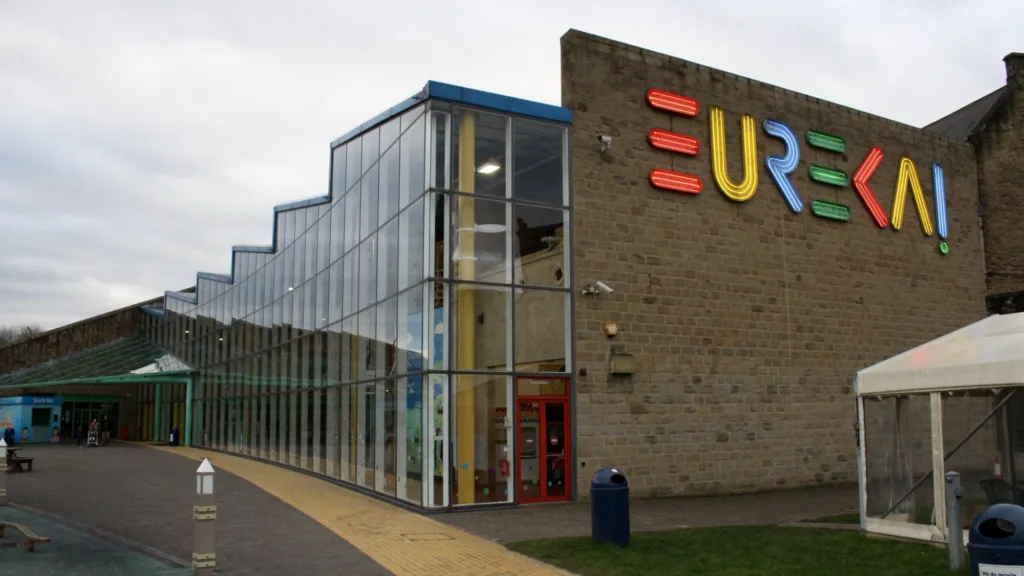
A photo of the Eureka National Childrens Museum in Halifax

Considering how often I pass Eureka, and the fact that we have a young child, it’s perhaps surprising that it’s been almost seven years since my last visit. And like that time, it was partly due to some Tesco Clubcard vouchers expiring. The museum hasn’t changed much in that time; the main difference was that the car garage is now a community area with a bus and a smaller electric car exhibit.

It’s still a good museum for half a day, and at eight years old our child isn’t too old for it. There’s a new Eureka, focussing more on science for slightly older kids, in Wirral which we need to visit at some point.

Royal Armouries, Leeds

A disarmed AK-47 rifle that has been covered in sprinkles and Love Hearts sweets

The last time we went to the Royal Armouries was for Thought Bubble, back in 2016. Museums about war and armour aren’t really my thing, but our eight-year-old had read a library book about them recently and so it was an opportunity to see some of those things in real life.

The Reloaded exhibition is interesting, as it looked at guns as gifts and objects of desire. There were also a couple of commissioned art pieces, such as an AK-47 covered with sprinkles and Love Hearts. It’s always fun to see the elephant armour too.

We have a few more busy weekends coming up, so I doubt we’ll be going anywhere else for a few weeks.