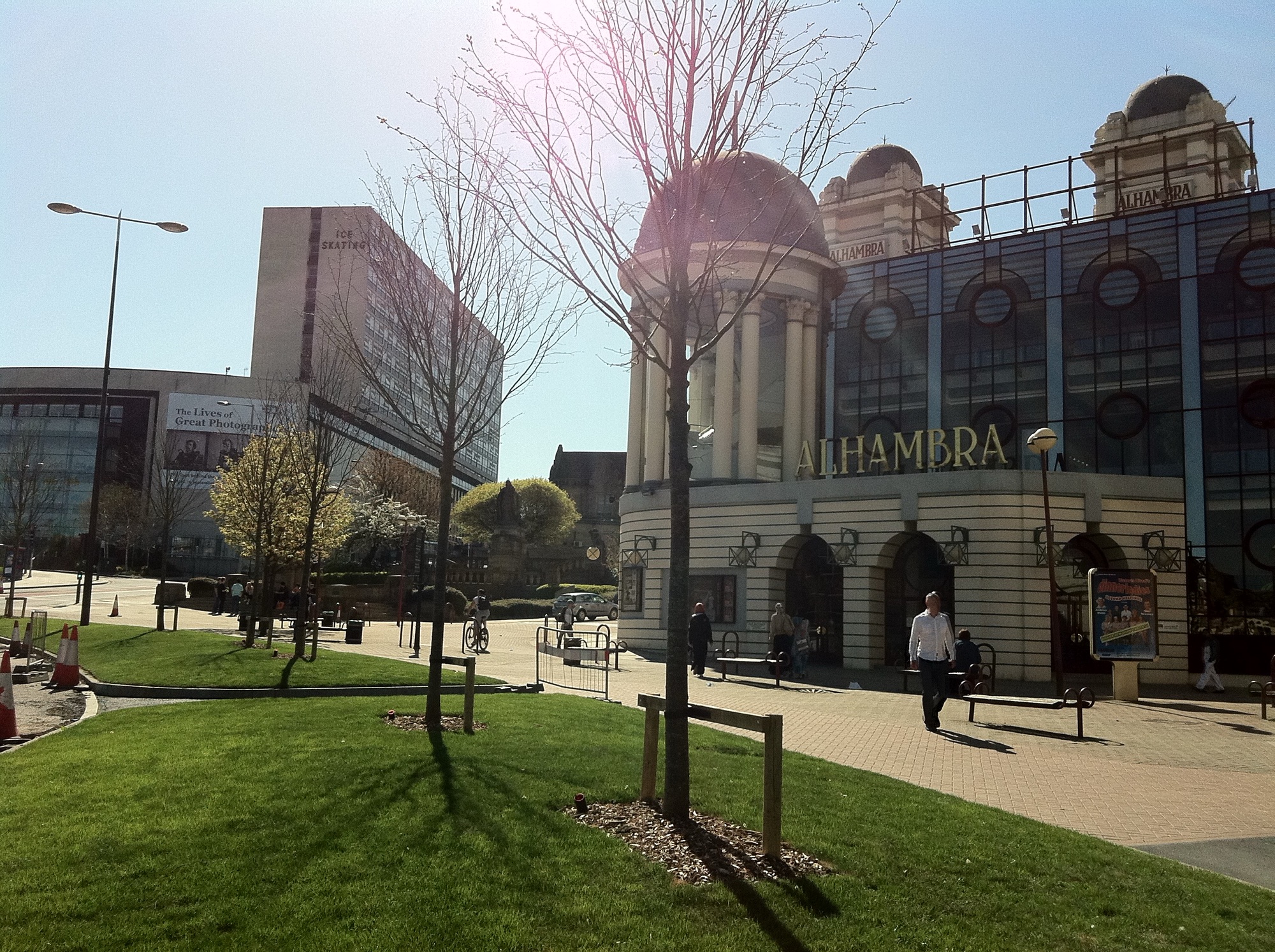
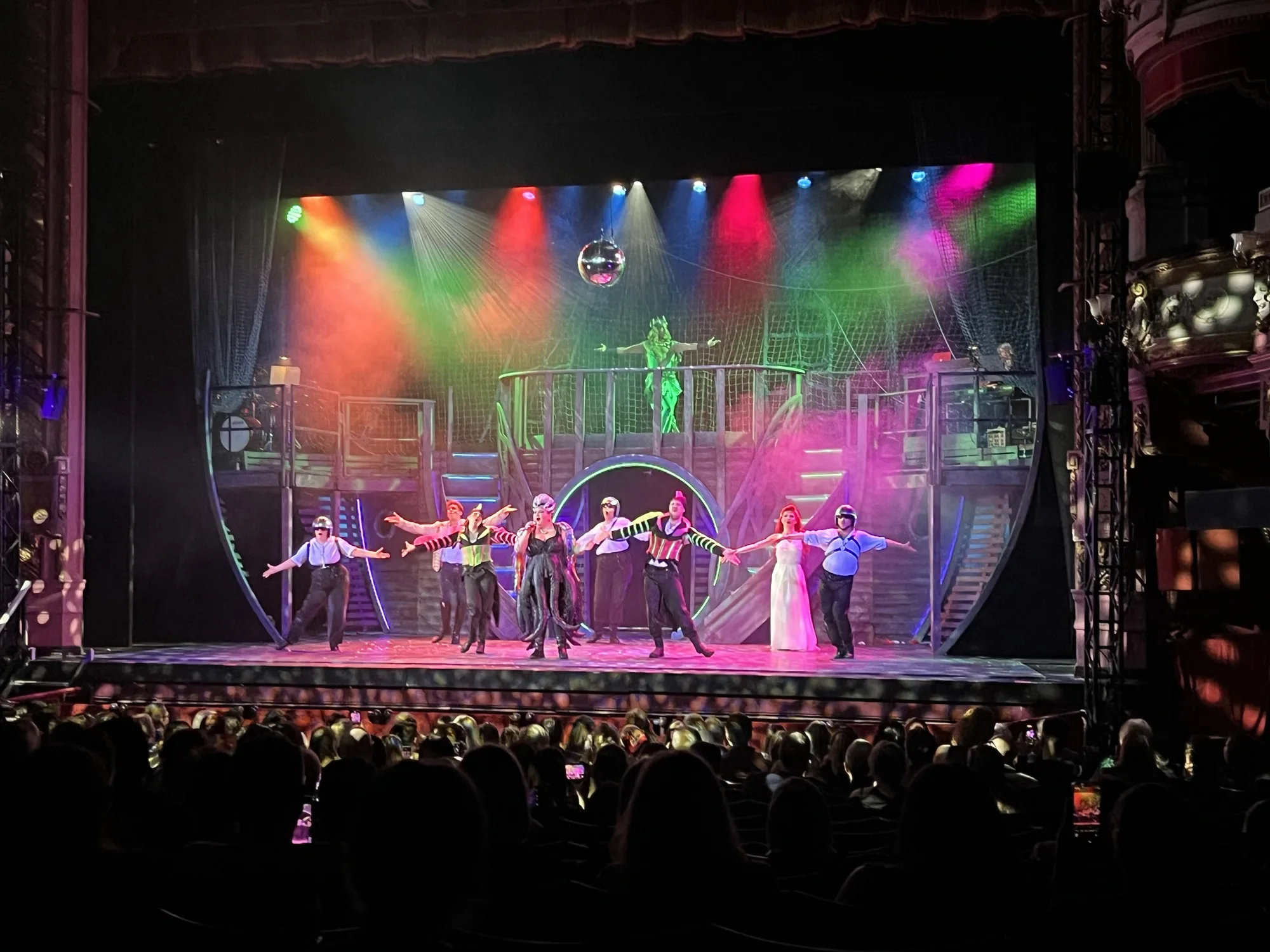
A couple of weeks ago, the hit musical Operation Mincemeat made its way to Bradford’s Alhambra Theatre, and so Christine and I went to see it. It’s very good.
The true story of Operation Mincemeat
Like Kinky Boots, which we saw last month, Operation Mincemeat is based on a true story. The actual Operation Mincemeat took place in 1943 and was a distraction strategy by allied forces during the Second World War. It involved planting the body of a street tramp, disguised as a high ranking military official, off the coast of Spain. The body contained important (but crucially faked) documents implying that the Allies planned to invade Sardinia. Instead, the actual plan was to invade Sicily, which, at the time, was heavily guarded by Nazi forces. Sure enough, forces were re-allocated from Sicily to Sardinia, allowing the Allies to liberate Sicily.
Two books have been written about Operation Mincemeat; a novel in 1950 called Operation Heartbreak, and a second book in 1953, The Man Who Never Was. This second book was written by Ewen Montagu, one of the intelligence officers involved, and it was adapted for a film in 1956. A later film followed in 2021, called Operation Mincemeat, and now there’s a musical adaption too.
The musical
The musical largely follows the actual events of Operation Mincemeat, with some artistic license. It’s performed with just five actors, who, through many rapid costume changes, play lots of different parts. The set is relatively simple, with lighting used to great effect throughout. The songs are all original, and number over 20 – much of the show takes place in song.
It’s a lot of fun to watch. The cast were all great singers and performers, and despite the many, many costume changes, it always felt slick and well-rehearsed. A nice touch comes towards the end, where there is a tribute to the street tramp, and a revealing of his actual identity.
Whilst not aimed at children, Operation Mincemeat is fine for families with children to watch. I don’t think our ten-year-old would have liked it, but teenagers may be interested.
The musical opened in London in 2019, and moved to the West End in 2023 where it’s still running. It’s therefore unusual for a musical to go on tour so soon afterwards, but it appears that the West End run is almost completely booked up for months. Indeed, there appears to be a ballot to get tickets now. As such, you have more chance of seeing it on tour. Whilst the Bradford Alhambra Theatre run is over now, as I write this it is coming to the end of a two week run in Sheffield, after which it is off to Stoke-on-Trent and then Chester. It makes it back to Halifax in October, and I’m highly tempted to see it again.
We’ve been back from London for a week now, so I suppose it’s about time I started writing about what we got up to whilst we were away. We went down last Thursday, and on the Thursday evening, we went to see Kinky Boots at the London Coliseum.
When Christine and I are in London, we usually try to see a show there too. Sometimes it’s planned – we booked the tickets for Kinky Boots a week in advance, and have done the same with Matilda, Wicked and The Play That Goes Wrong in the past. And other times, like when we went to see We Will Rock You, we picked up last minute cheap seats on the afternoon of the show.
The plot of Kinky Boots
Kinky Boots was originally a film which same out in 2005, and is based on a true story that was featured in the BBC2 documentary series Trouble at the Top. It follows the story of Charlie Price, who inherits his family’s shoemaking business in Northampton. The business is falling on hard times; though the shoes it makes are good quality, it can’t compete with cheaper imports and is about to go bust. But a chance meeting with a drag queen, Lola, sees Charlie finding a niche – making high quality boots for drag artists.
As you would expect from a musical that features drag artists, it’s very camp, but also touches on homophobia and transphobia.
The musical of Kinky Boots premiered in Chicago in 2012, and moved to Broadway the following year. The actor Billy Porter earned a Tony award for his portrayal of Lola, and he sings on the official soundtrack. The music was written by Cindy Lauper, but it’s not a jukebox musical – the songs were written for the show, so there’s no renditions of Girls Just Wanna Have Fun. The music is really good, and I appreciate musicals that have new music written for them as opposed to jukebox musicals.
Kinky Boots in the West End
Its first London run was in 2015, where it ran for four years at the Adelphi Theatre, closing in 2019.
This time, it’s at the London Coliseum, which is the largest theatre in the West End seating 2,359 people. Normally the Coliseum is the home of the English National Opera, so Kinky Boots probably attracts a rather different crowd. The role of Charlie Price is played by X-Factor winner Matt Cardle, with the South African actor Johannes Radebe playing Lola.
We really enjoyed the show. There’s some sad bits, but (as mentioned) the music is excellent and it’s well put-together, with great use of lighting.
Kinky Boots is on a limited run, which, as it stands, ends in mid-July. Tickets start from £25; we bought the £35 tickets for the upper circle, which is the third of four tiers in the London Coliseum. The view was pretty good from our seats.
Accessibility at the London Coliseum is pretty good, as the theatre was extensively renovated in the early 2000s. There is lift access to most floors, and wheelchair spaces are available. There are disabled and unisex toilets available, but there isn’t a Changing Places toilet. That being said, the London Coliseum is only a short walk/wheel away from Trafalgar Square where there are Changing Places toilets in the National Gallery and the National Portrait Gallery, although they will only be available during the gallery opening times.
There are special showings with captions, audio descriptions and British Sign Language interpretation in April and May.
The nearest tube stations are Leicester Square and Charing Cross, and it’s not too far from Embankment station either.
Seeing as it’s UK City of Culture this year, and theatres are places where you can see cultural things, how many theatres are there in Bradford? I think there’s eight, and here’s a list.
By the way, I’m defining Bradford as the area within the A6177 Bradford ring road. That means that I’m not including the theatres and arts centres in Ilkley, Bingley and Keighley that are in the wider City of Bradford district. And I’m defining ‘theatre’ as anywhere with a stage and seating that can be used for performances.
1. The Alhambra Theatre
Probably the best known theatre in Bradford is the Alhambra Theatre in the city centre. Opening shortly before the First World War, and extensively refurbished in 1986, it seats 1456 people and is where most major shows take place. It’s Grade II listed, and next month it’ll be hosting the touring production of Matilda, Tim Michin’s musical adaptation of the Roald Dahl novel. Earlier this month, it hosted the annual CBeebies Pantomime which will be on TV and BBC iPlayer this Christmas.
The last show we saw here was Unfortunate, last year, but we may well go to see Matilda as it’s a favourite in our household. It’s a Grade II listed building.
2. The Studio
Right behind the Alhambra Theatre is The Studio. As the name suggests, it’s a ‘black box’ studio theatre with a movable seating rig. This can seat up to 200, and is used for smaller productions and stand-up comedy. We saw George Egg here 10 years ago, but haven’t been to another show since.
3. Theatre in the Mill
Okay, disclosure alert: The Theatre in the Mill is run by my employer, the University of Bradford. As the name suggests, it’s in part of what was the Phoenix Mill, and now forms one of the university buildings. Like The Studio, it’s a black box studio theatre with movable seating, and seats around 100 people. Its programme of events includes stand-up comedy – both performances and workshops – film screenings and shows. I’ve also been to a number of student shows here over the years, but as Bradford isn’t really a performing arts university, there currently aren’t many of these.
4. Siobhan Ullah Performance Space
Next door to the university is Bradford College, which is home to Bradford Arts School, and in turn, the Siobhan Ullah Performance Space. Although it’s primarily used by the college students, it can also be used for events and seats 125 people. Again, it’s a black box studio theatre. It’s named after a former performing arts student of the college who sadly died of an asthma attack, aged just 18. I haven’t been to this theatre before.
5. Bradford Live
Back down towards the city centre, and next door to the Alhambra is Bradford’s newest and biggest performance venue, Bradford Live. It only opened this summer, and seats over 3000 people. It’s hosted in what was the Victoria Theatre, and later and Odeon Cinema which closed in 2000, and laid empty for almost a quarter of a century. Indeed, it survived a plan to demolish it in the late 2000s, and has now undergone a huge amount of restoration. It’s not currently a listed building.
As the name suggests, Bradford Live is more about live events and will be hosting a number of bands in coming months. Ocean Colour Scene are playing next month, as is CBeebies entertainer Justin Fletcher, and the Kaiser Chiefs are playing their first album in full in the new year. But there are some shows that you would typically expect in a theatre playing there too, such as Bluey’s Big Play, which I’m sure we’d be dragged to if our nine-year-old was a bit younger. We haven’t yet been here.
6. Bradford Arts Centre
Okay, technically the Bradford Arts Centre is even newer than Bradford Live, having opened under its current name as recently as this month. Previously, it was known as Kala Sangam, with a focus on South Asian arts. Its new name reflects its broader remit and engagement across all of Bradford’s populations. It’s located at what used to be Bradford’s crown post office at Forster Square, around the back of the Broadway shopping centre and next to Bradford Cathedral. The building is Grade-II listed.
There are several spaces in the arts centre, including a 200 seater studio theatre. We’ve been once, to see a pantomime that a friend was in about 10 years ago.
7. Bradford Playhouse
A few years ago, I used to volunteer at the Bradford Playhouse, and so it’s come up on here a few times. It was at risk of closure in 2014, but is now flourishing and is now fully accessible, following a successful crowdfunder early this year. The theatre offers two spaces: an art deco main auditorium seating up to 265 people, and a smaller black box studio theatre, seating up to 40 people. It hosts a mixture of professional shows and performances by amateur dramatic societies and dance schools. The building isn’t listed, but it was registered as an Asset of Community Value for five years in 2014.
8. St Georges Hall
Like Bradford Live, St Georges Hall is more of a live events venue than a theatre, with stand-up comedy and live bands. It’s also the oldest on this list, having opened in 1853. At one time, over 3000 seats were squeezed into the space, but nowadays its seating capacity has been reduced to 1335, or 1550 for standing events. It’s Grade II* listed, and was renovated between 2016 and 2019. The last show we went to see was a recording of I’m Sorry I Haven’t A Clue in 2014.
I think that’s quite an impressive list of theatres, actually, considering Bradford’s size.
For anyone who can’t manage stairs, the building is essentially a no-go. There are stairs up to the main entrance, and once you’re inside, more stairs up to the seating or down to the bar. There is no lift, nor has there ever been one.
As regular readers will know, accessibility is something that is important to me and I include a section in all my newer days out reviews. Installing a lift at the Bradford Playhouse will open it up to many people who can’t manage stairs – not just wheelchair users, but others with mobility issues, and parents with prams. That way, more people can enjoy shows there, and it makes the venue more attractive to producers who currently may be deterred by its lack of accessibility. It would be fantastic if the funding target could be met, and the work completed before the end of Bradford’s year as City of Culture ends in 10 months time. I’ve already contributed; if you can, please contribute as well.
Last week, Christine and I went with a group of friends to see the Unfortunate Musical at Bradford’s Alhambra Theatre. It’s a musical parody of The Little Mermaid, but told from the perspective of Ursula the Sea Witch; indeed, Ariel doesn’t appear until towards the end of the first act.
I suppose you could say that Unfortunate is to The Little Mermaid as Wicked is to The Wizard of Oz. However, Unfortunate is very much an adults-only affair, with plenty of swearing and sex references throughout. The touring version of the show sees Shawna Hamic as Ursula, who is absolutely fantastic, and Ariel is played by River Medway, one of the contestants from series three of RuPaul’s Drag Race UK. There are also standout performances by Thomas Lowe as Triton and Allie Dart as Sebastian (and several other roles, including two in the same scene).
It’s very, very camp, as you would expect from a show with more than one drag queen in the cast, and isn’t afraid to poke fun at Disney’s film adaptations. It makes good use of a multi-level set, and Ursula’s character breaks the fourth wall on multiple occasions throughout. I thoroughly enjoyed it, and it was worth arranging childcare for our eight-year-old to be able to see it.
Unfortunate is still on a UK tour until July, with some more dates in the North to come, including York, Newcastle and Blackpool. If you like big, camp comedy with original music, then I would heartedly recommend it. I took the photo for this blog post during the encore when photography was encouraged.
If you’re like me, then this may be the first time you’ve heard of a musical theatre adaptation of Herman Melville’s famous book. The musical version dates from the early 1990s – it had a brief run in London’s West End at the Piccadilly Theatre, but closed after a four month run due to poor reviews. Don’t let that put you off though.
Moby Dick! The Musical is essentially a meta-play – a play within a play. It follows the girls of St Godley’s School – faced with closure, they put on a performance of Moby Dick to raise money to save the school. Whilst the cast is predominantly female, the role of the headmistress/Captain Ahab is usually played by a male actor in drag.
Christine has been working on the show for months now and it’s been great to see it come together. There’s just a few more rehearsals before it opens on Thursday night, with further showings on Friday and Saturday.
You can buy tickets online – they’re £10 each, or £8 for concessions. If you’re local to Bradford, it would be great if you can come along and support the students who have worked so hard to put on this show. I hope I’ll see you there!
The Playhouse has had something a troubled history. I first became aware of it as The Priestley Theatre, which had recently re-opened following a fire and subsequent extensive refurbishment. That closed down and a few years later was reborn as the Bradford Playhouse, but that too failed financially.
More recently a company called Takeover Events & Theatre Ltd, trading as The New Bradford Playhouse, has been running the theatre as a going concern, as tenants. However, the building’s owner has gone into liquidation, and so the theatre will be sold at auction next month. And there’s a real risk that whoever buys it will want to convert the building into something else.
This would be a terrible shame as the theatre still has many of its original features despite the fire damage. It’s Bradford’s only medium sized theatre, seating 290 people, and also houses a small studio space. I’ve been privileged to be able to help out with some of the shows there, such as Little Shop of Horrors which Christine performed in earlier this year. The operating team is well-connected and has been able to draw upon a lot of goodwill to get the theatre to where it is now, and it would be a huge shame if their hard work came to nothing. Especially as they have some ambitious plans to re-invigorate the theatre, with a new entrance, wheelchair access and a proper café or restaurant on site, subject to funding.
If Takeover Events can buy the theatre outright at the auction, then I’m sure it will have a bright future – I personally trust them to be able to turn it around and break the vicious cycle that has seen it closed down so many times in the past. But my worry is that it will end up being sold to someone else who will turn it into flats or offices, and an important part of Bradford’s cultural heritage will be gone for good.
So, here’s what you can do to help. If you can spare some money, please contribute to the Indiegogo campaign. They need £125,000 in less than three weeks, to be able to buy the building at auction. Also, simply buying tickets and going along to their shows will help.
If you have no money to spare, then please sign this petition to Bradford Council, asking them to refuse planning permission to anyone wanting to change the use of the building. That way, if another company buys it, there is a reduced risk of it being converted into anything other than a theatre. And if you’re local to Bradford, get in touch with the people running the theatre to see if you can volunteer any of your time to cut down on their running costs in the meantime.
With the new Westfield shopping centre opening around the corner from the Playhouse in less than two years’ time, the theatre could have a really bright and sustainable future for the first time in many years. So it’s critical that the theatre is saved. It will be such a massive shame if it isn’t.
As I mentioned briefly earlier in the week, on Friday we went to see We Will Rock You at the Dominion Theatre in London. For those unaware, it’s a a so-called ‘jukebox musical‘, where the script is written around pre-existing songs. All the songs are by Queen, hence the title.
It opened in London in 2002, and it still going strong. When we went it was nearly a sell-out, although it was a Friday night, the beginning of the half term holiday for some schools, and Valentines Day, so that’s not so surprising.
The musical is set in a dystopian future, where one corporation, GlobalSoft, rules the world, and all original music is banned. Except one person, Galileo, who keeps hearing lyrics from music from the twentieth century in his head, but doesn’t know why. He teams up with a young woman, who he calls ‘Scaramouche’, and they flee to the sewers where the Bohemians live, all the while being pursued by GlobalSoft and its leader, the Killer Queen.
That’s the general synopsis of the plot, whilst trying to avoid spoilers. The story is rather contrived, and some of the links with the songs feel a little forced. The ending is also a bit rushed in my opinion, leaving several plot holes unclosed. And it’s very similar to the plot of The Matrix, in several ways, which is something that its writer, Ben Elton, has admitted.
Thankfully, what it lacks in plot, it makes up for in looks. Some of the lighting and effects are brilliant, and visually it is quite spectacular. Plus, you’ll probably know most of the songs already, even if sometimes the words are changed to fit the plot.
Furthermore, there have been some minor changes to the musical over the years to keep it topical. The Bohemians are all named after current pop acts, some of which were not around in 2002, so these have been changed. And references to Facebook and Twitter have been introduced as neither existed 12 years ago. What hasn’t changed is some of the computer graphics, shown on the backdrops, which arguably looked dated even in 2002. I’m sure your average computer animation student could do something better in an afternoon nowadays.
Should you go and see it? If you can get some of the cheaper tickets like we did – £30 each, for the back of the stalls but still with a good view – then sure, go for it. But there are better musicals out there in the West End – Wicked is amazing, and I’ve head good things about Book of Mormon, although tickets are still like gold dust for that. Of course, it also depends how much you like Queen’s music.
Having lived in Bradford for over 7 years I wholeheartedly disagree that Bradford is ‘dangerous, ugly and boring’ as the survey suggests. It’s no less dangerous than any other major UK city and while Bradford has its fair share of 1960s monstrosities in architecture, there are some fine examples of stone-built Victorian buildings which have been faithfully restored and look rather splendid, all over the city.
As for boring, there are plenty of attractions for tourists to visit:
1. In the city centre:
National Media Museum – this is the UK’s most visited museum outside of London, and has a wide range of galleries focussing on film, photography, television, radio and new media such as the internet. Its latest addition is an arcade games gallery, where you can play a range of 1980s arcade machines. It’s also home to Yorkshire’s only Imax cinema. Best of all, it’s free to go in (bar the cinemas and some special exhibitions). It was influential in Bradford’s successful bid to become the world’s first UNESCO City of Film, which launches this weekend.
Peace Museum – one of Bradford’s lesser-known gems, this has a fantastic collection of items and records. It’s open on Wednesday and Fridays, and for pre-booked groups.
Bradford Sculpture Trail – around the turn of the millennium, a series of sculptures were commissioned across the city. This trial takes you around 27 different sculptures and statues, including those of JB Priestley, the famous Bradford-born author.
Curry houses – Bradford has a huge range of curry houses across the city and any visit isn’t complete without visiting at least one. There’s the world famous Mumtaz, the student favourite Omar’s, Markaz on Centenary Square and many more. What’s more is that they’re all very affordable.
Bradford Cathedral – being one of Britain’s newer cities (the Royal Charter was granted in 1897) the cathedral is quite small compared to the likes of York, Lancaster and Lincoln, however, it’s still an old building with parts dating from the 15th century. It holds regular events and sits in an area of Bradford known as ‘Little Germany’, full of well-preserved and renovated Victorian buildings.
Alhambra Theatre – one of several venues in Bradford (there’s also St George’s Hall, Bradford Playhouse and the Theatre in the Mill), the interior of this theatre has been thoroughly restored and looks magnificent. It hosts many major shows throughout the year.
The Wool Exchange – once the centre of Bradford’s wool trade, this fantastic piece of 19th century architecture has been restored and now hosts probably the nicest-looking branch of Waterstones in the country. There’s also a Starbucks on the mezzanine level.
Bradford Industrial Museum – located in late 19th century mill, this working museum has various examples of mill machinery, as well as a horse-drawn tram, worker’s houses and a transport exhibition. Entry is free and it’s open 7 days a week.
Lister Park – open to the public since 1870, this large park includes a boating lake, café, adventure playground, gardens and is also home to the Cartwright Hall art gallery which has recently been host to an exhibition of work by David Hockney, who originally came from the Bradford area. It was named Britain’s Best Park in 2006.
Peel Park – across the valley from Lister Park, this opened in 1850 and now plays host to the annual Bradford Mela which is one of the biggest festivals of British Asian culture in the UK.
Undercliffe Cemetery – Bradford was at the heart of the UK wool industry and many of the great and good from Bradford’s past have been buried here with some very elaborate and decorative memorials.
Bolling Hall – a mansion house which now houses exhibitions showing the life and times of Bradford families over the past few hundred years. Like many of Bradford’s other museums, entry is free.
3: Further afield:
Saltaire – a UNESCO world heritage site, and home to Salt’s Mill, which houses a permanent exhibition of art by David Hockney and a range of specialist shops and restaurants.
Keighley & Worth Valley Railway – a working steam railway that takes you through the pretty Worth Valley. Connects with the main line at Keighley station.
Haworth – a hillside village with a great range of independent shops and fine public houses.
While I think this list is pretty exhaustive I’m sure there’s bits I’ve missed. But there’s certainly no shortage of things to see and do as a tourist in Bradford and it’s well worth spending a day or two to look around. There’s also the City Park which is under construction and will be open by next summer.