Our 2025 holiday: Chester Zoo

A pair of rhinos at Chester Zoo

This is the last of my blog posts about what we did on our summer holiday to Wales – bearing in mind we’ve been back for over six weeks. Our last stop was on the way home, and as with our visit to Beamish on the way home from Northumberland, not actually in Wales. This was a visit to Chester Zoo.

I last blogged about a visit to Chester Zoo in 2018, when I took our then two-year-old on a day out when Christine was working a weekend. We’ve been back many times since, despite it being over an hour’s drive away. Indeed, we had an annual membership for a year – unfortunately, that year was 2020 when the zoo was shut for several months due to the pandemic, although we still managed seven visits that year. Our last visit was almost exactly two years ago.

This year’s Chester Zoo visit was prompted by receiving gift vouchers at Christmas from my parents, who joined us this time. It had been much longer since they had last visited, and I imagine the zoo has changed significantly since then.

Heart of Africa

Our main focus for this year’s visit was the new Heart of Africa zone. This replaces an area of the zoo which was starting to feel a little run-down, and makes it more like the other newer areas of the zoo. The rhinos, painted wild dogs and meerkats remain roughly where they were before. The giraffes have moved to a new mixed savannah habitat here, along with zebras, ostriches and antelope. It’s definitely an improvement, and the animals feel more in context with themed surroundings. There’s also a mock-up of a lab, showing the work that zoo staff do to ensure the animals’ welfare.

Snow Leopards

Another recent arrival at Chester Zoo were a pair of snow leopards. We got to (briefly) see the male snow leopard, but the female is off show as she’s recently given birth to an adorably fluffy cub. These have a new purpose-built habitat in the older part of the zoo, near to the Red Pandas. Which were doing the usual Red Panda thing of sleeping in a tree, as it was a hot summer day.

Chester Zoo is huge, and even if you get there at 10am and stay until closing, it’s almost impossible to see everything in one day. As such, on this year’s visit, we prioritised seeing the new zone and specific animals that we enjoy seeing. Alongside the new zone is The Reserve, which is Chester Zoo’s first on-sight overnight accommodation for visitors and overlooks the savannah area with the giraffes, so you can extend your visit to two days.

Accessibility

Accessibility is reasonably good, although the site isn’t completely flat – thanks to Flag Lane, which is a public right of way that cuts through the middle of the site. There are two crossings of Flag Lane; the one by the elephants and nearer the entrance is best for wheelchairs. The other crossing, the Bat Bridge, is wooden.

Wheelchairs and mobility scooters are available to hire, and there’s a changing places toilet near the main entrance. Chester Zoo really want you to download their app, but I managed to find a PDF of the current map here – it’s very buried on their web site.

Chester Zoo is located next to one of Chester’s Park and Ride sites, and so you can get a bus from Chester railway station (this is what we did on our first visit as a couple in 2012). Ample parking on-site is available, and there are 20 medium-speed 7 kW electric car chargers close to the entrance. However, when we arrived on a busy summer Saturday, these had all been taken by 10:30am, and I had to pop back at lunchtime to move my car to a bay that had become free. They’re on the Pod Point network.

Knowsley Safari Park

A photo of a tiger at Knowsley Safari Park

On Good Friday, we paid a visit to Knowsley Safari Park, on the eastern edge of Liverpool. This was actually our sixth visit, going back to 2018 when our nine-year-old was only two, but apparently I’ve never blogged about it before. We received gift tickets as Christmas presents from my parents.

Knowsley Safari Park is the only drive-through safari park in the North of England, and one of only six in the UK. You may know it from the Channel 4 series, the Secret Life of the Safari Park, which aired last year and is available to stream on 4oD, or whatever it’s changed its name to this week. For us in Sowerby Bridge, it’s only an hour’s drive in good traffic, despite being in Merseyside and on the other side of Manchester. However, its distance means that, in bad traffic, it can take much longer, and on a previous trip in 2019 I remember having to take a huge diversion via Preston and Burnley to get home, due to a closure on the M60.

A pair of white rhinos at Knowsley Safari Park

The Safari Drive

Knowlsey Safari Park is split into two parts. As mentioned, there’s a drive-through safari, where you stay in your own car and drive (slowly) past lots of different animals. The drive is split into several zones to split the animals up, nominally by where you would find them in the wild. Expect to see lots of different species of deer and antelope, but there are also several rhinos and camels. There are also some wandering ostriches which like to peck at the rubber seals around your car windows.

Speaking of animals which like to damage cars, there’s a separate section for the baboons. The baboon colony at Knowsley is quite large, both in terms of space and population. There are warning signs as you drive in that your car will be damaged, and so there’s a ‘baboon bypass’ you can take if you’d rather not have a cheeky baboon steal your windscreen wipers. We drove through on our first visit in 2018, and ended up without some rubber windscreen seals that we weren’t able to replace. On subsequent visits, we’ve parked up next to the baboon enclosure for the schadenfreude of watching other peoples’ cars getting damaged.

The other animals that have their own section are the African Lions, mainly because they would probably hunt the other animals on the safari drive, given the chance. As well as cattle grids between each zone, you drive over electric webbing to enter the lion zone.

This time we also saw plenty of animals which weren’t part of Knowsley’s collection, that just happened too be there. There were plenty of pheasants, as well as partridges, oyster catchers and lapwings.

Foot Safari

The other part of Knowsley Safari Park is the ‘foot safari’, which is where you can park up your car and walk around, like in a traditional zoo. This is where you’ll see the Amur Tigers, tapir, giraffes, bears, sealions, bush dogs, meerkats and birds of prey. The foot safari used to be in a horseshoe shape, but since our last visit they’ve added a wildlife walk to make it a complete circuit. This also gives access to a new area with sheep and goats. We actually did this bit first, having arrived at opening time, and it was nice and peaceful.

A zookeeper at Knowsley Safari Park holding a bald eagle during a falconry display

Shows and displays

There are a couple of shows that are worth watching whilst you’re at the foot safari. The first is the sealion show, where they show the zoo’s sealions performing tricks. And the second is a birds of prey show, where they will fly several of their birds. The sealion show is indoors, and the birds of prey show is either indoors or outdoors depending on the weather. Though the weather on Good Friday wasn’t great (definitely worse than recently and Good Friday last year), the birds of prey show was outside. There are also various talks about the animals on the foot safari at set times.

The shows are all in the afternoons, as I think the expectation is that you’ll do the safari drive first and then the foot safari. We did it the other way around, as we expected the weather to be worse later on. Compared to other zoos, being able to use your car to drive through has its advantages in bad weather.

For the first time in a while, I’ve had time to upload the rest of my photos to Flickr, so take a look.

Accessibility

Most people will drive to Knowsley Safari Park, and it’s located just off the M57 (which itself isn’t far from the M62). But it is reachable by public transport – the nearest town is Prescot, and there’s a direct bus from the bus station there. You can also get the train to Prescot and walk – it takes about half an hour, apparently. If you want to do the safari drive, but haven’t arrived in a car, then you can take the Baboon Bus. You need to pre-book, and my experience you should book at least a couple of weeks in advance. It goes around the whole safari drive, including the baboon enclosure. It’s fitted with ropes and things for the baboons to climb on, and presumably they have access to a good supply of spare parts.

The foot safari is almost exclusively on one level, and where it isn’t, ramps are provided. There are two Changing Places toilets on site. Assistance dogs are only allowed outside of the animal areas, however; kennels are provided if needed.

Also, I feel it’s worth mentioning that the food at Knowsley Safari is above average, compared to most other zoos, and it’s not too over-priced. Sure, you can have the usual hotdogs and burgers, but I had quite a nice katsu curry when we went.

What we didn’t do in Northumberland

I managed to span the list of things we did whilst on holiday in Northumberland to eight blog posts, representing the seven days that we were on holiday. Because it was a short holiday, there were lots of places that we could have visited, but didn’t have the time. Here are some of them.

Alnwick Castle

Whilst we did visit The Alnwick Garden, which is adjacent and shares a car park, we didn’t go into the more famous castle next door. It dates from the 11th Century, following the Norman Conquest, although it was extensively re-modelled in the 18th and 19th Centuries. It’s often been used as a filming location, with the first series of Blackadder set there. More recently, it was used in last year’s Dungeons and Dragons film, and featured in the first two films about that wizard boy whose enemy cannot be named.

Howick Hall

Not far from Seahouses is Howick Hall, the ancestral home of the Earls Grey. The hall itself is open to visitors, as are its gardens and arboretum, and of course there’s a café where presumably there’s an expectation that you’ll drink Earl Grey Tea. Whilst the Earls Grey have owned the site since the 14th Century, the current house is less than 100 years old, having been substantially rebuilt following a fire.

Craster

Craster is another pretty fishing village like Seahouses. Whilst Seahouses claims to be where kippers where invented, Craster Kippers are more well-known. Craster is also known for its lobsters and crabs.

Dunstanburgh Castle

Had we visited Craster, we could have also called in at Dunstanburgh Castle. It’s a ruin – moreso than Warkworth Castle – and it’s just over a mile’s walk from Craster where the nearest car park is. We saw it from a distance as it’s on the coast, but the long walk from the car park and the fact that it’s a ruin put us off.

Beadnell

One of the main roads into Seahouses from the A1 passes the village of Beadnell, and so we drove past it multiple times without actually going into the village itself. It’s also a harbour, and looked quite pretty in some paintings that we saw.

Grace Darling Museum

Up the coast in the village of Bamburgh, and just a short walk from Bamburgh Castle, is the RNLI’s Grace Darling Museum. Grace Darling lived on the Farne Islands and was a daughter of one of the lighthouse keepers. She came to fame in 1838, when she was 22 years old, by risking her life to rescue the stranded survivors of a shipwreck – of the 62 people on board, all but three were rescued. Whilst she died a few years later aged 26, she managed to go down in history as a local heroine. The museum opened in 1938 to mark 100 years since her dramatic rescue.

Whilst the museum was very close to where we were staying, we’d pencilled it in for a day of bad weather. As it was, we were really lucky with the weather and so didn’t need an indoor backup plan.

Northumberland Zoo

Our summer holidays normally result in a zoo or aquarium visit, but we didn’t find the time this year. Had we stayed for longer, then we may have gone to Northumberland Zoo. It’s less than 10 years old, and tends to have smaller animals; the largest are medium-sized cats like servals, lynx and snow leopards.

Morpeth Chantry Bagpipe Museum

Most people associate bagpipes with Scotland, but Northumberland has its own bagpipes, and there’s a museum about them in Morpeth. Indeed, it’s home to over 120 pipe instruments from around the world.

I’ve no doubt that we’ll have another holiday in Northumberland at some point in the future, and we may well visit some of these places that we didn’t manage to fit in.

Our 2022 summer holiday in Brittany

A photo of Carnac beach on the coast of Brittany

I’m away on holiday at the moment, so this week’s posts are about previous un-blogged holidays from 2019, 2021, 2022 and 2023. Yesterday was our 2021 holiday to Kent and East Sussex, and today it’s our 2022 holiday to Brittany.

By the summer of 2022, almost all Covid restrictions were gone and so we ventured outside of England for the first time in three years. We returned to our usual holiday format of a couple of weeks in France, staying in a Eurocamp static caravan, and this time, we went to Brittany in Northern France.

I’ve been to Brittany a few times, but it was the first time for our then six-year-old and my wife Christine. We stayed near Carnac on the Atlantic coast, which is well-known for the Carnac Stones – around 3000 standing stones across the area.

Here’s where we visited:

A photo of St Malo in Brittany

St Malo

The easiest way to get to Brittany from England is by ferry, and so we took the overnight Portsmouth-St Malo ferry with Brittany Ferries. As (for once) we didn’t have a long drive on arrival in France, we spent the first morning in St Malo, having a wander around the town and harbour. The town is fortified, and inside the town walls there’s a Micro Zoo, with lots of small animals. It’s a nice little place, if not especially interesting, and was enough to pass the morning before heading onwards to Carnac.

A photo of the town of Pont Aven

Pont Aven

Pont Aven is a scenic little town in Brittany that’s home to lots of artist studios. We took advantage of the all day kid’s club at the campsite to have a grown-ups only day here. It’s a nice place to wander around – it’s in a steep-sided valley with a river running through it.

A zookeeper at Parc de Branféré holding a parrot

Parc de Branféré

We always seem to end up at a zoo on our holidays, and this year it was Parc de Branféré. Make sure you stick around for the bird show, as they bring out all of the hand-reared birds pretty much all at once. It was fantastic being able to get so close to the animals – many are not locked away in enclosures, but free to roam around. It’s definitely one of my top five zoos that I’ve visited.

A photo of the outside of the Insectaraium de Lizio

Insectarium de Lizio

Another zoo of sorts, but this time focussed mostly on insects. As well as many preserved examples in frames, there were a number of live insects here, as well as a bee colony and an outdoor butterfly garden. It was certainly enough to fill a morning, even if it’s not a very big place. And you probably need to like insects to really enjoy it.

A photo of one of the buildings at the Museum of the Junkyard Poet

Museum of the Junkyard Poet

Also in Lizio (which in reality is a rather small village) is the Museum of the Junkyard Poet, which we found whilst browsing TripAdvisor. It’s a fabulously whimsical place in the Brittany countryside, with buildings and contraptions made out of discarded materials. It’s very, very French, but fun to explore with lots of hidden things. Oh, and there were loads of frogs all over the place.

A metal sculpture of a fish at Quiberon

Quiberon

Quiberon is a town on the end of a peninsula that pokes out into the Atlantic Ocean. It’s a port for ferries to a few islands in Quiberon Bay, the largest being Belle-Île-en-Mer (which literally translates as, um, ‘pretty island in the sea’). There’s nice sandy beaches and it’s a seaside resort, sort-of like Blackpool but sunnier and French.

Our 2023 summer holiday in the Loire

A photo of a model of Chateau de Chambord, one of the Loire castles

I’m away on holiday at the moment, so this week’s posts are about previous un-blogged holidays from 2019, 2021, 2022 and 2023. Yesterday was our 2022 holiday to Brittany, and today it’s our 2023 holiday to the Loire Valley in France.

Though I did go into some detail about our 2023 holiday in my 2023 review, here’s a bit more about what we did and where we went. Our holiday followed its usual format – an overnight ferry from Portsmouth to St Malo, and then we drove down to stay in a static caravan at a campsite. This year we stayed near St Catherine de Fierbois, to the south of the Loire valley and between Tours and Poitiers.

Here’s what we got up to:

A miniature model of Chateau de Chambord at the Parc des Mini-Chateaux

Parc des Mini-Châteaux

One thing the Loire Valley is known for are its many castles, or ‘châteaux’ in French. We limited ourselves to three this year, but we got to see miniature models of almost all of them at the Parc des Mini Châteaux. Here, there are models of Chambord, Chenonceau and many others that we had previously been to in person. It’s a fun way of seeing lots of places without having to travel to them all in person, and probably better for kids too.

A photo of Château du Clos Lucé

Château du Clos Lucé

The first real château that we visited was Château du Clos Lucé, in which Leonardo da Vinci spent some time. Consequently it’s a museum containing recreations of some of his inventions, and a print of that painting. What we enjoyed more were the gardens, which also contained several of da Vinci’s inventions, but on a much larger scale. Some, like an Archimedes screw, were interactive, and exploring the gardens was fun.

Three giant pandas at Zooparc de Beauval

Zooparc de Beauval

Zooparc Beauval is probably my favourite zoo that I’ve ever been to. We went there for the first time in 2018, and made a return visit last year. Since then, it’s expanded, and as was already too much to see in one day before, we focussed on the new bits and then our favourite bits from last time.

Its star attraction is probably the giant pandas, and we were lucky enough to see them. Unlike those that went to Edinburgh Zoo, those at Beauval have had more success at breeding and so there were four pandas there when we went. There had been a cub that we saw in 2018, but I believe it’s moved elsewhere to carry on the breeding programme.

The other thing that you should make time to see is Les Maitres des Airs, which is a fantastic daily bird flying show. Though there were fewer birds taking part compared to 2018, it’s still a great spectacle. Get there early to get a good view.

Other animals that I haven’t seen much elsewhere include hippos, dugongs and white tigers.

A spiny fish in the Aquarium de Touraine

Grand Aquarium de Touraine

We bought a joint ticket for both the Grand Aquarium de Touraine and the Parc des Mini-Châteaux, so when a wet day rolled around we had something to do. It’s interesting enough to spend half a day at; a particular highlight for our (then) seven-year-old was being able to draw a fish and have it scanned by a camera, to then appear in a virtual aquarium on a projector screen with others creations.

A photo of Château d’Ussé

Château d’Ussé

The second Loire château that we visited was Château d’Ussé, which allegedly was the inspiration for the story of Sleeping Beauty. This is something that the owners have capitalised on, and so as well as being able to go inside some of the interior of the château, there’s also a walk around the top floor where the rooms have been decorated to tell the story. There’s also some nice gardens to walk around, but part of the building is off limits as its owners still live there.

A photo of Château du Riveau

Château du Riveau

One château that wasn’t at the Parc des Mini-Châteaux was Château du Riveau, as it hasn’t been open to the public for very long. Again, its owners live here and so only a few rooms inside are open.

The gardens are really good – and we got a discount for being RHS members. There’s lots of sculptures, and a few pet birds around, and it’s very whimsically French. The whimsy continues inside – there’s lots of taxidermy on the walls wearing glasses or mounted backwards. We really enjoyed our visit here and it stands out compared to the other châteaux of the Loire. You can see the rest of my photos on Flickr.

Futuroscope

Futuroscope

Futuroscope is a theme park based around film. It opened in the 1980s, and I went twice with my parents in the 1990s. This time I introduced it to my wife and our (then) seven-year-old, and it was a lot of fun.

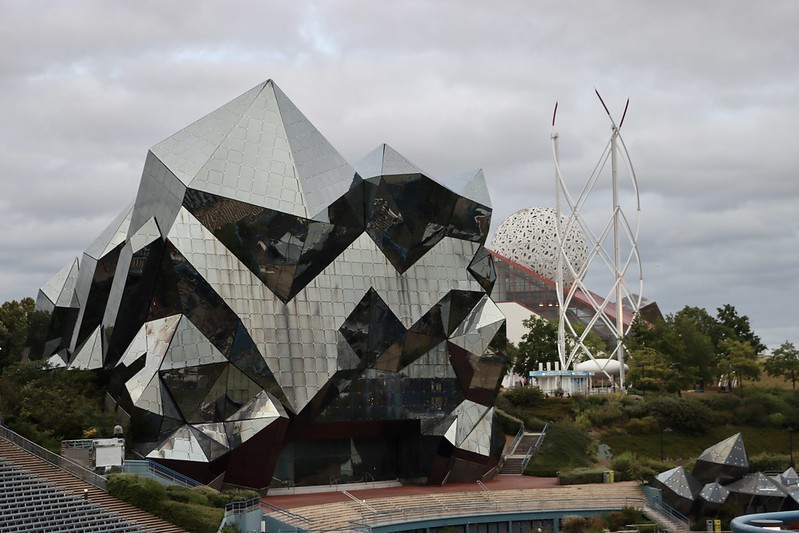
Each of the pavilions is a different kind of cinema. Some have massive Imax screens, others are in 3D or the seats move with the film. In some, you may find yourself sprayed with water or blasted with air. The architecture is also futuristic, in a way that (for the most part) still feels modern even after over 30 years.

And yes, it’s very French. The food is much better than your average British theme park, and there’s some really whimsical evening entertainment. We would have liked to have stayed around for the evening sound and light show, but being July it was quite late at night. Again, there’s more photos on Flickr since I actually got around to uploading them.

Our 2021 summer holiday in Kent and East Sussex

A photo of the beach at Camber Sands in East Sussex

I’m away on holiday at the moment, so this week’s posts are about previous un-blogged holidays from 2019, 2021, 2022 and 2023. Yesterday was our 2019 holiday to the Dordogne in France, and today, it’s our 2021 holiday to Kent and East Sussex.

In 2021, with some remaining Covid restrictions making travel a little difficult, we decided to have a domestic holiday and remain in England. We decided to stay on the south coast, at Parkdean’s Camber Sands resort in East Sussex. This wasn’t our first stay at a Parkdean resort – Sci-Fi Weekender is at Parkdean’s Vauxhall Holiday Park in Great Yarmouth – although it was the first time that my parents had stayed at such a place. My parents found it rather different to the Eurocamp sites that they’re used to in France – the static caravans are more tightly packed in and usually don’t have decking outside. But it was fine as a base to explore the area.

Here’s where we visited:

A photo of Hever Castle in Kent. It's made of stone and there's ivy covering most of the frontage.

Hever Castle

On the way down, we called in at Hever Castle, which is probably best known as being the childhood home of Anne Boleyn, the second wife of King Henry VIII and mother of Queen Elizabeth I. The castle itself isn’t that big, and we actually didn’t have time to go in to it properly, but there’s plenty to see and do in the grounds. There’s some really nice gardens, and regular jousting events at weekends, which are fun to watch. Our eight-year-old (who was five at the time) particularly liked the water maze, and there are several playgrounds too, so it’s a great place to take kids.

Unlike the other castles mentioned here later, this isn’t run by the National Trust. However, it’s possible to get discounted entry with Tesco Clubcard vouchers, Gardener’s World two-for-one cards, or membership of the RHS or Historic Houses.

A photo of a steam locomotive carrying a nameboard that says 'The Johnston Express'

The Romney, Hythe & Dymchurch Railway

Along the Kent coast is 13 ½ mile miniature railway – the Romney, Hythe & Dymchurch Railway. All the locomotives are ⅓ of the size of regular mainline trains, and it runs from Hythe in the east to Dungeness in the west. We travelled the whole line. At Dungeness, there’s a small café and a visitor centre, and you should have time for a stroll around the village of Dungeness between trains. It’s quiet scenic apart from the massive nuclear power station.

A leopard resting on a platform at Howlett's Wild Animal Park

Howletts Wild Animal Park

We used more of our Tesco Clubcard vouchers at Howletts Wild Animal Park. It’s a zoo, but doesn’t call itself one; the focus is on breeding endangered animals and allowing them large habitats to live in. Consequently it’s quite a large site, with several big cat species, elephants and gorillas. It’s one of two animal sanctuaries in Kent run by the Aspinall Foundation, whose founder, John Aspinall, had some odd ideas about animal husbandry which has seen at least two keepers die over the years. Because the focus is on animal welfare rather than visitor experience, don’t be surprised if not every animal is available to see. We saw just about everything apart from the pallas cats.

A view of a street in the town of Rye in East Sussex

Rye

The nearest town to Camber Sands is Rye, which is situated on a natural hill and has a castle at the top. It’s a pretty little town, with narrow cobblestone streets and a harbour. There’s plenty of tourist-orientated shops, and the castle is open as a museum, with good views from the top.

Bodiam Castle

My mum sold this to us as a ‘proper castle’. It has a real moat, and bridge to cross it, to enter the keep. On the inside it’s mostly open to the elements, but when we went there were plenty of activities for kids. This is a National Trust property.

A photo of Scotney Castle

Scotney Castle

We had a two castle day that day, and followed up our visit to Bodiam Castle with a trip to Scotney Castle in the afternoon. You may recognise it as a filming location for the Sandman series that was on Netflix a couple of years ago. It’s also a National Trust property – between our National Trust membership and Tesco Clubcard vouchers, we had a good value holiday.

The old part of the castle is mostly ruins, but there’s also a newer castle which we didn’t go into. There’s also plenty of grounds and a playground for the kids.

A photo of a shark at Hastings aquarium.

Hastings

Our run of nice weather petered out and so we had a wet day in the town of Hastings. Here, we visited the aquarium, the Fishermen’s Museum and the Shipwreck Museum in the Rock-a-Nore, and had a wander around the harbour and lifeboat station.

On the way home

Outside of Kent and East Sussex, we stopped over in Slough and spent an afternoon in Windsor, following by a day at Legoland Windsor, before heading home. Our eight-year-old is desperate for a return visit to Legoland.

Dudley Zoo and Castle

A photo of Dudley Castle, inside the grounds of Dudley Zoo

For my 40th birthday last weekend, we had a couple of days in Dudley. Which might seem like an odd choice for a short break, but it meant that we could visit Dudley Zoo and Castle, and the Black Country Living Museum (which I’ll blog about separately soon).

This was my third visit to Dudley Zoo; all three of us visited in 2019 on the way down to Portsmouth to go on holiday, and I had been as a child (probably 1992 as I seem to remember it being the 29th February). It’s a medium-sized zoo; it doesn’t have any really big animals like elephants and rhinos, but is home to some quite big animals like sealions, lions, tigers and giraffes. You’ll need a full day to see everything, but unlike Chester Zoo you will be able to see everything in one day.

Dudley Castle

Before the zoo, there was the castle. There’s been a castle on this site since Norman times, as it’s a strategic lookout position. The current castle is a ruin – it was damaged quite a bit during the English Civil War in the 17th century and suffered a fire in the 18th century. You can go up the keep, which is the oldest bit of the castle, and there’s a newer indoor part which is home to nocturnal animals, as well as offering a history of the castle.

The ruined castle offered a focal point for what was originally known as Dudley Zoological Gardens, and several animals including the penguins and sealions now live in what was the castle’s moat.

Tectons

When the zoo opened in the 1930s, a number of concrete buildings were built by the Tecton architectural group, with all but one surviving. They’re now all Grade II or II* listed, although a number are no longer fit for their original purpose. They were all restored recently and still look quite futuristic, almost 90 years after they were built. These include the main entrance gates, which I gather are now only used on really busy summer weekends. Entry is now via what was originally known as the Station Café, which is now a gift shop. Incidentally, there’s no longer a railway station nearby, but there will soon be a stop on the West Midlands Metro once the Dudley extension opens – hopefully later this year.

A photo of a tiger licking its mouth at Dudley Zoo

Dudley Zoo highlights

The highlight for us was the Lorikeet Lookout; provided that you go in between 11am and 3pm, you can buy a pot of nectar to feed the lorikeets. They’ll happily sit on your hand/arm/shoulder whilst doing this. We also got to see a female tiger playing around in the water, and a weaver bird making its nest. As usual, I’ve uploaded a full set of photos to Flickr.

They also have red pandas; we saw one but it was high up in the trees and so I couldn’t get a photo. We also didn’t see the otters this time.

Accessibility

Like most zoos, Dudley Zoo is open every day (except Christmas Day). As mentioned, it’s on a hill, which is great if you’re building a castle, but not so great if you’re in a wheelchair. Whilst there is a marked out route with gentler slopes, some powered wheelchairs may struggle. If your wheelchair folds, you can use the land train to get between the bottom and top levels of the site.

There’s a detailed guide for people with sensory issues available to download, and there are sensory signs on just about every enclosure warning of possible loud noises or strong smells.

Tropical Butterfly House

A photo of a black butterfly feeding off a red flower at the Tropical Butterfly House

A few weeks ago, I took our eight-year-old to the Tropical Butterfly House near Sheffield, after a request to go somewhere with parrots. We’ve been many times – the first was in 2017, before our now eight-year-old had turned two. And whilst the name implies that it’s just about butterflies, it’s actually a small animal zoo with both indoor and outdoor areas.

There is, of course, a tropical butterfly house there, and the house itself is actually new. The previous indoor bit is now a dedicated bird house. There’s a wide range of different butterflies, along with tropical plants. Outside, there are farm animals, various birds (including parrots), the obligatory meerkats, otters and lemurs. The parrots are often involved in aerial displays, although we didn’t stay for one this time.

The zoo isn’t very big, and you can see everything in half a day. It’s also very much aimed at families with younger children – there are various things that spray water, and lots of fibreglass dinosaurs. It’s worth going to during school holidays, as there are lots of extra activities around Halloween, Christmas and Easter in particular.

The photos from our most recent visit are on Flickr.

Accessibility

The Tropical Butterfly House is about five minute’s drive away from Junction 31 of the M1, and there should be sufficient parking on site. If you don’t have a car, then the X5 bus from Sheffield gets you to within a 15 minute walk away. The site is almost all on one level, with good wheelchair access throughout. Sensory packs and loan wheelchairs are available if booked in advance.

Chester Zoo

Rhinos

A couple of weeks ago, I took our two-year-old on a day out to Chester Zoo, whilst Christine was working. Christine and I have been before, most recently in 2012 when we stayed in Chester for the weekend.

We’ve been planning to go back for some time, but it’s an expensive day out for two adults. You can expect to pay over £20 per person, even when booked in advance. But as under-threes go free, so for one adult and a very young child it’s not so bad. Even with a ticket booked on the morning of the visit, I still saved a bit of money over the gate price.

From Sowerby Bridge, Chester Zoo is a little over an hour’s drive with clear roads. So, after dropping Christine off at work, we headed straight over and got there just before the official opening time of 10am. And, apart from a half hour lunch break, we didn’t leave until 4:45pm.

This is because Chester Zoo is huge. It claims to be England’s most visited zoo, and it can certainly absorb a lot of people. Which is good – the weather was glorious and so there were thousands of people visiting. I reckon there were a couple of hundred cars there already, even before 10am. And yet it never felt too busy – we had no trouble getting close enough to see the animals.

Baby elephant

Chester Zoo’s new arrival

What I hadn’t realised was that, only three days before, a baby elephant had been born. The day we visited was only its second day out in public, which explained the crowds around the elephant enclosure.

There was also a baby rhino, which was just a few weeks old. I didn’t manage to get a good photo of it, unfortunately.

Since our last visit, Chester Zoo has extended somewhat, with a new ‘islands’ zone that focusses on animals from the islands of South East Asia. We got around most of it, but must’ve taken a wrong turn as we missed the tigers.

Towards the end, we went on the Monorail. This runs in a circuit around the site, although you can only travel point to point between two stations. I hadn’t been on it before, but it allows you to get another perspective of the animals. It’s £2.25 for a single trip or £4 for multiple trips, but as it was getting to the end of the day we just made a single trip.

Lizzie loves animals and really enjoyed herself. Unfortunately she wasn’t so keen on walking around or being in the pushchair, so I spent a lot of the day pushing an empty pushchair whilst carrying her. My back did not thank me the next day.

The rest of my photos are up on Flickr. Oddly, I never uploaded my photos from our 2012 visit.

Ponderosa Farm & Rural Therapeutic Centre

Iguana

Until recently, if someone had told me that there was a zoo in Heckmondwike, West Yorkshire, I wouldn’t have believed them. But there is, and it’s called Ponderosa Farm & Rural Therapeutic Centre.

It turns out that I’ve walked past it before. Back in 2009, I walked the Spen Valley Greenway, but the section south of Heckmondwike had been closed by Yorkshire Water. They were installing a new sewage pipeline, and had signposted a diversion. It just so turns out that this went straight past Ponderosa without me realising what it was.

We visited on Saturday. It’s not very big, but it’s also quite cheap – £5 for adults.

I’d been a little hesitant to visit having read the reviews on TripAdvisor. I’d probably rate it three out of five, and I agree with some of the points made in the negative reviews. Namely, it’s rather run-down in places, and the animals have smaller enclosures than in some newer zoos. The lemur enclosure in particular was full of nettles, and some of the vivariums holding the lizards didn’t look very sturdy.

Asian small-clawed otter

It’s also not a great zoo for photographers. Most enclosures are behind mesh that obscures the animals, unless you get very close up to the bars. This isn’t so good when taking photos of animals that are right up to the bars themselves, like this Asian small-clawed otter. The Yorkshire Wildlife Park is much better for wildlife photography, but it is also much newer.

Ponderosa is, however, a very good place to bring kids. There are several playgrounds, and when I went (which was a warm August weekend afternoon) there was a bouncy castle. The far end of the site has a huge sandpit as well. Its outdoor nature means that it’s only really suitable for good weather, but we could have probably spent far longer here.

There were some animals there that I haven’t seen before – the tri-coloured squirrel, for example.

Tri-coloured squirrel

Ponderosa clearly needs investment, and underlines why I have issues with local authorities (who often lack the relevant expertise) issuing zoo licenses. In my mind, licenses should be issued by a central government agency, possibly attached to DEFRA, that also carries out inspections. It’s also why I don’t plan to visit South Lakes Zoo any time soon.

That being said, I think we will go back to Ponderosa. Our toddler had a good time, it’s not far from us, and it’s cheap. Plus, Christine hasn’t been yet.

Update (January 2025): Ponderosa is now known as Ponderosa Zoo, and is under new ownership. We’ve been back several times and it has improved significantly over the years.