Hello from Athens!

So, last weekend I teased that I would be travelling for work. Well, I flew out of Manchester very early yesterday morning – there should be a law against 6:30am flights on a Sunday morning – and have safely arrived in Athens in Greece.

I’m here to attend a Higher Education Summit by LanguageCert, who are very kindly paying for my flights and accommodation. LanguageCert are part of PeopleCert, and offer English language tests for non-native speakers wanting to live, work or study in English speaking countries. PeopleCert, meanwhile, offer professional certifications, including PRINCE2 which I achieved in 2018.

I’m only here for a relatively short time and will be flying back tomorrow.

Our journey towards an electric car – part II

Time for a second post in this series about our journey towards an electric car – part one was last week. This time I’m going to focus on the ‘why’ and the ‘why now’.

Why an electric car?

In less than five years, unless something changes, it won’t be possible to buy a new car solely powered by an internal combustion engine in the UK. From 2030, sales of new petrol and diesel cars will be phased out; there will then be a five year period where new cars must be fully electric, or hybrids. Then, from 2035, sales of hybrid cars will end too – so in ten years time, if you want to buy a new car, it will need to be electric. Or some other form of zero emissions vehicle that isn’t yet on the market.

Last year, around 20% of new UK car registrations were for electric cars. And, more and more public chargers are becoming available for electric car owners to use.

That’s the wider context. For us personally, an electric car makes sense for the following reasons:

  1. We’ll be able to charge it at home. Being able to charge an electric car from your own electricity supply is pretty cheap – especially if you have a tariff that gives you cheaper overnight charging for example. Currently, I work at home 2-3 days per week, and so we can have our car plugged in for long periods to charge up if needed. And we generate our own electricity from our solar panels.
  2. Most of our usage is short distance. Whilst we occasionally drive longer distances, most of our usage is for short journeys, and so we don’t necessarily need a car with a massive fuel tank or battery.
  3. It’ll be better for the environment. Electric cars aren’t totally emissions free – you still get particulate matter from the brakes and tyres emitted into the air. But you’re not burning a fossil fuel, and the UK electricity grid is become more sustainable all the time.
  4. It’ll be better for air quality. Where we live, in Sowerby Bridge, is a hotspot for poor air quality due to being in a narrow valley. By driving an electric car, we’d be no longer contributing to this.
  5. It’ll be quieter. Traffic noise isn’t a major issue for us, but just imagine how much quieter the roads would be without noisy engines. Also, as I have issues with hearing loss, less noise inside the car should make it a nicer driving experience.
  6. It’ll cost less to service. Compared to cars with an international combustion engine (whether on its own or as a hybrid vehicle), electric cars have fewer moving parts and consequently require fewer repairs.
  7. We won’t have to pay the ULEZ. I’m not planning to drive in or near London any time soon, but our current car would incur a charge under the Ultra Low Emissions Zone. Whilst many petrol cars are exempt, an electric car is likely to remain so if the criteria change. It used to be that electric cars were also exempt from vehicle tax, but that’s no longer the case.
  8. No gear changes. Compared to other nations, especially the US, us Brits have a weird obsession with buying new cars with a manual transmission, rather than automatic, and that trickles down to the used car market. Meanwhile, almost all electric cars only have one gear – electric motors work differently and so don’t need to have gears. Therefore, no gear changes. I think Christine was a bit cheesed off when she found out that she could’ve learnt to drive in an automatic instead, but at least it means she can drive our current car until we change it.

Why now?

As for why now, the key reason is that we need a new car soon. Our current car has lots of minor niggles that are starting to get annoying, and are likely to be costly to repair.

But also, more electric cars are starting become available on the used car market. We can’t really afford to buy a new car, but there’s a reasonable number of electric cars available in our price range. Whilst the capacity of the batteries does go down over time, we’re still happy to consider a used electric car.

Which UK counties have I visited?

A map of the UK with the counties I have visited highlighted

Something that seemed popular on Bluesky last week was Sophie Stone’s UK Travel Visualiser. There’s a map of the UK (plus the Isle of Man) showing each county, and you can select each one to mark whether you’ve lived there, stayed over, visited, stopped or passed through. I’ve uploaded an excerpt of mine above, and included the full image below (converted from SVG to PNG because I can’t be bothered amending the WordPress config file to enable SVG uploads).

Here’s a text based breakdown for the counties I have visited:

Counties I have lived in

Just two: North Yorkshire and West Yorkshire. I was born in York, in North Yorkshire, and then moved to Bradford in West Yorkshire when I was 18. Then, when Christine and I decided to move in together in 2010, we moved to Sowerby Bridge, also in West Yorkshire, where we still live now. Christine meanwhile has also lived in Lancashire and Derbyshire.

Counties I have stayed in

I’ve interpreted this as ‘counties where I have stayed overnight for at least one night’. There are a lot more of these:

  • Berkshirelast visited in 2021 when we stayed in Slough, ahead of a trip to Legoland Windsor.
  • Bristol – I last visited for work in 2014, which involved a couple of overnight stays.
  • Cheshire – an overnight stay in Chester in 2012 with Christine, marking a year since we got engaged.
  • Cumbria – lots of hiking trips to the Lake District, but I think our most recent stay was with a friend from university who has now settled in Kirkby Lonsdale.
  • Derbyshire – another hiking trip, this time to Dovedale in 2009.
  • Durham – we stayed overnight to attend a wedding in 2016.
  • East Riding of Yorkshire – my grandparents lived in the East Riding and so stayed over many times in the past.
  • East Sussex – on holiday in 2021.
  • Greater London – I last stayed over last year, however Christine has been more recently.
  • Greater Manchester – before I could drive, we used to stay over in Manchester after various music gigs. The last time was in 2014, when we saw Delain and Within Temptation at the O2 Apollo. Also spent a couple of nights there for a stag do in 2015.
  • Hampshire – we’ve stayed over at the Travelodge by Portsmouth Ferry Terminal a few times on the way back from France, most recently in 2023. Also that year, we spent an afternoon in Southsea.
  • Herefordshire – way back in the late 1990s, I went on a week-long PGL holiday near Ross-on-Wye.
  • Hertfordshire – another overnight stay for a wedding, this time in 2013, in Stevenage.
  • Kent – though we visited Kent in 2021, we stayed in East Sussex. The last time I stayed overnight in Kent was in 2000, on a short break ahead of a few days in the Pas-de-Calais region of France.
  • Lancashire – Christine lived here when I met her, and so I stayed overnight a few times during 2009 and 2010 before we moved in together.
  • Leicestershire – another overnight stay for a wedding, this time in 2018. The wedding was at the National Space Centre in Leicester, incidentally.
  • Lincolnshire – I had a few days in Lincoln with my parents in 2001.
  • Merseyside – shortly before the lockdown in 2020, we had a couple of nights in Runcorn as it was handy for Chester Zoo. Before that, we had an overnight stay in 2016, and our last visit was a day trip to Wirral and Liverpool last year.
  • Norfolklast visited in March for Sci-Fi Weekender.
  • Northumberlandlast year’s holiday.
  • Nottinghamshire – my grandparents used to have a canal boat based out of Nottingham marina, and we stayed overnight on it a few times in the 1990s.
  • Oxfordshire – most recently in 2018, on the way back from our holiday. We have family there, and will be back there later this summer.
  • South Yorkshire – stayed overnight in Sheffield in 2019 when attending a previous Sci-Fi Weekender.
  • Staffordshire – again, I have relatives here but our last overnight stay was in 2015 – once again, for a wedding.
  • Surreystayed overnight as part of our 2023 holiday.
  • Tyne and Wear – our most recent trip away was last weekend, when we stayed overnight in Gateshead to visit Beamish. Even though Beamish itself is in County Durham.
  • Warwickshirespent a night in a hotel in 2019, so we could visit Warwick Castle.
  • West Midlands – not a wedding, but a stag do in 2013.
  • Worcestershire – my ex-girlfriend Hari had family on Worcestershire, so spent some time there up until 2008.
  • Edinburghlast visited in 2011 when we stayed for a few nights. Well overdue for another visit.
  • Clwyd – another hiking trip, this time in 2009. We’ll be back there for our summer holiday next month. Also passed through in 2018 on the way to…
  • Gwynedd – our first Sci-Fi Weekender was near Pwllheli in 2018, which was the last one to be hosted there.
  • Isle of Man – technically the Isle of Man is a Crown Dependency and not officially part of the United Kingdom, but it’s on the map. Christine and I had our first holiday as a couple there in 2010.
  • Fife – one of my mum’s university friends lives in Fife and so I’ve been a few times. Our most recent visit was in 2015, and, in what is becoming a theme, it was for a wedding.
  • Perth and Kinrossvery early in our relationship, Christine and I joined two other couples on a long weekend near Callander in Perthshire, in early 2010.

Counties I have visited

This is a much smaller list of places where I have intentionally gone to on a day trip:

  • Cambridgeshire – I’ve been to Cambridge once, for a meetup with other editors at the Open Directory Project, back in 2003.
  • Shropshire and Powys – as mentioned, I have family in Staffordshire and so I’ve been to Shropshire and Powys before on day trips – just not very recently.
  • South GlamorganI went on a demonstration against tuition fees in Cardiff in 2004. To date, it’s still my one and only visit to the Welsh capital.
  • Lanarkshire – I’ve also only made it to Glasgow once, in November 2009. I met up with several people in my World of Warcraft guild, including Hari – we had split up earlier that year and this was the first time we’d seen each other since. I’d first met Christine a few weeks before.

Counties I have stopped off in

  • Essex – literally just at Birchanger Green services on the M11.
  • East Sussex – part of Gatwick Airport is in East Sussex and so I would have been there very briefly in 1999.

Counties I have passed through

  • Devon, Somerset and Dorset – in the 1990s, when on holiday with my parents, we came back via Poole and Plymouth on occasion and so will have passed through these counties. But I haven’t visited them properly.
  • Gwent – on the way to Cardiff in 2004.
  • Rutland, Northamptonshire, Bedfordshire, Buckinghamshire – these are places I have driven through, but never visited. Christine has recently reconnected with some of her family in Milton Keynes, so Buckinghamshire may rise up the list in future.
  • Berwickshire, West Lothian, Midlothian, East Lothian. These are all counties that we passed through on our way to Fife in 2015.
  • Dumfries, Dumbartonshire, Stirling & Falkirk. Similarly, we passed through these in 2010 on the way to Callander.

Counties I’ve never been to

I’m not going to list them all, but this includes large parts of Scotland, mid Wales, and the whole of Northern Ireland. We’d like to go to Cornwall at some point, but it’s a very long way from where we are in Northern England. There’s a reason why there’s still a sleeper train from London to Penzance. Our nine-year-old has also expressed an interest in seeing the Giant’s Causeway in Northern Ireland at some point.

How many points?

The UK Travel Visualiser also awards points – the longer you’ve spent in a county, the more points you get. I managed 184 points – not bad, but it would have been higher if I had lived in more places. Diamond Geezer managed 241, by virtue of having lived in more places, and being 19 years my senior.

Tuya Zigbee Window Sensors

A photo of a Zigbee window sensor

I recently picked up a pair of these Tuya Zigbee Window Sensors from AliExpress. At £7.50 for two (plus VAT and shipping), they’re an absolute bargain; on Amazon (sponsored link), expect to pay more than double that for just one. The sensors detect when a window or door is opened or closed, and can both report the current status of the window or door, and be used to trigger actions when the window or door is opened or closed.

Wait, didn’t you rant about Tuya in February?

Why yes, I did rant about Tuya Wi-Fi devices, and I stand by what I wrote. However, you can get many Tuya-compatible Zigbee devices, which can be used with Zigbee2MQTT without having all your data go to servers operated by a Chinese company. So yes, I wouldn’t be keen to buy any new Tuya Wi-Fi devices in future, but I see little issue with Tuya Zigbee devices.

Installing the window sensors

The sensors come in two parts. One holds the batteries (two AAA batteries, not included) along with the circuitry, and the other, smaller part is what detects whether the door or window has opened. Each part comes with an appropriately sized piece of sticky foam, so you can just stick the small part to your window, and the larger part to the frame. You need to ensure that, when closed, the two parts touch.

To test whether they work, open and close the window or door – if you see a little red light flashing when this happens, then you’re good.

Zigbee devices need to be paired to your Zigbee mesh network. Once you’ve enabled pairing on your Zigbee controller (in my case, Zigbee2MQTT), you need to press and hold the reset button on the window sensor for five seconds. It comes with a little metal pointy thing to help with this – a bit like the pointy things for ejecting SIM cards on a iPhone. Once it has joined your network, you should be good to go.

Using the window sensors with Home Assistant

Any new devices in Zigbee2MQTT automagically appear as new MQTT devices in Home Assistant. Right now, I just have dashboard badges for the two window sensors, so I can see at a glance whether those windows are open. I’m planning to add an automation which switches the heating off when one or both of the windows are open, and potentially a notification at bedtime to remind me if I’ve left a window open as it’s getting dark.

You could add them to a door, so that when you open it, a light comes on, and then turns off when the door is closed, or after a certain time delay.

For now, I’ve only bought two of these. As mentioned, each one requires a pair of AAA batteries, and whilst I could fit them to every opening window, that’s potentially a lot of batteries to replace. At least they take standard AAA batteries which can be easily recharged. I’ve only had them a couple of weeks, and so I can’t yet give an estimate of how long the batteries will last, but they’re both still showing 100%.

Jooooooooooooon

I haven’t done one of these ‘looking at the month ahead’ posts in a while (March being the last one). It’s usually a sign that I feel the need to write something and I’m running out of ideas. And that’s sort of the case here; I normally write blog posts in bulk at the weekend, and next weekend I’m unlikely to have time.

This month will see both Christine and I travel away for work. Christine’s off to London for a conference; meanwhile, I get to go somewhat further afield. It’ll be the first time I’ve travelled for work where I’ve needed to stay overnight since a trip to Canterbury in 2019, and the first time I’ve travelled abroad for work since my Middle East trip in 2015. Indeed, it’ll also be the first time in a decade that I’ve been on an aeroplane. I’ll write more about it nearer the time.

The weather seems to have become more unsettled than it has been of late, although I’m hoping we’ll get the chance to have some nice days out as a family as well. We’ll see what happens.

There’ll also be one or two more posts in our journey towards an electric car to come this month. I don’t think we’ll end up actually buying an electric car this month, but I’m planning a couple of posts about it pre-purchase.

Integration

With Home Assistant, I think it’s fair to say that some of its integrations are easier to set up than others.

Some services offer a nice public API, and an easy way for users to get hold of an API key. Then, it’s just a case of popping this API key into Home Assistant, and off you go.

Some services are not so easy. They may offer an API, but require you to jump through hoops to sign up as a developer and create an application before you can get what you need. Or they may not offer an API, and the only way to integrate it with Home Assistant is to scrape web pages. Meanwhile, the integration developers have to constantly amend their integration to carry on working.

Now, this isn’t a blog post about Home Assistant – it’s using Home Assistant as a metaphor for immigration, and it’s inspired by this Guardian Comment piece from last week. We seem to want people who come to the UK to integrate with British culture, but integration works best when both sides work together.

In the late 1990s, there was a pioneering British sketch comedy TV show called Goodness Gracious Me, which was the first to feature an all British Asian cast. One of the recurring sketches was The Coopers, an Asian family that tries a little too hard to be British. I think it’s relevant to this, because, as someone who is white and indigenous to Britain, I have a duty to those who want to integrate with British society to feel welcome. We can’t tell people to integrate harder when we’re unwilling to do the same. Just because we happened to be lucky to be born into a country where lots of people want to live.

Britain is a better country because of immigration. I appreciate living in a multi-cultural society, where I can experience different perspectives on the world. Where there’s a range of different food shops and restaurants from the various diasporas who have settled here. Where the jobs that British natives don’t want to do get done, especially in health and social care. Where Christmas is celebrated alongside Eid, Diwali and Passover. When we all work together so that we can live together in peace, the world is a better place.

Our journey towards an electric car – part I

Christine and I have decided that we’re going to get a new (or rather new to us) care in the next few months, and we’ve decided that it’ll most likely be an electric car.

Last March, I talked about how our current car was starting to get expensive. It had been in the garage four times in as many months, and April made it the fifth consecutive month to clear the particulate filter. Since then, it’s been behaving itself a little better – so far, it’s only been in the garage twice this year. But there are still some issues. There’s various squeaks and knocks that, whilst not seemingly affecting our ability to drive it, are starting to get annoying. The air conditioning system doesn’t work any more – on a hot day, it just emits hot air. And, throughout the whole six years we’ve owned it, the tyre pressure monitor hasn’t worked properly.

More recently, we’ve noticed a patch of rust on one of the doors. Getting that fixed is likely to be expensive, and it’s getting to the point where I don’t want to throw more money at the car. I’d rather save it, and use that money towards buying a newer car.

Going electric

I’ve deliberately made this ‘part one’ of a series, as I have a few blog posts in mind between now and after we finally get a new car. When I say ‘new’, I mean ‘new to us’ – I doubt we’ll be buying a brand new car. We also haven’t decided on a particular make and model, but what we have agreed is essentially the following:

  • It’ll be roughly the same size, or smaller than our current car.
  • It’ll be electric, or a plug-in hybrid.

We want a smaller car, because our current car (a first-generation Peugeot 3008) can be a pain to park sometimes. And 95% of the time, we don’t need such a big car – we’re just burning extra diesel to carry excess air around. For the times when we do need more space, we’ll look at buying a roof box instead.

We’ve also decided that it’s about time we made the jump to an electric vehicle. We have the ability to charge one at home (more in that in a future blog post in the series) and, as we have solar panels, we’ll be able to do so very cheaply. Plus, more electric vehicles are becoming available on the second-hand market, so we’re more likely to be able to afford to buy one.

Like I said, I’ll be posting more about this in future blog posts over the summer – especially once we’ve bought the car.

How to: read a not-so-smart export meter

A photo of our electricity meter showing our export reading

Somewhat annoyingly, our smart electric meter stopped being smart on the 26th March. I’m not entirely sure what happened, but since then, we’ve not had any automatic electricity readings sent to our energy supplier.

After a week, I reported the issue to Octopus, who are our energy supplier. We exchanged some emails back and forth, and tried various things, but apparently to no avail. What was weirder was that the gas meter still submits regular readings.

This web site has loads of information about smart meters, including how they work and how they communicate with your energy supplier. As well as the gas and electric meters, all homes with a smart meter have a ‘communications hub’ that sits on top of the electric meter, and it’s this that sends the data. So even though it was sat on top of our electric meter, it was only sending data from the gas meter. Weirder still is our ‘in home display’ (IHD) – the small black screen that sits away from our meters in our dining room. That was still accurately displaying data from both gas and electric meters.

With Octopus unable to fix the problem remotely, we’ll need an engineer to come out. And right now, there’s a long wait for smart meter engineer visits, as energy companies are currently prioritising those with a ‘radio teleswitch’ (RTS) meter. These older meters were used for (for example) Economy 7 tariffs, and listen for a radio signal to switch to a cheaper tariff – they’ve been around since the 1980s. Alas, the radio signal is being switched off at the end of next month, and there’s an estimated 400,000 RTS meters still in use. That doesn’t leave very long to have these replaced with smart meters.

Going back to manual readings

So whilst our gas readings are being sent automatically on a regular basis, we’re back to doing manual readings for electricity. As we have solar panels, we have to do two separate readings – an import reading, for the energy we use from the grid, and an export reading, for the energy that we sell back to the grid.

For the import readings, we can just use the IHD – press a few buttons, and it’ll give us our usage. But the IHD doesn’t display export readings. For that, we have to take a reading from the screen on the meter itself.

Our electricity meter is in our cellar, under the steps down from the kitchen. After we had our kitchen renovated, we also improved the access to the cellar, but it’s still in an awkward place. I have to move our tumble dryer out of the way, and crouch in the small space under the steps to take the reading.

It’s also not the most straightforward process. The meter itself has a small screen and two buttons, and you need to know which combination of button presses are required. Thankfully, Octopus offers this excellent guide to how to read various types of meters, and so I was able to submit both import and export readings. The next day, we were credited £116 for all the electricity we’d exported since the 26th March.

Hopefully, it won’t be too long before an engineer visits and fixes the issue for us. In the meantime, I’m also waiting to see if we can get an Octopus Home Mini, which bridges across to your home Wi-Fi network and sends data in near real-time.

Birthday blogging

Today is my 41st birthday. After turning 40 last year, it’ll be a long time before I have another big birthday to celebrate.

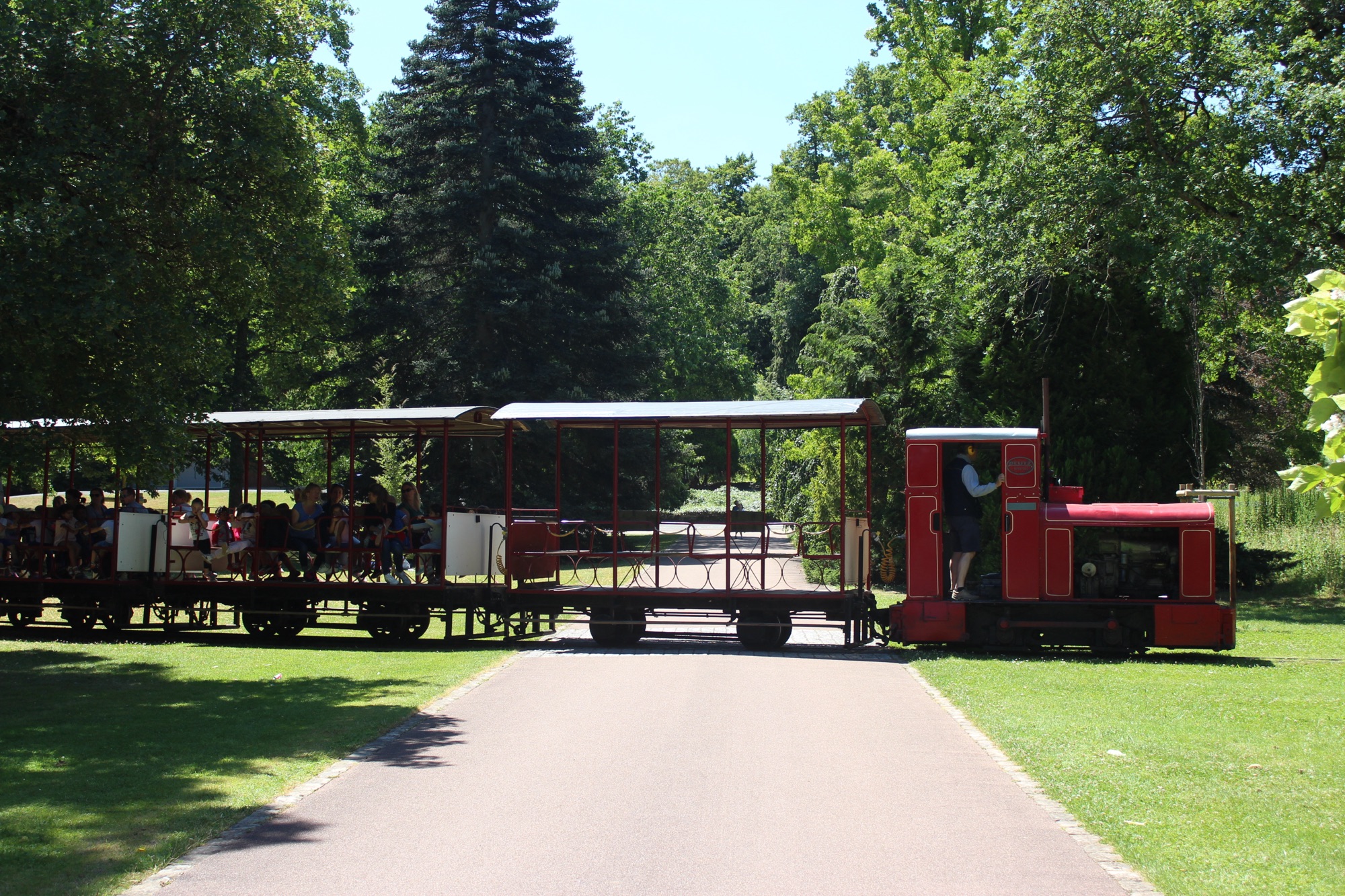
I’m once again lucky that my birthday has fallen over a bank holiday weekend. We’re off to Beamish again; as we went there last July, we have annual passes with a couple of months left to run. It also gives us an opportunity to visit the areas that we missed last time – namely the 1940s and 1950s farms, and the funfair. Our visit also coincides with the Festival of Transport, so we’ll be able to travel on the short steam railway which wasn’t open last year.

We’ll be staying overnight nearby, as it’s a two hour drive each way.

How many UNESCO World Heritage sites have I visited?

A photo of Salt's Mill in Saltaire, a UNESCO World Heritage Site near Bradford.

Something I used to do was ask my Facebook friends a new question every day. It started in 2022, and I managed to keep going every day well into last year before running out of ideas for new questions. One of those questions was how many UNESCO World Heritage Sites have you visited?

I think, in my mind, UNESCO World Heritage Sites are relatively unusual, and that most people would have only visited one or two in their lifetimes. As it happens, there are well over a thousand UNESCO World Heritage Sites across the world, in over 160 countries. 35 of these are in the UK alone. So, with this in mind, here are all of those that I have visited, split by country.

United Kingdom

A photo of Bridgetown in Barbados, a UNESCO World Heritage Site

Barbados

Barbados has just the one UNESCO World Heritage Site, which is its capital, Bridgetown. I went on holiday with my parents in 2000, as I’d turned 16 and it was their 25th wedding anniversary. To date, it’s the only time I’ve been to the western side of the Atlantic Ocean.

A photo of one of the canals in Bruges.

Belgium

  • La Grand-Place, Brussels. I had a weekend in Brussels with my parents in the early 2000s. At the time, my mum worked for a charity that was applying for a six-figure sum of funding from the European Commission, and so it was decided that she would submit the funding bids in person so that there was no risk of it getting lost in the post. We therefore went as a family and made a weekend of it, travelling down on the Eurostar.
  • Belfries of Belgium and France. These include belfries in Brussels and also Bruges, which we visited in 2014. Speaking of which…
  • Historic Centre of Bruges. The whole of central Bruges is a UNESCO World Heritage Site, and it’s easy to see why as it’s lovely. Previously I’d been briefly with my parents in 1992, on our way back from a holiday in eastern France.
A photo of Mont St Michel in Northern France

France

France is the country that I’ve visited the most after the UK, so it’s not surprising that I’ve visited several UNESCO World Heritage Sites over the years.

Greece

I have been to Crete, which is home to several UNESCO World Heritage Sites, but as I was only three years old at the time, I don’t really remember it.

Ireland

I have been to Ireland – well, Dublin. There are two UNESCO World Heritage Sites in the Republic of Ireland, but neither of them are in Dublin, so I haven’t been to them.

Italy

I have been to Italy twice – once to Venice, in 1999, which is a UNESCO World Heritage site, and once on a day trip in 2001 to Ventimiglia, a town known for its markets on the French border, which isn’t.

Jordan and Oman

I have been to Amman in Jordan, and Muscat and Salalah in Oman, but this was a work trip so I didn’t get to see any of the heritage sites whilst there.

Romania

I was lucky enough to go on an A-level Geography field trip to Romania in 2001. Whilst there, I got to see the Danube Delta and some of the Villages with Fortified Churches in Transylvania.

Spain

I’ve been to the northern coast of Spain once, staying near Santander, but it was thirty years ago and so I can’t remember whether we visited any of the UNESCO World Heritage Sites there.

Switzerland

I’ve been to Geneva once, all the way back in 1992, but not to any of the UNESCO World Heritage Sites elsewhere in the country.

Where next

I’ve hinted at a few places that we may go back to in the UK. Next month, there’s a possibility I may check off another international UNESCO World Heritage Site, but I can’t be sure that it’ll happen yet.